






Savory Cakes in Vietnam: Best Local Cakes for First-Time Visitors
 HoangAn
  3 min. to read
 Have you ever felt confused when you see dozens of small cakes at a local market and do not know which one to try first? Savory cakes in Vietnam and Vietnamese savory snacks often surprise travelers because they look simple but taste rich and deeply local. In this guide, you will learn what these cakes are, why locals love them, which ones you should try, and where to enjoy them during your Vietnam trip.
Key Takeaways
- Savory cakes in Vietnam are light yet filling, making them popular for meals and snacks, often enjoyed at local markets.
- Key ingredients include rice flour, shrimp, pork, mung beans, and banana leaves, which create unique flavors and textures.
- Popular savory cakes like Banh Beo, Banh Bot Loc, and Banh Xeo showcase regional flavors and traditions across Vietnam.
- Travelers can find these cakes at local street stalls, traditional markets, or through guided food tours to experience authentic Vietnamese cuisine.
- Savory cakes reflect local culture and are safe to eat for foreign travelers, providing a rich culinary experience.
1. Why Savory Cakes Play a Big Role in Vietnamese Cuisine
Savory cakes in Vietnam hold a special place in daily meals, street food culture, and family traditions. This section explains why these cakes remain popular across generations and regions.
Vietnamese people value balance in food. Savory cakes offer a mix of soft textures, light fillings, and gentle seasoning. Many locals eat them for breakfast, afternoon snacks, or light meals. You can find these cakes everywhere, from busy streets to quiet countryside markets.
Unlike heavy meals, Vietnamese savory snacks feel light and filling at the same time. That is why travelers often enjoy them during long walking days or food-focused itineraries. Many Vietnam food tour programs include savory cakes because they show local habits clearly and honestly.
2. Key Ingredients Used in Vietnamese Savory Cakes
The charm of savory cakes in Vietnam comes from simple ingredients that reflect local farming, rivers, and coastal life. Below are the key components that shape the flavor and texture of these Vietnamese savory snacks.
- Rice flour and tapioca flour
Rice flour forms the foundation of most savory cakes in Vietnam. It creates soft, smooth, or slightly chewy textures that feel gentle on the palate. In some cakes, tapioca flour adds extra elasticity, which many travelers find interesting and fun to eat. - Fresh shrimp and pork
Shrimp and pork appear in many Vietnamese savory snacks as main fillings or toppings. Cooks usually chop or mince them finely, then season them lightly to keep the taste natural. This balance helps the cake stay flavorful without feeling heavy. - Mung beans and mushrooms
Mung beans add a mild, nutty taste and a creamy texture to many cakes. Wood ear mushrooms bring light crunch and contrast. These ingredients show how Vietnamese cooking values texture as much as flavor. - Banana leaves
Banana leaves do more than wrap the cakes. They protect the dough during steaming and add a subtle natural aroma. For travelers, this detail often feels very authentic and closely tied to traditional food culture. - Fish sauce and dipping sauces
Fish sauce plays a key role in finishing savory cakes in Vietnam. Cooks mix it with lime, sugar, or chili to create dipping sauces that enhance flavor without overpowering the cake. This step turns simple ingredients into memorable Vietnamese savory snacks.
This ingredient harmony explains why savory cakes in Vietnam taste light, comforting, and deeply local. Many travelers discover that these simple elements leave a stronger impression than complex recipes.

3. Popular Savory Cakes in Vietnam You Should Try
Savory cakes in Vietnam appear in many forms, from small street snacks to symbolic holiday dishes. Below are the most popular Vietnamese savory snacks that travelers should experience at least once during their journey.
3.1 Banh Beo (Steamed Rice Cakes)
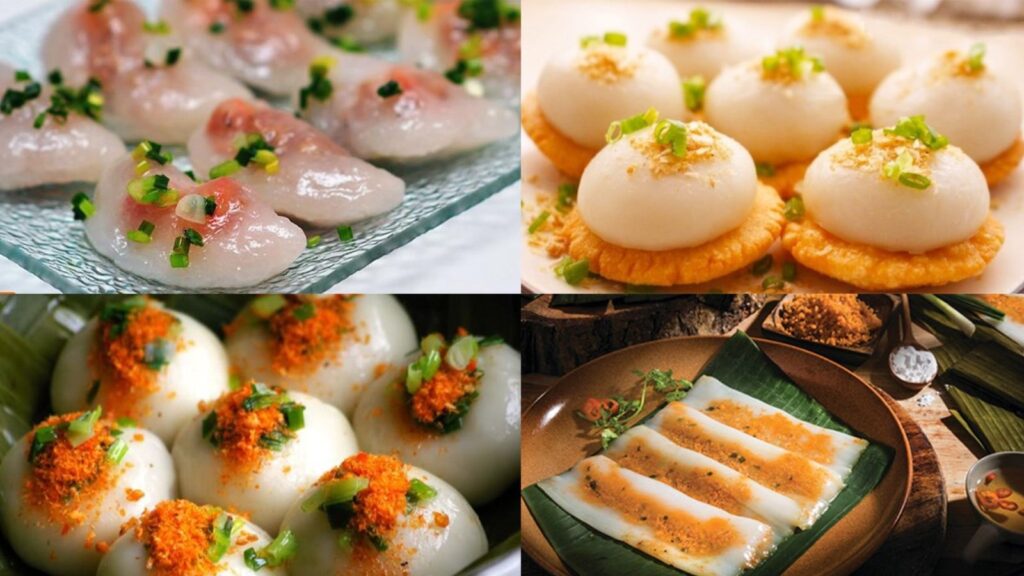
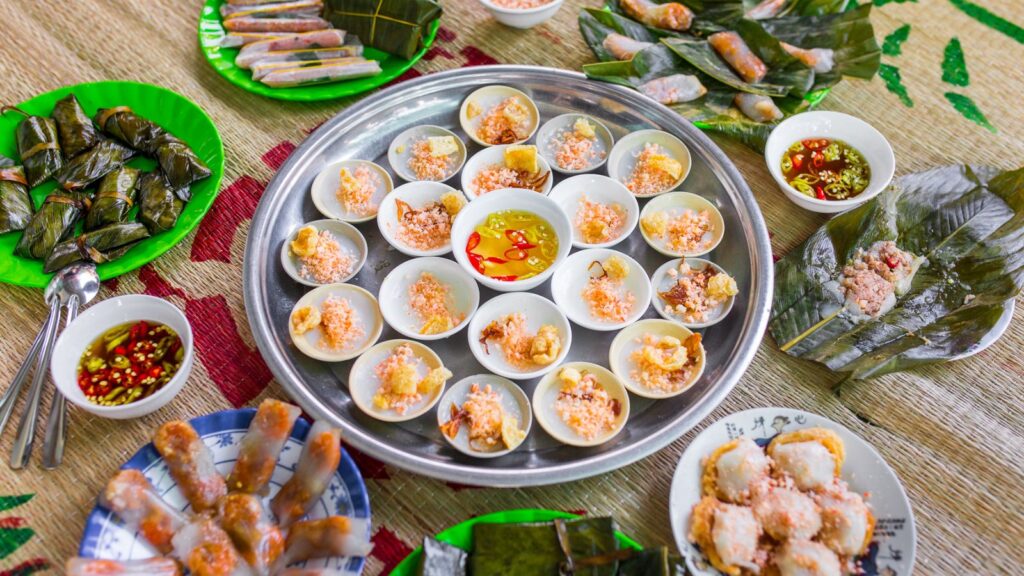
Banh beo are small steamed rice cakes served in shallow dishes. Cooks top them with shrimp floss, crispy pork fat, and scallion oil for a light but flavorful bite. You often find this cake in central Vietnam, especially in Hue, where food culture focuses on small portions and elegant presentation. Many travelers first try banh beo while exploring local markets or regional food stops.
3.2 Banh Bot Loc (Clear Tapioca Dumplings)
Banh bot loc uses translucent tapioca dough filled with shrimp and pork. The chewy texture makes it stand out among Vietnamese savory snacks. Vendors usually wrap it in banana leaves and serve it warm with dipping sauce. This savory cake in Vietnam reflects the coastal influence of central Vietnam very clearly.
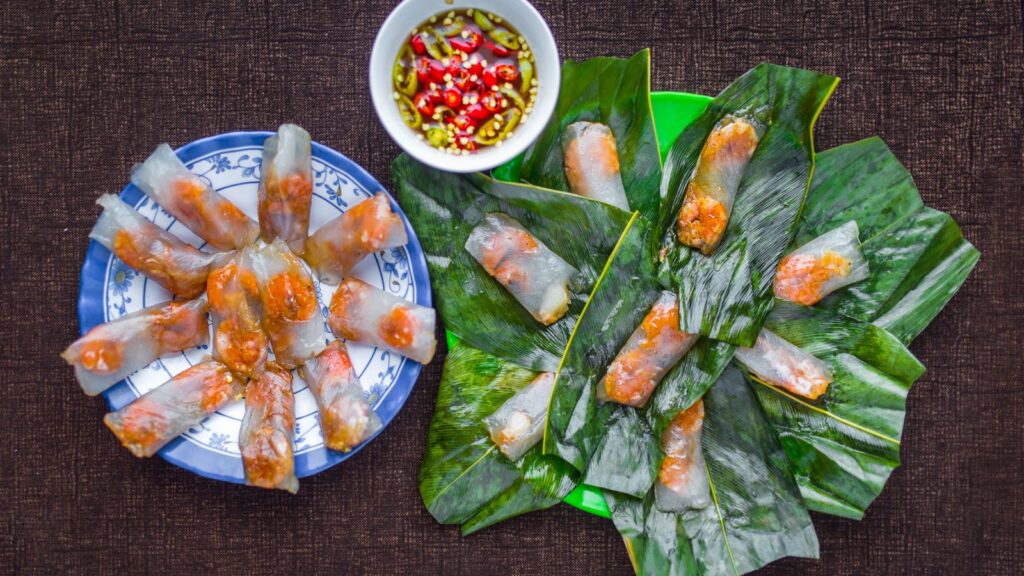
3.3 Banh Nam (Flat Steamed Rice Cake)
Banh nam has a thin, flat shape and a soft texture. The filling includes finely minced shrimp and pork spread evenly inside the cake. Banana leaves help keep the cake moist and fragrant during steaming. Travelers often enjoy banh nam because it feels light and easy to digest.
3.4 Banh Cuon (Steamed Rolled Rice Pancakes)
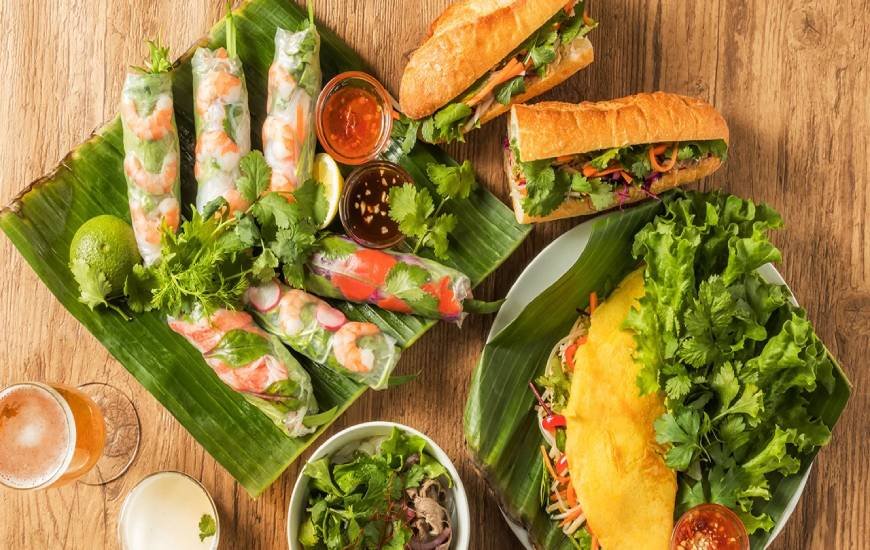
Banh cuon features thin rice sheets rolled with minced pork and wood ear mushrooms. Vendors serve it hot with fresh herbs and fish sauce. This savory cake in Vietnam plays a key role in breakfast culture, especially in Ha Noi. Many visitors try it early in the morning before starting city tours.
3.5 Banh Xeo (Vietnamese Savory Pancake)
Banh xeo is a crispy rice flour pancake cooked with turmeric. It contains shrimp, pork, and bean sprouts inside. Diners break it into pieces, wrap it with herbs, and dip it in sauce. This interactive way of eating makes banh xeo a favorite among food-loving travelers.

3.6 Banh Khot (Mini Savory Pancakes)
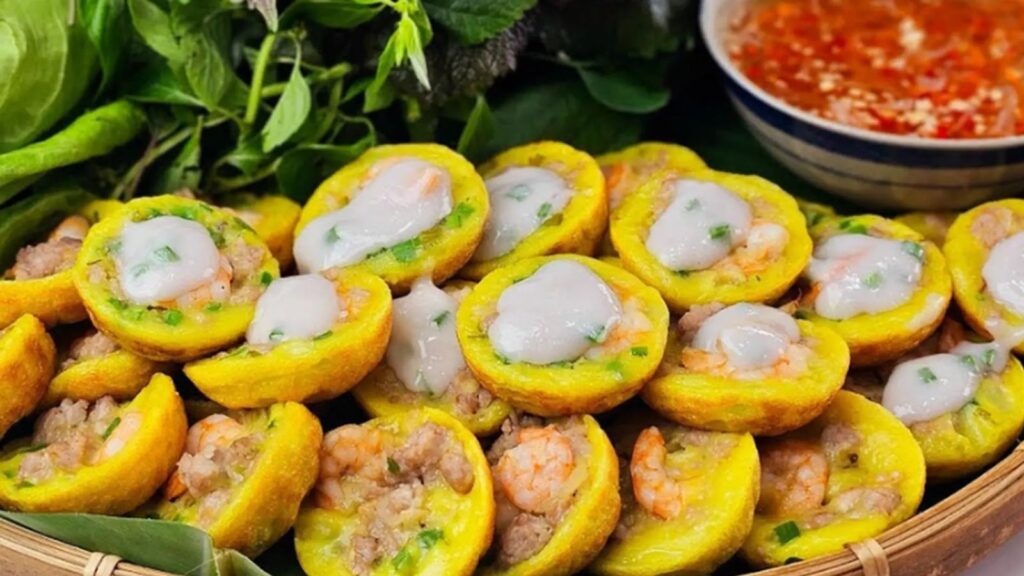
Banh khot comes from southern Vietnam and coastal areas. These small round cakes have crispy edges and soft centers. Shrimp and scallions usually sit on top, adding color and flavor. Travelers often discover banh khot during Mekong Delta tour or southern coastal routes.
3.7 Banh Chung (Square Sticky Rice Cake)
Banh chung is a traditional savory cake made from sticky rice, pork, and mung beans. This savory cake in Vietnam has a square shape and represents earth in Vietnamese culture. People mainly prepare it for Tet, the Lunar New Year, but some places sell it year-round. For travelers, banh chung offers a deep cultural story beyond taste.
3.8 Banh Tet (Sticky Rice Rolls)
Banh tet is similar to banh chung but has a cylindrical shape. It appears more often in central and southern Vietnam. The filling usually includes pork and mung beans, wrapped tightly in banana leaves. Many travelers try banh tet when joining holiday-themed or cultural tours.

3.9 Banh Bao (Vietnamese Steamed Dumplings)
Banh bao looks like a soft white bun and feels familiar to many travelers. Inside, it often contains pork, sausage, quail egg, and mushrooms. Vendors sell it widely as a quick meal or snack. This cake shows how Vietnamese savory snacks adapt influences while keeping local flavors.
4. Regional Variations of Savory Cakes in Vietnam
Savory cakes in Vietnam change clearly from north to south. The table below helps travelers understand regional differences quickly.
| Region | Common Savory Cakes | Key Characteristics |
|---|---|---|
| Northern Vietnam | Banh cuon, banh gio | Light seasoning, soft texture |
| Central Vietnam | Banh beo, banh nam, banh bot loc | Small portions, strong shrimp flavor |
| Southern Vietnam | Banh xeo, banh khot | Crispier texture, richer dipping sauces |
Each region reflects local climate and ingredients. Northern cakes feel subtle and gentle. Central cakes focus on seafood and presentation. Southern cakes feel bolder and more filling. Many North to South tours let travelers taste these differences clearly.
If you feel unsure about hygiene or ordering, you can contact Sun Getaways Travel for food tour advice that fits your route and schedule.
5. Where to Find the Best Savory Cakes in Vietnam
You can find savory cakes in Vietnam almost everywhere, but some places offer better experiences. This section helps travelers choose wisely.
- Local street stalls
Small stalls often serve the freshest cakes. Vendors make them in front of you, which builds trust and curiosity. Prices stay low, usually from 1 to 3 USD per serving. - Traditional markets
Morning markets offer many Vietnamese savory snacks in one place. You can try several types without walking far. This option suits travelers with limited time. - Food-focused tours
Guided tours help you understand ingredients and eating habits. You can try a typical Vietnam food tour to taste savory cakes in Vietnam and see how locals enjoy these dishes in their daily life.
“When travelers try savory cakes in Vietnam, I always suggest starting with smaller portions and tasting across regions. This approach helps you understand local culture without feeling overwhelmed.”
– Mrs. Emma Nguyen, Tour Operator Manager with over 12 years of experience at Sun Getaways Travel
6. FAQs about Savory Cakes in Vietnam
Yes, many locals eat them in the morning. They feel light but filling, making them ideal for travel days.
Most cakes cost between 0.5 and 3 USD per portion. Prices stay affordable even in tourist areas.
Most are mild. You can add chili sauce separately if you enjoy heat.
Some versions use mung beans or plain rice flour. Always ask vendors about fillings.
Yes, especially when you choose busy stalls or guided food tours. Fresh cooking reduces risk.
7. Conclusion
Savory cakes in Vietnam offer more than food. They show how locals eat, share, and live each day. From soft steamed cakes to crispy pancakes, Vietnamese savory snacks bring simple joy to every journey.
If you want to explore these flavors with confidence and local insight, Sun Getaways Travel can help you design food-focused routes that match your travel style. Contact our team today and let Vietnam welcome you through its most authentic tastes.


Related Tour


Northern Vietnam Delights: Hanoi, Halong Bay & Sa Pa 6 Days


27 Reviews

15-Day Vietnam Food Tour: A Culinary Adventure
19 Reviews

6-Days Ho Chi Minh Floating Market Tour
10 Reviews

3 Days Tour Muslim Hanoi and Halong Bay
21 Reviews

18 Days Vietnam Family Holiday Tour
0 Reviews
Ask a question
Leave a Comment (0)
No questions yet. Be the first to ask a question!
See related Posted
Luxury Golf Resorts in Vietnam – Elite Golf Travelers

Vietnam is increasingly recognized as a premier golf destination in Asia, therefore luxury golf…
Macrame in Vietnam: The Revival of Knot Art in Contemporary Craft Culture

Macrame in Vietnam reflects the country’s growing engagement with contemporary handmade culture, where global…
Vietnamese Musical Instrument Craft: Traditional Instrument Making in Vietnam

Vietnamese musical instrument craft reflects a long-standing relationship between sound, material, and cultural memory.…
Traditional Vietnamese Kite Art: History, Craftsmanship, and Cultural Meaning

Traditional Vietnamese kite art is a living expression of folk creativity, community values, and…
Vietnamese Folk Masks: Tradition, Symbolism & Cultural Meaning

Vietnamese folk masks are a distinctive form of traditional art that reflects the spiritual…
Vietnamese Embroidery Art: Traditional Craftsmanship & Cultural Meaning

Vietnamese embroidery art is a refined traditional craft that reflects patience, cultural memory, and…