





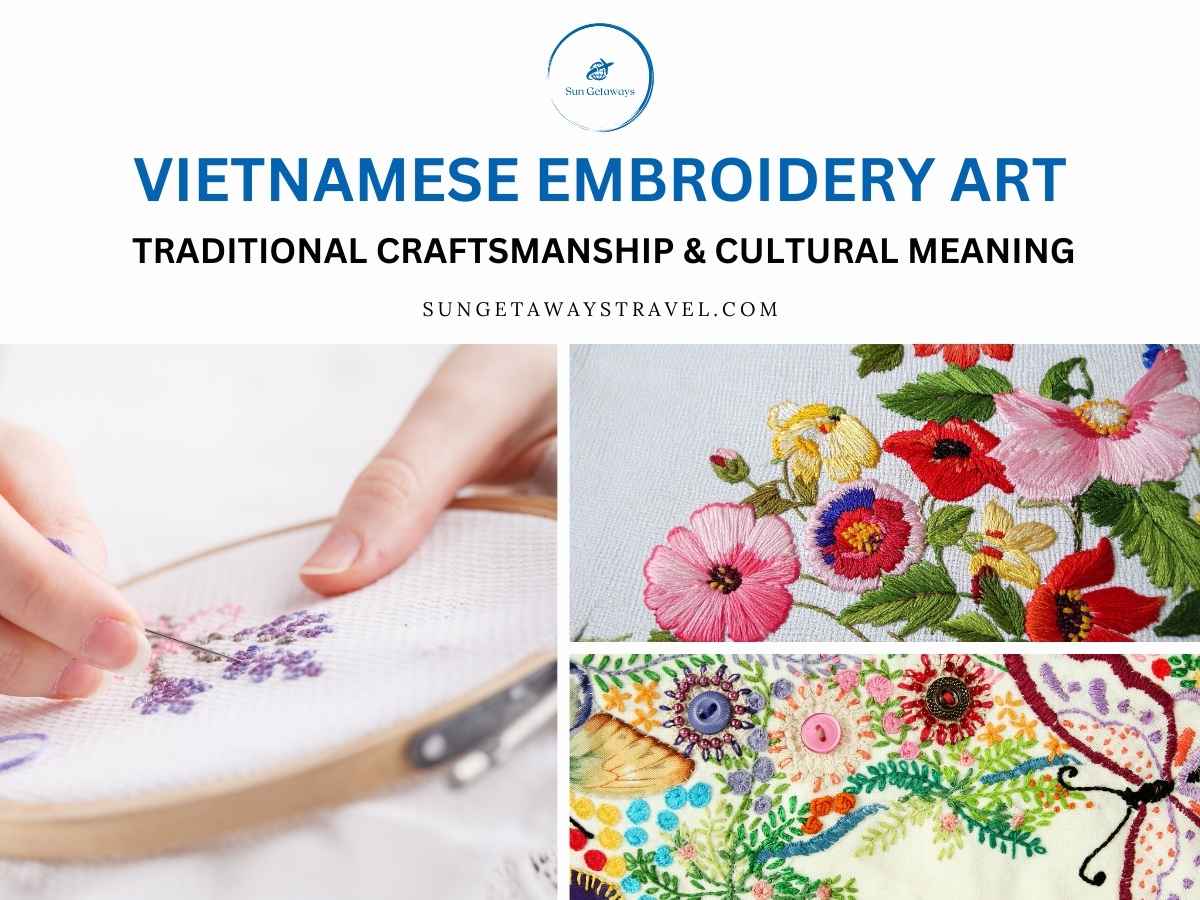
Vietnamese Embroidery Art: Traditional Craftsmanship & Cultural Meaning
 PhamDuong
  3 min. to read
 Vietnamese embroidery art is a refined traditional craft that reflects patience, cultural memory, and aesthetic restraint deeply rooted in Vietnamese society. Developed through generations of artisans, Vietnamese traditional embroidery craftsmanship goes beyond decorative textiles, serving as a visual expression of social values, spiritual beliefs, and everyday life. By examining its history, techniques, and symbolism, embroidery reveals a quieter yet enduring dimension of Vietnam’s artistic heritage.
Key Takeaways
- Vietnamese embroidery art reflects deep cultural values, patience, and technical precision, transcending mere decoration.
- Its historical development showcases a journey from practical domestic use to sophisticated courtly traditions under royal patronage.
- Modern challenges led to adaptations, where traditional techniques now cater to contemporary markets and artistic expressions.
- Key themes include harmony with nature, emotional restraint, and the significance of motifs drawn from daily life and spirituality.
- Visitors can experience Vietnamese embroidery art through workshops, understanding its symbolism, and exploring key locations like Hue and Hanoi.
1. Introduction to Vietnamese Embroidery Art
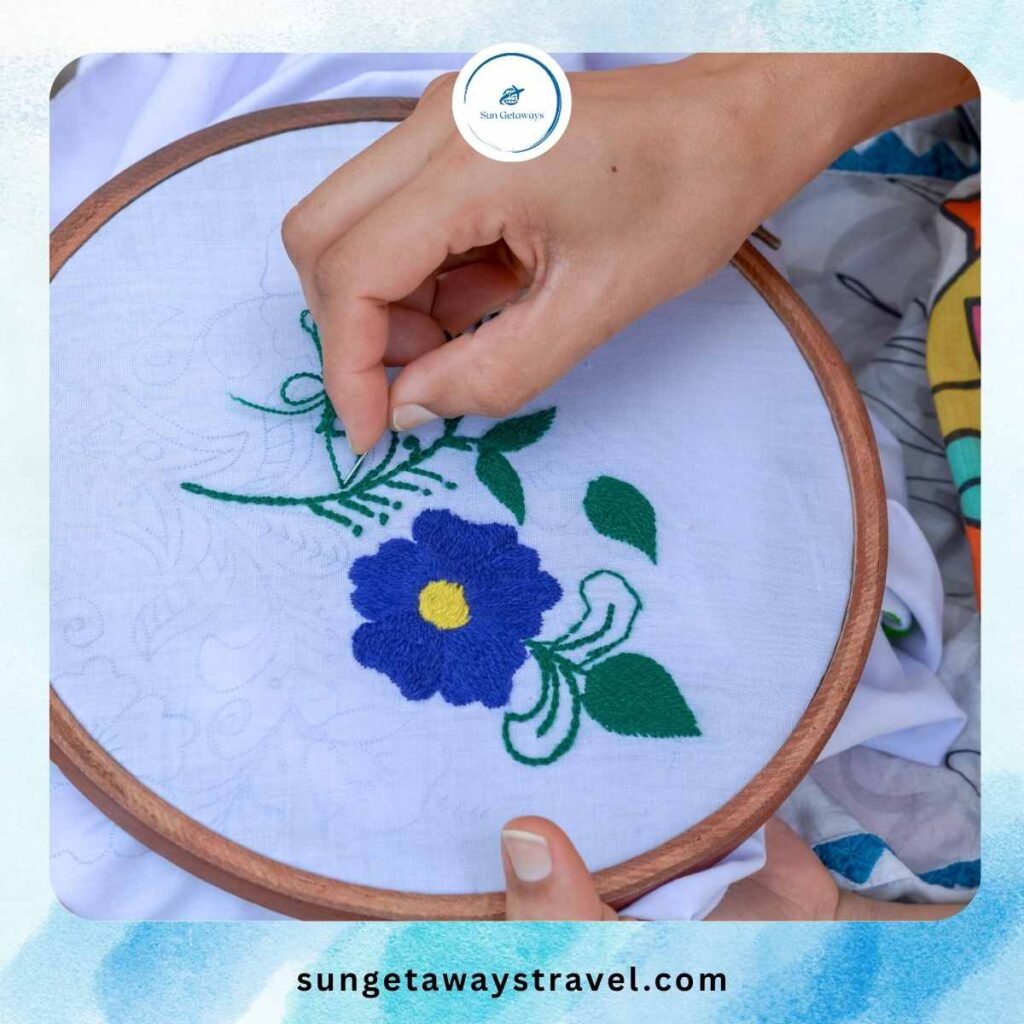
Vietnamese embroidery art is one of the most refined expressions of traditional craftsmanship in Vietnam, blending technical precision with cultural symbolism and emotional depth. Developed over centuries, embroidery in Vietnam was never merely decorative—it functioned as a visual language reflecting social values, spiritual beliefs, and everyday life.
Unlike mass-produced textiles, Vietnamese traditional embroidery craftsmanship emphasizes patience, manual skill, and intimate knowledge of materials. Each embroidered piece carries traces of the artisan’s rhythm, discipline, and worldview, making embroidery a quiet but powerful art form within Vietnamese cultural heritage.
2. Historical Development of Vietnamese Traditional Embroidery Craftsmanship
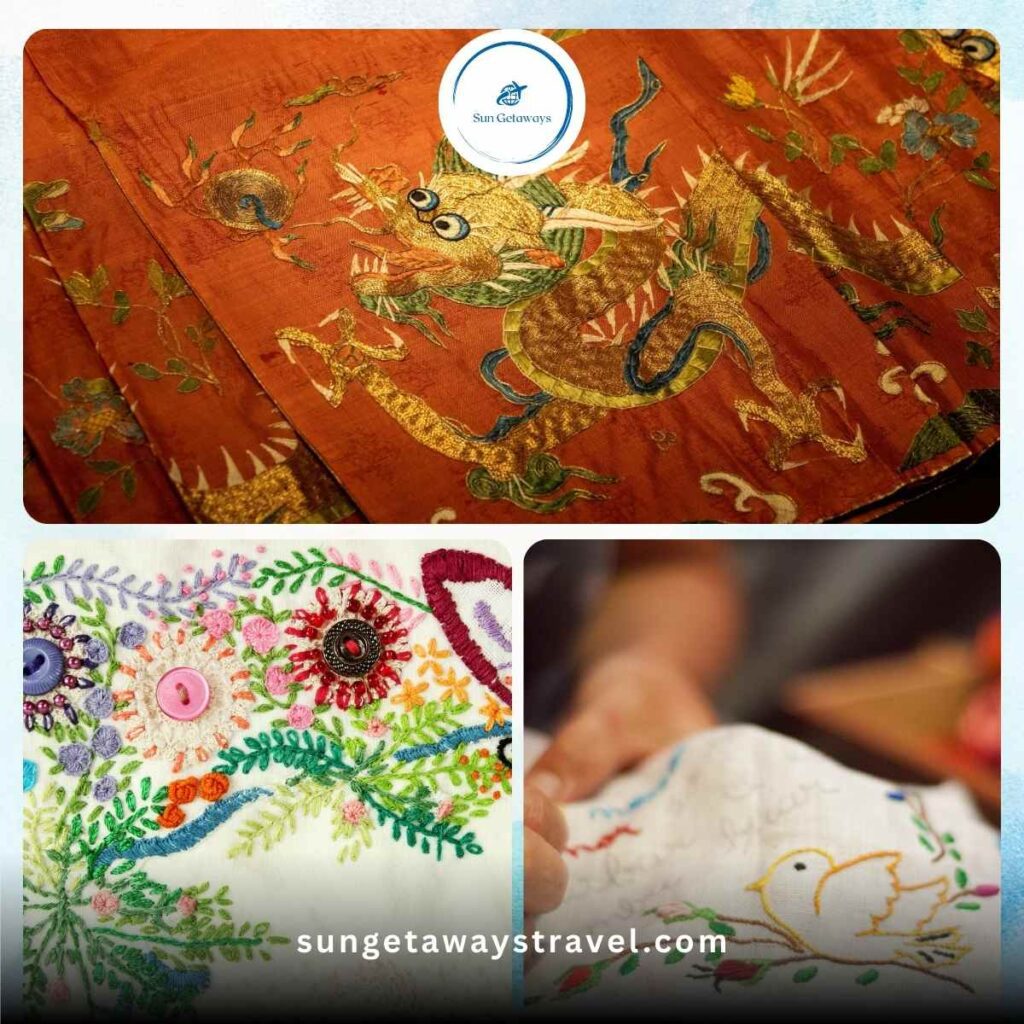
The evolution of embroidery in Vietnam closely follows changes in social structure, court culture, and village life. From everyday household use to highly regulated royal workshops, embroidery developed alongside Vietnamese society, reflecting both continuity and adaptation over time.
2.1 Early Origins and Folk Traditions
Embroidery existed long before formal documentation, deeply embedded in domestic life and ritual practices of rural communities. In this early stage, embroidery functioned as both a practical skill and a cultural form of expression.
Key historical characteristics include:
- Embroidery used for clothing, household textiles, and ceremonial objects, serving daily needs as well as spiritual purposes
- Techniques passed down orally within families and craft villages, ensuring continuity across generations
- Patterns reflecting local beliefs, nature, and seasonal cycles, closely tied to agricultural life
In rural communities, embroidery was not merely decorative; it was a marker of femininity, patience, moral education, and family identity.
2.2 Court Embroidery and Elite Patronage
During feudal dynasties, embroidery reached a high level of sophistication under royal patronage. Court embroidery became a formalized art governed by strict aesthetic and symbolic rules.
Notable developments include:
- Royal garments embroidered with dragons, phoenixes, and symbolic motifs, representing power, harmony, and cosmic order
- Strict rules governing colors, patterns, and thread materials, based on rank and ceremonial function
- Embroidery used to signal rank, authority, and cosmic harmony, reinforcing social hierarchy
While court embroidery influenced folk traditions, it remained distinct in scale, refinement, and symbolic complexity.
2.3 Modern Transformation and Preservation
In the modern era, embroidery faced serious challenges from industrial textiles and mass production. However, traditional craftsmanship did not disappear. Instead:
- Traditional villages adapted techniques for contemporary markets, including tourism and decorative arts
- Embroidery shifted toward art pieces, souvenirs, and fashion design, expanding its creative scope
- Cultural institutions began documenting and preserving techniques, recognizing embroidery as intangible heritage
Today, Vietnamese embroidery survives through a careful balance between preserving tradition and responding to modern demand.
3. Cultural Values Reflected in Vietnamese Embroidery Art
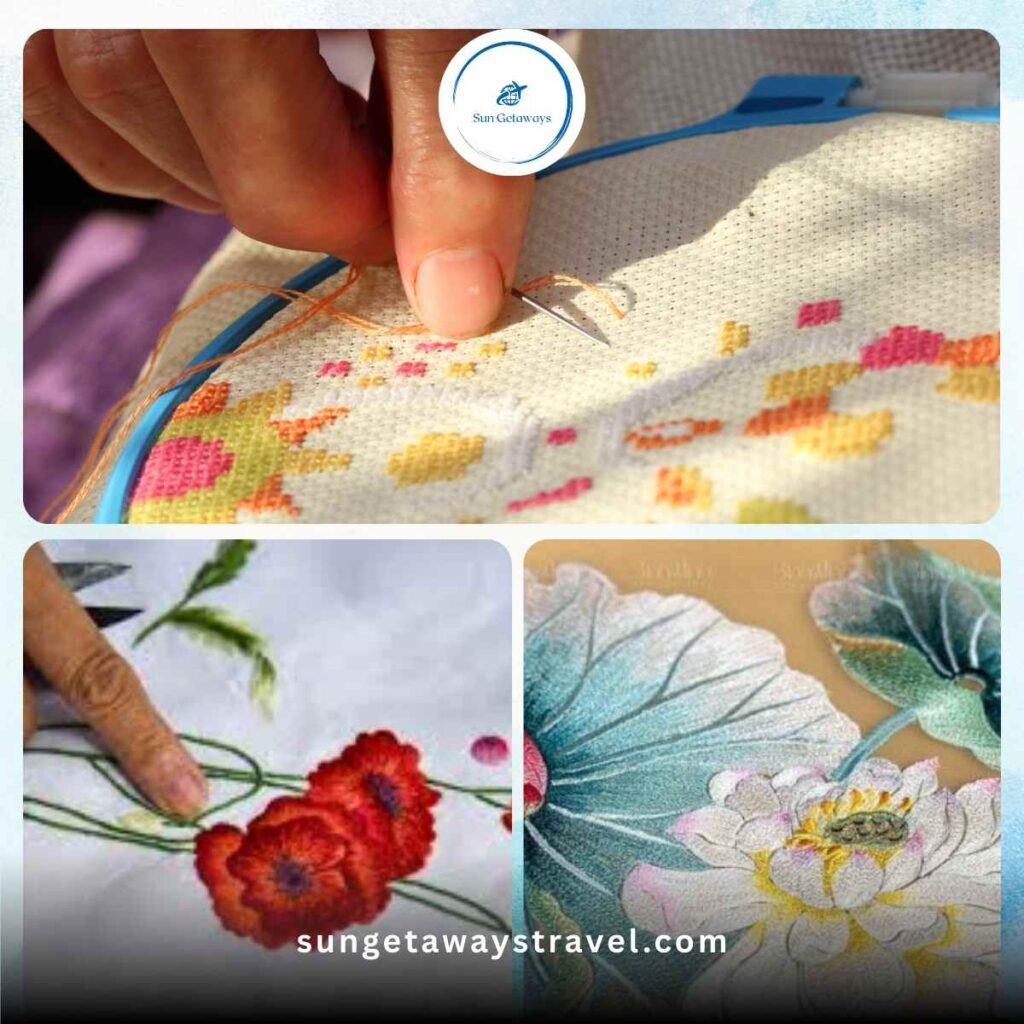
Vietnamese embroidery art reflects cultural values that go beyond visual beauty or technical skill. Each piece embodies a quiet philosophy shaped by Vietnamese social norms and aesthetics. Core values include:
- Patience and discipline: Fine stitches require long hours and sustained concentration
- Harmony with nature: Motifs often feature flowers, birds, water, and landscapes drawn from daily surroundings
- Emotional restraint: Beauty is subtle, avoiding excess or dramatic contrast
- Respect for tradition: Designs follow inherited patterns while allowing individual variation
These values distinguish Vietnamese embroidery from more commercially driven or purely decorative textile arts.
To better understand Vietnam’s folk visual culture, discover 👉 Dong Ho folk painting and the unique process behind dong ho woodblock prints, rooted in village life and Lunar New Year traditions.
4. Core Techniques in Vietnamese Traditional Embroidery Craftsmanship
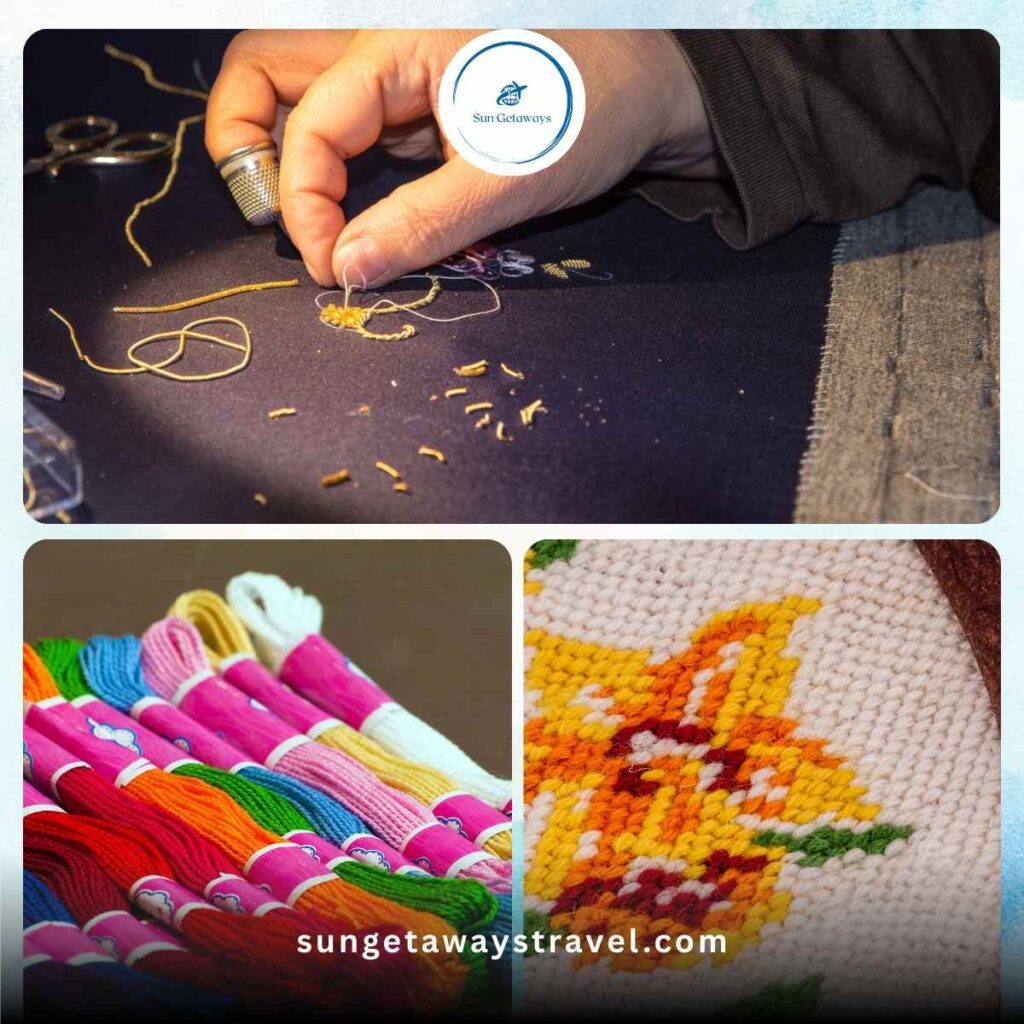
Embroidery techniques in Vietnam vary by region but share common principles rooted in manual skill and material sensitivity.
4.1 Hand-Stitching Methods
Traditional embroidery relies entirely on hand-stitching, with each method serving a specific visual function. Common methods include:
- Satin stitch for smooth surfaces, creating softness and continuity
- Split stitch for outlines and fine detail, enhancing clarity and definition
- Long-and-short stitch for shading and depth, allowing gradual tonal transitions
Each stitch contributes to texture, rhythm, and overall visual balance.
4.2 Use of Silk Threads and Fabric
Materials play a central role in shaping the final aesthetic of embroidered works. Typical materials include:
- Natural silk threads dyed in muted tones, favoring elegance over brightness
- Cotton or silk fabric as a base, chosen for durability and texture
- Minimal use of metallic threads for symbolic emphasis, avoiding visual excess
Material choice reflects both functional considerations and traditional Vietnamese taste.
5. Common Themes in Vietnamese Embroidery Art
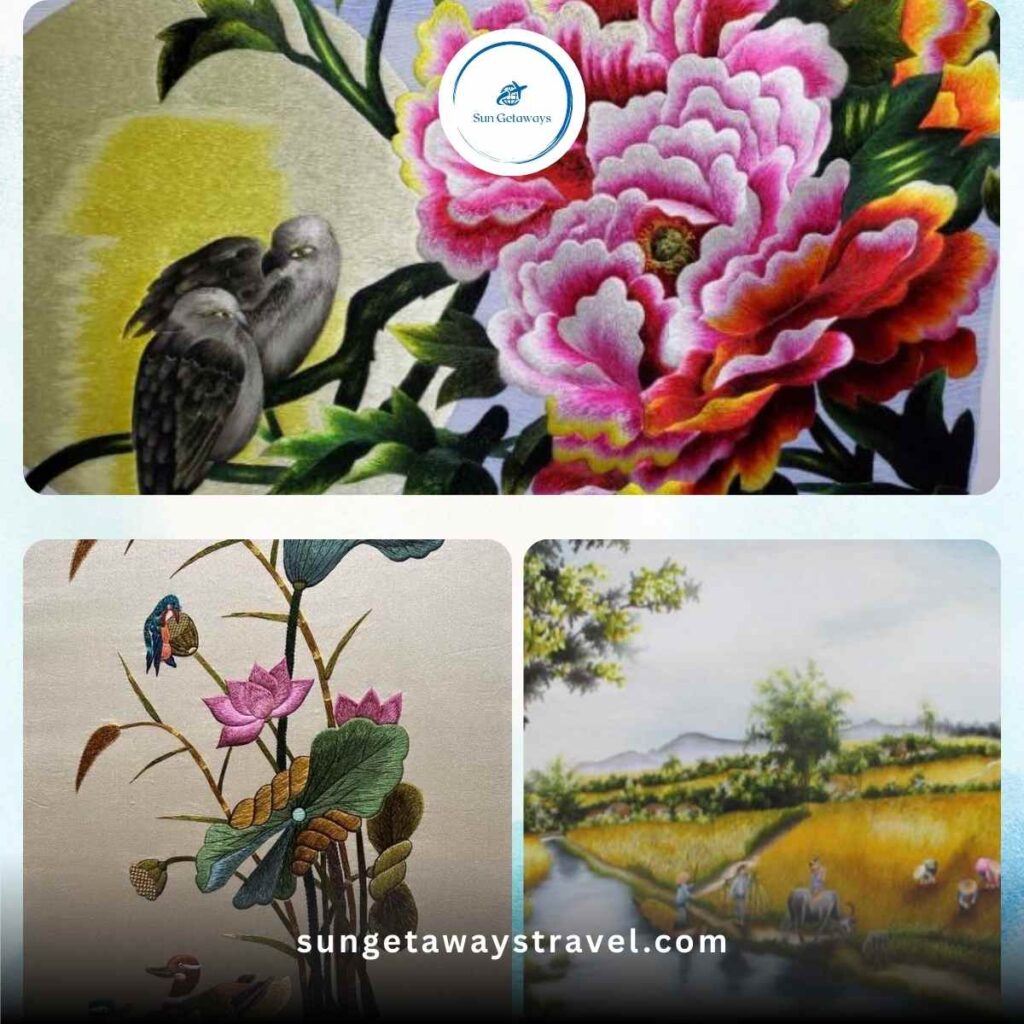
Themes in Vietnamese embroidery art draw heavily from lived experience, collective memory, and spiritual belief. Popular subjects include:
- Floral compositions symbolizing seasons and femininity, closely linked to natural cycles
- Birds and animals representing harmony and prosperity, often used as auspicious symbols
- Rural life scenes and village landscapes, reflecting everyday reality
- Spiritual symbols linked to Buddhism and folk beliefs, conveying moral and spiritual meaning
Rather than strict realism, Vietnamese embroidery emphasizes mood, symbolism, and emotional continuity across generations.
If you are interested in understanding the broader cultural context behind Vietnam’s creative heritage, start with an overview of 👉 Vietnamese traditional arts to explore key traditional art forms in Vietnam, from folk practices to court-influenced traditions.
6. Regional Embroidery Traditions in Vietnam
Vietnamese embroidery art varies significantly by region, shaped by local history, social structure, and aesthetic preferences. Each area contributes distinct techniques and visual languages, enriching the diversity of Vietnamese traditional embroidery craftsmanship.
6.1 Hue Embroidery: Courtly Elegance
Hue embroidery is closely associated with royal culture and ceremonial life, reflecting the refined tastes of the former imperial capital. Hue embroidery is known for:
- Fine detail and restrained color palettes, favoring balance and subtle elegance over visual excess
- Strong influence of royal aesthetics, with strict compositional rules and symbolic accuracy
- Symbolic and ceremonial themes, often linked to authority, harmony, and cosmic order
It represents the highest level of technical refinement within Vietnamese embroidery traditions.
The 12 Days Vietnam From North To South With Hue journey brings these layers together, offering travelers a meaningful way to experience Vietnam’s cultural diversity in real places and everyday contexts
6.2 Northern Village Embroidery
Northern village embroidery developed within communal settings, closely tied to everyday life and local rituals rather than elite patronage. Northern traditions emphasize:
- Folk motifs and everyday symbolism, drawn from nature, agriculture, and village beliefs
- Strong connection to village rituals, including festivals, weddings, and ancestral ceremonies
- Practical applications in household textiles, such as clothing, bedding, and decorative fabrics
These styles reflect communal identity, continuity, and the shared values of rural life.
Northern Vietnam is where many of the country’s traditional arts, rituals, and community practices first took shape. The 8 Days Northern Guided Vietnam Tours offer a focused journey through this cultural heartland, connecting historic cities, craft villages, and living traditions in a meaningful and immersive way.
7. Vietnamese Embroidery in Contemporary Art and Design
In recent decades, Vietnamese embroidery has entered new creative contexts without losing its traditional foundation. Artists and designers increasingly view embroidery as both a craft and an expressive medium.
Current trends include:
- Embroidery incorporated into fashion and interior design, blending heritage techniques with modern aesthetics
- Contemporary themes expressed through traditional techniques, addressing identity, memory, and social change
- Collaboration between artisans and visual artists, expanding embroidery beyond its original functional role
This evolution keeps Vietnamese embroidery relevant while preserving its cultural roots.
8. How to Experience Vietnamese Embroidery Art as a Visitor
For visitors, experiencing embroidery is most meaningful when approached with respect and curiosity. Understanding context and process allows deeper appreciation of the art form.
Recommended approaches include:
- Visiting traditional craft villages and workshops, where techniques are still practiced daily
- Observing artisans at work without interrupting, allowing concentration and respect for craftsmanship
- Learning basic symbolism before purchasing pieces, to understand cultural meaning beyond appearance
Understanding the process greatly enhances appreciation of the final artwork.
👉 If you prefer a journey tailored exactly to your interests, pace, and travel style, let us help you design a
customized tour created just for you.
9. Best Places to Explore Vietnamese Embroidery Art
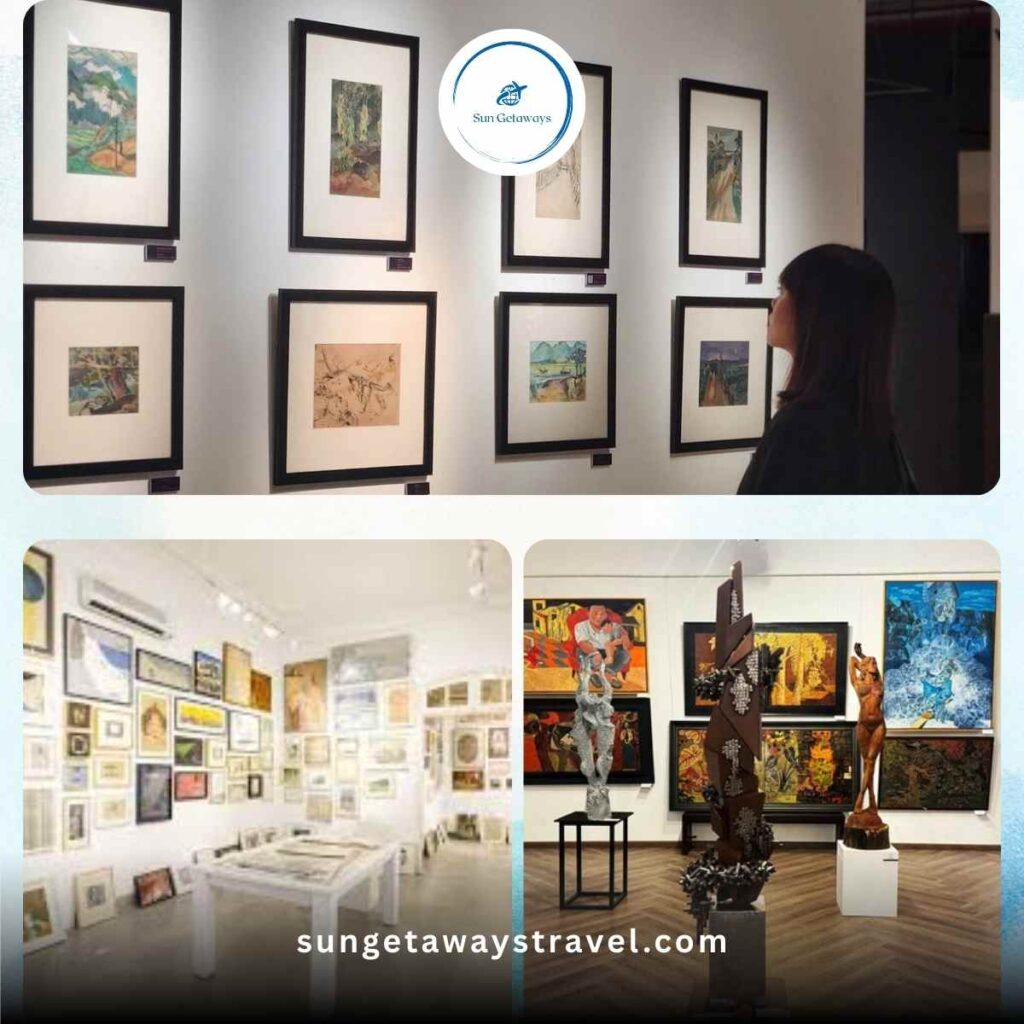
Vietnam offers several key destinations for those interested in embroidery art, each providing a different perspective.
- Center of royal embroidery heritage, deeply connected to imperial history
- Workshops preserving court techniques, maintaining high technical standards
- Museums and craft villages, offering historical and educational context
- Educational exhibitions and artisan cooperatives, supporting preservation efforts
- Contemporary embroidery in fashion and design, reflecting modern reinterpretations
- Modern interpretations and galleries, connecting traditional craft with global art trends
10. Comparison Table: Embroidery vs Other Vietnamese Traditional Arts
| Art Form | Primary Materials | Cultural Function | Level of Individual Expression |
|---|---|---|---|
| Embroidery | Silk thread, fabric | Symbolic, domestic, ceremonial | Moderate |
| Lacquer Painting | Lacquer, wood, pigments | Artistic, spiritual | High |
| Dong Ho Painting | Woodblock, natural pigments | Folk, ritual | Low–Moderate |
| Oil Painting | Canvas, oil paint | Artistic, expressive | High |
“Vietnamese embroidery is not just decorative craft. It reflects discipline, cultural memory, and the quiet strength of generations of artisans who express identity through patience and detail.”
— Mrs. Emma Nguyen – Tour Operator Manager with over 12 years of experience at Sun Getaways Travel
11. Conclusion
Vietnamese embroidery art represents a delicate balance between craftsmanship, cultural values, and artistic expression. Through centuries of adaptation, Vietnamese traditional embroidery craftsmanship has preserved its core identity while finding new relevance in contemporary life. For those seeking to understand Vietnam beyond monuments and museums, embroidery offers an intimate window into the nation’s cultural soul.
👉 If you’re looking for ready-made itineraries and inspiring travel ideas, explore our full collection of
Vietnam tours designed around culture, nature, and authentic local experiences.


Related Tour

15-Day Vietnam Food Tour: A Culinary Adventure


19 Reviews


10 Day Beach Relaxing Vietnam trip
10 Reviews


16-Day Vietnam Adventure Experience trip
0 Reviews
Ask a question
Leave a Comment (0)
No questions yet. Be the first to ask a question!
See related Posted
Luxury Golf Resorts in Vietnam – Elite Golf Travelers

Vietnam is increasingly recognized as a premier golf destination in Asia, therefore luxury golf…
Macrame in Vietnam: The Revival of Knot Art in Contemporary Craft Culture

Macrame in Vietnam reflects the country’s growing engagement with contemporary handmade culture, where global…
Vietnamese Musical Instrument Craft: Traditional Instrument Making in Vietnam

Vietnamese musical instrument craft reflects a long-standing relationship between sound, material, and cultural memory.…
Traditional Vietnamese Kite Art: History, Craftsmanship, and Cultural Meaning

Traditional Vietnamese kite art is a living expression of folk creativity, community values, and…
Vietnamese Folk Masks: Tradition, Symbolism & Cultural Meaning

Vietnamese folk masks are a distinctive form of traditional art that reflects the spiritual…
Dong Ho Folk Painting: The Cultural Soul of Vietnamese Woodblock Prints
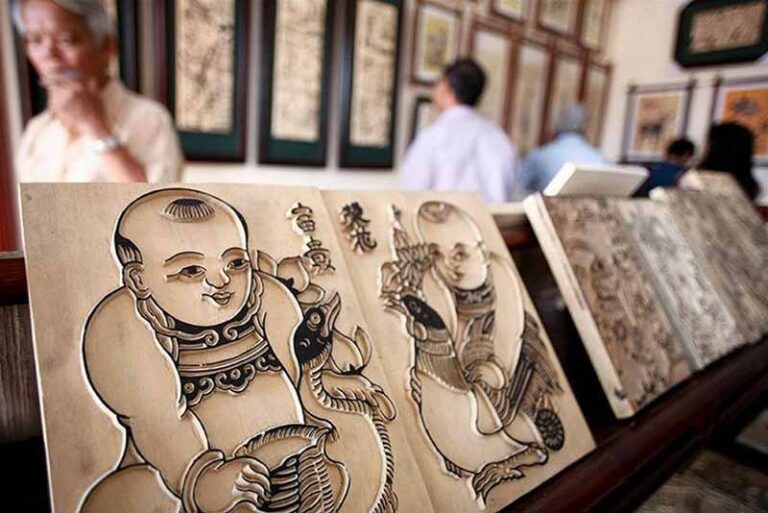
Dong Ho folk painting is one of Vietnam’s most enduring traditional art forms, reflecting…