





Vietnam Astronomy Park: A Unique Science Destination for Kids & Adults
 Dan Vy
  3 min. to read
 Vietnam astronomy park is emerging as one of the most inspiring science-based attractions in the country, offering a rare blend of education, imagination, and hands-on discovery. Unlike traditional museums, this destination transforms complex astronomical concepts into interactive experiences accessible to both children and adults. For families, students, and curious travelers, it represents a new generation of Vietnam astronomy attractions focused on learning through exploration.
This guide explains what makes the park special, what you can experience inside, and how to plan a meaningful visit.
Key Takeaways
- Vietnam Astronomy Park offers an interactive educational experience, blending science, imagination, and hands-on discovery for all ages.
- The park features themed zones that make complex astronomical concepts accessible through visual storytelling and play.
- Located in Ha Dong District, Hanoi, the park combines open-air installations with enclosed exhibitions for immersive learning.
- Best visiting times include weekday mornings for quieter exploration and late afternoons for magical lighting.
- The park is open to the public and features limited facilities; planning ahead improves the overall experience.
What Is Vietnam Astronomy Park and Why It Matters
Vietnam astronomy park is a large-scale educational complex designed to introduce astronomy, space science, and physics through immersive environments rather than static displays. It is part of a broader movement in Vietnam to create science attractions that inspire curiosity and critical thinking from an early age, much like the modern adventure travel in Vietnam scene.

Unlike smaller science corners or planetarium rooms, the park is built as a themed landscape where visitors move through different “zones,” each representing a major astronomical concept—from the Solar System to deep space.
Key reasons why this park stands out among Vietnam astronomy attractions include:
- 🔭 Science made accessible
Concepts like gravity, planetary motion, and light are explained visually and interactively, not through dense text. - 👨👩👧 Multi-generational appeal
The park is designed so children, teenagers, and adults can all engage at different levels of understanding, making it a highlight for any family holiday. - 🌌 Outdoor + indoor learning
Unlike traditional museums, Vietnam astronomy park combines open-air installations with enclosed exhibition spaces. - 🎓 Education-first philosophy
The focus is on learning outcomes, not entertainment alone.
This makes it an ideal destination for families, school groups, and travelers looking for meaningful, educational cultural tours.
Where Vietnam Astronomy Park Is Located and How to Get There
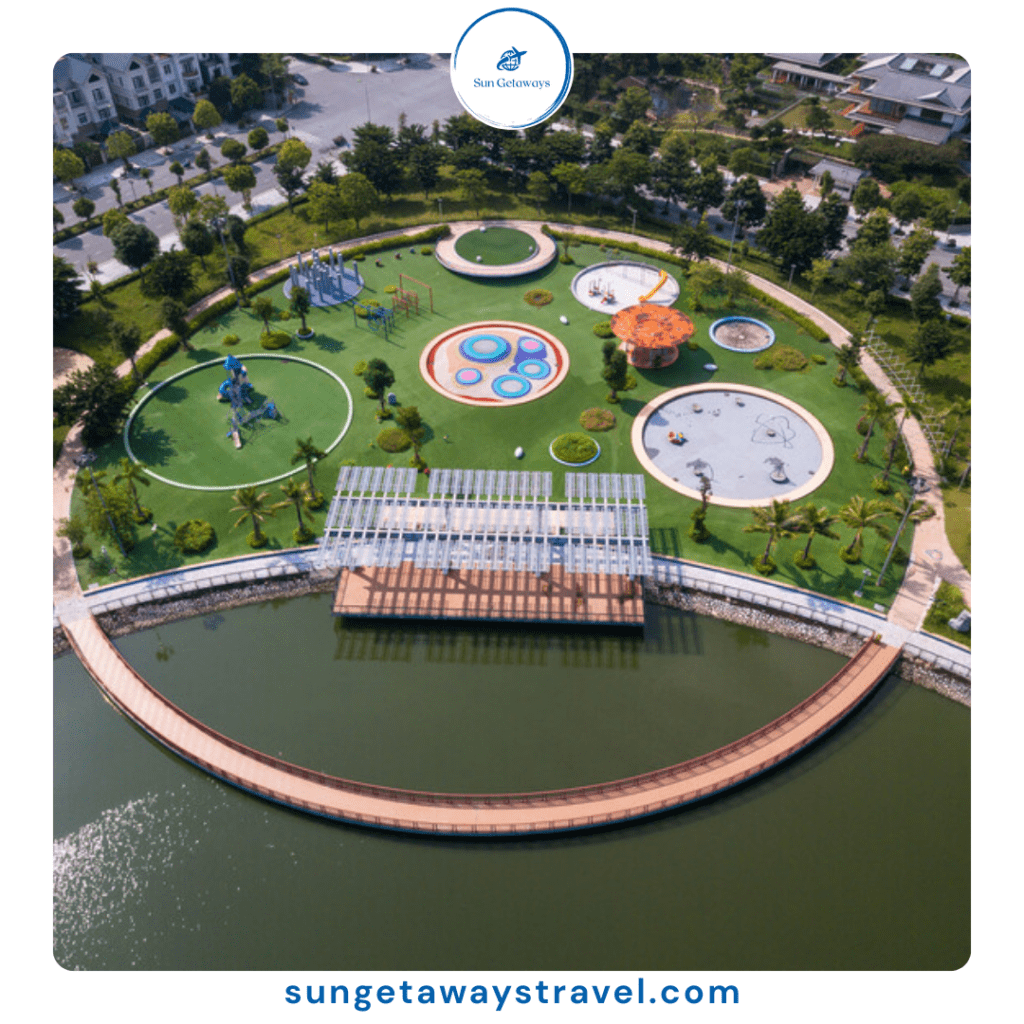
Vietnam astronomy park is located in Ha Dong District, Hanoi, within a planned urban development area that emphasizes green space and education. Its location allows easy access from central Hanoi while avoiding the crowds typically found in inner-city attractions.
📍 Location Highlights
- Address: Dương Nội Ward, Hà Đông District, Hanoi. (Approximately 30–40 minutes from Hanoi Old Quarter)
- Situated near residential and educational zones
- Easy to combine with other Hanoi day trips.
🚗 Transportation Options
- Taxi or ride-hailing apps (most convenient, like Grab and Xanh SM).
- Private car for families or groups
- School buses for educational visits
Because the park is not yet over-commercialized, signage and information may be limited—planning ahead improves the experience.
👉 If you’re traveling with family or a school group, Sun Getaways Travel can help arrange transportation and integrate Vietnam astronomy park into a well-paced Hanoi itinerary.
Inside Vietnam Astronomy Park: Main Zones Explained
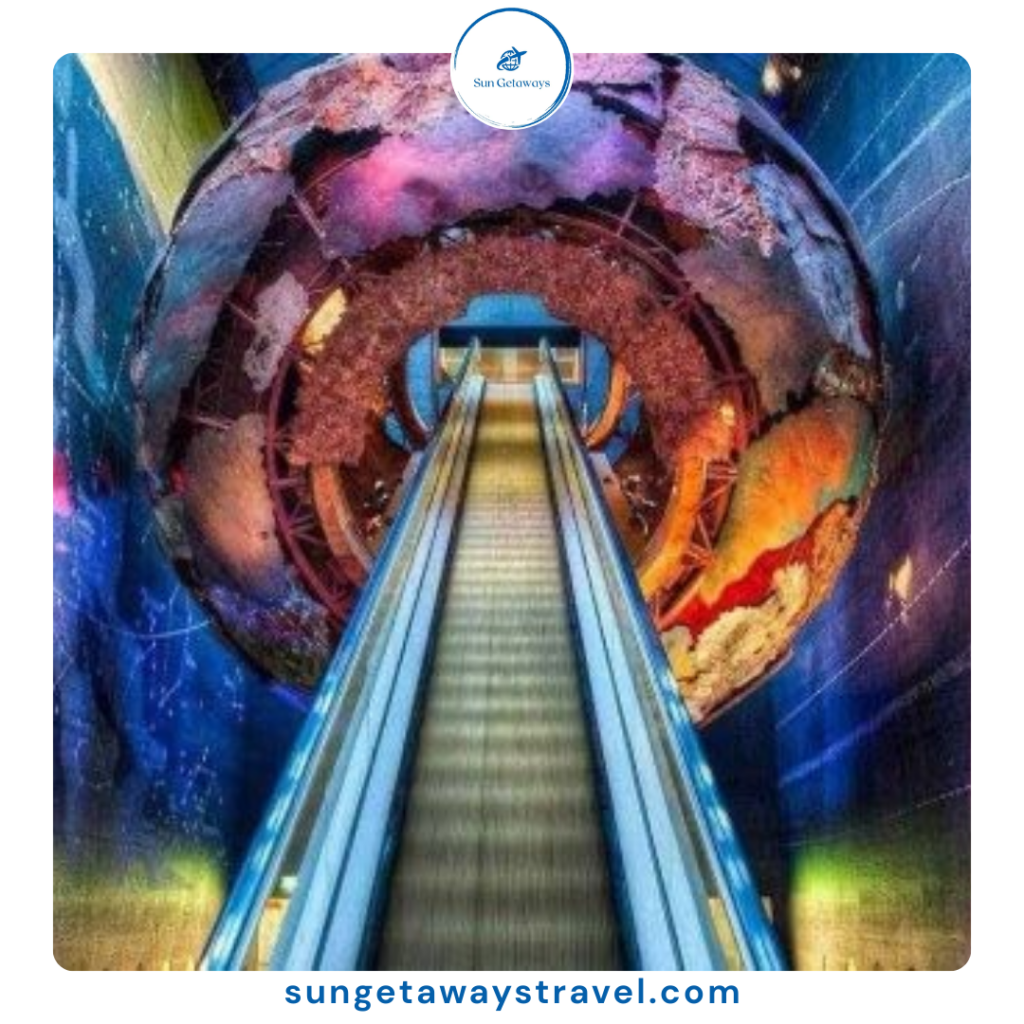
Spanning over 12 hectares in the Duong Noi Urban Area (Ha Dong, Hanoi), the Vietnam Astronomy Park is the largest of its kind in Southeast Asia. Rather than overwhelming visitors with dense jargon, the park organizes learning into immersive, thematic zones designed to spark curiosity through play and visual storytelling.
Here is a breakdown of the must-see zones:
- 💥 Big Bang Square: Features the Big Bang Tower, an architectural landmark that widens toward the sky to symbolize the birth and expansion of the universe.
- 🪐 Solar System Square: A family-friendly zone with scaled planet models and educational signage illustrating the vast distances and sizes within our cosmic neighborhood.
- 🌀 Milky Way Garden: A spiral labyrinth representing our galaxy. If you enjoy the outdoors, you might also be interested in stargazing in Vietnam in more remote areas.
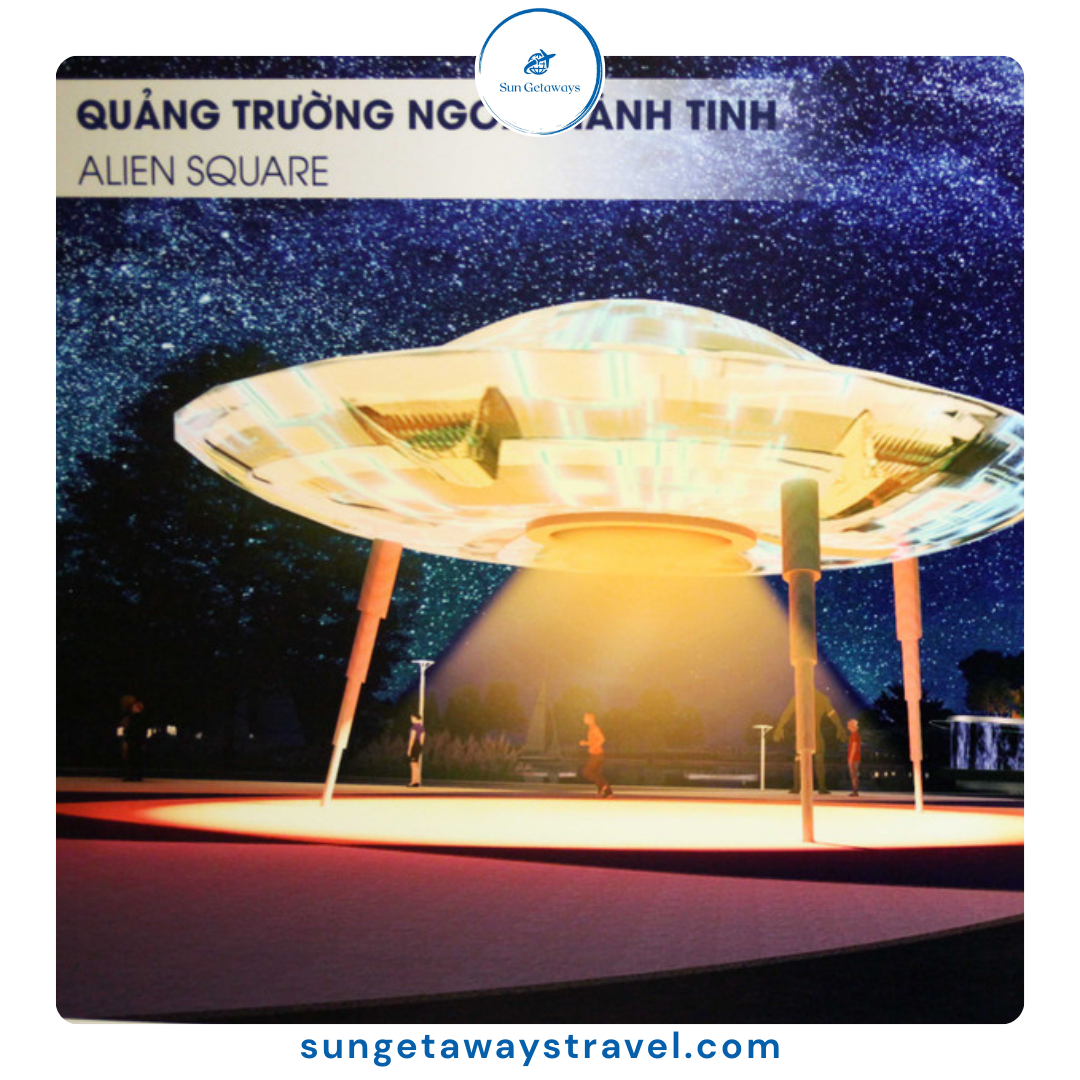
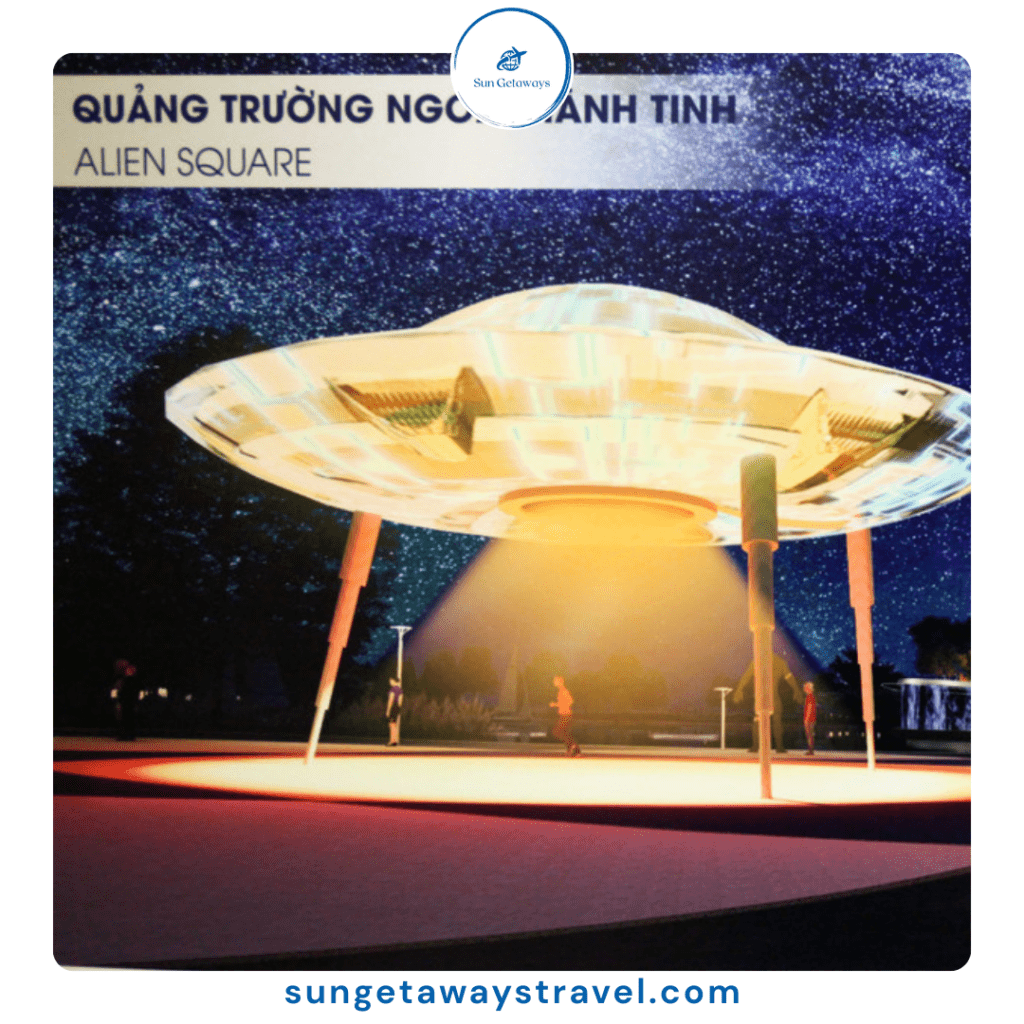
- 👽 Alien Square & UFO Zone: A children’s playground featuring UFO models, alien sculptures, and topography mimicking the surfaces of Mars and the Moon.
- ♊ Zodiac Square: A circular area showcasing the 12 zodiac constellations. It features interactive night lighting, making it a popular spot for photography.
- 🕳️ Black Hole Pool: Located by the lake, this area uses visual effects to simulate gravitational pull, simplifying complex physics through a stunning, tangible experience.
Beyond the Park: Other Top Vietnam Astronomy Attractions 🌌
If you are a true space enthusiast, your journey doesn’t have to end at the park. Vietnam has recently expanded its scientific infrastructure, offering several world-class facilities:
| Attraction | Location | Best For… |
| Vietnam Space Museum | Hoa Lac Hi-Tech Park, Hanoi | The most modern space museum in the country; inaugurated in late 2025. |
| Nha Trang Observatory | Hon Chong, Nha Trang | Stargazing by the sea and educational planetarium shows. |
| Hoa Lac Observatory | Hanoi outskirts | Scientific research and high-powered telescope observations. |
| Fansipan Summit | Sapa | High-altitude stargazing above city lights. |
Interactive Learning: Why the Park Appeals to All Generations
Unlike conventional museums, the Vietnam Astronomy Park excels by focusing on “edutainment”—a blend of education and entertainment. It is arguably the most interactive of all Vietnam astronomy attractions, making science accessible to everyone.
🧒 For Children:
- Active Learning: Encourages curiosity through physical exploration rather than rote memorization.
- STEM Foundation: Sparks early interest in Science, Technology, Engineering, and Math.
- Kinesthetic Education: Uses physical movement to explain abstract ideas like orbits, similar to the active nature of trekking in Vietnam.
✨ For Adults:
- Jargon-Free Science: Complex concepts are explained through visual storytelling, making learning intuitive even for non-scientists.
- Intellectual Stimulation: Encourages deep reflection on the scale of our galaxy and the natural beauty of Vietnam.
- Aesthetic Appeal: The park’s futuristic architecture and themed zones (like the Big Bang Square) offer stunning photography spots for those less interested in the technical data.
Vietnam Astronomy Attractions Compared: Why This Park Stands Out
To understand why the Vietnam Astronomy Park is a must-visit, it helps to see how it compares to other science-focused sites in the country.
| Feature | Vietnam Astronomy Park | Traditional Planetariums | General Science Museums |
| Learning Environment | Outdoor, open-air learning | Indoor, seated theater | Indoor galleries |
| Hands-on Interaction | ✅ Extensive & tactile | ❌ Minimal/Passive | ⚠️ Moderate |
| Family-Friendly | ✅ Highly (play-based) | ⚠️ Limited for toddlers | ⚠️ Moderate |
| Exploration Style | ✅ Self-paced | ❌ Scheduled shows | ⚠️ Partial |
| Visual Scale | 6-hectare landscape | Projection screen | Static exhibits |
Best Times to Visit and Practical Tips for a Smooth Experience
The Vietnam Astronomy Park is located in the Duong Noi Township (Ha Dong District, Hanoi). Planning your visit around Hanoi’s weather and crowd patterns is essential for a comfortable trip.
🕒 Recommended Visiting Times
- Weekday Mornings: The quietest time, ideal for families who want to explore without school groups.
- Late Afternoons: The park takes on a magical atmosphere as the themed lighting begins to glow, offering a unique night activity.
- Note: Weekends can be crowded with local families, so arrive early if you visit on a Saturday or Sunday.
🌤 Seasonal & Practical Preparation
- Dry Season (Oct–Apr): The most comfortable weather for exploring the outdoor zones.
- Hot Months (May–Aug): Bring sun protection, hats, and plenty of water, as shade can be limited in the middle of the park.
- Footwear: Wear comfortable shoes; you will cover a lot of ground. Check our Vietnam packing list for more tips.
- Language Tip: While many exhibits are visual, some signage is primarily in Vietnamese. Using a translation app or having a guide can enhance the experience for older children.

For international visitors, contact us for FREE assist with guided visits or combine a trip to the Vietnam Astronomy Park with other family-friendly attractions in Hanoi for a seamless, stress-free day plan.
The Ultimate Hanoi Family Itinerary: Combining Science and Culture
To make the most of your day, consider pairing the Vietnam Astronomy Park with other local experiences. Emma, our senior travel consultant with 12 years of experience, suggests this balanced approach:
Emma’s Expert Recommendation:
“I always suggest the Astronomy Park as a ‘brain-break’ for families. After a few days of historical temples and crowded markets, children need space to run and engage with something modern. Pairing the park with a nearby traditional craft village creates a perfect ‘Old vs. New’ theme for your day.”
Sample Family Day Plan:
- Morning: Explore the Vietnam Astronomy Park while the air is fresh.
- Lunch: Enjoy local “Phở” or “Bún Chả” in the Ha Dong area.
- Afternoon: Visit the Van Phuc Silk Village (just 10 mins away) to see traditional weaving.
- Evening: Return to the city center for a traditional Water Puppet Show.

FAQs: Visiting the Vietnam Astronomy Park
Currently, the park is often open to the public for free as part of the township’s infrastructure, though some specific indoor exhibition areas may occasionally have separate fees or restricted hours.
It is approximately 12–15km from the Old Quarter. Depending on traffic, a taxi or Grab ride will take about 30–45 minutes.
Yes! While they may not understand the science, the park features many “space-themed” playgrounds and open spaces that act as a giant, safe park for toddlers.
The park is most beautiful at dusk when the lights turn on, but most visitors find it easiest to explore the educational signs and exhibits during daylight hours.
Vietnam Astronomy Park is a standout destination that perfectly blends modern science with interactive fun. It offers a unique “edutainment” experience, making the mysteries of the universe accessible to families and travelers of all ages. Whether for education or exploration, a visit to this cosmic landscape is a must-see highlight of any Hanoi itinerary.


Related Tour

6 Days Muslim Hanoi Sapa Trang An & Halong Bay


0 Reviews

4 Days Guided Tour Of Northern Vietnam
12 Reviews

Hoi An Sunrise Fish Market Tour
0 Reviews

Travel eSIM: 5GB/Day – 30 Days
0 Reviews

18 Days Vietnam Family Holiday Tour
0 Reviews
Ask a question
Leave a Comment (0)
No questions yet. Be the first to ask a question!
See related Posted
Luxury Golf Resorts in Vietnam – Elite Golf Travelers

Vietnam is increasingly recognized as a premier golf destination in Asia, therefore luxury golf…
Macrame in Vietnam: The Revival of Knot Art in Contemporary Craft Culture

Macrame in Vietnam reflects the country’s growing engagement with contemporary handmade culture, where global…
Vietnamese Musical Instrument Craft: Traditional Instrument Making in Vietnam

Vietnamese musical instrument craft reflects a long-standing relationship between sound, material, and cultural memory.…
Traditional Vietnamese Kite Art: History, Craftsmanship, and Cultural Meaning

Traditional Vietnamese kite art is a living expression of folk creativity, community values, and…
Vietnamese Folk Masks: Tradition, Symbolism & Cultural Meaning

Vietnamese folk masks are a distinctive form of traditional art that reflects the spiritual…
Vietnamese Embroidery Art: Traditional Craftsmanship & Cultural Meaning

Vietnamese embroidery art is a refined traditional craft that reflects patience, cultural memory, and…