






Milky Way Hunting in Vietnam: Top Destinations to Capture the Galaxy in Southeast Asia
 Dan Vy
  3 min. to read
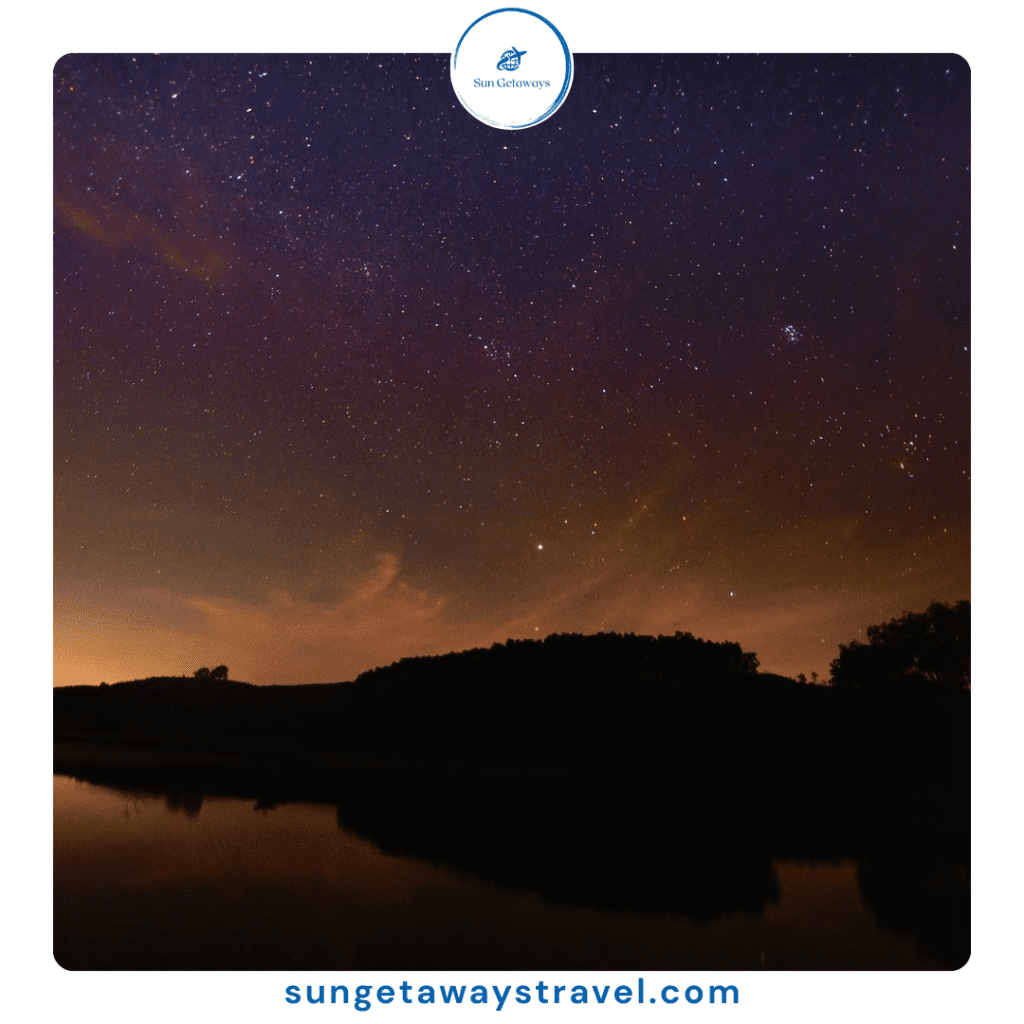
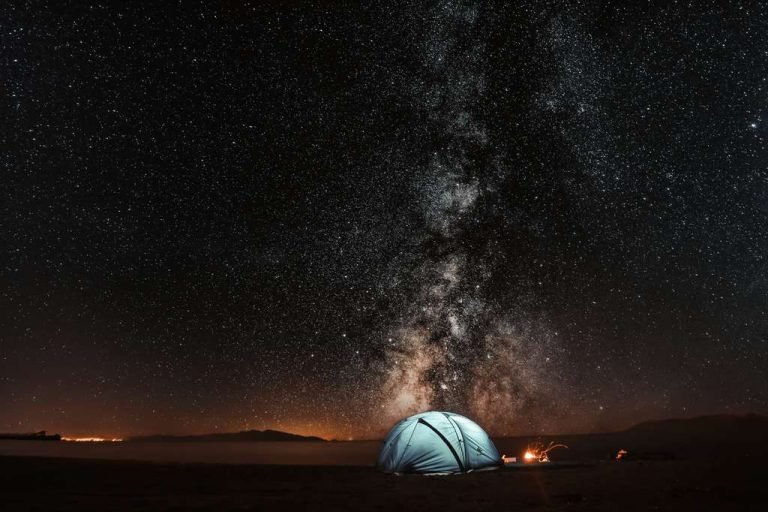
 Vietnam is not the first place that comes to mind when people think about stargazing—but for photographers and night-sky lovers, it is one of Southeast Asia’s most underrated destinations. With diverse landscapes, remote highlands, and improving accessibility, Milky Way hunting in Vietnam has become increasingly popular among travelers seeking both adventure and astrophotography opportunities.
This guide reveals the best locations, ideal seasons, and expert tips to help you capture the galaxy at its finest.
Key Takeaways
- Vietnam is an emerging destination for Milky Way hunting in Vietnam due to its diverse landscapes and minimal light pollution.
- The best time for Milky Way photography in Vietnam is from March to September, with specific conditions varying by month.
- Top locations include Ha Giang for dark skies, Ninh Binh for limestone karsts, Phong Nha for jungle landscapes, Da Lat for pine forests, and Mui Ne for coastal views.
- Effective preparation, such as understanding weather patterns and planning around moon phases, enhances the Milky Way hunting experience in Vietnam.
- Vietnam offers unique astrophotography opportunities that feel less commercialized, making images more original and valuable.

Why Vietnam Is an Emerging Destination for Milky Way Photography
Vietnam’s growing reputation for astrophotography is no coincidence. The country stretches across multiple latitudes, giving photographers access to both northern and southern sky views depending on location. Many rural regions still experience minimal light pollution, especially in mountainous and coastal areas far from major cities.
Another advantage of Milky Way hunting in Vietnam is landscape diversity. You can frame the galaxy above rice terraces, limestone karsts, sand dunes, pine forests, or ancient temples—creating images that feel uniquely Southeast Asian. Compared to heavily photographed destinations like New Zealand or the Atacama Desert, Vietnam still feels fresh and visually distinctive.
Best Time of Year for Milky Way Hunting in Vietnam
Timing is critical for successful Milky Way photography Vietnam, and Vietnam’s climate adds an extra layer of planning.
In general, the best season runs from March to September, when the galactic core is visible in the southern sky. However, weather patterns vary by region:
- March–May: Clear skies, moderate humidity, ideal for both North and Central Vietnam
- June–August: Peak Milky Way visibility, but watch for clouds and rain in mountainous areas (the height of the Vietnam rainy season)
- September: Last strong viewing window before the core disappears after sunset
Moon phase matters just as much as season. New moon nights—or shooting during moonset—offer the darkest skies. Many experienced photographers plan trips around lunar calendars rather than fixed travel dates.
Top Destinations for Milky Way Hunting in Vietnam
Vietnam’s night skies are best enjoyed far from major cities. Below are the most reliable regions for Milky Way hunting in Vietnam, chosen for darkness, accessibility, and foreground potential.
Ha Giang: Vietnam’s Ultimate Milky Way Landscape
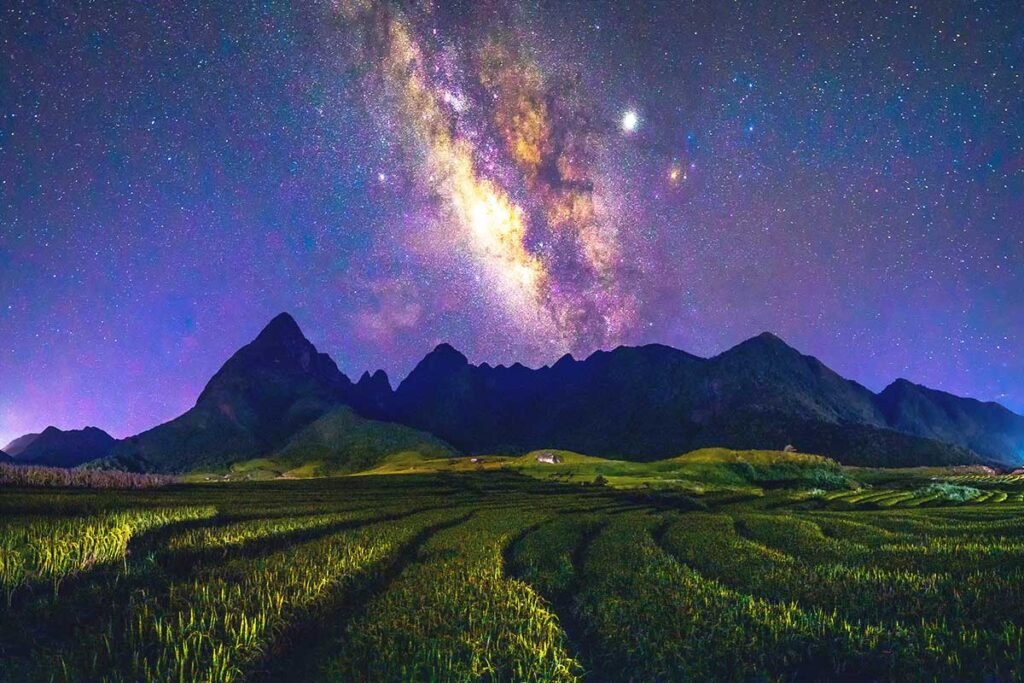
Ha Giang is widely regarded as the best destination for Milky Way photography Vietnam. Located in Vietnam’s far north, this mountainous province offers extremely low light pollution, dramatic limestone peaks, and winding mountain roads.
The Milky Way often appears diagonally across the sky here, creating stunning compositions over valleys and ridgelines. Locations such as Ma Pi Leng Pass, Lũng Cú Flag Tower area, and remote ethnic villages provide excellent vantage points.
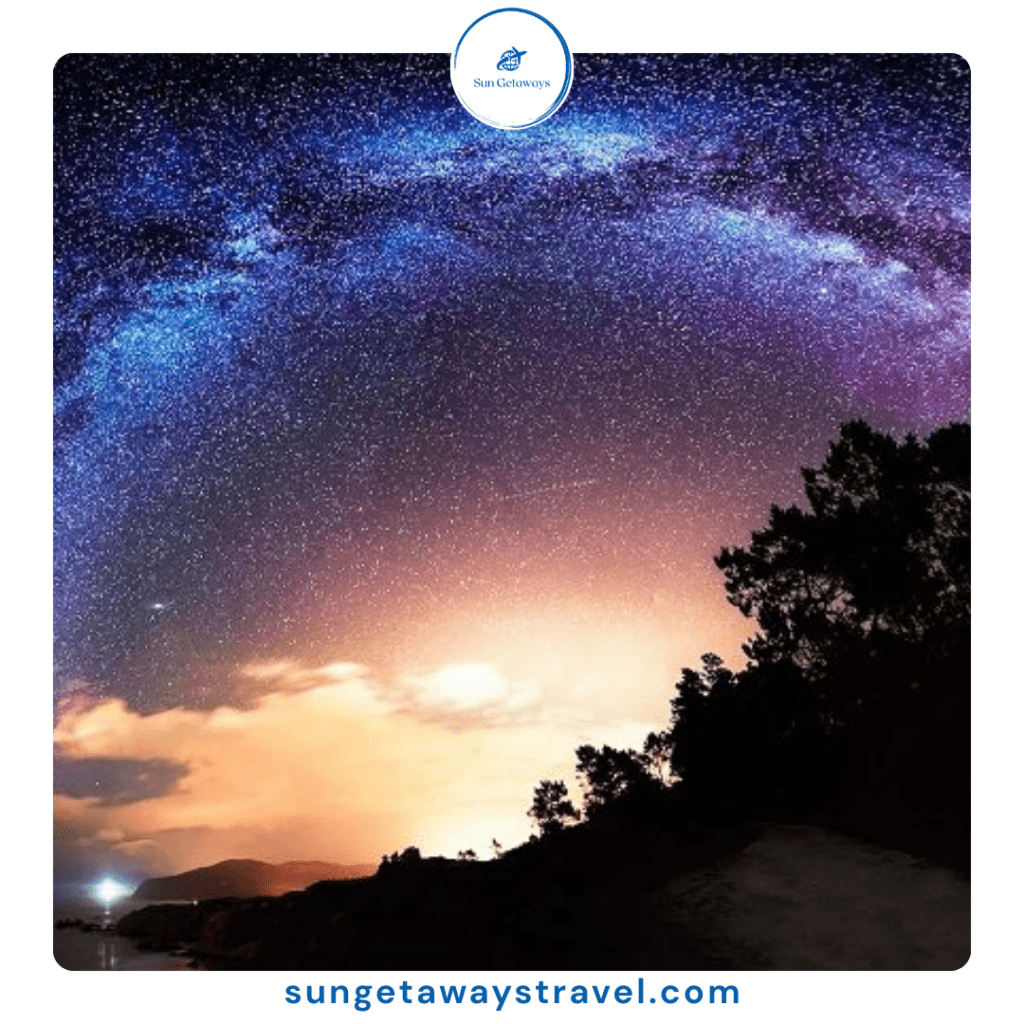
What makes Hà Giang special is not just the darkness, but scale. The galaxy feels massive against the rugged terrain, giving images a cinematic quality rarely found elsewhere in Southeast Asia. This region is a prime spot for northern Vietnam trekking and adventure travel.
If you’re planning a photography-focused trip to Ha Giang, Sun Getaways Travel can help arrange safe transport, remote homestays, and flexible schedules aligned with moon phases—essential for night shooting in this region.
Ninh Binh: Limestone Karsts Under the Stars
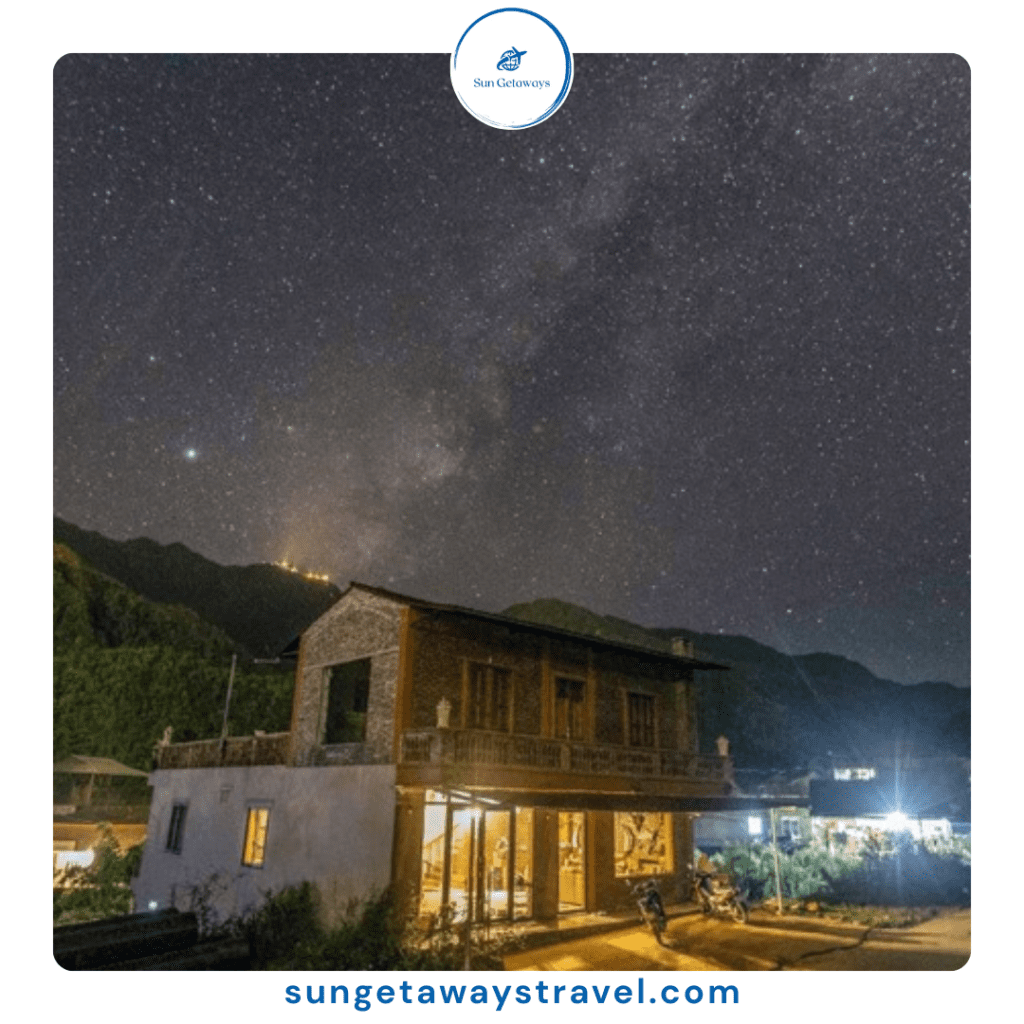
Often called “Ha Long Bay on land,” Ninh Binh offers a surprisingly good environment for Milky Way hunting in Vietnam—especially if you move beyond the main tourist areas.
Rural zones near Vân Long Nature Reserve and Tràng An outskirts have relatively low light pollution. The Milky Way can be framed above karst towers, rivers, and rice fields, producing images that blend natural drama with cultural elements.
While skies are not as dark as Hà Giang, Ninh Bình’s accessibility makes it ideal for photographers with limited time or those already traveling through Northern Vietnam.
Phong Nha – Ke Bang: Jungle, Caves, and Dark Skies
Phong Nha is best known for its massive cave systems, but it is also one of Central Vietnam’s top locations for Milky Way photography Vietnam.
The national park lies far from large cities, resulting in excellent night-sky visibility. Forest clearings, riversides, and cave entrances create striking foregrounds. During dry season (April–August), cloud cover is relatively low, making this one of the most consistent regions for stargazing.
Another advantage is infrastructure: photographers can stay in eco-lodges or homestays that understand early mornings and late nights, which is rare in remote areas.

Da Lat: Pine Forests and Cool Mountain Nights
Da Lat’s altitude and cooler climate make it a comfortable location for Milky Way hunting in Vietnam, especially for travelers who prefer forest landscapes over rocky mountains.
While light pollution has increased in the city itself, surrounding areas such as Tuyền Lâm Lake, coffee plantations (which offer a fascinating Vietnam coffee tour), and rural hills still offer dark skies. The Milky Way often rises above pine silhouettes, creating a softer, more atmospheric aesthetic compared to northern mountain regions.
Da Lat is also ideal for beginners, thanks to good roads, accommodation options, and relatively stable weather during dry months.
Mui Ne & Southern Coastal Areas: Milky Way Over Sand Dunes
Southern Vietnam is often overlooked for astrophotography, but coastal areas like Mũi Né offer unique opportunities for Milky Way photography Vietnam.
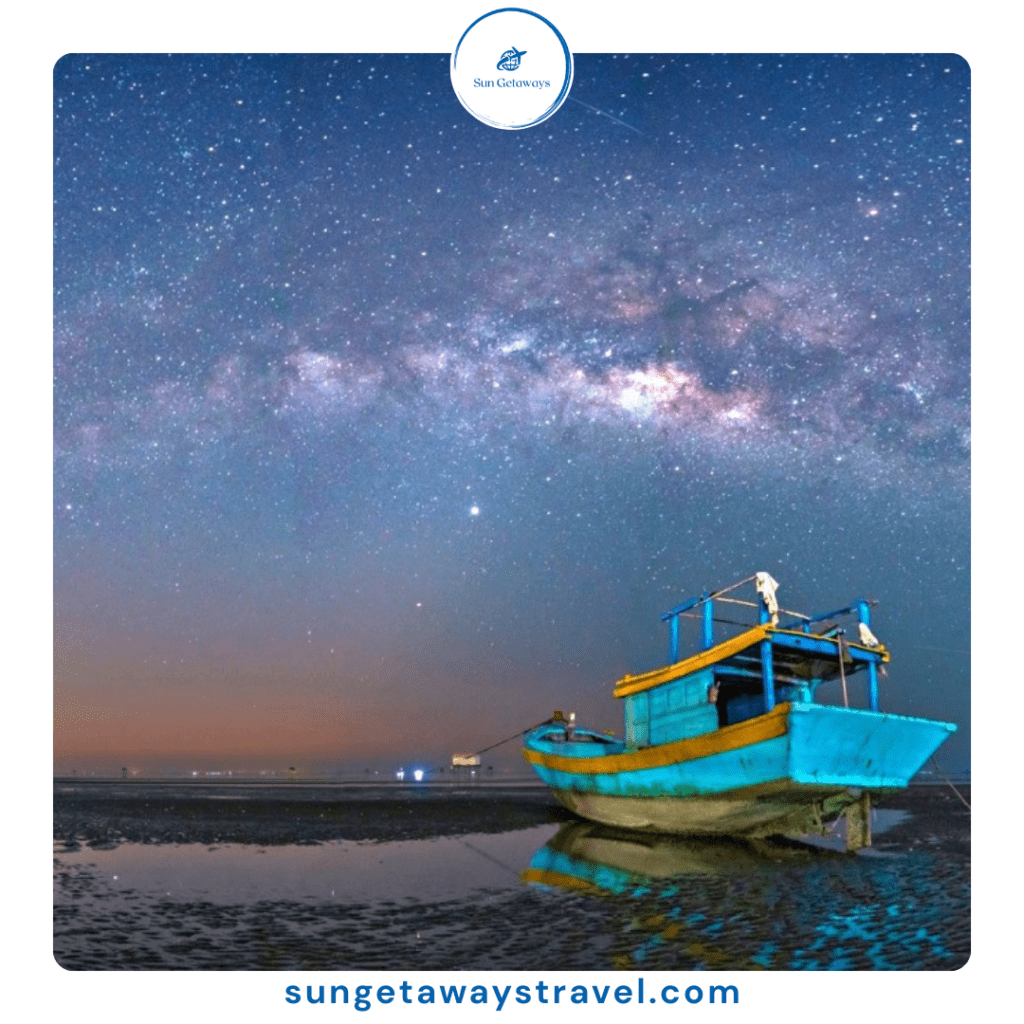
The sand dunes outside town experience minimal light interference, and the flat horizon allows clear views of the galactic core. Shooting the Milky Way above rolling dunes or fishing boats creates compositions that feel both surreal and distinctly Vietnamese.
Humidity can be higher in the south, so lens fog prevention and careful timing are important.
Camera Settings and Gear Tips for Milky Way Photography in Vietnam
While professional gear helps, successful Milky Way hunting in Vietnam depends more on preparation than expensive equipment.
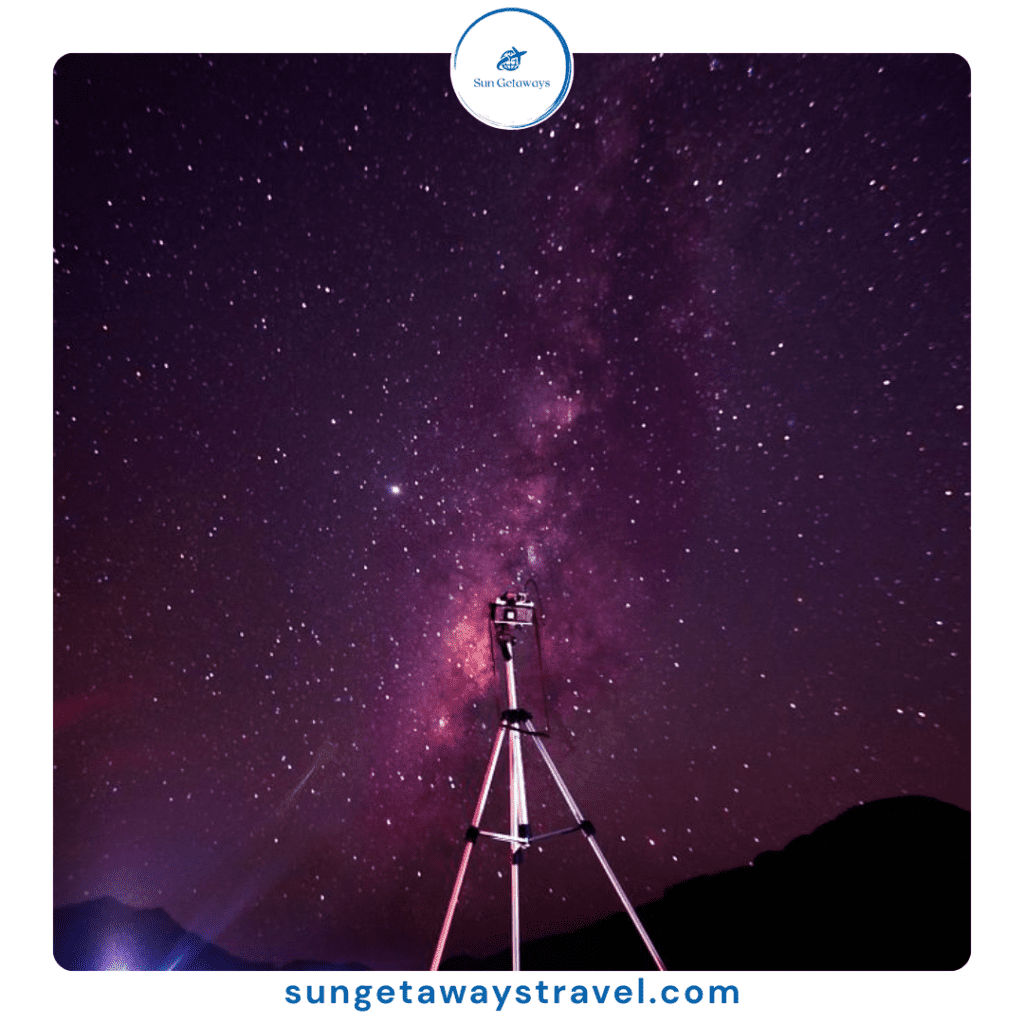
Use a wide-angle lens (14–24mm equivalent) with an aperture of f/2.8 or wider. ISO typically ranges from 1600–3200 depending on light pollution and sensor performance. Shutter speed should stay within the “500 rule” to avoid star trails.
Tripods are essential, as are headlamps with red-light mode to preserve night vision. In humid regions, silica gel packs and lens heaters can prevent condensation—an often overlooked challenge in Vietnam. For this type of travel, having the right Vietnam travel electronics is key.
Expert Insight: Emma on Planning Milky Way Trips in Vietnam
Emma, a travel consultant with over 12 years of experience in Vietnam tour planning and outdoor expeditions, emphasizes timing and logistics:
“Many travelers underestimate how important access and flexibility are for Milky Way photography in Vietnam. Roads, weather, and moon cycles must align. The most successful trips I’ve planned allow at least two nights in one location, so photographers aren’t pressured by clouds or unexpected conditions.”
Her experience highlights a key truth: Milky Way hunting in Vietnam rewards patience and thoughtful planning more than rushing from place to place.
Common Mistakes to Avoid When Hunting the Milky Way in Vietnam
One of the biggest mistakes photographers make is staying too close to urban centers. Even small towns can introduce unwanted light pollution. Always scout locations during the day and confirm access routes.
Another common issue is ignoring weather micro-patterns. Mountain regions may be clear in one valley but clouded in the next. Local advice—from homestay owners or guides—can make a major difference.
Finally, many photographers overlook safety. Shooting at night near cliffs, rivers, or remote roads requires caution, proper footwear, and awareness of surroundings. Always be aware of Vietnam travel safety protocols.
Should You Join a Guided Photography Trip?
While independent travel works for experienced photographers, guided trips offer advantages—especially in remote areas.
A guided experience can help with location scouting, transport, safety, and timing. Sun Getaways Travel occasionally supports photography-focused itineraries, connecting travelers with local drivers and accommodations that understand night-shooting needs, without turning the experience into a rigid tour.
Why Vietnam Stands Out for Milky Way Photography in Southeast Asia
Compared to neighboring countries, Vietnam offers a rare mix of accessibility and variety. You can capture the Milky Way above mountains, coastlines, forests, and cultural landmarks within a single trip.
More importantly, Milky Way hunting in Vietnam still feels undiscovered. Images from Vietnam stand out precisely because they are less common—making them valuable not just artistically, but professionally for photographers seeking originality.
Conclusion: Is Vietnam Worth It for Milky Way Hunters?
Absolutely. Vietnam may not yet be famous for astrophotography, but that is precisely its advantage. With careful timing, the right locations, and thoughtful planning, Milky Way hunting in Vietnam delivers results that rival far more established destinations. Whether you are a passionate photographer or a traveler chasing unforgettable night skies, Vietnam offers a galaxy worth waiting for.
FAQs About Milky Way Hunting in Vietnam
Yes. Many locations such as Da Lat and Ninh Binh are beginner-friendly, with easy access, safe viewpoints, and clear night skies during the right season.
The best months are from April to August, when the Milky Way core is most visible after sunset and weather conditions are generally favorable.
No. A basic DSLR or mirrorless camera, a wide-angle lens, and a sturdy tripod are enough to start Milky Way photography Vietnam successfully.
Ha Giang currently offers the darkest skies and most dramatic landscapes for Milky Way hunting in Vietnam, especially in remote mountain passes.
Yes. In low light pollution areas and during new moon nights, the Milky Way can be clearly visible to the naked eye, especially in northern and central regions.


Related Tour

11-Day Taste of Vietnam From North to South


31 Reviews

14-Day Explore Vietnam Local Food
20 Reviews


Ventures Through Vietnam 14 Days
25 Reviews
10-Day Serenity in Vietnam: Honeymoon Haven
10 Reviews
5-Day Highlights of Central Vietnam
27 Reviews
Ask a question
Leave a Comment (0)
No questions yet. Be the first to ask a question!
See related Posted
Luxury Golf Resorts in Vietnam – Elite Golf Travelers

Vietnam is increasingly recognized as a premier golf destination in Asia, therefore luxury golf…
Macrame in Vietnam: The Revival of Knot Art in Contemporary Craft Culture

Macrame in Vietnam reflects the country’s growing engagement with contemporary handmade culture, where global…
Vietnamese Musical Instrument Craft: Traditional Instrument Making in Vietnam

Vietnamese musical instrument craft reflects a long-standing relationship between sound, material, and cultural memory.…
Traditional Vietnamese Kite Art: History, Craftsmanship, and Cultural Meaning

Traditional Vietnamese kite art is a living expression of folk creativity, community values, and…
Vietnamese Folk Masks: Tradition, Symbolism & Cultural Meaning

Vietnamese folk masks are a distinctive form of traditional art that reflects the spiritual…
Vietnamese Embroidery Art: Traditional Craftsmanship & Cultural Meaning

Vietnamese embroidery art is a refined traditional craft that reflects patience, cultural memory, and…