






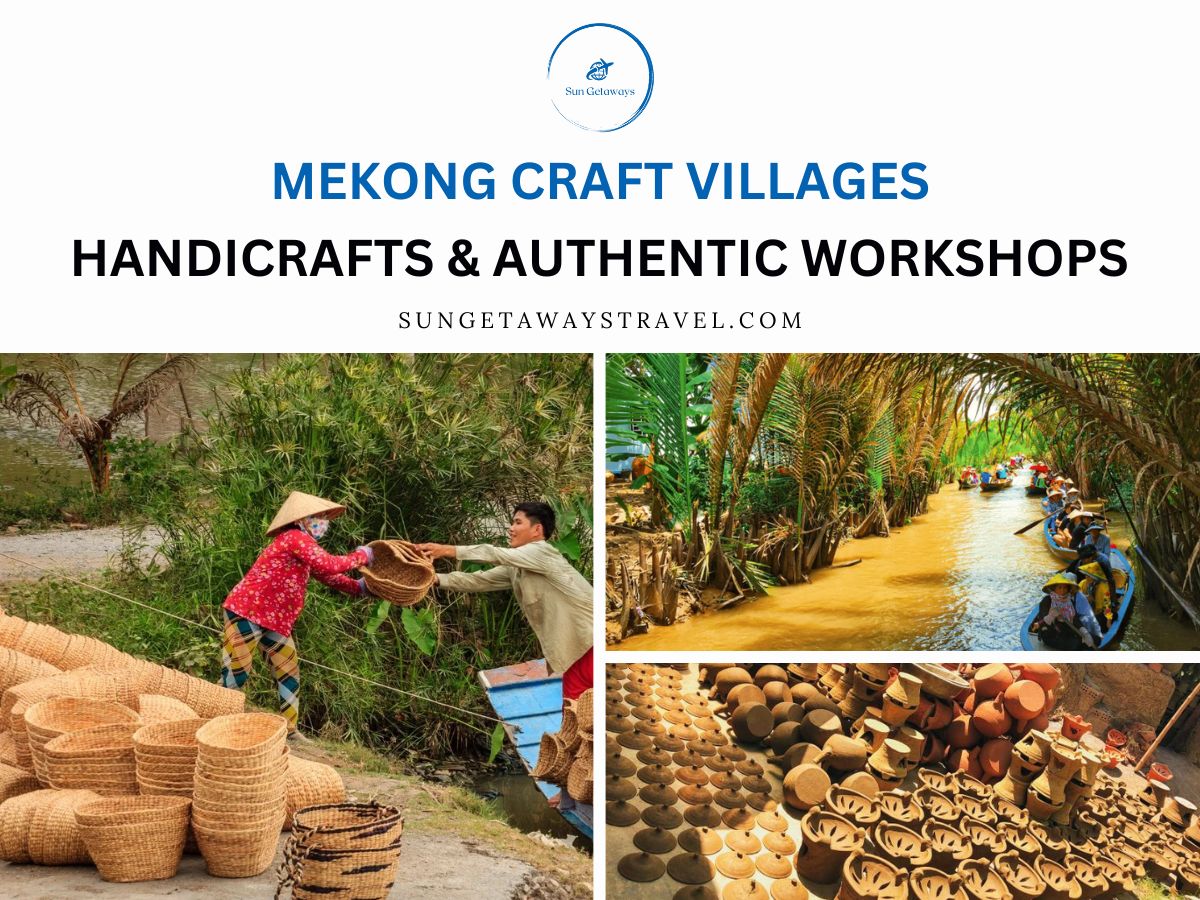
Mekong Craft Villages: Discover Traditional Handicrafts & Authentic Workshops in the Mekong Delta
 PhamDuong
  3 min. to read
 Beyond floating markets and river cruises, Mekong craft villages offer travelers a deeper connection to local life through hands-on creativity and centuries-old traditions. From weaving mats and baskets to shaping clay and coconut wood, these villages preserve skills passed down through generations. In this guide, you’ll discover where to find the most authentic Mekong handicraft workshops, what to expect when visiting, and how to include craft villages naturally in your Mekong Delta journey.
Key Takeaways
- Mekong craft villages offer hands-on experiences and preserve traditional skills using local materials.
- You can find these villages in areas like Can Tho, Ben Tre, and Vinh Long, each known for unique crafts.
- Participating in Mekong handicraft workshops allows you to learn weaving, pottery, and coconut shell carving directly from artisans.
- These workshops often fit well into a broader Mekong Delta itinerary, enhancing your cultural and culinary experiences.
- Visiting Mekong craft villages offers a deeper connection to local life, making for a meaningful travel experience.
1. What Are Mekong Craft Villages and Why They Matter
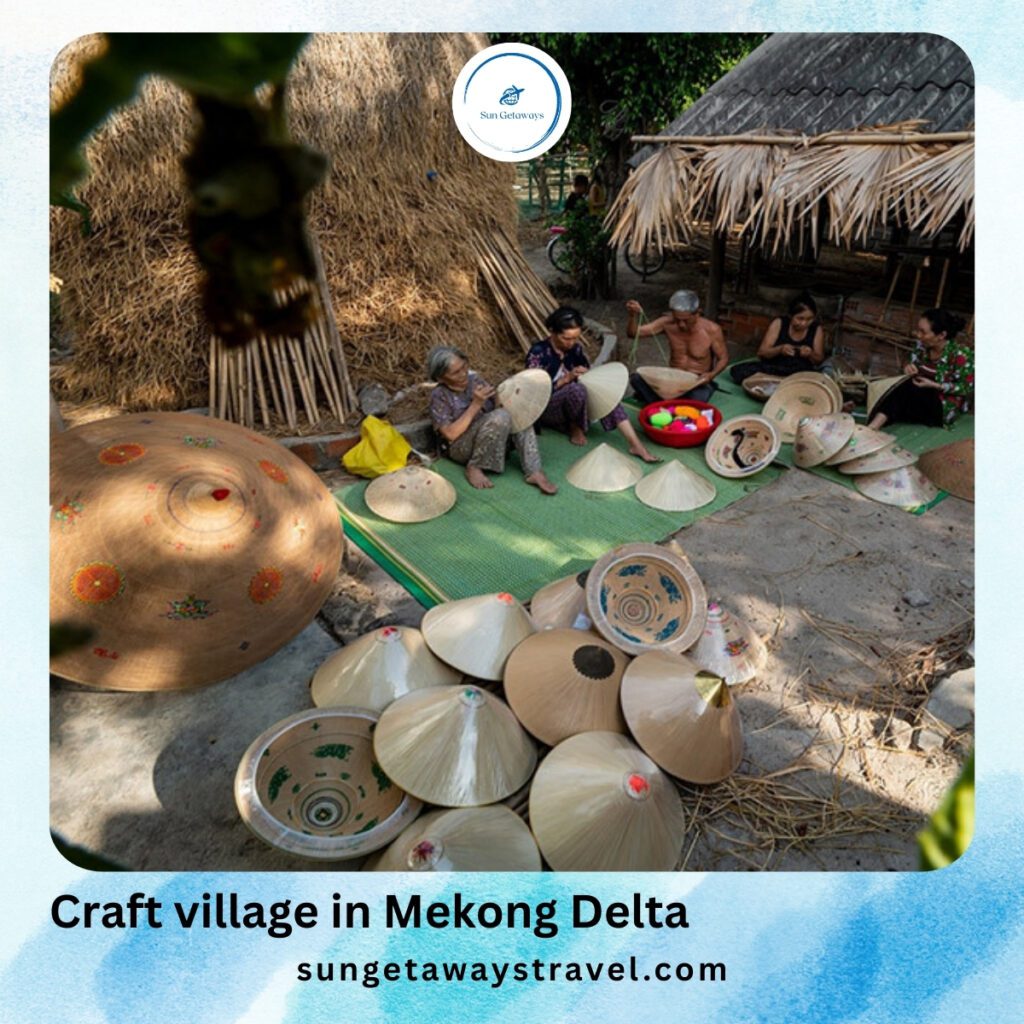
Craft villages are small communities where generations have specialized in creating functional or artistic objects using local materials. Mekong Craft Villages are unique because they evolved alongside rivers and canals, allowing artisans to use water-based materials like sedge, water hyacinth, coconut husk, and clay sourced directly from riverbanks.
When you visit these villages, you step into places where creativity arises from daily life rather than style trends, making them reflective of the region’s identity. Unlike mass-produced souvenirs, products from Mekong handicraft workshops carry stories, local materials, and techniques almost unchanged over time.
For a broader perspective on traditional crafts across Vietnam, see this guide on where to learn traditional crafts in Vietnam.
2. Where to Find Mekong Craft Villages
Because craft villages grew near raw materials and transport routes, you’ll find them scattered across the Mekong Delta. Below are some of the most accessible and active areas:
2.1. Can Tho and Surrounding Rural Areas
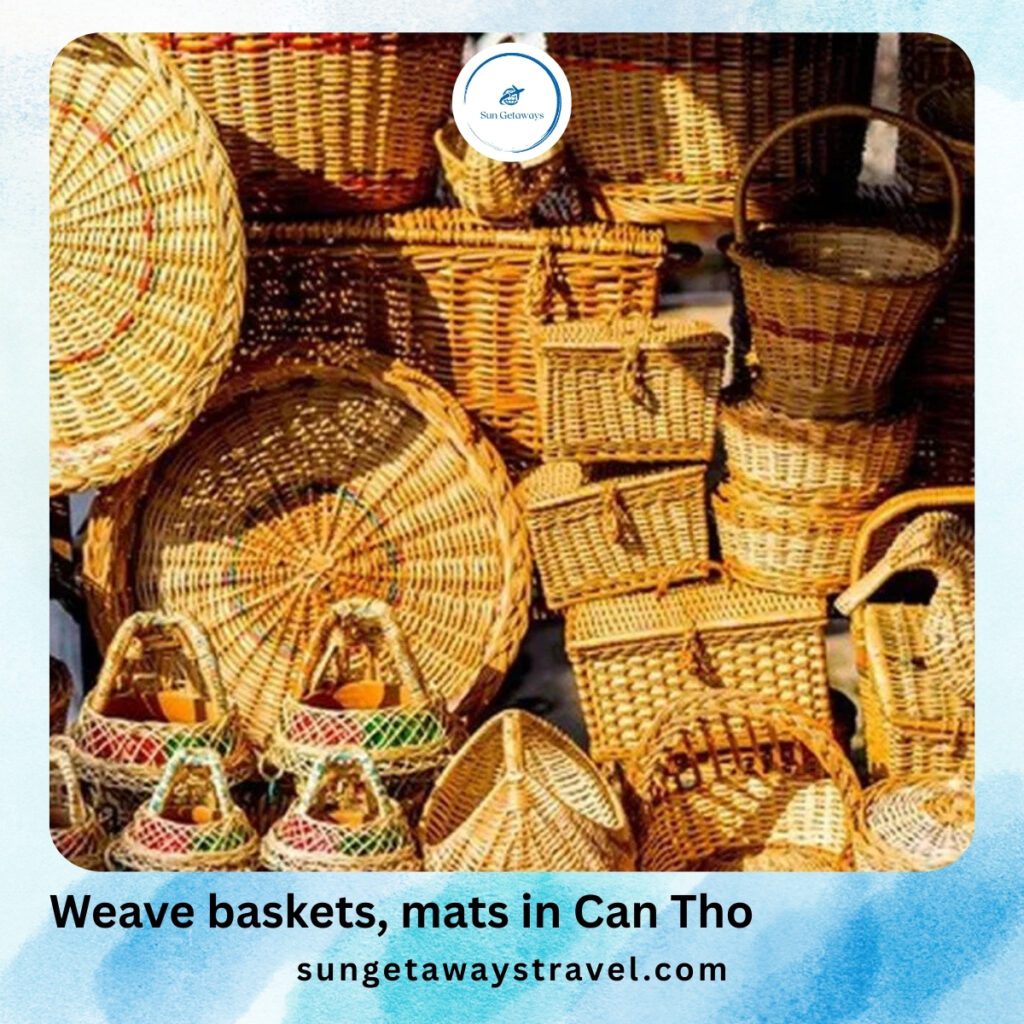
Can Tho’s rural districts are home to short boat rides away from the city’s riverfront. Here, families weave baskets, mats, and household items from natural fibers. For many travelers, a night in Can Tho makes it easy to include craft village visits the next morning before exploring other highlights like Ninh Kieu Wharf in Can Tho.
2.2. Ben Tre – Coconut Craft Heartland
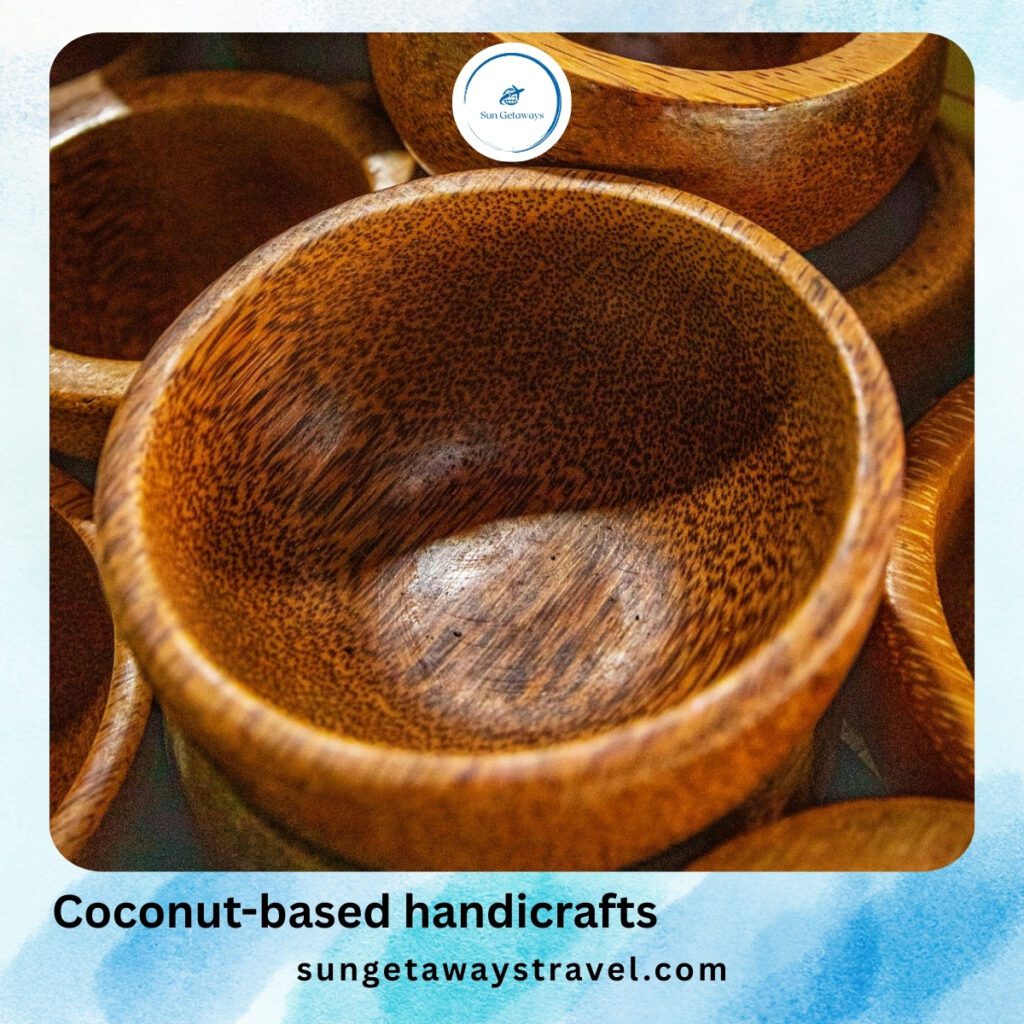
Ben Tre is especially famous for its coconut-based handicrafts — from bowls and spoons to decorative items and small furniture. Many workshops here let visitors try their hands at simple crafting steps, showing how waste wood and husks are repurposed beautifully.
2.3. Vinh Long & Local Pottery Villages
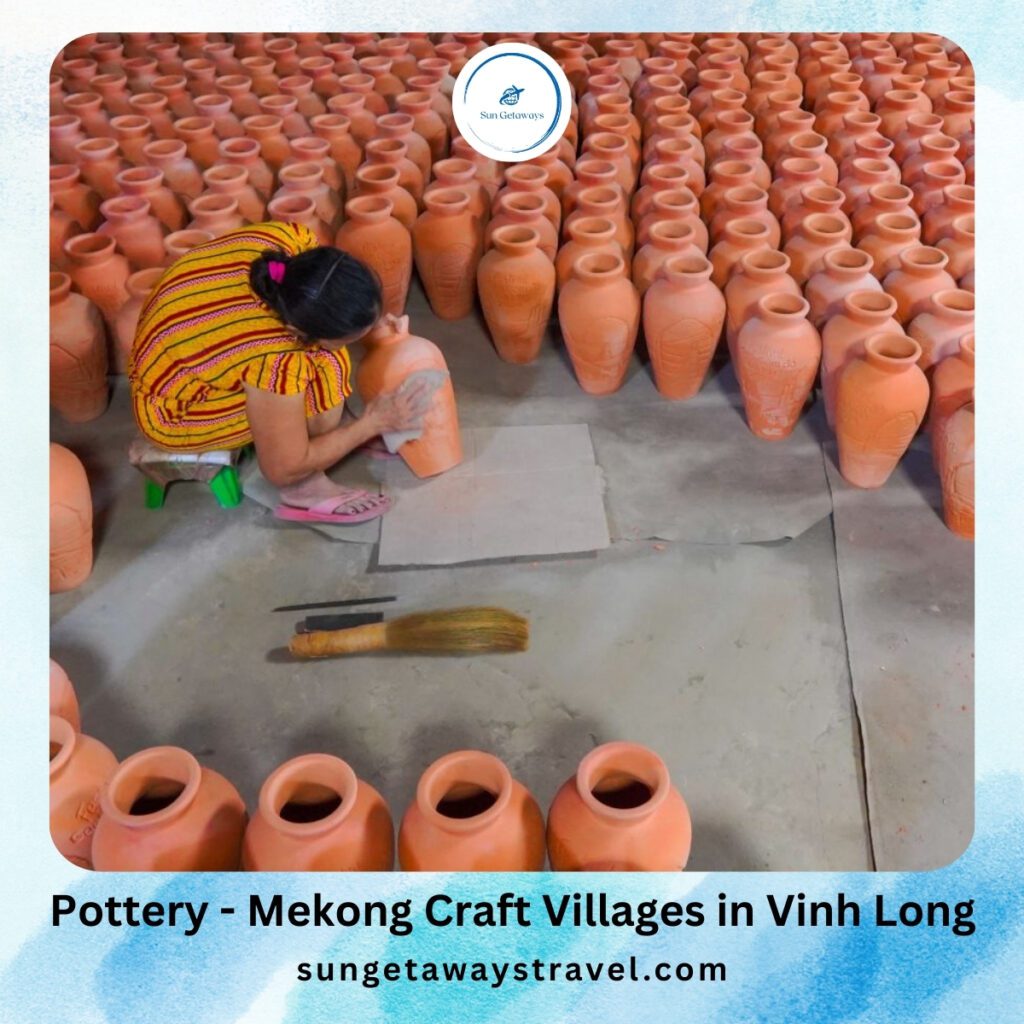
Toward the central Mekong Delta, Vinh Long stands out as a hub for traditional pottery, where the unique qualities of river clay have shaped generations of artisans. Small family-run kiln workshops here produce a variety of items, from functional pots and vases to intricate decorative pieces, reflecting both practical needs and local aesthetics.
These craft villages are often explored as part of a wider Vietnam travel itinerary by Sun Getaways Travel, connecting regional traditions across the country.
3. What to Do in Mekong Handicraft Workshops
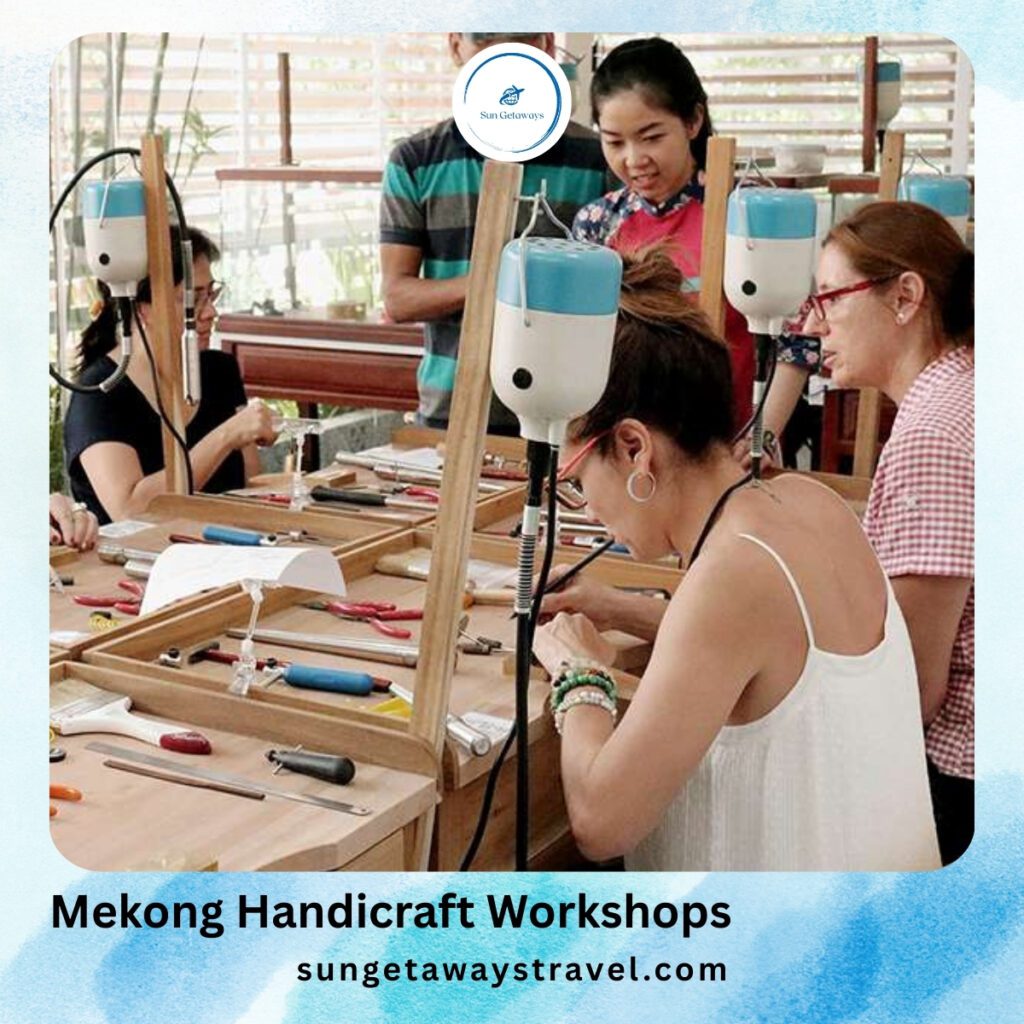
Participating in a Mekong handicraft workshop is an immersive experience that goes far beyond simply observing. It’s about touching, shaping, and truly engaging with traditional techniques. These workshops offer travelers a hands-on way to connect with local culture and appreciate the skill and creativity involved in everyday artisan crafts.
When you join a workshop, you can expect to:
- Learn weaving techniques from experienced artisans using locally sourced fibers, gaining insight into patterns, tools, and cultural significance behind each design.
- Shape clay in traditional pottery workshops, with hands-on guidance through molding, firing, and finishing processes that have been passed down for generations.
- Try your hand at coconut shell carving, polishing, and finishing, creating functional or decorative items while learning traditional motifs and techniques.
- Understand material selection and preparation, including how local resources like bamboo, rattan, or palm leaves are harvested, treated, and prepared before crafting begins.
- Gain a deeper cultural perspective, as artisans often share stories about the history, symbolism, and everyday uses of the items being made, connecting you to the rhythms of Mekong Delta life.
This hands-on approach transforms a simple visit into a meaningful cultural exchange, leaving travelers not only with handmade souvenirs but also with a richer understanding of the Delta’s traditions and creative heritage.
These experiences are particularly meaningful when followed by regional food experiences such as a Mekong Delta food tour, which balances cultural learning with culinary immersion.
4. How Mekong Craft Villages Compare with Craft Destinations Elsewhere
Vietnam’s craft traditions vary widely by region, and Mekong villages contrast intriguingly with those in central and northern parts of the country.
Mekong Craft Villages are rooted in river ecosystems, meaning:
- Materials are primarily water-based — sedge, water hyacinth, clay from riverbanks, and coconut parts.
- Crafts are deeply tied to rural livelihood and daily needs rather than decorative luxury.
- Workshops feel informal, home-based, and community-centered.
By contrast, in northern regions around Hanoi or central highlands:
- Northern craft tours might focus more on wood carving, lacquerware, and silk — with influences from ethnic textiles and cooler mountain climates. See this tour exploring traditional crafts near Hanoi.
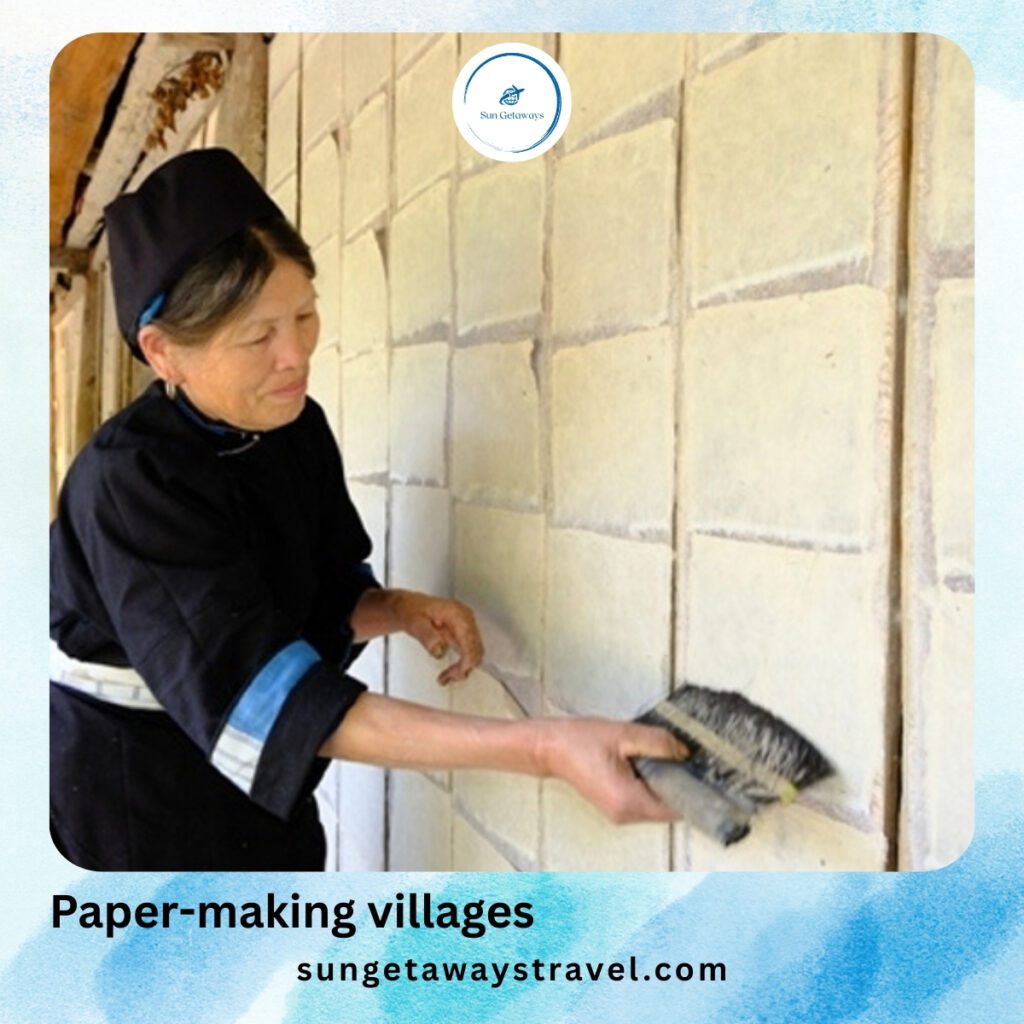
- Central Vietnam craft regions have different identities, such as paper-making villages or Cham-influenced motifs. For example, traditional paper-making villages across the country show a different artisanal lineage than river-based craft villages.
For a general overview of Vietnamese craft traditions, this post gives great context across regions.
In essence, Mekong craft villages are usually more connected to daily life and functional crafts woven into community sustainability, while some northern and central workshops have developed into specialized art forms over time.
5. Best Time and Practical Tips for Visiting Craft Villages
Because craft villages are scattered across rural areas, timing and logistics matter.
Best Time to Visit:
The dry season from November to April is generally most comfortable for workshop visits, when roads and boat routes are more reliable. During the rainy months, river levels rise and travel can be slower, though lush landscapes may appeal to those seeking quiet immersion.
Practical Tips:
- Workshops may not operate on strict schedules, so always check ahead.
- Bring small cash for workshop fees and souvenirs.
- Dress modestly and prepare to interact with families who see you as a guest, not just a customer.
- Combine craft village visits with food, market, and historical sightseeing for a balanced itinerary.
These experiences sit naturally within broader Mekong Delta tours where transport and scheduling are organized to maximize your time without stress.
If you need help coordinating craft village visits with transport and timing in the Mekong Delta, you can reach out via WhatsApp for practical advice.
6. Where Mekong Craft Villages Fit into Your Trip

Craft workshops provide a unique window into local culture and creativity, making them a memorable addition to any Mekong Delta itinerary. These hands-on experiences allow travelers to engage directly with traditional artisans, learn about local techniques, and gain a deeper appreciation of the region’s heritage.
Craft workshops fit beautifully at several points in a Mekong Delta itinerary:
- After river cruising in Can Tho
- Before or after a Mekong Delta food tour
- As part of Mekong Delta sightseeing combined with hidden gems
- On the way to island extensions like Hon Son Island or Nam Du Island for beach time
These combinations help travelers avoid backtracking, maintain a smooth flow, and structure each day around a clear theme – whether it’s culture, food, or nature. Incorporating craft workshops not only enhances understanding of the Delta’s traditions but also creates meaningful memories and souvenirs that reflect the heart of the region.
Expert Insight:
“Craft villages reveal the living heart of the Mekong Delta. Unlike museums or staged exhibits, real workshops show how creativity and practicality are woven into daily life here,”
says Mrs. Emma Nguyen — Tour Operator Manager with over 12 years of experience at Sun Getaways Travel.
7. FAQs About Mekong Craft Villages
Generally yes — especially if you want a hands-on session, as many workshops operate on flexible schedules.
Yes. Many hands-on workshops are child-friendly and provide simple, safe activities.
Basic English varies. A local guide helps bridge communication gaps and enrich interpretation.
Yes — Mekong Delta workshops are unique for their river-driven materials and community-centered traditions.
Most villages do not charge entrance fees, but workshop participation usually has a modest cost.
8. Conclusion
Mekong Craft Villages provide one of the most meaningful ways to understand life in southern Vietnam. Through Mekong handicraft workshops, travelers don’t just observe but they participate, touch materials, and hear stories tied to water, land, and community.
By combining craft village visits with food tours, river sightseeing, and island thrills, you create a journey that’s rich in texture and connection. Whether you’re a curious traveler, a slow explorer, or someone who loves hands-on culture, Mekong craft villages offer an unforgettable window into authentic Vietnamese life.


Related Tour

Discover the Unbeaten Path to Vietnam on a 14-Day Tour


20 Reviews

4 Day Hoang Su Phi Trekking
23 Reviews

12-Day Vietnam Small Group Adventure Tour
22 Reviews

Mekong Experience: My Tho & Ben Tre
7 Reviews

Discover the Essence of Vietnam: A 12-Day Journey
46 Reviews

Small Group Vietnam South to North 12 Days Tour
25 Reviews
Ask a question
Leave a Comment (0)
No questions yet. Be the first to ask a question!
See related Posted
Luxury Golf Resorts in Vietnam – Elite Golf Travelers

Vietnam is increasingly recognized as a premier golf destination in Asia, therefore luxury golf…
Macrame in Vietnam: The Revival of Knot Art in Contemporary Craft Culture

Macrame in Vietnam reflects the country’s growing engagement with contemporary handmade culture, where global…
Vietnamese Musical Instrument Craft: Traditional Instrument Making in Vietnam

Vietnamese musical instrument craft reflects a long-standing relationship between sound, material, and cultural memory.…
Traditional Vietnamese Kite Art: History, Craftsmanship, and Cultural Meaning

Traditional Vietnamese kite art is a living expression of folk creativity, community values, and…
Vietnamese Folk Masks: Tradition, Symbolism & Cultural Meaning

Vietnamese folk masks are a distinctive form of traditional art that reflects the spiritual…
Vietnamese Embroidery Art: Traditional Craftsmanship & Cultural Meaning

Vietnamese embroidery art is a refined traditional craft that reflects patience, cultural memory, and…