




Mekong Delta Sightseeing: Authentic Attractions
 PhamDuong
  3 min. to read
 Mekong Delta sightseeing offers far more than a quick boat ride or a floating market photo stop. For travelers seeking authentic Vietnam experiences, this fertile southern region reveals river-based lifestyles, cultural diversity, and landscapes shaped by water. This guide explores Mekong Delta attractions in depth, so you can plan confidently and travel smarter.
Key Takeaways
- Mekong Delta sightseeing is best enjoyed at a slow pace rather than as a rushed day trip
- Mekong Delta attractions are spread across rivers, villages, and natural landscapes, not centralized landmarks
- Overnight stays significantly improve access to authentic river life and early-morning experiences
1. Understanding Mekong Delta Sightseeing Properly
Mekong Delta sightseeing differs from traditional city sightseeing. Here, attractions are spread across rivers, islands, and rural communities rather than centralized landmarks.
1.1. Why Mekong Delta Sightseeing Feels Different

Mekong Delta sightseeing feels fundamentally different from urban sightseeing because attractions are shaped by waterways and daily rural life rather than fixed landmarks. This difference becomes clear in several key aspects:
- Attractions are connected by canals instead of highways
- Daily routines revolve around boats and river transport
- Experiences emphasize observation, interaction, and participation
As a result, Mekong Delta attractions rewards travelers who slow down and explore thoughtfully rather than rushing through a checklist.
1.2. Types of Mekong Delta Attractions

Rather than revolving around a single landmark, Mekong Delta attractions are spread across different environments that reflect how people live and work with water. Each category contributes a distinct layer to the overall experience and becomes more meaningful when combined thoughtfully.
Key attraction types include:
- Natural river and canal landscapes, where waterways shape transport, housing, and daily routines
- Cultural and religious sites, reflecting Khmer, Chinese, and Vietnamese influences through temples and shrines
- Agricultural villages and fruit orchards, showcasing farming traditions and seasonal harvest cycles
- Floating and land-based markets, functioning as centers of trade rather than staged performances
Together, these interconnected elements form a balanced approach to sightseeing, allowing travelers to understand the region not as isolated highlights but as a living system shaped by water, culture, and livelihoods.
To experience these environments responsibly, explore a Mekong eco tour focused on nature, culture, and local livelihoods.
2. River-Based Mekong Delta Sightseeing Experiences
Waterways form the foundation of Mekong Delta sightseeing. Rivers are not just scenic features but essential living spaces where commerce, transportation, and social life take place simultaneously.
2.1. Canal Boat Journeys
Canal boat journeys reveal the quieter side of Mekong Delta sightseeing, away from busy river crossings and crowded routes. Besides, boats move slowly through narrow canals shaded by nipa palms, everyday life appears naturally along the banks.
Additionally, rom the water, travelers observe how homes, gardens, and small docks are arranged around the canals. These waterways are not just scenic paths but essential connectors between households, orchards, and nearby villages, shaping both movement and daily routines.
Moreover, his experience prioritizes immersion over speed. Because raveling at a gentle pace allows visitors to understand how river life influences farming practices, housing design, and community interaction, making canal journeys a foundational part of authentic Mekong Delta attractions.
Explore more slow-paced experiences on the water in our guide to things to do in the Mekong Delta.
2.2. Floating Markets as Living Attractions
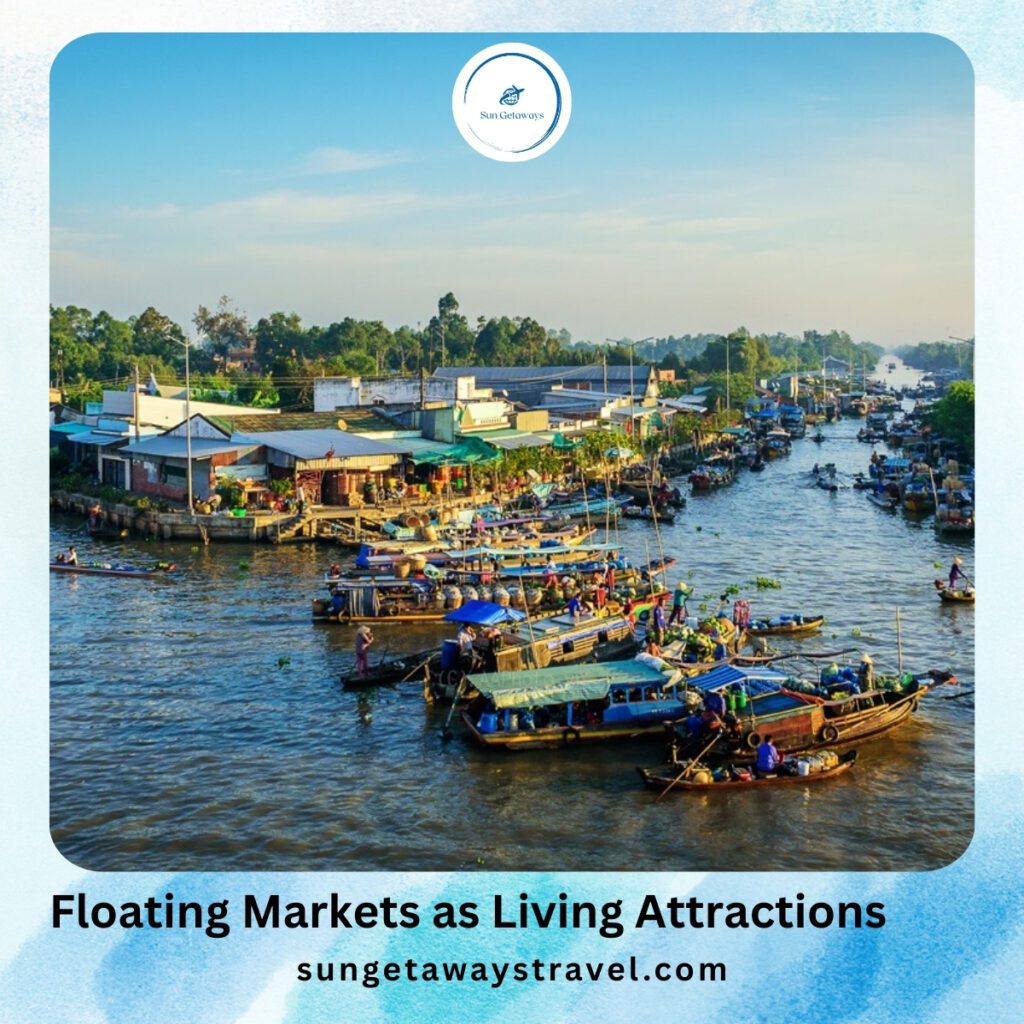
Floating markets are among the most recognizable Mekong Delta attractions, but their true value depends on timing and approach. Early morning visits reveal real trading activity before the area becomes crowded.
The most notable floating markets include:
- Cai Rang for large-scale wholesale trade
- Phong Dien for smaller, local exchanges
- Nga Nam for regional distribution routes
When visited responsibly, these markets become a meaningful part of Mekong Delta sightseeing, offering insight into river-based commerce rather than staged performances.
3. Rural Villages and Island Life
Village visits add a human dimension to Mekong Delta sightseeing. In addition, these communities preserve agricultural traditions that continue to shape the region’s economy and identity.
3.1. Coconut and Craft Villages

Ben Tre’s villages are shaped by coconut-based livelihoods, where farming and small-scale production blend naturally into daily routines. Walking between homes and workshops reveals how traditional skills remain part of everyday life rather than staged demonstrations.
Typical activities include:
- Coconut candy hand-making
- Simple handicraft production
- Charcoal from coconut husks
- Family-run workshop visits
Therefore, these villages offer practical insight into how local households sustain themselves through traditional industries.
3.2. River Islands and Homestead Living

River islands around Vinh Long offer a quiet window into everyday rural life shaped by waterways. Staying overnight allows visitors to observe natural routines rather than staged activities:
- Walking through small orchards and village paths
- Watching fishing preparations along narrow canals
- Sharing home-cooked meals with host families
- Experiencing early-morning river activity
So, this setting suits travelers who value slow observation and genuine local interaction over fast sightseeing.
If you need quick assistance with routes, timing, or itinerary adjustments, you can contact us via WhatsApp for fast, practical support from local travel specialists.
4. Fruit Gardens as Mekong Delta Attractions

Fruit gardens play a dual role in Mekong Delta sightseeing: they are both productive farmland and interactive visitor experiences. Most gardens are family-run, operating informally rather than as commercial attractions, which allows travelers to engage directly with local farmers in a relaxed setting.
Unlike fruit stalls or city markets, orchard visits emphasize process over presentation. Because alking through shaded pathways, learning how fruit trees are cultivated seasonally, and tasting ripe produce straight from the tree add a sensory depth to Mekong Delta attractions that cannot be replicated elsewhere.
Several well-known fruit garden areas are especially suitable for visitors:
- My Khanh Fruit Garden (Can Tho)
- Vinh Kim Fruit Village (Tien Giang)
- Cai Mon Fruit Gardens (Ben Tre)
Each location offers a slightly different atmosphere, influenced by soil conditions, water salinity, and farming techniques. Additionally, these orchards showcase how agriculture shapes daily life and supports the broader Mekong Delta sightseeing experience.
Discover a curated Mekong Delta food tour built around seasonal fruit and local flavors.
5. Cultural and Religious Mekong Delta Sightseeing

Cultural diversity gives this region a spiritual depth that many travelers do not expect. Rather than a single belief system, different communities have shaped places of worship that reflect daily life, migration history, and long-standing traditions.
Khmer Buddhist temples in Soc Trang and Tra Vinh are especially distinctive, featuring bright colors, ornate roofs, and symbolic sculptures that differ from northern pagodas. In contrast, pilgrimage destinations such as Sam Mountain near Chau Doc reveal a mix of Vietnamese, Khmer, and Chinese spiritual practices, drawing visitors throughout the year.
What makes these sites meaningful is not just their architecture, but how they are used. Visitors may observe:
- Morning prayers and monk rituals
- Local families offering incense and food
- Seasonal festivals tied to agricultural cycles
Therefore, experiencing these spaces slowly allows travelers to understand how belief, community, and everyday life remain closely connected.
6. Nature-Based Mekong Delta Sightseeing

Nature-focused experiences add balance to Mekong Delta sightseeing, revealing how wetlands, flooded forests, and coastal ecosystems support agriculture and river life. These natural areas are not isolated parks but living environments that influence fishing, farming, and settlement patterns across many Mekong Delta attractions.
Beyond Tra Su Cajuput Forest – famous for its flooded cajuput trees and seasonal rowing routes—other notable nature-based sites include:
- Tram Chim National Park (Dong Thap)
- U Minh Thuong National Park (Kien Giang)
- U Minh Ha Mangrove Forest (Ca Mau)
Together, these destinations deepen Mekong Delta sightseeing by highlighting the environmental cycles that shape both landscapes and local livelihoods.
7. Choosing the Right Mekong Delta Sightseeing Style
Different travel styles shape how visitors experience Mekong Delta sightseeing. Selecting the right approach helps align expectations with reality.
| Style | Best for | Experience | Time |
| Day trip | Limited time | Markets, canals | 1 day |
| Overnight | Cultural depth | Villages, homestays | 2 -3 days |
| Nature focused | Eco travelers | Wetlands, forests | 2 days |
| Customized Route | Comfort seekers | Flexible attractions | varies |
“Mekong Delta sightseeing works best when travelers slow down. Moreover, overnight stays allow visitors to see river life, markets, and villages at their most authentic.” – Ms. Emma Nguyen, Head of Tour Operations at Sun Getaways Travel
8. Practical Planning for Mekong Delta Sightseeing

Timing, transport, and daily pacing all influence how comfortably travelers can explore without feeling rushed.
- Best time to visit: November to April offers drier weather and easier road access, while May to October brings lush scenery and peak fruit harvests
- Travel pace: Short distances can take longer due to ferries, small roads, and boat transfers
- Transport options: Private cars provide flexibility, while boats are essential for canal and river routes
- Overnight stays: Staying at least one night allows early-morning markets and village life to be experienced properly
For travelers who want quick advice or last-minute itinerary adjustments, you can contact our team via WhatsApp for fast support and practical planning assistance.
9. Common Mistakes Travelers Make
Many visitors unintentionally limit their experience by rushing or focusing only on famous stops. Common issues include:
- Rushing through multiple locations
- Visiting only commercial attractions
- Skipping overnight stays
- Underestimating travel distances
- Overpacking daily itineraries
- Expecting urban-style sightseeing
For better pacing and smarter route choices, see our guide on where to go in the Mekong Delta for balanced, experience-driven travel.
10. FAQs about Mekong Delta sightseeing
Budget travelers spend USD 40–60 per day
100–200 km from Ho Chi Minh City
2–4 hours depending on destination.
Private car combined with boats offers the most flexible and comfortable experience.
Conclusion
Thoughtful Mekong Delta sightseeing goes far beyond quick boat rides or photo stops. Moreover, by exploring, travelers gain a deeper understanding of how water, agriculture, and community shape daily life in southern Vietnam. When planned carefully, Mekong Delta attractions offer authenticity, balance, and memorable experiences that reward those who take the time to slow down and explore beyond the surface.
For travelers who prefer well-paced journeys and local insight, Sun Getaways Travel specializes in designing private tours that balance comfort, flexibility, and authentic experiences.


Related Tour

Travel eSIM: 3GB/Day – 7 Days


25 Reviews

Discover Vietnam on an 8-Day Relaxing Tour
12 Reviews
7 Days Muslim Hanoi Sapa Halong Bay & Da Nang
0 Reviews
Best of Saigon: 3-Day Team Building Tour
9 Reviews

14-Day Explore Vietnam Local Food
20 Reviews
Ask a question
Leave a Comment (0)
No questions yet. Be the first to ask a question!
See related Posted
Luxury Golf Resorts in Vietnam – Elite Golf Travelers

Vietnam is increasingly recognized as a premier golf destination in Asia, therefore luxury golf…
Macrame in Vietnam: The Revival of Knot Art in Contemporary Craft Culture

Macrame in Vietnam reflects the country’s growing engagement with contemporary handmade culture, where global…
Vietnamese Musical Instrument Craft: Traditional Instrument Making in Vietnam

Vietnamese musical instrument craft reflects a long-standing relationship between sound, material, and cultural memory.…
Traditional Vietnamese Kite Art: History, Craftsmanship, and Cultural Meaning

Traditional Vietnamese kite art is a living expression of folk creativity, community values, and…
Vietnamese Folk Masks: Tradition, Symbolism & Cultural Meaning

Vietnamese folk masks are a distinctive form of traditional art that reflects the spiritual…
Vietnamese Embroidery Art: Traditional Craftsmanship & Cultural Meaning

Vietnamese embroidery art is a refined traditional craft that reflects patience, cultural memory, and…