



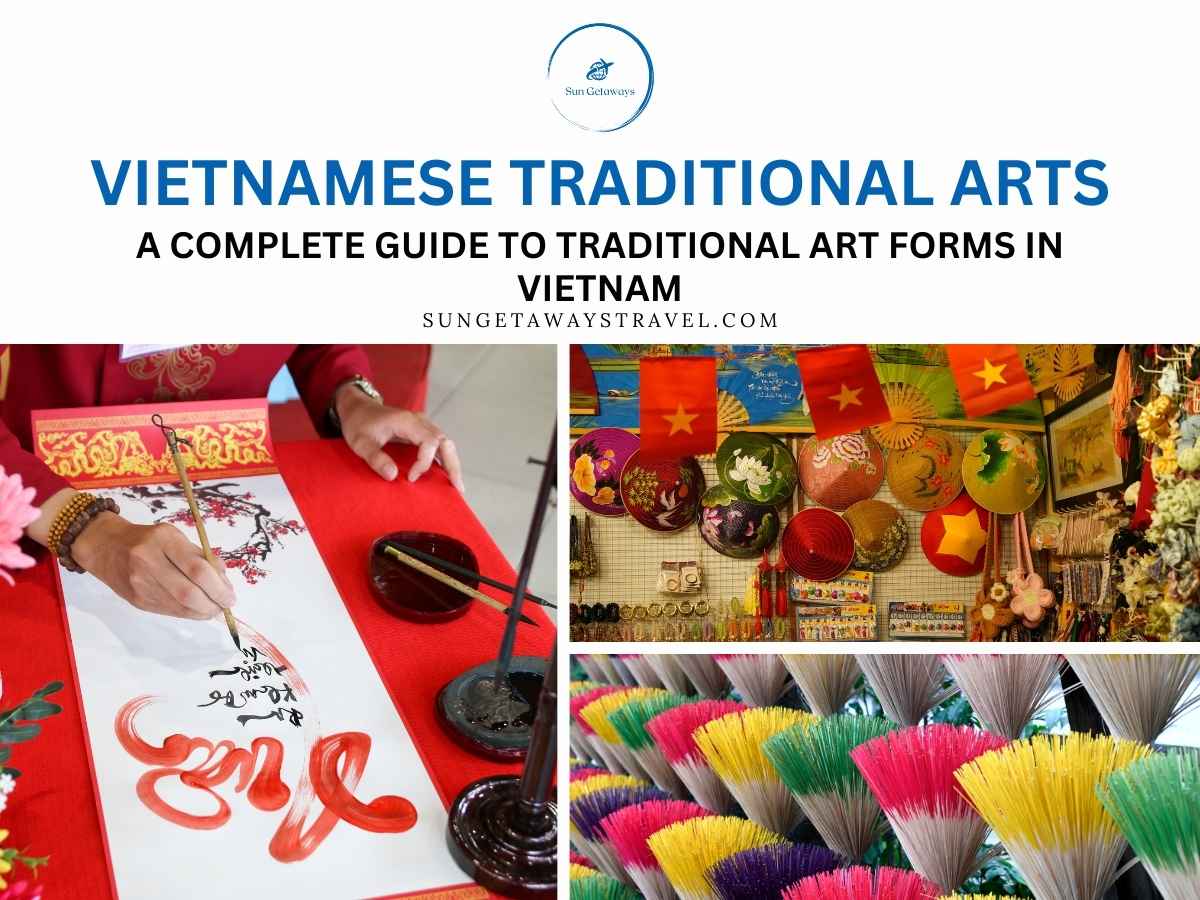
Vietnamese Traditional Arts: A Complete Guide to Traditional Art Forms in Vietnam
 PhamDuong
  3 min. to read
 Vietnam is often admired for its landscapes and cuisine, but the true soul of the country lies in its artistic traditions. Vietnamese traditional arts reflect centuries of history, belief, and everyday life, shaped by nature, spirituality, and community values. From performing arts and visual crafts to folk music and ritual practices, traditional art forms in Vietnam remain vibrant and deeply connected to modern society.
This guide introduces the origins, major categories, and best places to experience Vietnamese traditional arts, helping travelers and culture enthusiasts gain a deeper understanding beyond surface-level sightseeing.
Key Takeaways
- Vietnamese traditional arts reflect the country’s history, beliefs, and community values through various forms, including performing arts, visual crafts, and folk music.
- These art forms emphasize harmony with nature, spirituality, community participation, and rich symbolism, reinforcing social bonds and cultural identity.
- Visitors can engage with Vietnamese traditional arts by attending performances, visiting craft villages, and participating in cultural activities.
- Key locations for experiencing traditional arts include Hanoi, Hue, Hoi An, and Northern Villages, each offering unique artistic experiences.
- Understanding and respecting local customs enhances the appreciation of traditional art forms in Vietnam.
1. What Are Vietnamese Traditional Arts?
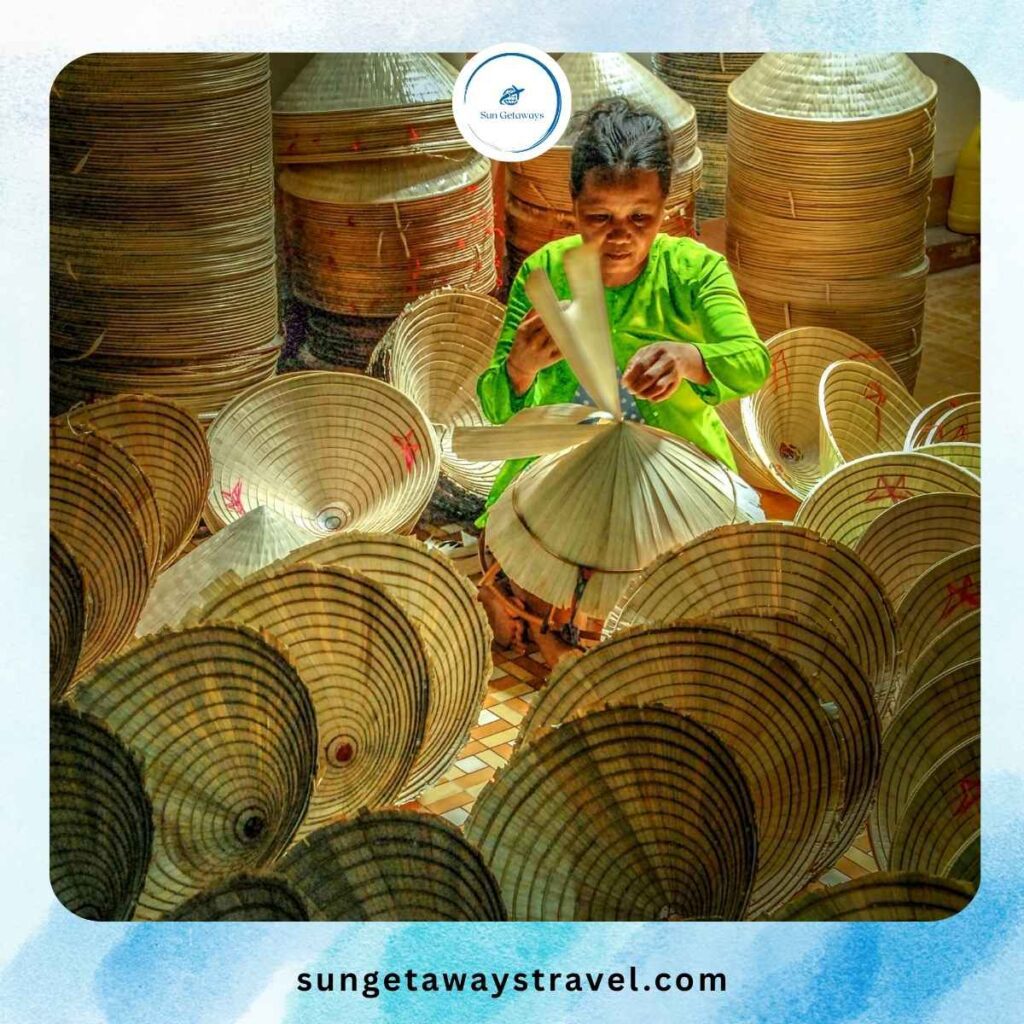
Vietnamese traditional arts refer to artistic expressions that developed organically within Vietnamese society over centuries. Unlike modern or imported art forms, these traditions are closely tied to:
- Agricultural life and seasonal rhythms
- Spiritual beliefs and ancestor worship
- Community rituals and collective memory
Rather than focusing on personal creativity alone, traditional art forms in Vietnam emphasize shared values, symbolism, and continuity between generations.
2. Historical Foundations of Traditional Art Forms in Vietnam
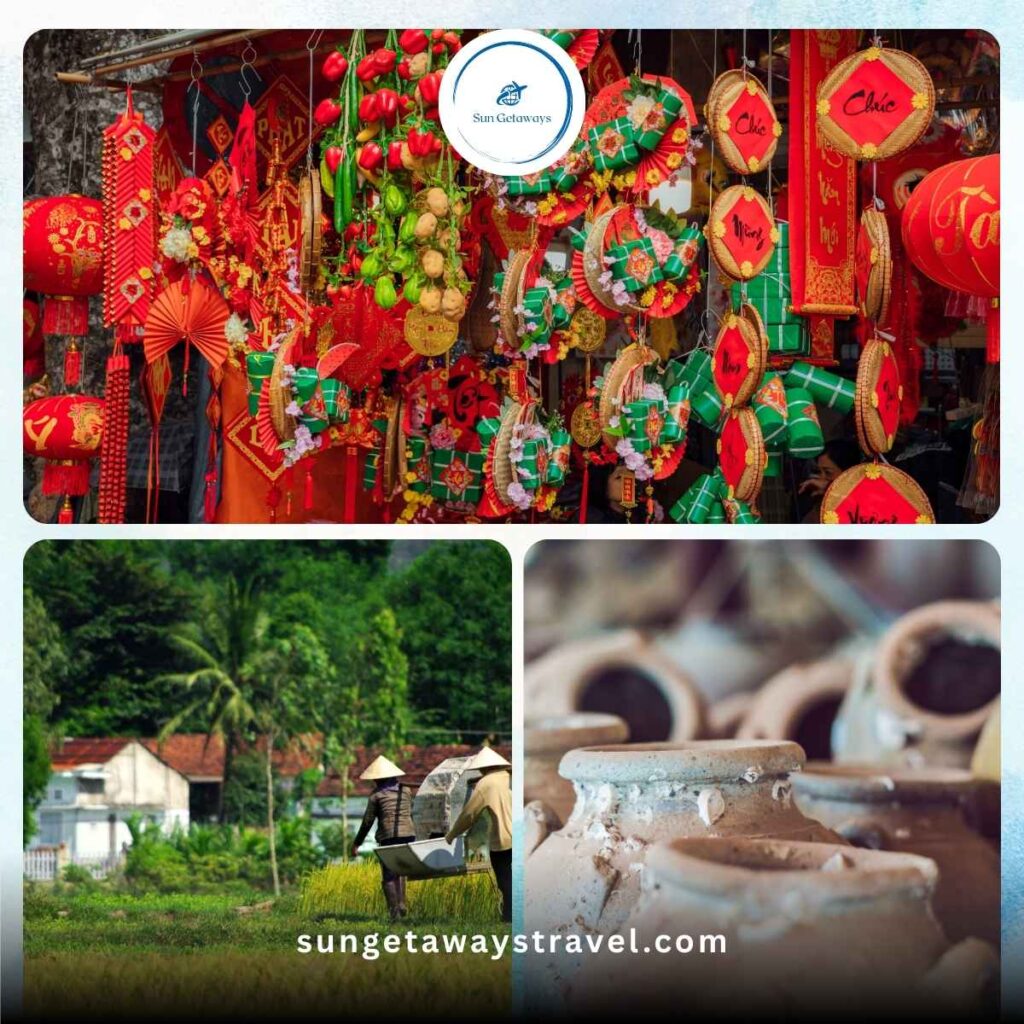
The development of Vietnamese traditional arts is closely connected to the country’s long historical journey and cultural environment. Art in Vietnam did not emerge in isolation but grew naturally from daily life, social structures, and historical challenges.
- Agrarian roots: Wet-rice farming shaped the rhythm of life in Vietnam, influencing artistic themes, materials, and timing. Seasonal cycles, harvest celebrations, and agricultural tools frequently appear in traditional art forms in Vietnam, reflecting a deep dependence on nature.
- Village-based culture: Most traditional arts developed within villages rather than royal courts or urban centers. Skills and knowledge were passed down orally or through hands-on practice, allowing art forms to remain closely tied to community life and local identity.
- Cultural resilience: During periods of foreign influence and political change, Vietnamese traditional arts served as a quiet form of cultural preservation. Folk performances, crafts, and visual arts helped communities maintain a sense of identity and continuity.
- Selective cultural integration: Over time, Vietnamese artists absorbed external elements from neighboring cultures, but always adapted them to local tastes. This process resulted in a distinctly Vietnamese aesthetic and worldview that remains recognizable today.
3. Core Values Reflected in Vietnamese Traditional Arts
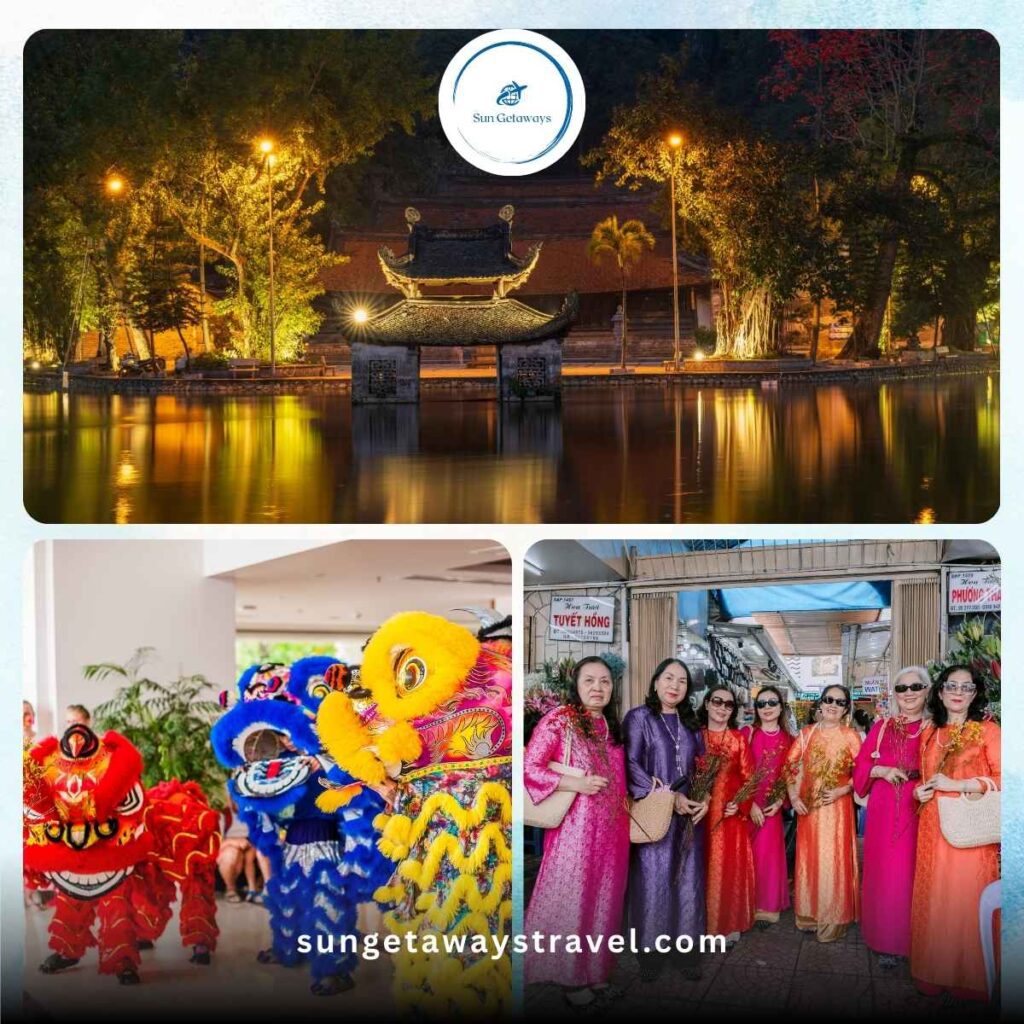
Despite regional diversity, traditional art forms in Vietnam share a set of core cultural values that define their character and purpose.
- Harmony with nature: Vietnamese traditional arts often express respect for mountains, rivers, animals, and seasonal changes. Nature is not portrayed as something to conquer, but as a partner in human life.
- Spiritual connection: Many art forms are closely linked to rituals, festivals, and belief systems. Performances and visual arts frequently serve spiritual functions, such as honoring ancestors or seeking protection and prosperity.
- Community over individuality: Collective participation is central to Vietnamese traditional arts. Performances, festivals, and craft production often involve groups rather than individual creators, reinforcing social bonds.
- Symbolism: Colors, movements, sounds, and patterns are rarely decorative alone. They carry layered meanings that convey moral lessons, wishes, and cultural values passed down through generations.
These shared values make Vietnamese traditional arts both visually expressive and culturally meaningful.
4. Major Categories of Vietnamese Traditional Arts
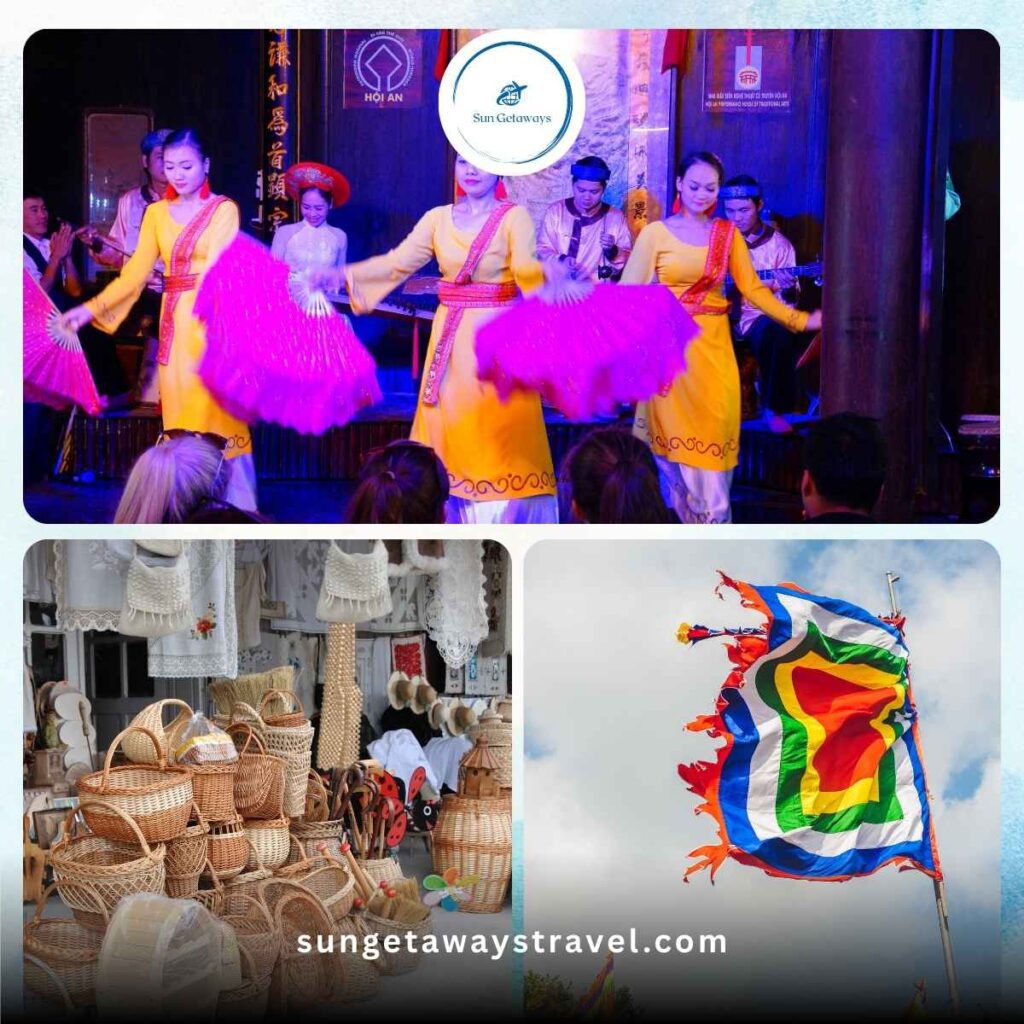
Vietnamese traditional arts can be broadly divided into several interconnected categories, each reflecting a different aspect of cultural expression.
- Performing arts: Including theater, music, and dance, these art forms combine storytelling, movement, and sound to express history, legends, and everyday life.
- Visual and craft arts: Encompassing painting, sculpture, and handicrafts, this category highlights craftsmanship, symbolism, and functional beauty rooted in daily use.
- Ritual and folk arts: Closely tied to festivals and spiritual practices, these art forms play an important role in maintaining cultural traditions and collective memory.
Together, these categories illustrate the richness and diversity of traditional art forms in Vietnam, showing how art continues to connect past and present.
5. Performing Arts in Vietnam
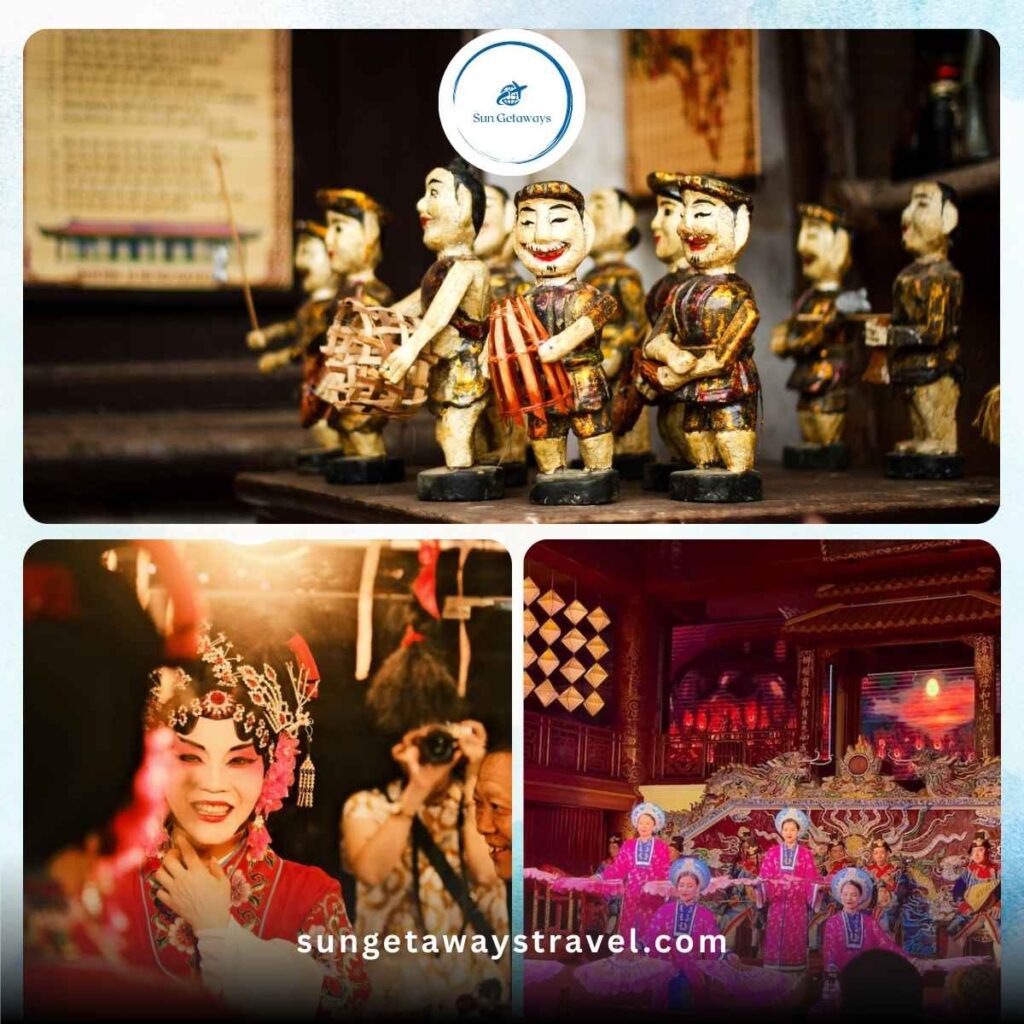
Performing arts are among the most recognizable and dynamic expressions of Vietnamese traditional arts, reflecting both everyday life and spiritual values through sound, movement, and storytelling. These art forms are often performed in communal spaces, making them deeply connected to social life.
Key Performing Art Forms
- Water Puppet Theatre (Múa rối nước)
- Originated in rural villages of northern Vietnam, especially in wet-rice farming communities.
- Uses water as a natural stage, with puppets controlled from behind a screen.
- Common themes include folk tales, village humor, agricultural life, and historical legends.
- Demonstrates creativity in turning natural environments into artistic spaces.
- Traditional Opera (Tuồng & Chèo)
- Combines music, acting, singing, and highly symbolic gestures.
- Tuồng often focuses on royal courts, loyalty, and historical heroes.
- Chèo is more folk-oriented, humorous, and rooted in village life.
- Performances traditionally served as both entertainment and moral education.
- Court Music (Nhã nhạc)
- Developed during the imperial era, particularly under the Nguyen Dynasty in Hue.
- Performed during royal ceremonies, coronations, and religious rituals.
- Recognized by UNESCO as Intangible Cultural Heritage of Humanity.
- Represents the refinement and hierarchical aesthetics of Vietnam’s royal culture.
Together, these performing arts blend storytelling, music, and movement into immersive cultural experiences that define many traditional art forms in Vietnam.
Reading about Vietnamese culture is only the first step. To truly understand it, you need to live it.
Our Taste of Vietnam – 11 Days tour allows travelers to engage with local traditions, cuisine, and cultural practices in a respectful and immersive way.
6. Visual and Craft-Based Art Forms
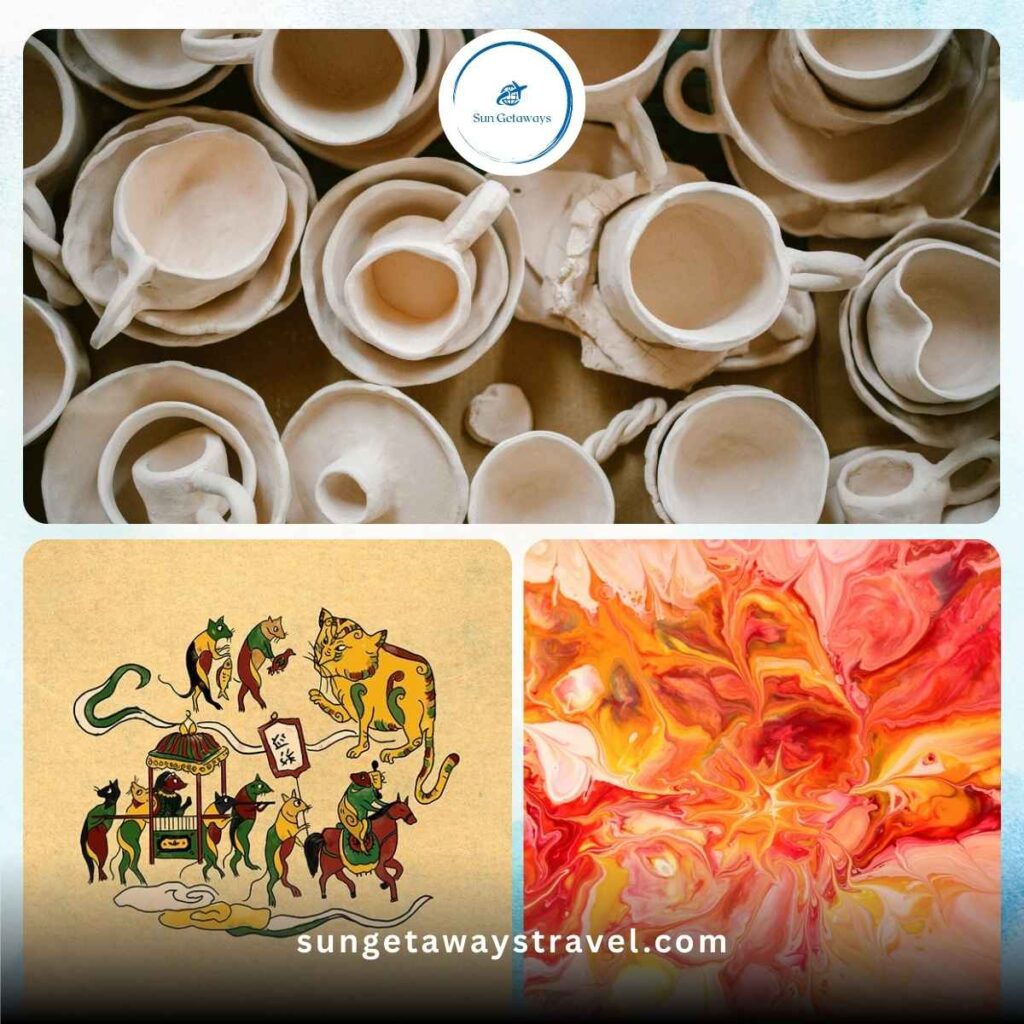
Visual arts and handicrafts play a vital role in preserving Vietnamese aesthetics, craftsmanship, and cultural symbolism. These forms are closely linked to daily life, belief systems, and village economies.
- Created using woodblock printing techniques and natural pigments.
- Commonly depict village life, folk animals, and wishes for prosperity and happiness.
- Often displayed during Lunar New Year as symbols of good fortune.
- Reflect humor, simplicity, and moral values of rural society.
- Produced in traditional craft villages such as Bat Trang near Hanoi.
- Serve both practical household functions and decorative purposes.
- Designs often feature symbolic motifs like dragons, flowers, and nature elements.
- Showcase the balance between functionality and artistic expression.
- Uses natural tree resin combined with layered polishing techniques.
- Applied to paintings, furniture, and decorative objects.
- Known for its durability, depth of color, and refined elegance.
- Represents a unique Vietnamese contribution to Southeast Asian art traditions.
These crafts embody the harmony between daily use and artistic beauty that lies at the heart of Vietnamese traditional arts.
7. Ritual and Folk Arts
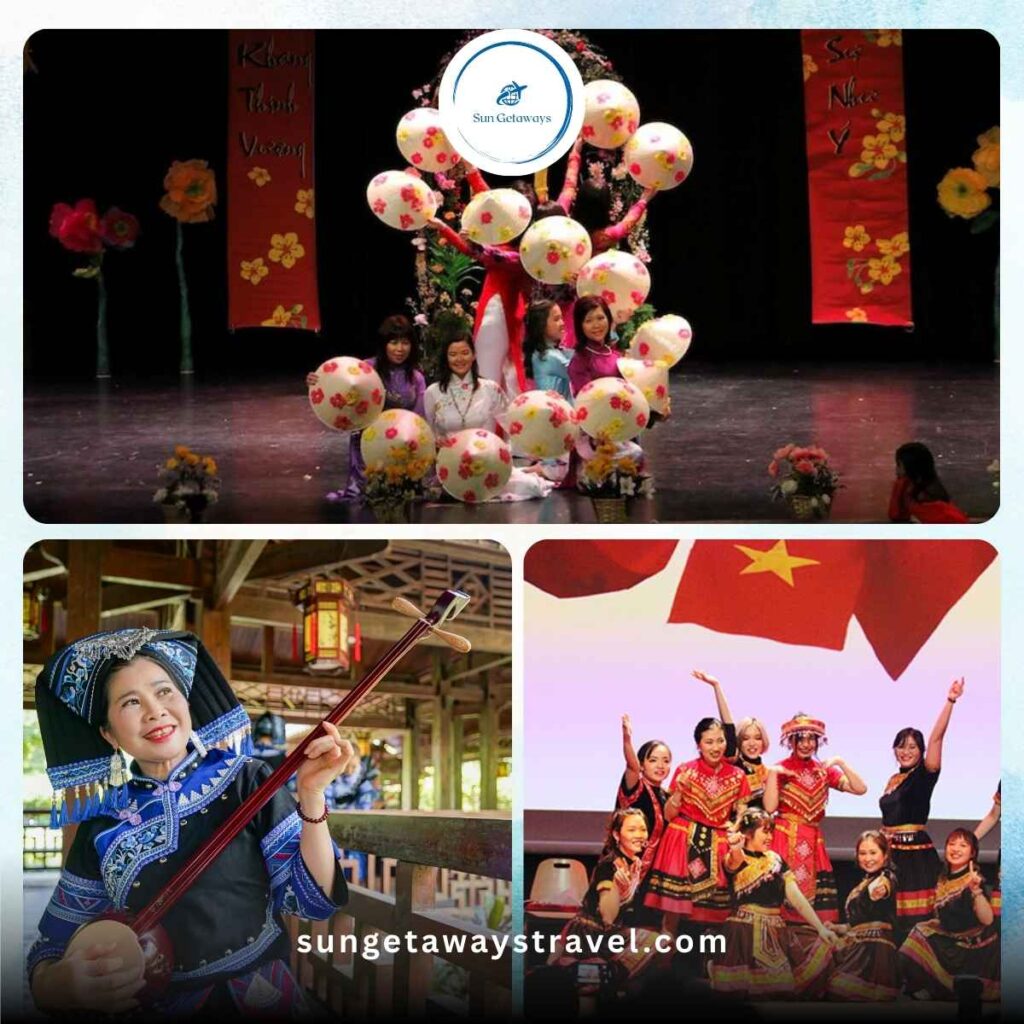
Many traditional art forms in Vietnam are inseparable from rituals, festivals, and spiritual practices. Art, in this context, serves not only aesthetic purposes but also cultural and religious functions.
- Performed during village festivals, harvest celebrations, and temple events.
- Often symbolize prayers for good weather, prosperity, and communal harmony.
- Movements are highly symbolic and passed down through generations.
Folk music
- Sung during communal gatherings, weddings, and seasonal rituals.
- Includes regional styles such as Quan Ho, Ca Tru, and folk chants.
- Emphasizes oral transmission and emotional expression.
Spiritual performances
- Closely linked to belief systems such as Mother Goddess Worship.
- Combine music, costume, and ritual movement.
- Serve as a bridge between the human and spiritual worlds.
These ritual and folk arts reinforce community identity, collective memory, and spiritual continuity within Vietnamese society.
8. How to Experience Vietnamese Traditional Arts as a Visitor
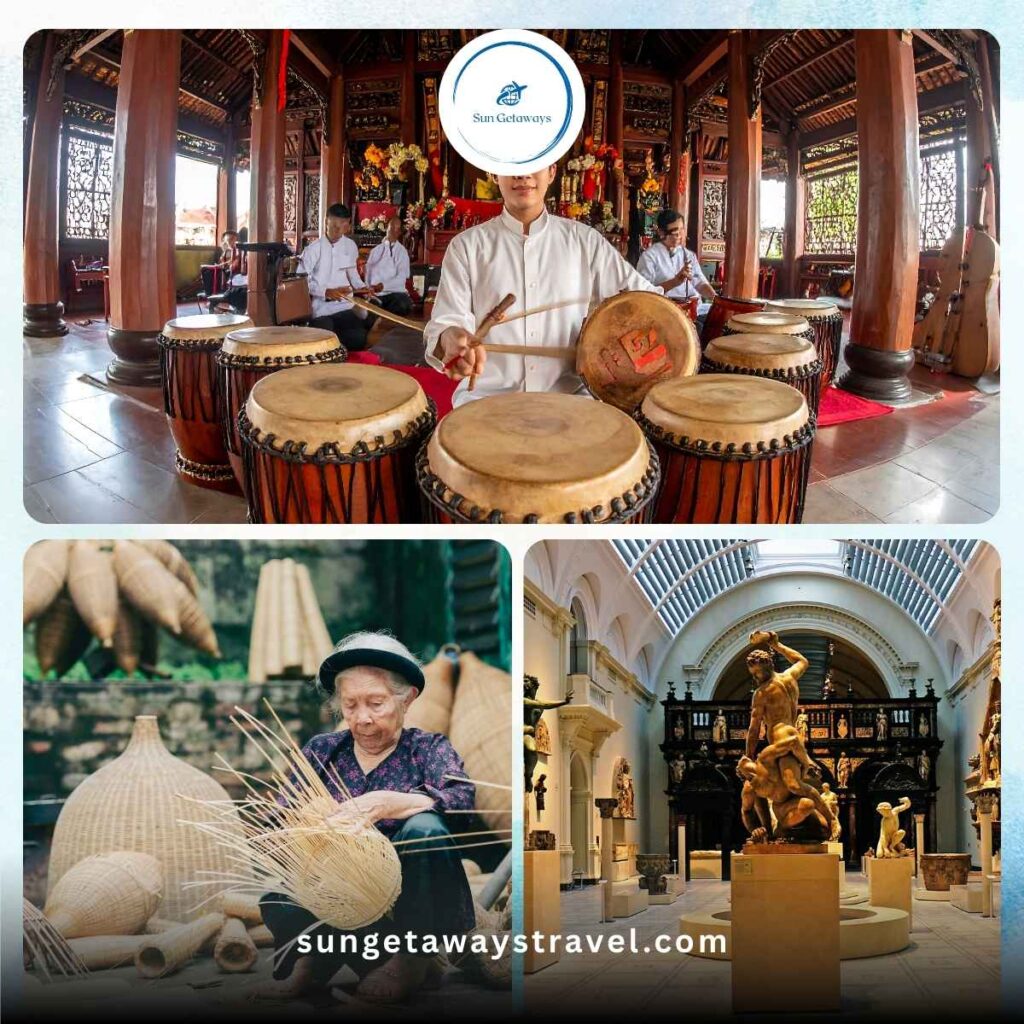
Visitors can engage with Vietnamese traditional arts in meaningful and respectful ways by seeking both performance-based and educational experiences.
- Attend cultural performances at traditional theaters or local festivals.
- Visit traditional craft villages to observe artisans and learn about techniques.
- Explore museums and cultural centers to understand historical and cultural context.
- Participate respectfully, observing local customs and etiquette.
Approaching these experiences with curiosity and respect allows visitors to gain a deeper appreciation of traditional art forms in Vietnam and their enduring cultural value.
For a closer look at textile traditions, explore👉 Vietnamese embroidery art and learn how Vietnamese traditional embroidery craftsmanship reflects patience, symbolism, and cultural continuity.
9. Best Places to Explore Traditional Art Forms in Vietnam
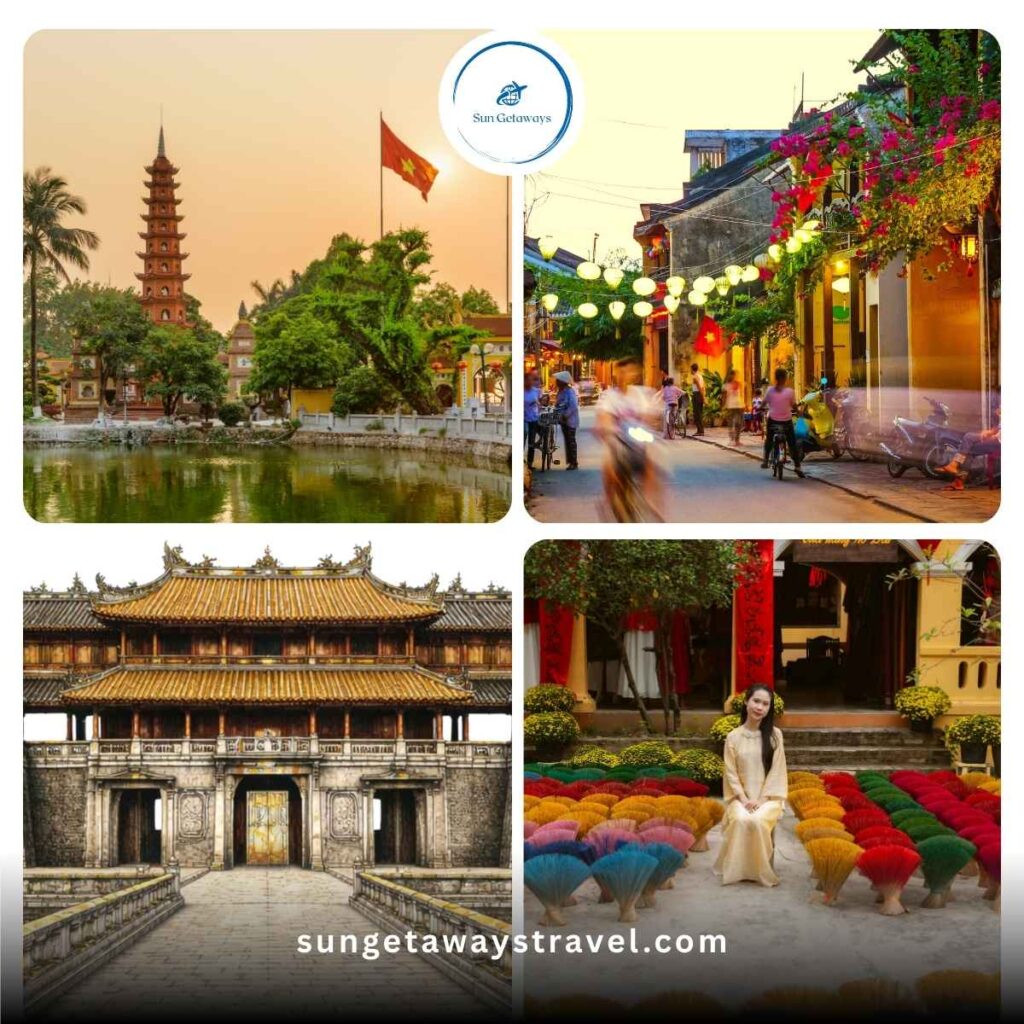
Different regions offer distinct artistic experiences.
- Hosts a wide range of theaters, museums, and cultural centers.
- Home to water puppet theatres, traditional music performances, and folk art exhibitions.
- Surrounded by long-established craft villages producing ceramics, lacquer, and folk paintings.
- Ideal for first-time visitors seeking an accessible introduction to Vietnamese traditional arts.
- Former imperial capital with strong ties to royal and ceremonial arts.
- Recognized as the center of court music (Nhã nhạc) and imperial rituals.
- Preserves refined aesthetics influenced by Confucian and royal traditions.
- Offers a more formal and historical perspective on traditional Vietnamese arts.
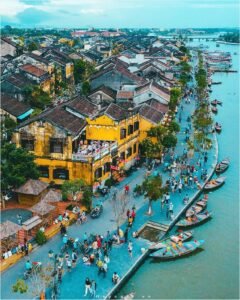
- Well-preserved ancient town known for its living craft traditions.
- Famous for lantern-making, tailoring, and decorative folk arts.
- Regularly hosts folk performances and cultural festivals.
- Blends traditional craftsmanship with a vibrant, everyday cultural atmosphere.
Northern Villages
- Home to some of the most authentic and less-commercialized art traditions.
- Preserve village-based performances, folk music, and ritual practices.
- Many traditions are still passed down within families and communities.
- Offer deeper insight into the grassroots origins of Vietnamese traditional arts.
👉 If you’re looking for ready-made itineraries and inspiring travel ideas, explore our full collection of
Vietnam tours designed around culture, nature, and authentic local experiences.
“Vietnamese traditional arts are not museum pieces frozen in time. They continue to live through communities, festivals, and everyday practices. For visitors, experiencing these art forms respectfully is one of the most authentic ways to understand Vietnam beyond modern city life.”
— Mrs. Emma Nguyen – Tour Operator Manager with over 12 years of experience at Sun Getaways Travel
10. Practical Tips for Cultural Travelers
To fully appreciate traditional art forms in Vietnam, consider the following tips:
- Dress modestly when attending cultural or ritual events.
- Ask before photographing performances or artisans.
- Learn basic cultural context to understand symbolism.
11. Frequently Asked Questions
Yes, many art forms remain active and are passed down through generations.
Visitors are welcome to observe and sometimes join workshops or performances.
Festival seasons and cultural events offer the richest experiences.
12. Conclusion
Vietnamese traditional arts offer a powerful lens into the country’s history, values, and collective spirit. Through diverse traditional art forms in Vietnam, travelers gain insight into how art connects daily life, spirituality, and community. By exploring these traditions respectfully, visitors move beyond sightseeing and experience the deeper cultural rhythms that continue to shape Vietnam today.
👉 If you prefer a journey tailored exactly to your interests, pace, and travel style, let Sun Getaways Travel help you design a customized tour created just for you.


Related Tour

14 Days Vietnam North To South With Phu Quoc Island


26 Reviews

6 Days Mekong Delta and Beach Relaxing
29 Reviews

12 Days Vietnam Classic Tour From North To South
26 Reviews
Ask a question
Leave a Comment (0)
No questions yet. Be the first to ask a question!
See related Posted
Luxury Golf Resorts in Vietnam – Elite Golf Travelers

Vietnam is increasingly recognized as a premier golf destination in Asia, therefore luxury golf…
Macrame in Vietnam: The Revival of Knot Art in Contemporary Craft Culture

Macrame in Vietnam reflects the country’s growing engagement with contemporary handmade culture, where global…
Vietnamese Musical Instrument Craft: Traditional Instrument Making in Vietnam

Vietnamese musical instrument craft reflects a long-standing relationship between sound, material, and cultural memory.…
Traditional Vietnamese Kite Art: History, Craftsmanship, and Cultural Meaning

Traditional Vietnamese kite art is a living expression of folk creativity, community values, and…
Vietnamese Folk Masks: Tradition, Symbolism & Cultural Meaning

Vietnamese folk masks are a distinctive form of traditional art that reflects the spiritual…
Vietnamese Embroidery Art: Traditional Craftsmanship & Cultural Meaning

Vietnamese embroidery art is a refined traditional craft that reflects patience, cultural memory, and…