

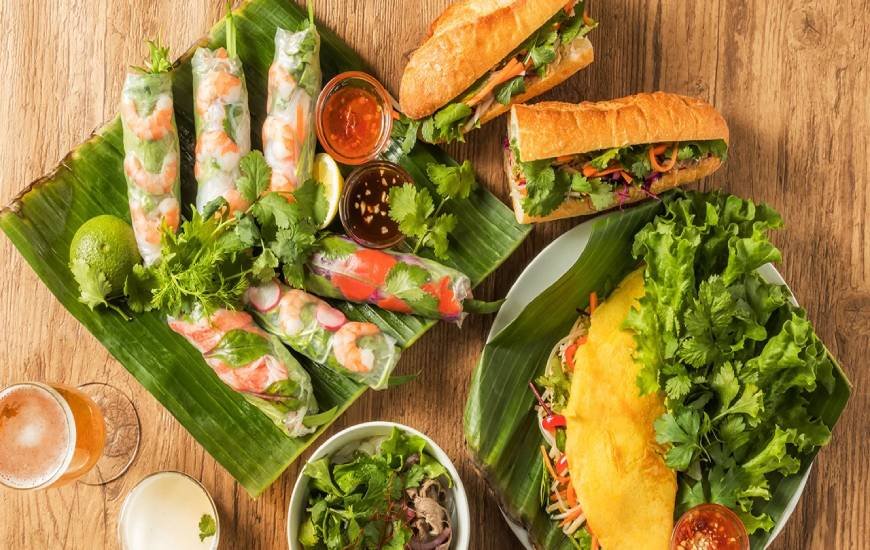






Vietnamese Steamed Rice Rolls for an Authentic Food Experience
 HoangAn
  3 min. to read
 Have you ever wondered what Vietnamese people eat for breakfast that feels light yet deeply satisfying? Vietnamese steamed rice rolls (also known as Vietnamese Banh Cuon) often surprise travelers who want real local food without heavy flavors. In this guide, you will learn what this dish is, how locals make it, where to eat it, and how to enjoy it like a local while traveling across Vietnam.
Key Takeaways
- Vietnamese steamed rice rolls, or Vietnamese Banh Cuon, are light, savory, and often enjoyed for breakfast across Vietnam.
- These rolls consist of thin rice sheets filled with ingredients like minced pork and mushrooms, and they showcase regional variations.
- To make Vietnamese steamed rice rolls, cooks prepare a fermented rice batter, steam it, add fillings, and serve it fresh with herbs and dipping sauce.
- Travelers can find authentic Banh Cuon in places like Ha Noi, Quang Ninh, and Ho Chi Minh City, each offering unique styles of the dish.
- Prices for Vietnamese steamed rice rolls are affordable, typically ranging from 30,000–70,000 VND, making it a great option for travelers.
1. What are Vietnamese Steamed Rice Rolls?
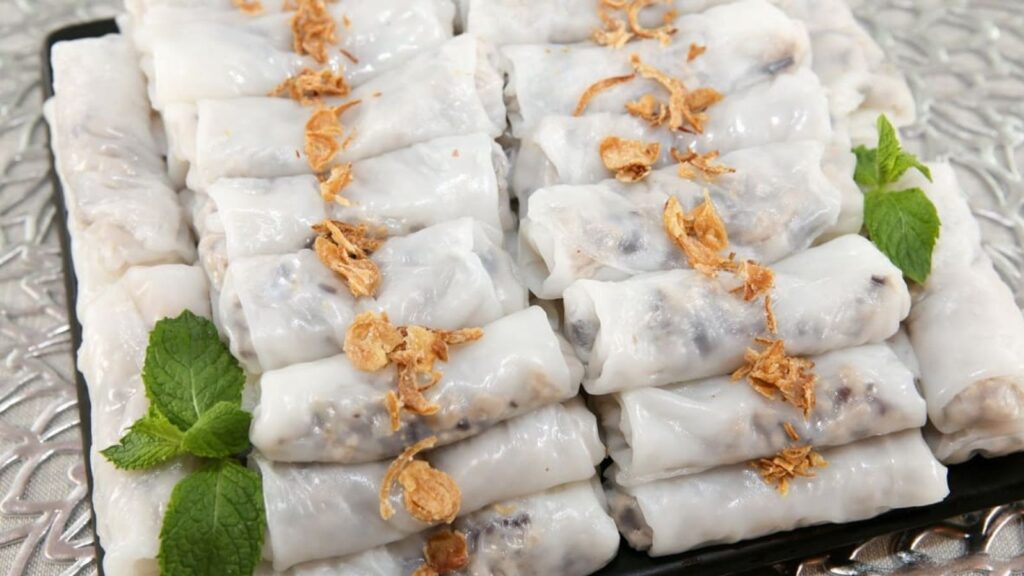
Vietnamese steamed rice rolls are thin rice sheets made from fermented rice batter, steamed gently, and filled with savory ingredients. Locals call this dish Vietnamese Banh Cuon, and they often enjoy it for breakfast or light meals.
Beyond taste, Vietnamese steamed rice rolls reflect Vietnamese food culture. The dish shows how simple ingredients can create balance and harmony. Families often prepare it for gatherings, while street vendors sell it fresh every morning.
When travelers explore Ha Noi or northern Vietnam, they usually see locals lining up early just for a warm plate of Vietnamese Banh Cuon. This dish also belongs to the broader world of Vietnamese traditional cakes, where rice plays a central role in daily life and celebrations.
2. Key Ingredients That Define the Flavor of Vietnamese Steamed Rice Rolls
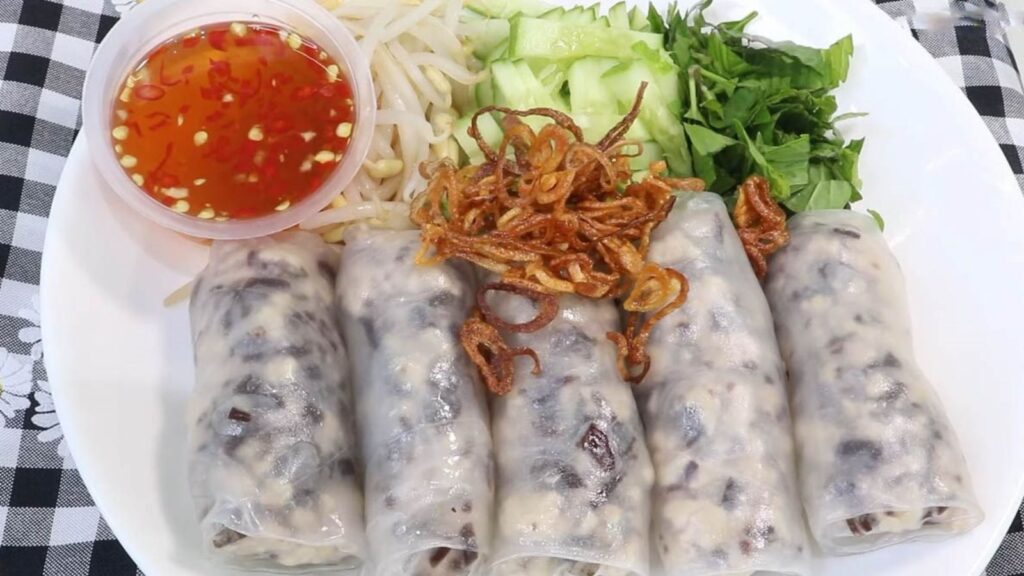
Although Vietnamese steamed rice rolls look simple at first glance, their flavor depends on a surprisingly rich combination of ingredients. Different regions and family recipes often add their own twist, which explains why Vietnamese Banh Cuon never feels boring when you travel across the country.
- Rice flour and fermented batter
The base always comes from rice, but texture varies by technique. Some cooks ferment the batter lightly to create a gentle aroma, while others keep it fresh for a cleaner taste. This choice affects how soft or elastic the rice sheet feels on your tongue. - Fillings: pork, shrimp, egg, and more
The most common filling uses minced pork and wood ear mushrooms, but many versions go beyond that. Some places add fresh shrimp for sweetness, while others include beaten egg steamed directly onto the rice sheet. These variations create richer flavors without losing the dish’s light character. - Toppings and side proteins
This one of Vietnamese savory cakes rarely comes alone. Vendors often serve it with cha lua, grilled pork, fried spring rolls, or even fermented pork rolls. These sides add protein and make the dish more filling, especially for travelers who need energy for long sightseeing days. - Fresh herbs and vegetables
Lettuce, coriander, cucumber, and bean sprouts balance the softness of the rice rolls. They also help refresh the palate, which many travelers appreciate in Vietnam’s warm climate. - Dipping sauce with regional differences
Northern sauces stay light and clear, while southern versions taste slightly sweeter. Chili, lime, or black pepper often appear on the side, allowing travelers to adjust flavor easily.
Together, these ingredients explain why Vietnamese steamed rice rolls feel both comforting and flexible, adapting naturally to local tastes across Vietnam.
3. How Vietnamese Steamed Rice Rolls is Traditionally Made
Making Vietnamese steamed rice rolls requires patience and skill. Locals often learn this technique from family members over many years.
Step 1: Preparing the rice batter
Cooks soak rice overnight, then grind it into a smooth liquid. They mix the batter with water and a pinch of salt. This resting time helps the batter ferment slightly, which gives Vietnamese Banh Cuon its signature aroma.
Step 2: Steaming thin rice sheets
Next, the cook pours a thin layer of batter onto a stretched cloth over boiling water. Steam rises evenly from below. After less than one minute, the rice sheet becomes translucent and soft.
Step 3: Adding the filling
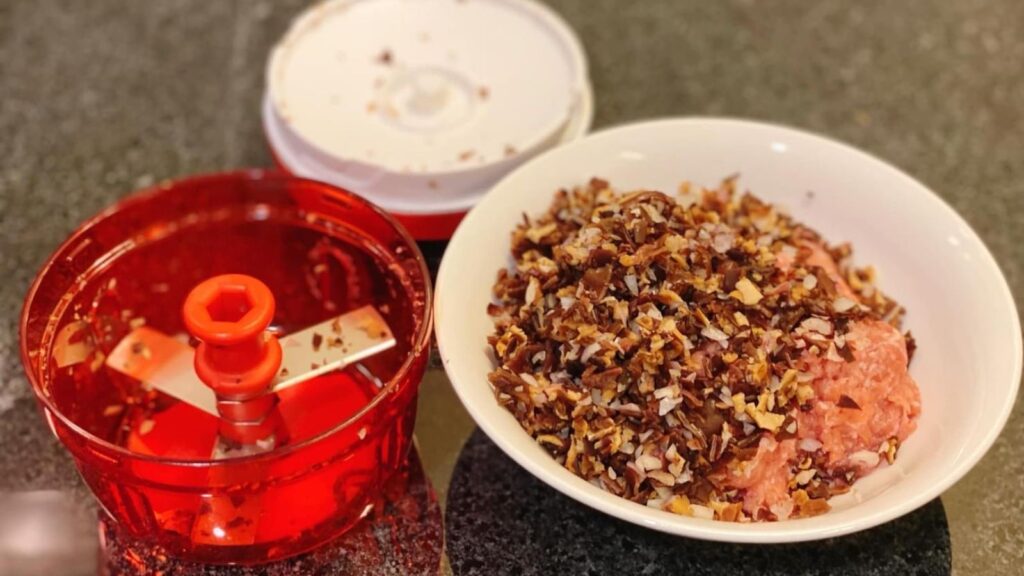
The cook spreads a small amount of cooked pork and mushroom filling onto the rice sheet. Timing matters here, because the sheet must stay warm and flexible.
Step 4: Rolling and serving
Finally, the rice sheet gets gently rolled and placed onto a plate. The dish comes with herbs, fried shallots, and dipping sauce. Many locals serve Vietnamese steamed rice rolls immediately to preserve texture.
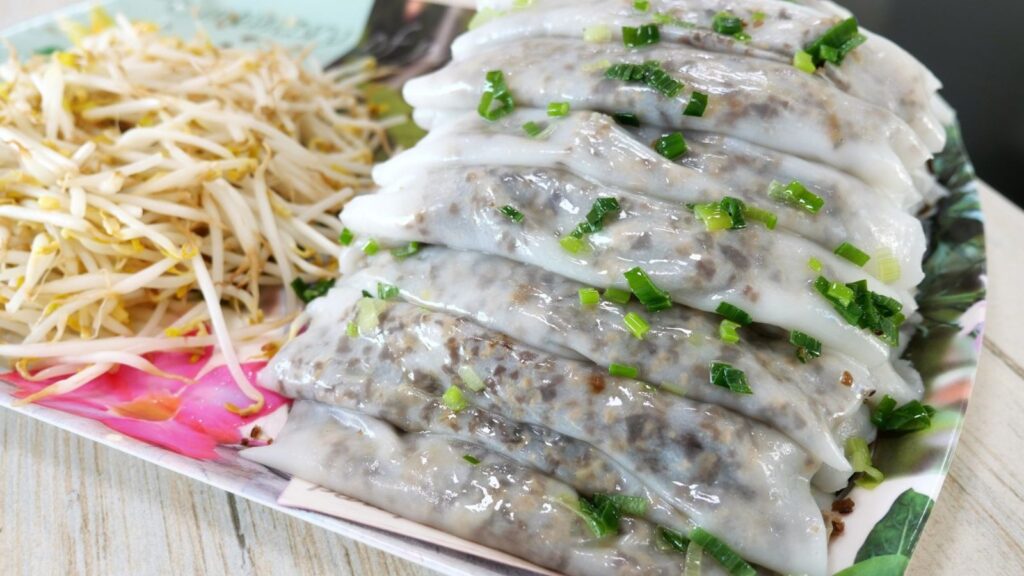
Watching this process at a street stall feels like a small cultural performance, especially during a Ha Noi street food tour. Don’t hesitate to contact Sun Getaways Travel if you want help planning an authentic local food experience in Vietnam.
4. Popular Types of Vietnamese Steamed Rice Rolls You Should Know
Vietnamese steamed rice rolls come in many forms, and knowing these types helps travelers order with confidence. Each version reflects local habits and regional food culture.
- Classic filled Banh Cuon with pork and mushrooms
This type uses pork and wood ear mushroom filling and usually comes with cha lua, fried spring rolls, and fresh herbs. In southern Vietnam, vendors often serve larger portions, making it popular for brunch or late breakfast. - Shrimp and pork Banh Cuon
Coastal areas and tourist-friendly cities often serve Vietnamese Banh Cuon with shrimp and pork together. Shrimp adds sweetness and color, making the dish visually appealing for first-time visitors. - Cao Bang-style Banh Cuon with broth
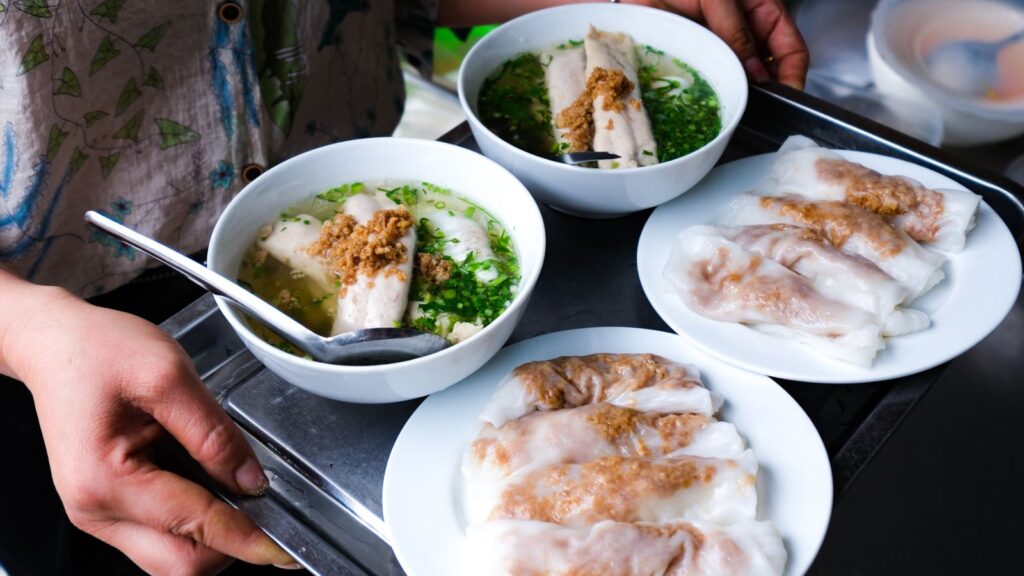
This northern mountain version feels very different. Instead of dipping sauce, locals pour hot bone broth over the rolls. Travelers often enjoy this version on cooler mornings or after long drives. - Egg Banh Cuon
Vendors steam beaten egg directly onto the rice sheet, creating a richer and creamier texture. This type suits travelers who want a more filling breakfast. - Quang Ninh Banh Cuon with squid cake
In Quang Ninh, Vietnamese steamed rice rolls are served with famous cha muc (squid cake). The strong seafood flavor pairs surprisingly well with soft rice sheets and attracts many domestic tourists. - Banh Cuon with grilled pork
Some regions serve rice rolls alongside smoky grilled pork. This version feels closer to a full meal and often appears at busy local eateries.
These variations show how Vietnamese Banh Cuon changes across regions while keeping its rice-based identity. That is why many travelers choose to explore this dish as part of a Vietnam local food tour across the country.

5. Where to Try Authentic Banh Cuon in Vietnam
Finding great Vietnamese steamed rice rolls becomes easier when you know where locals trust most. Certain regions stand out for both quality and tradition.
- Ha Noi and northern provinces
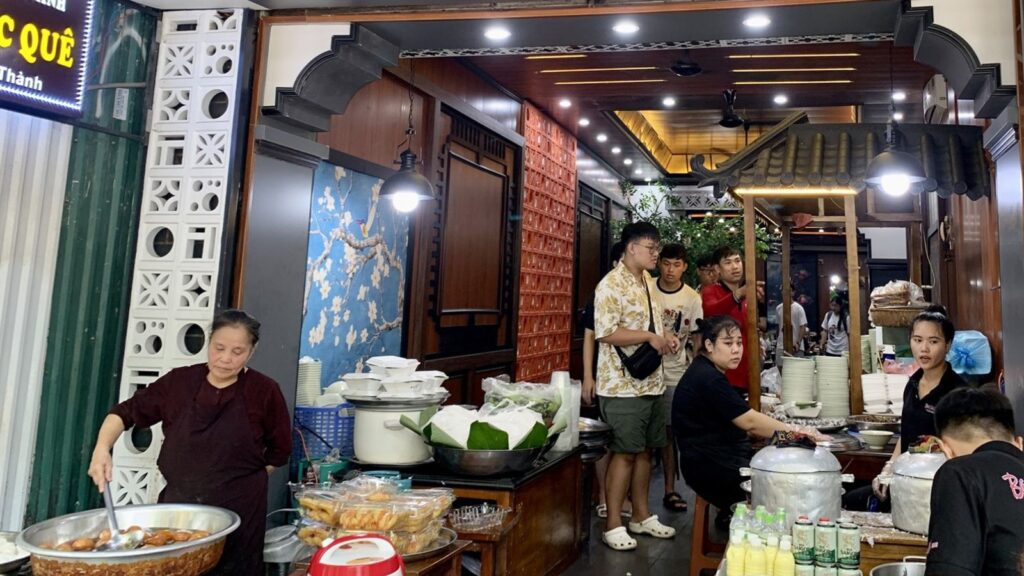
Ha Noi remains the heart of traditional Vietnamese Banh Cuon. Long-standing family stalls specialize in thin rice sheets and light fillings. Many travelers try this dish during a food tour, which offers safe and authentic experiences. - Quang Ninh
This province is famous for pairing rice rolls with squid cake. Travelers visiting Ha Long Bay often stop here, making it easy to combine food discovery with sightseeing on a northern Vietnam tour. - Cao Bang
In mountainous Cao Bang, the broth-based version stands out. Travelers exploring remote landscapes often appreciate this warm and comforting dish after a long day. - Ho Chi Minh City
The city offers many versions influenced by migrants from the north. Portions tend to be larger, and side dishes are more generous. Exploring Vietnamese Banh Cuon here fits naturally into a Ho Chi Minh street food experience. - Central Vietnam cities
Cities like Da Nang also serve rice rolls with local twists. Travelers often encounter them while following a Vietnam Classic Tour across regions.
6. How Much Does This Dish Cost?
A basic plate usually costs around 30,000-40,000 VND at local stalls. Versions with shrimp, egg, or extra side dishes may reach 50,000-70,000 VND. In tourist-friendly restaurants or curated food tours, prices can rise slightly, but hygiene and comfort often improve.
For travelers on longer trips, Vietnamese Banh Cuon offers excellent value. It feels light, filling, and affordable, making it easy to enjoy repeatedly without straining your budget.
7. Tips for First-Time Travelers Trying Banh Cuon
Trying Vietnamese steamed rice rolls for the first time becomes more enjoyable when you understand local habits.
- Go early in the morning
Most stalls sell out before noon. Early visits ensure freshness and better texture. - Observe before ordering
Watching how locals eat helps you understand dipping styles and side combinations. - Start simple
Choose the classic version before trying regional specialties. This helps you compare flavors later. - Balance your plate
Add herbs and vegetables generously. They make the dish lighter and easier to digest. - Ask politely about fillings
Vendors usually explain ingredients clearly. This helps travelers with dietary preferences feel comfortable.
By following these tips, Vietnamese Banh Cuon becomes more than a meal. It turns into a cultural experience that connects food, people, and place during your Vietnam journey.
“For first-time visitors, I always suggest starting with classic Ha Noi-style Banh Cuon at reputable local stalls. It gives the best balance of flavor, texture, and cultural experience.”
– Mrs. Emma Nguyen, Tour Operator Manager with over 12 years of experience at Sun Getaways Travel
8. FAQs about Vietnamese Steamed Rice Rolls
Yes, Vietnamese steamed rice rolls use rice flour, so they are naturally gluten-free. However, always check the dipping sauce.
Some places offer mushroom-only fillings. You should ask vendors clearly before ordering.
The base dish is not spicy. Spice comes only from chili added to the sauce.
Yes, this dish is generally gentle on the stomach because it is steamed and low in oil. Travelers should choose busy stalls where rolls are made fresh to ensure hygiene.
Most locals use chopsticks, especially when dipping rolls into sauce. However, using hands at casual street stalls is also acceptable, and vendors rarely mind.
9. Conclusion
Vietnamese steamed rice rolls are more than a local dish; they reflect how Vietnamese people value balance, freshness, and simplicity in daily life. Through each regional variation, Vietnamese Banh Cuon offers travelers a gentle yet memorable way to understand Vietnam beyond famous landmarks.
If you want to taste authentic Vietnamese food in the right places, let Sun Getaways Travel guide your journey. Let us design a journey where you can enjoy authentic Vietnamese flavors in the right places, at the right pace.


Related Tour

12 Days Vietnam From North To South With Hue


14 Reviews


Hoi An Discovery Tour: Unveiling the Charms in 5 Days
25 Reviews
12 Days Vietnam Classic Tour From North To South
26 Reviews

Travel eSIM: 5GB/Day – 15 Days
11 Reviews

5 Days Halal Food Tour Hanoi Sapa & Trang An
0 Reviews
Ask a question
Leave a Comment (0)
No questions yet. Be the first to ask a question!
See related Posted
Luxury Golf Resorts in Vietnam – Elite Golf Travelers

Vietnam is increasingly recognized as a premier golf destination in Asia, therefore luxury golf…
Macrame in Vietnam: The Revival of Knot Art in Contemporary Craft Culture

Macrame in Vietnam reflects the country’s growing engagement with contemporary handmade culture, where global…
Vietnamese Musical Instrument Craft: Traditional Instrument Making in Vietnam

Vietnamese musical instrument craft reflects a long-standing relationship between sound, material, and cultural memory.…
Traditional Vietnamese Kite Art: History, Craftsmanship, and Cultural Meaning

Traditional Vietnamese kite art is a living expression of folk creativity, community values, and…
Vietnamese Folk Masks: Tradition, Symbolism & Cultural Meaning

Vietnamese folk masks are a distinctive form of traditional art that reflects the spiritual…
Vietnamese Embroidery Art: Traditional Craftsmanship & Cultural Meaning

Vietnamese embroidery art is a refined traditional craft that reflects patience, cultural memory, and…