




Vietnamese Pancake: A Complete Guide to Banh Xeo for Travelers
 HoangAn
  3 min. to read
 Have you ever wondered what makes Vietnamese Pancake so special that travelers keep talking about it after their Vietnam trip? Vietnamese Pancake, also known as Vietnamese Banh Xeo, is not just a dish but a cultural experience that reflects local life across the country. In this guide, you will learn what this savory cake is, how it is made, where to try it, and practical tips to enjoy it like a local traveler.
Key Takeaways
- Vietnamese Pancake, or Banh Xeo, is a cultural dish that represents sharing and local life in Vietnam.
- It features rice flour, turmeric, coconut milk or water, shrimp, pork, and fresh vegetables for a unique flavor.
- Preparation requires skill: cooks create a thin batter, heat the pan, and cook each pancake freshly to maintain crispiness.
- Regional variations include southern, central, and coastal styles, each with distinct ingredients and textures.
- To enjoy Vietnamese Pancake like a local, always use herbs, eat in small bites, and dip lightly into fish sauce.
1. What Is Vietnamese Pancake and Its Cultural Meaning
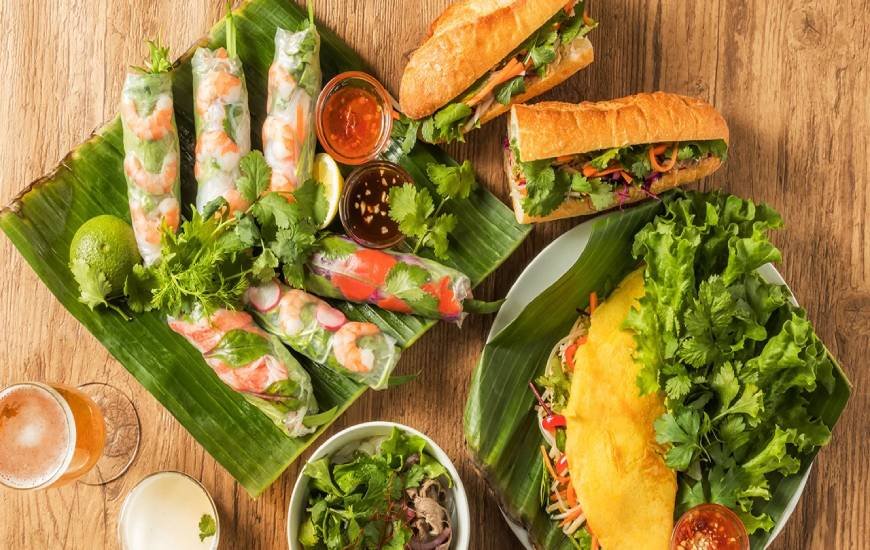
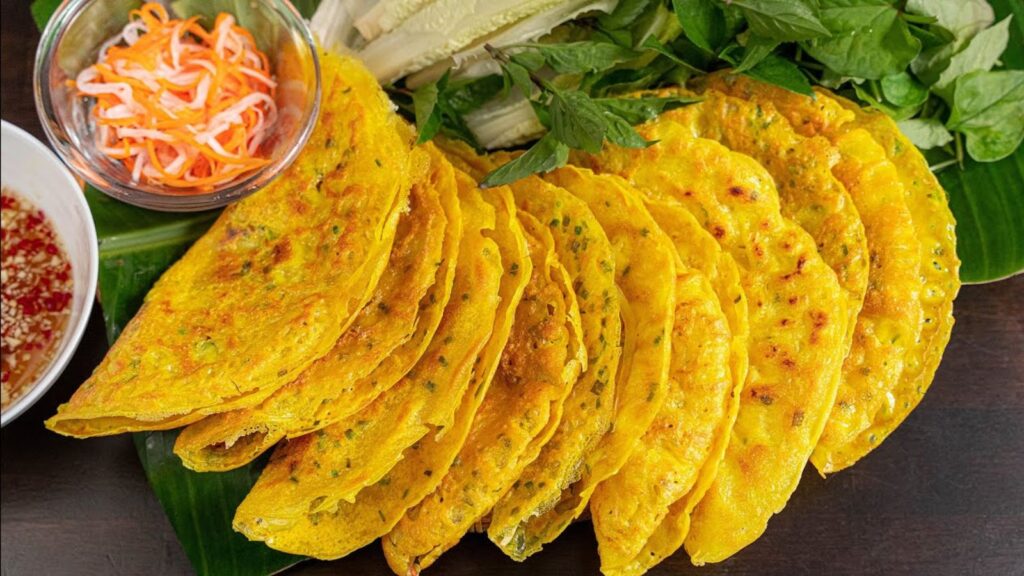
Vietnamese Pancake is a savory rice-based pancake cooked until crispy and filled with shrimp, pork, and fresh vegetables. Locals call it Banh Xeo because of the sizzling sound when the batter hits the hot pan.
This dish reflects the Vietnamese habit of sharing food and spending time together. Families often gather around the pan, wait for each pancake, and eat slowly with herbs and dipping sauce. Because of this, Vietnamese Pancake is often mentioned alongside other Vietnamese traditional cakes that carry strong cultural value rather than just flavor.
2. Key Ingredients That Define the Flavor of Vietnamese Pancake
Vietnamese Pancake uses simple ingredients, but each one plays a clear role in shaping the final taste.
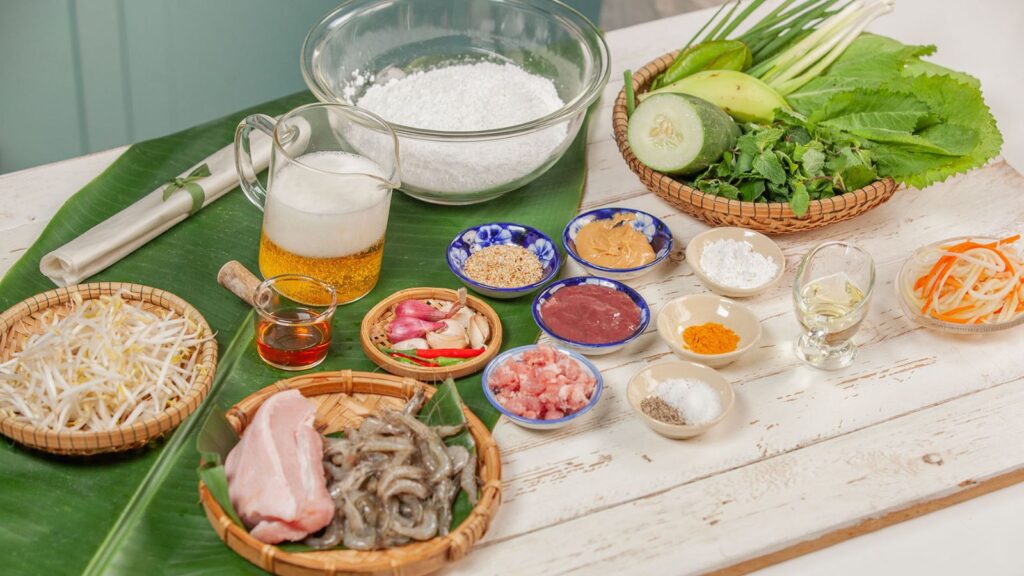
- Rice flour and turmeric powder
Rice flour creates a light structure that allows the pancake to stay thin and crisp. Turmeric adds color and a mild aroma, making Vietnamese Pancake visually appealing without overpowering the flavor. - Coconut milk or water
In southern Vietnam, coconut milk gives Vietnamese Pancake a richer and slightly sweet taste. In central regions, water is more common, resulting in a lighter pancake that highlights dipping sauce flavors. - Shrimp and pork belly
Shrimp brings natural sweetness, while pork belly adds richness and fat. Together, they create balance and make Vietnamese Banh Xeo filling without being heavy. - Bean sprouts and green onions
These vegetables add freshness and crunch. They also reduce oiliness and improve texture. - Fresh herbs and fish sauce
Herbs like lettuce and mustard greens refresh the palate. Fish sauce connects all flavors and completes the dish.
3. How Vietnamese Pancake Is Traditionally Made
Vietnamese Pancake requires attention and experience, even though the ingredients are simple. Locals usually cook each pancake to order to ensure freshness.
Step 1: Preparing the batter
The cook mixes rice flour, turmeric, salt, and liquid until smooth and lump-free. The batter must be thin enough to spread easily but not watery. Many cooks adjust the batter by sight rather than exact measurements.
Step 2: Heating the pan correctly
A wide pan is heated with oil until very hot. This heat level is important because it creates the crispy edges Vietnamese Pancake is known for. If the pan is not hot enough, the pancake turns soft instead of crisp.
Step 3: Pouring and spreading the batter
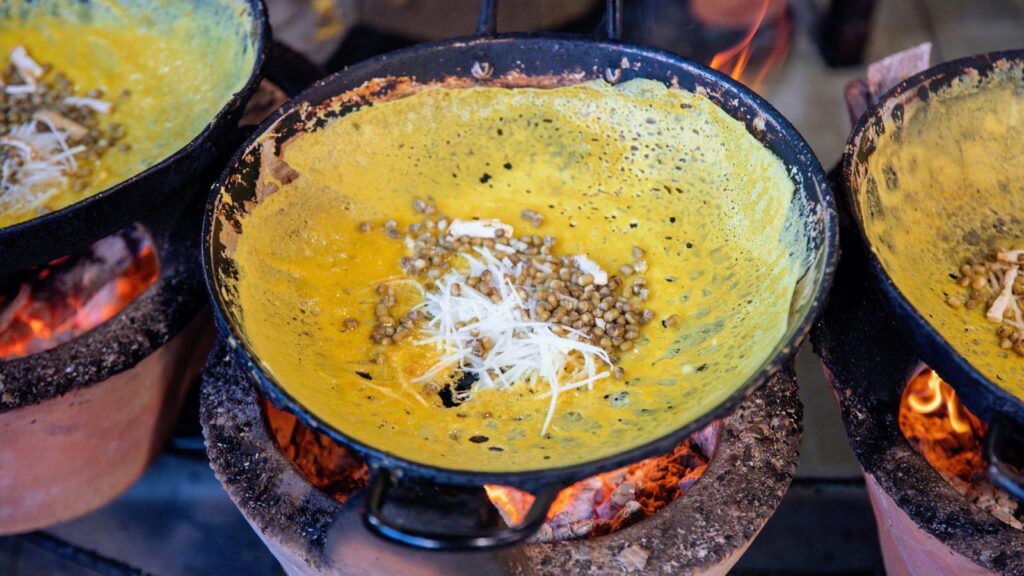
The batter is poured into the pan and quickly rotated to form a thin layer. At this moment, you hear the “xeo” sound that gives Vietnamese Banh Xeo its name. This step requires speed and confidence.
Step 4: Adding fillings in order
Shrimp and pork are added first so they cook fully in the hot pan. Bean sprouts and green onions are added later to keep them crunchy. Timing here affects texture and flavor.
Step 5: Cooking without a lid
The pancake cooks uncovered to allow steam to escape. This method keeps the pancake crispy and prevents sogginess. Locals rarely rush this step.

Step 6: Folding and serving
Once golden, the pancake is folded in half and removed from the pan. Vietnamese Pancake is served immediately while hot. Locals believe delayed serving ruins the texture.
For travelers joining a Vietnam food tour, observing this process gives practical insight into Vietnamese daily cooking culture.
4. Popular Types of Vietnamese Pancake You Should Know
Vietnamese Pancake changes noticeably across regions. Understanding these styles helps travelers choose what suits them best.
- Southern Vietnamese Pancake
This version is large, thin, and very crispy. Coconut milk is commonly used, and many herbs are served alongside. Travelers often encounter it while exploring Ho Chi Minh street food scenes. - Central Vietnamese Pancake
Central-style Vietnamese Pancake is smaller and thicker. It focuses more on dipping sauce flavor and balance rather than size. This style feels lighter and more affordable. - Coastal Vietnamese Pancake
Coastal areas use fresh seafood such as squid or shrimp. The flavor is clean and highlights local ingredients rather than heavy seasoning.
| Region | Size | Texture | Typical Ingredients | Average Price |
|---|---|---|---|---|
| South | Large | Very crispy | Shrimp, pork, coconut milk | Medium |
| Central | Small | Soft-crispy | Pork, shrimp | Low |
| Coastal | Medium | Light | Fresh seafood | Medium |
5. Where to Try Authentic Banh Xeo in Vietnam
This dish appears across Vietnam, but the taste, size, and eating style change by region. Knowing where to try Vietnamese Banh Xeo helps travelers avoid tourist traps and enjoy the dish the local way.
- Ho Chi Minh City
Ho Chi Minh City offers some of the most famous Vietnamese Pancake spots, especially in local districts rather than central tourist areas. Here, Banh Xeo is usually large, crispy, and served with a wide variety of herbs, making it ideal for travelers exploring Ho Chi Minh street food after sunset. - Central Vietnam (Hue and Da Nang)
Central Vietnam serves smaller Vietnamese Pancake portions that focus more on balance than size. Travelers often enjoy this version while joining a Central Vietnam tour, as the lighter flavor and stronger dipping sauce fit well with cultural sightseeing routes. - Mekong Delta
In the Mekong Delta, Vietnamese Pancake often includes local herbs and coconut-based batter. This style reflects the region’s agricultural lifestyle and fits naturally into slow-paced travel experiences. - Ha Noi
Vietnamese Pancake is not traditional to northern Vietnam, but selected local restaurants still serve good versions. Many travelers discover it through curated Ha Noi street food tour programs that introduce dishes from different regions of Vietnam.

For travelers joining a Vietnam classic tour or a Vietnam local food tour, Banh Xeo often appears as a cultural highlight rather than just a meal. Want to try it? Contact Sun Getaways Travel for a perfect tour!
6. How Much Does This Dish Cost?
Vietnamese Pancake is one of the most budget-friendly local dishes for international travelers. However, prices vary clearly by region, portion size, and dining location.
- In Central Vietnam, small Vietnamese Pancake portions usually cost 15,000-30,000 VND per piece, making them the cheapest option in the country.
- In Southern Vietnam, where pancakes are larger and richer, prices commonly range from 40,000-80,000 VND per pancake.
- In popular tourist areas or restaurants with air conditioning, prices may reach 90,000-120,000 VND, but portions are often bigger.
7. Tips for First-Time Travelers Trying Vietnamese Pancake
Vietnamese Pancake is easy to enjoy, but first-time travelers often feel unsure about how to eat it properly. These tips help you avoid confusion and enjoy the dish confidently.
- Always eat Vietnamese Pancake with herbs
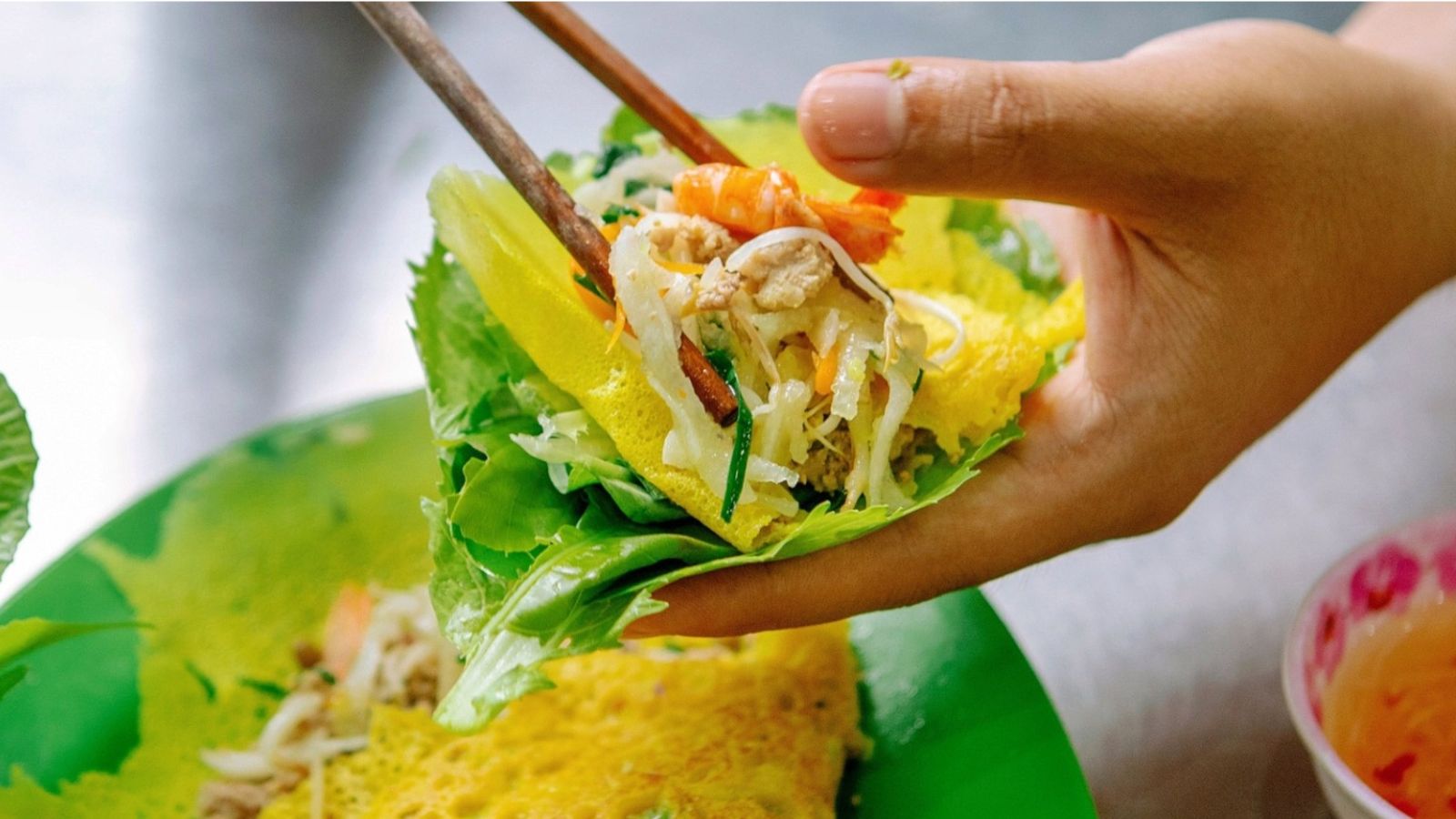
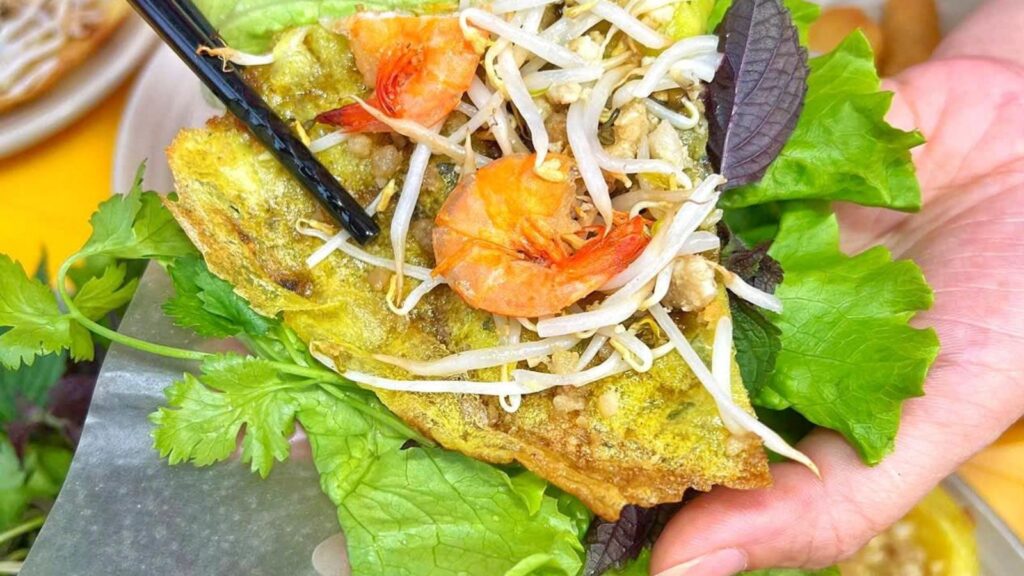
Locals never eat Vietnamese Banh Xeo alone. Fresh herbs balance oiliness, refresh your palate, and help digestion. - Wrap small portions instead of large bites
Vietnamese Pancake is meant to be eaten slowly. Wrapping small pieces allows you to enjoy the texture without feeling overwhelmed. - Dip gently, not heavily
Locals dip each bite lightly into fish sauce. This method avoids overpowering the pancake and keeps flavors balanced. - Choose places where locals eat
Crowded local spots usually mean fresh pancakes cooked continuously. This is often a better sign of quality than a fancy menu. - Observe before eating
Watching locals for one minute often explains everything. This simple step helps first-time travelers feel comfortable and respectful.
Expert Tip:
“Many travelers enjoy Vietnamese Pancake more after they learn how locals wrap and dip it. Understanding the eating style often matters as much as the taste.”
– Mrs. Emma Nguyen, Tour Operator Manager with over 12 years of experience at Sun Getaways Travel
8. FAQs About Vietnamese Pancake
Vietnamese Pancake can feel rich due to frying. Eating it with herbs and smaller portions usually makes it easier to digest.
No, crispiness depends on region and cooking style. Southern versions are crispier, while central versions are softer.
Some restaurants offer vegetarian versions. Always ask clearly about ingredients and sauces.
Yes, if the stall looks clean and busy. High turnover usually means fresh ingredients and safer food.
One large pancake is usually enough for one person. Smaller central-style pancakes may require two or three pieces.
9. Conclusion
Vietnamese Pancake offers travelers a clear taste of Vietnam’s food culture, from cooking style to eating habits. Whether you try crispy southern versions or affordable central styles, Vietnamese Banh Xeo helps you understand local life beyond landmarks. It is a simple dish with deep cultural meaning.
At Sun Getaways Travel, we design journeys that connect food, culture, and local experiences across Vietnam. Let us help you explore Vietnam where every meal becomes part of your travel story.


Related Tour

Experience Vietnam’s Diverse Regions in 14 Days


31 Reviews

Mekong Experience: My Tho & Ben Tre
7 Reviews

A Journey of a Lifetime: 12-Day Vietnam Beach Holiday
15 Reviews

Love’s Retreat: Honeymoon Adventure in Vietnam 14 days
20 Reviews


15-Day Vietnam Food Tour: A Culinary Adventure
19 Reviews
Ask a question
Leave a Comment (0)
No questions yet. Be the first to ask a question!
See related Posted
Luxury Golf Resorts in Vietnam – Elite Golf Travelers

Vietnam is increasingly recognized as a premier golf destination in Asia, therefore luxury golf…
Macrame in Vietnam: The Revival of Knot Art in Contemporary Craft Culture

Macrame in Vietnam reflects the country’s growing engagement with contemporary handmade culture, where global…
Vietnamese Musical Instrument Craft: Traditional Instrument Making in Vietnam

Vietnamese musical instrument craft reflects a long-standing relationship between sound, material, and cultural memory.…
Traditional Vietnamese Kite Art: History, Craftsmanship, and Cultural Meaning

Traditional Vietnamese kite art is a living expression of folk creativity, community values, and…
Vietnamese Folk Masks: Tradition, Symbolism & Cultural Meaning

Vietnamese folk masks are a distinctive form of traditional art that reflects the spiritual…
Vietnamese Embroidery Art: Traditional Craftsmanship & Cultural Meaning

Vietnamese embroidery art is a refined traditional craft that reflects patience, cultural memory, and…