





Vietnamese Mi Quang: How to Enjoy This Iconic Dish Like a Local
 HoangAn
  3 min. to read
 Have you ever searched for Vietnamese Mi Quang but felt overwhelmed by mixed information from blogs and videos? Many travelers want to try this special dish yet struggle to understand what makes Vietnamese Quang noodle unique or where to find the best version. If that sounds like you, this guide will finally clear things up. In this article, you will learn what the dish is, how it tastes, how much it costs, where to enjoy it, and why it is a must-try on any Vietnam trip.
Key Takeaways
- Vietnamese Mi Quang is a unique dish characterized by its minimal broth and rich ingredients, setting it apart from typical noodle soups.
- The dish features chewy yellow rice noodles, a flavorful but limited broth, and a variety of proteins such as shrimp, pork, and quail eggs.
- You can enjoy Mi Quang best in Central Vietnam, particularly in Da Nang and Hoi An, where local flavors shine.
- To eat Mi Quang like a local, crush the sesame rice cracker, mix ingredients thoroughly, and add fresh herbs for a refreshing taste.
- Vietnamese Mi Quang is affordable, typically ranging from 30,000 to 85,000 VND, making it a must-try dish for budget travelers.

1. What Makes Vietnamese Mi Quang Unique?
Vietnamese Mi Quang is a completely different experience from other traditional Vietnamese noodle soups. Its defining characteristic is the very small amount of intensely flavored broth, which makes it more of a dry noodle dish. The focus is entirely on the richness of the ingredients and the texture of the noodles.
1.1. The Signature Components of Vietnamese Mi Quang
This dish is celebrated for its unique presentation and the rich, complex mix of toppings. Every bowl is an artistic blend of color and flavor.
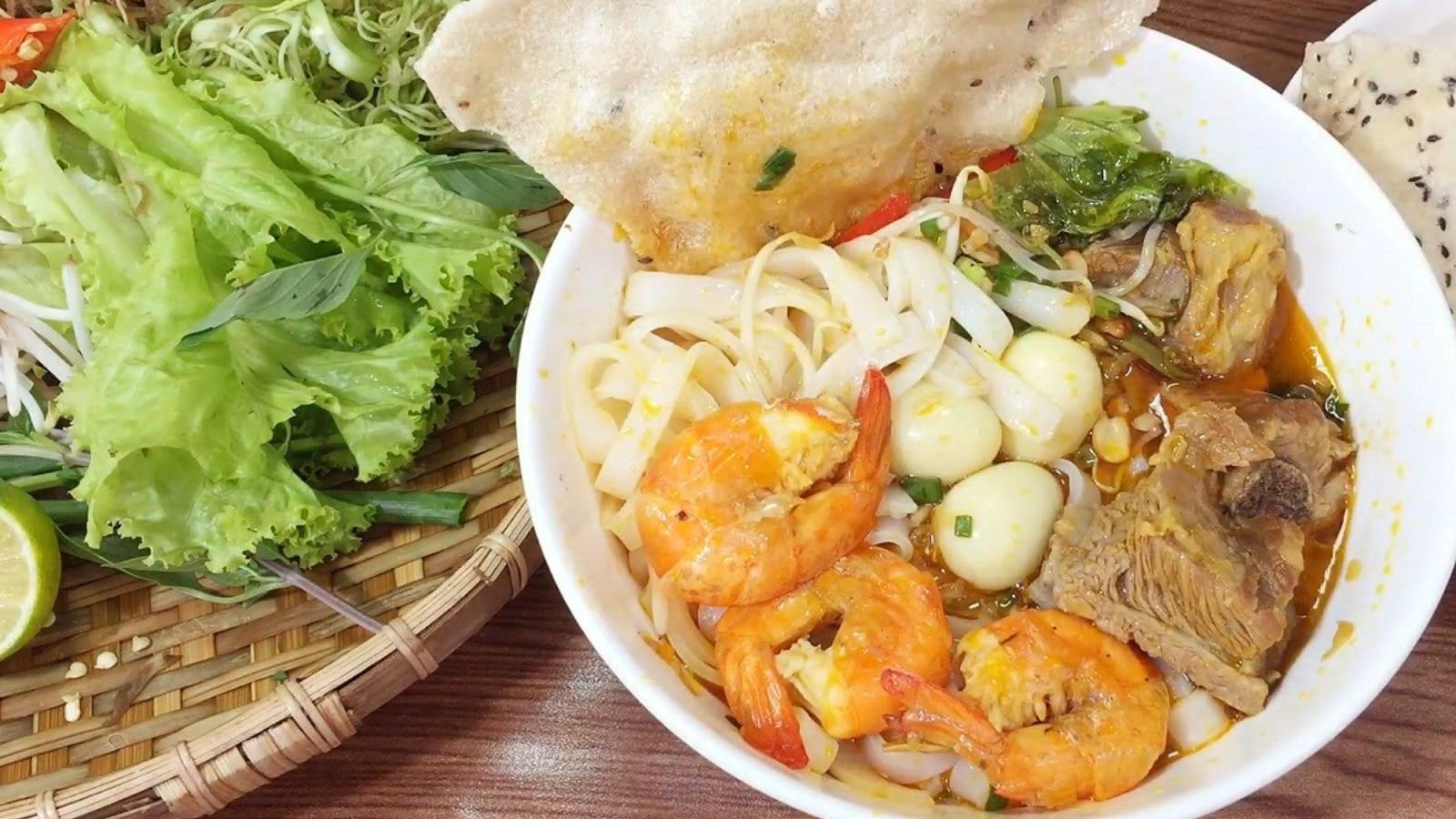
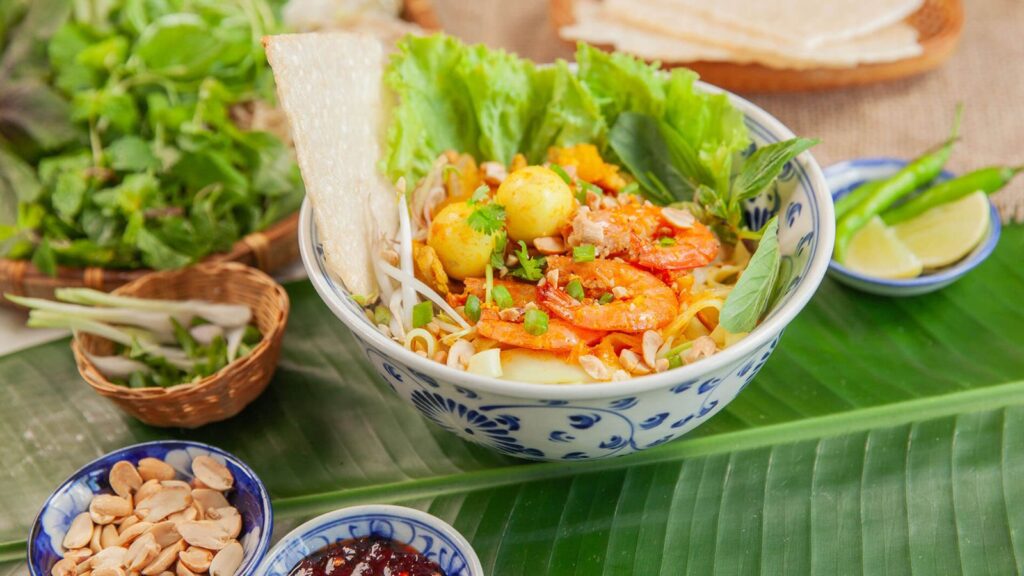
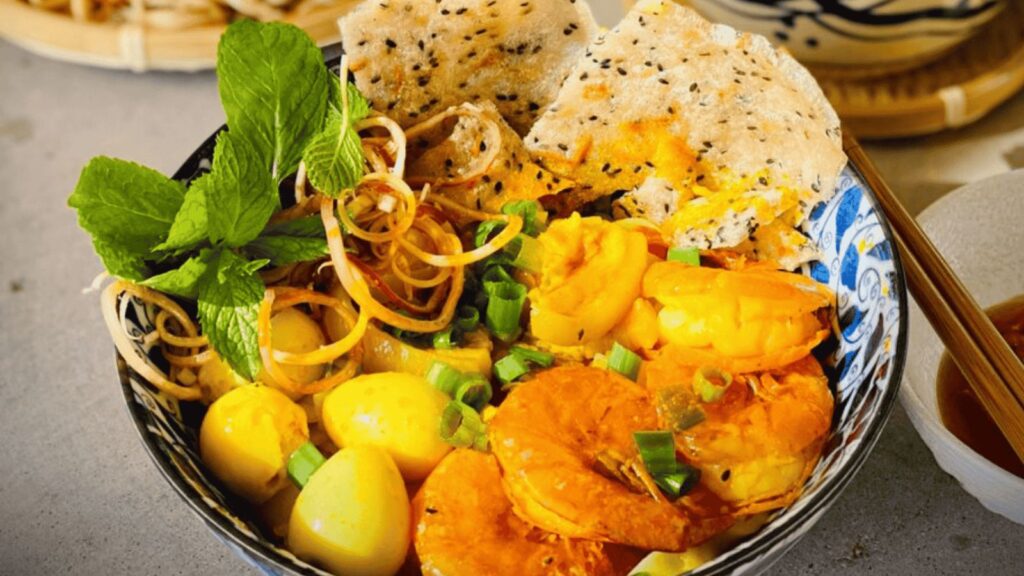
- The Noodles: The noodles used in Vietnamese Mi Quang are thick, wide, and flat rice noodles. They have a slightly chewy texture. Crucially, they are often tinted yellow using turmeric, which gives the dish its signature golden hue and a subtle earthy flavor.
- The Rich, Minimal Broth: Unlike a typical Vietnamese noodle soup, the broth (nuoc leo) in Mi Quang is very limited – just enough to coat the noodles and moisten the dish. This broth is intensely flavorful, made from simmering pork or chicken bones and often seasoned with fish sauce, turmeric, and shrimp or crab.
- Protein Medley: Vietnamese Mi Quang often features a combination of proteins in one bowl. Common additions include shrimp, slices of marinated pork, and sometimes chicken or quail eggs. This variety of protein ensures every spoonful is a surprise and makes the dish very hearty.
1.2. The Importance of Toppings and Crispy Elements
The toppings are just as essential as the noodles and broth. They provide the necessary crunch and aroma that defines a great Vietnamese Quang noodle bowl.
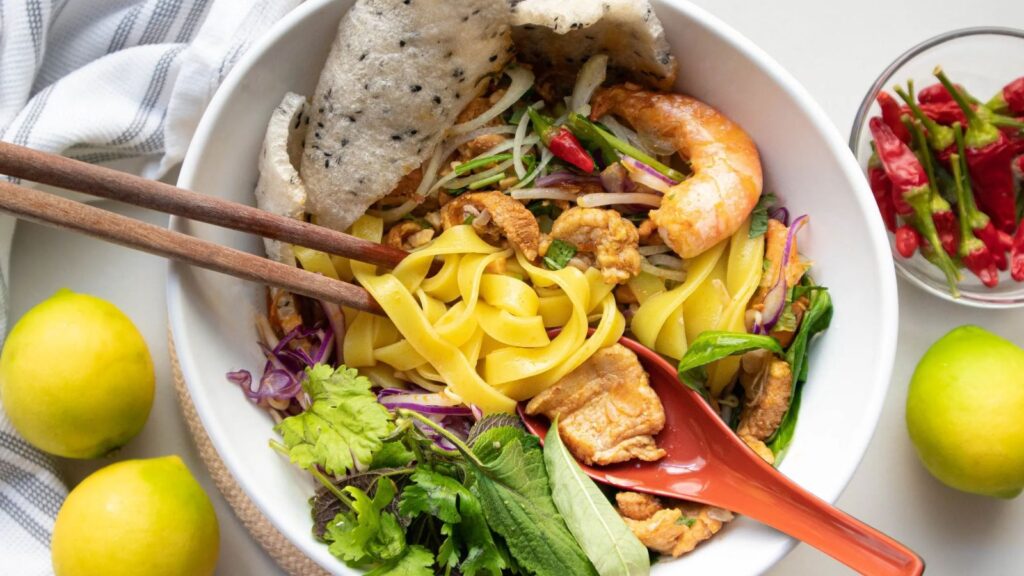
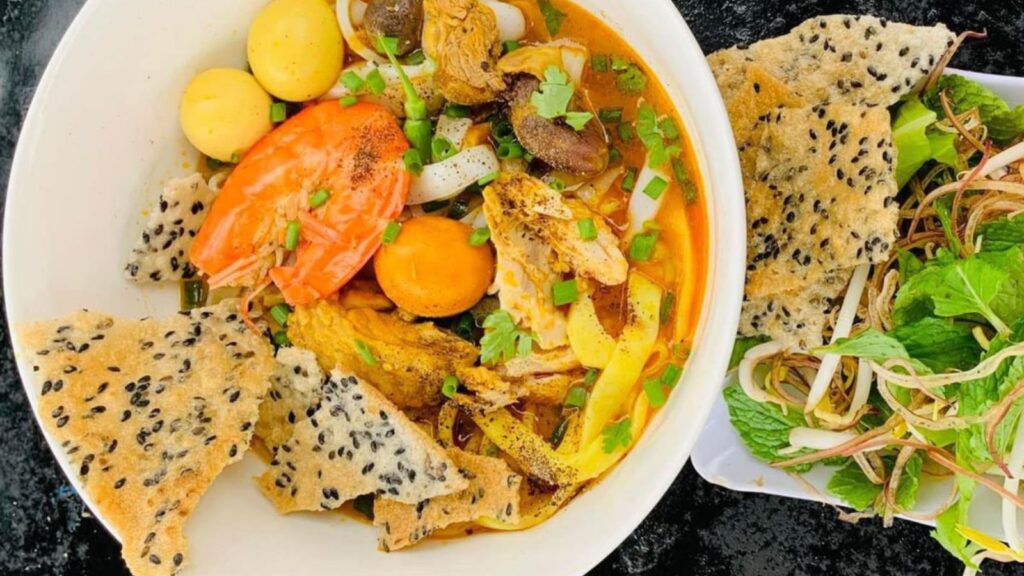
- The Peanuts and Sesame Crackers: A generous topping of crushed roasted peanuts is mandatory. This adds a crucial nutty flavor and crunch. Most importantly, a large, savory sesame rice cracker (banh trang or banh da) is served either in the bowl or on the side. This cracker must be broken up and mixed into the dish to provide texture.
- Fresh Herbs and Greens: A separate plate of fresh herbs and chopped vegetables always accompanies Mi Quang. This often includes shredded banana blossom, mint, coriander, and lettuce. These herbs add essential freshness and a slight bitterness that cuts through the richness of the turmeric broth.
2. Exploring the Diversity of Vietnamese Mi Quang
While the fundamentals remain the same, the Vietnamese Mi Quang dish has adapted to local tastes and ingredient availability, resulting in several delicious variations. Trying a local food tour is a great way to sample these differences.
2.1. Popular Variations of Vietnamese Quang Noodle
The name often changes based on the primary protein used, allowing you to choose your preferred type of meat or seafood.
- Mi Quang Tom Thit (Shrimp and Pork): This is the most classic and widely available version. It features a rich, savory broth made with both pork and shrimp, creating a complex seafood-pork fusion. This combination offers the most traditional and balanced flavor profile of the dish.
- Mi Quang Ga (Chicken): This variation uses chicken pieces, which are often simmered right in the broth, making the broth light yet deeply savory. The chicken provides a familiar, comforting flavor for travelers.
- Mi Quang Ca (Fish) and Mi Quang Ech (Frog): These versions are more rustic and common in rural areas or specialized stalls. They feature snakehead fish or frog legs, offering a truly adventurous and authentic local flavor experience.
2.2. Where to Find the Best Vietnamese Mi Quang
To experience the best Vietnamese Mi Quang, you must travel to its birthplace in Central Vietnam. Da Nang and Hoi An are the ideal locations.
- Da Nang City: Da Nang, a modern coastal city, has many long-standing Mi Quang institutions. Look for busy local restaurants near markets. These city spots are known for high quality and excellent cleanliness.
- Hoi An Ancient Town: The ancient town of Hoi An, a UNESCO World Heritage site, offers excellent Mi Quang with a slightly sweeter, more refined broth. Eating this dish in the charming, lantern-lit streets of Hoi An is a unique cultural experience, making it a perfect addition to any sightseeing tour.
3. The Art of Eating Vietnamese Mi Quang Like a Local
Unlike the dipping style of Bun cha or the mixing of Bun thit nuong, eating Vietnamese Mi Quang requires a few specific steps to achieve the perfect flavor.
3.1. Step-by-Step Guide to Enjoying Your Bowl
Follow these steps to ensure you enjoy the full spectrum of flavors and textures the Vietnamese Quang noodle dish offers.
- Crush the Cracker: Before starting, break the sesame rice cracker (banh trang) into large pieces and mix them right into the bowl. The cracker absorbs the broth and becomes slightly soft but still crunchy. This contrast of soft noodles and crunchy cracker is vital.
- Mix Thoroughly: Because the broth is minimal, you must mix the ingredients thoroughly with your chopsticks. Mix the turmeric noodles, proteins, broth, peanuts, and cracker pieces so they are evenly coated.
- Add the Herbs: Tear the fresh herbs with your hands and add them liberally to the bowl. The freshness of the herbs cuts through the rich, oily broth, ensuring the dish doesn’t feel too heavy.
3.2. Recommended Condiments to Customize Your Bowl
Every table will have condiments for you to adjust the final taste of your Vietnamese Mi Quang.
- Chili Sauce/Paste: Add a little chili paste to boost the heat and brighten the turmeric-rich broth. You can add a small spoonful and mix it in.
- Lime and Fish Sauce: If the broth feels too rich, a squeeze of fresh lime juice adds necessary acidity. Add a few drops of extra fish sauce if you prefer a slightly saltier taste.
4. Cost Analysis and Value of Vietnamese Mi Quang
As with most authentic Vietnamese street food, Vietnamese Mi Quang offers incredible value for travelers, especially considering the quality and complexity of the ingredients.
4.1. Typical Price Range
The prices for a bowl of this specialized Central Vietnamese delicacy are extremely affordable, even in popular tourist areas like Da Nang.
| Location Type | Price Range (VND) | Price Range (USD Approx.) | Key Takeaway |
| Local Stalls/Markets | 30,000 VND – 50,000 VND | $1.20 – $2.00 | Most authentic, includes generous toppings and crackers. |
| Mid-Range Restaurants | 55,000 VND – 85,000 VND | $2.20 – $3.40 | Often air-conditioned, slightly larger portions, excellent for comfort. |
For a filling meal with complex ingredients like shrimp and quail eggs, this price point makes Mi Quang an outstanding choice for any traveler on a budget.
4.2. Ordering a “Special” Bowl
When you order, you can often ask for a To Dac Biet (Special Bowl). This typically means they will add more protein – more shrimp, pork, or another quail egg. Travelers with a big appetite will appreciate this option, and you only spend a little extra.
Looking for the best Mi Quang stops to add to your Central Vietnam itinerary? Reach out to Sun Getaways Travel – we’ll help you map out the perfect route through Da Nang and Hoi An, complete with the most authentic places to enjoy this iconic dish.
5. Traveling Central Vietnam: Mi Quang and Sightseeing
Sampling Vietnamese Mi Quang is a perfect way to immerse yourself in the culture of Central Vietnam. The flavor is a direct reflection of the region’s culinary traditions.
5.1. Combining Mi Quang with Central Vietnam Tours
Central Vietnam offers historical sites and beautiful beaches, and you can easily integrate a Mi Quang meal into your touring schedule.
- Hoi An Culinary Tours: Since Hoi An is so famous for its food, the city offers many dedicated local food tour experiences. A guide can help you navigate the specialized food stalls, including those serving the best local Mi Quang.
- Da Nang Exploration: In Da Nang, enjoy your Vietnamese Mi Quang for lunch before heading to the stunning coastline. Attractions like My Khe Beach and the nearby Marble Mountains are easily accessible from the city center.

5.2. The Central Vietnamese Noodle Distinction
This dish, along with other Central specialties like Cao Lau, highlights how distinct the Vietnamese noodle dishes of this region are. Central Vietnamese food often uses less liquid than the North and South, focusing on powerful, concentrated flavors and interesting textures, like the crispy cracker. The limited, rich broth of the Vietnamese Mi Quang is the perfect proof of this distinction.
Mrs. Emma Nguyen – Tour Operator Manager with over 12 years of experience at Sun Getaways Travel advises: “When you receive your bowl of Vietnamese Mi Quang, don’t hesitate to break up that big rice cracker and mix it in immediately. This is the single most important step to truly appreciate the amazing texture contrast that the dish is famous for.”
6. FAQs about Vietnamese Mi Quang
No, Vietnamese Mi Quang is not naturally spicy. You can add chili if you want extra heat, but the base flavor is mild and friendly for all travelers.
Yes, some shops offer vegetarian versions with tofu and vegetables. The broth is lighter but still tasty and satisfying.
Yes, most travelers find it easy to digest. Choose clean, busy shops for the best experience.
Yes, the flavors are mild and balanced. You can ask the staff to reduce spices for kids.
Morning is the best time because the broth is fresh. Many shops sell out before noon.
7. Conclusion
Vietnamese Mi Quang is one of the easiest and most enjoyable dishes you can try in Vietnam. It fits well with any travel style, and it offers a clear taste of Central Vietnam culture. Whether you visit Da Nang, Hoi An, or Quang Nam, this dish is always worth trying.
Ready to explore Vietnam with confidence and discover more authentic dishes like Mi Quang? Contact Sun Getaways Travel today to get expert guidance and a personalized travel plan made just for you.


Related Tour

Love’s Retreat: Honeymoon Adventure in Vietnam 14 days


20 Reviews

13 Days Vietnam Beauty from North to South
19 Reviews

4 Days Hanoi Halong Ninh Binh Muslim Tour
21 Reviews

Exploring Vietnam: 9 Days of Adventures
10 Reviews

12 Days Vietnam From North To South With Hue
14 Reviews

A Journey of a Lifetime: 12-Day Vietnam Beach Holiday
15 Reviews
Ask a question
Leave a Comment (0)
No questions yet. Be the first to ask a question!
See related Posted
Luxury Golf Resorts in Vietnam – Elite Golf Travelers

Vietnam is increasingly recognized as a premier golf destination in Asia, therefore luxury golf…
Macrame in Vietnam: The Revival of Knot Art in Contemporary Craft Culture

Macrame in Vietnam reflects the country’s growing engagement with contemporary handmade culture, where global…
Vietnamese Musical Instrument Craft: Traditional Instrument Making in Vietnam

Vietnamese musical instrument craft reflects a long-standing relationship between sound, material, and cultural memory.…
Traditional Vietnamese Kite Art: History, Craftsmanship, and Cultural Meaning

Traditional Vietnamese kite art is a living expression of folk creativity, community values, and…
Vietnamese Folk Masks: Tradition, Symbolism & Cultural Meaning

Vietnamese folk masks are a distinctive form of traditional art that reflects the spiritual…
Vietnamese Embroidery Art: Traditional Craftsmanship & Cultural Meaning

Vietnamese embroidery art is a refined traditional craft that reflects patience, cultural memory, and…