






Vietnamese Lacquer Painting: History, Techniques, and Cultural Significance
 PhamDuong
  3 min. to read
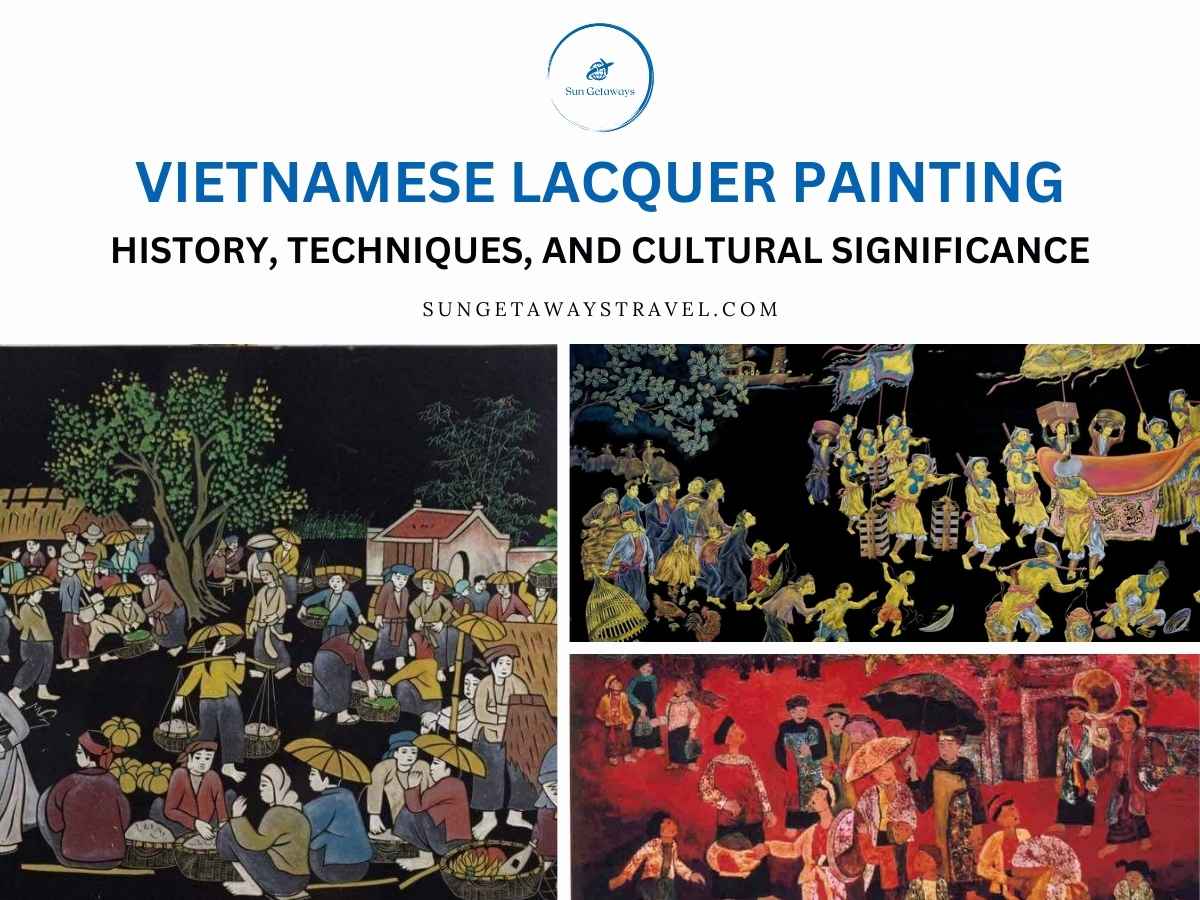
 Vietnamese lacquer painting is one of the most distinctive and refined forms of traditional art in Vietnam. More than a decorative craft, it represents a unique fusion of material mastery, cultural symbolism, and philosophical worldview. Through centuries of development, Vietnamese lacquer painting has evolved into a sophisticated art form that reflects national identity, aesthetic values, and artistic resilience.
Unlike industrial lacquerware found elsewhere, Vietnamese lacquer painting is deeply rooted in traditional craftsmanship and spiritual thinking. Each artwork requires patience, technical skill, and a profound understanding of materials—making it both an artistic and cultural practice.
Key Takeaways
- Vietnamese lacquer painting is a unique art form combining traditional craftsmanship with philosophical and cultural values.
- Key characteristics include natural materials, multi-layered techniques, and a focus on harmony and symbolism.
- Historically, this art evolved from functional items to a respected fine art medium, especially during the colonial era.
- Common themes reflect cultural memory, spirituality, and everyday life, using symbolism rather than strict realism.
- Today, Vietnamese lacquer painting continues to thrive, balancing tradition with modern expressions in various contexts.
1. What Is Vietnamese Lacquer Painting?

Vietnamese lacquer painting is an art form that uses natural lacquer sap combined with pigments, gold, silver, eggshell, and layered polishing techniques to create durable and luminous artworks.
Key characteristics include:
- Use of natural lacquer resin extracted from the lacquer tree (sơn ta).
- Multi-layered construction, where colors and materials are built gradually.
- Polishing techniques that reveal hidden layers and depth.
- Strong emphasis on harmony, balance, and symbolism.
Unlike oil or watercolor painting, lacquer painting is not applied in a single visible layer. Instead, the final image emerges only after extensive polishing—making the process as important as the result.
2. Historical Development of Lacquer Art in Vietnam
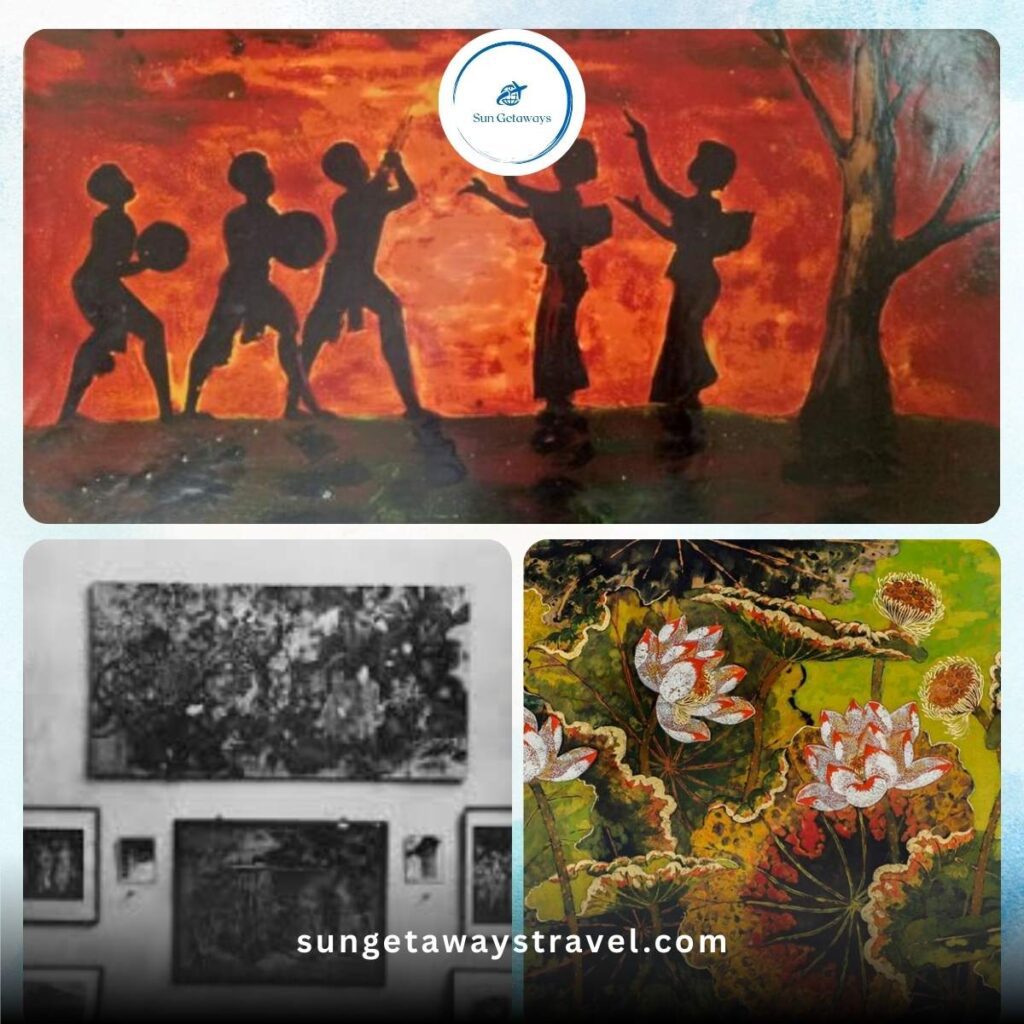
The history of Vietnamese lacquer painting is closely connected to traditional crafts, religious art, and later, the emergence of modern fine arts. Over time, lacquer evolved from a functional material into a highly respected artistic medium.
2.1. Early Origins
- Lacquer was originally used for ritual objects, temple decorations, and everyday household items.
- Early lacquerware appeared in altars, statues, ceremonial furniture, and architectural elements in communal houses and pagodas.
- The craft was deeply associated with spiritual beliefs, ancestor worship, and protective symbolism.
- Lacquer surfaces were valued not only for beauty but also for durability and sacred significance.
2.2. Colonial-Era Transformation
In the early 20th century, Vietnamese artists began adapting traditional lacquer techniques for fine art painting rather than decoration alone. The École des Beaux-Arts de l’Indochine played a crucial role in systematizing lacquer as a modern artistic medium. Artists experimented with composition, perspective, scale, and narrative themes, expanding the expressive range of lacquer painting. This period marked the transition from craft-based lacquerware to Vietnamese lacquer painting as a distinct art form.
2.3. Modern Evolution
Lacquer painting gradually became a symbol of national artistic identity. Artists combined traditional materials with contemporary themes such as daily life, social change, and abstract expression. While styles and subjects evolved, the core techniques and cultural philosophy of lacquer painting remained intact. Today, Vietnamese lacquer painting continues to balance tradition and innovation.
3. Cultural Values Embedded in Vietnamese Lacquer Painting
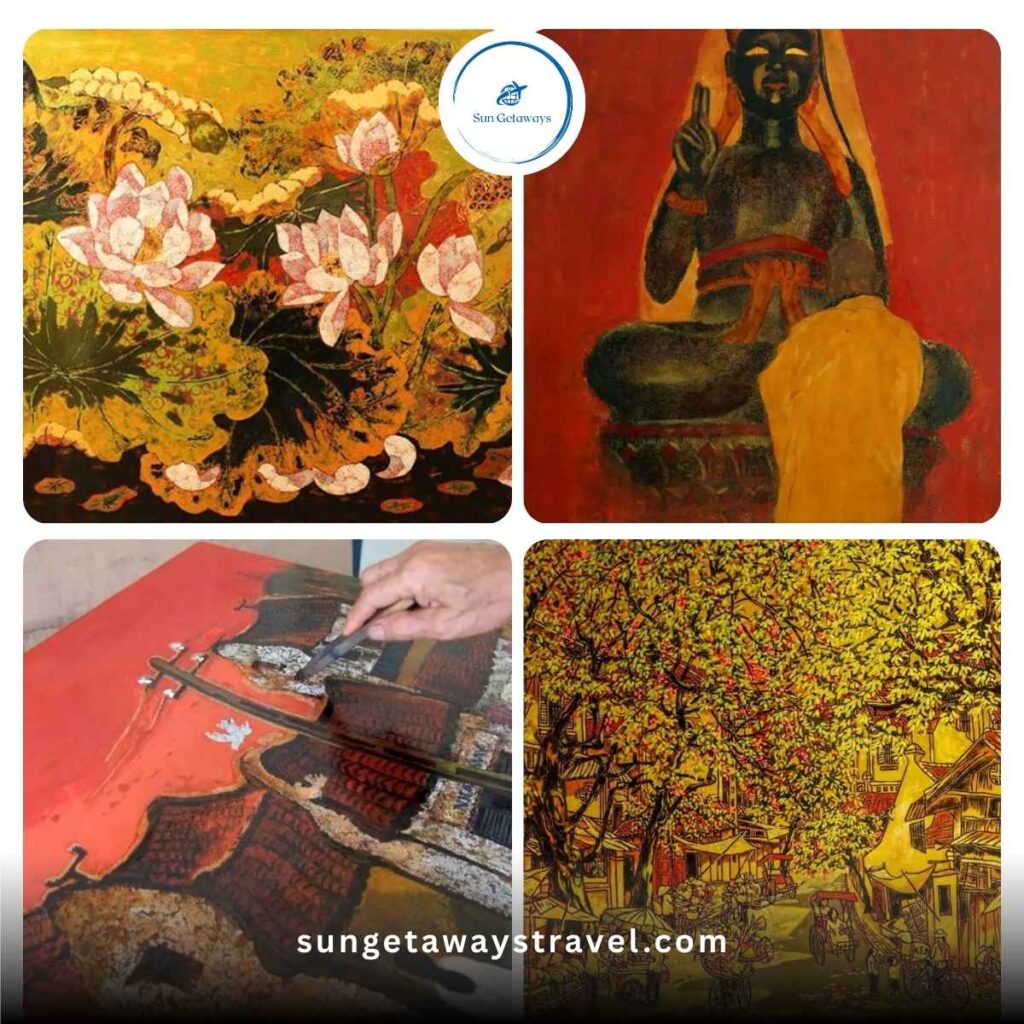
Vietnamese lacquer painting reflects deep cultural and philosophical values rather than purely visual aesthetics. These values are embedded in both subject matter and artistic process.
Common values include:
- Harmony with nature:
- Landscapes, water, plants, and seasonal cycles frequently appear in lacquer paintings.
- Nature is portrayed as a living, balanced system rather than a backdrop.
- Spiritual awareness:
- Many works reference Buddhism, folk beliefs, and ancestral traditions.
- Spiritual themes are often expressed subtly through symbolism rather than literal imagery.
- Patience and discipline:
- The slow, multi-layered process mirrors traditional values of endurance, focus, and craftsmanship.
- Artists must plan carefully and work over long periods of time.
- Balance and restraint:
- Colors, materials, and compositions avoid excess or dramatic contrast.
- Emphasis is placed on depth, harmony, and quiet visual strength.
These values distinguish Vietnamese lacquer painting from other lacquer traditions in East Asia, highlighting its unique cultural worldview.
4. Materials Used in Vietnamese Lacquer Painting
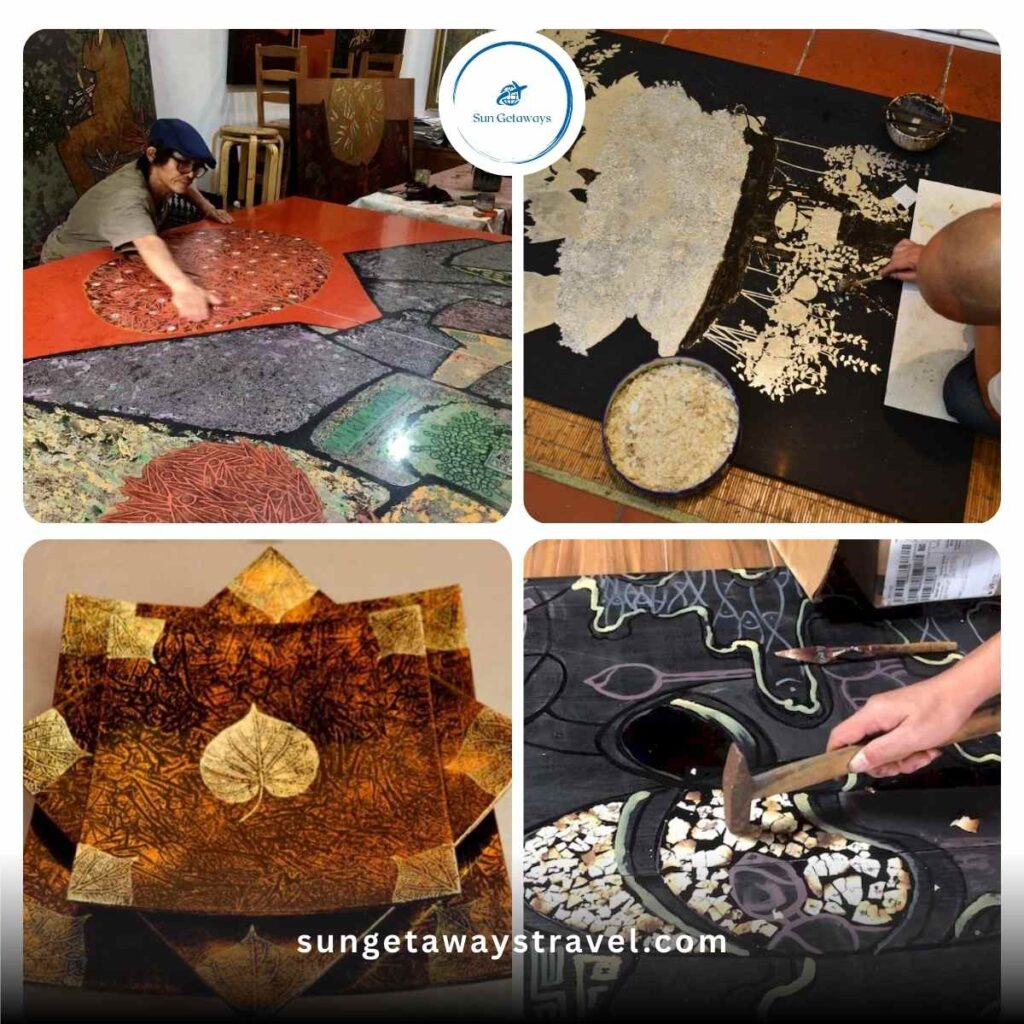
The uniqueness of Vietnamese lacquer painting lies in its materials, many of which are natural, complex, and labor-intensive to prepare.
Key materials include:
- Natural lacquer (sơn ta):
- Extracted from lacquer trees and processed carefully.
- Provides durability, depth, and a distinctive glossy surface.
- Eggshell:
- Crushed and embedded between lacquer layers.
- Creates texture, contrast, and symbolic associations with purity and renewal.
- Gold and silver leaf:
- Used to add luminosity and visual richness.
- Often carries symbolic meanings related to prosperity and spirituality.
- Natural pigments:
- Derived from minerals and organic sources.
- Contribute to the subtle, earthy color palette of lacquer paintings.
- Wooden panels:
- Serve as the traditional base for most lacquer artworks.
- Ensure stability and longevity for the finished piece.
Each material plays a specific role in creating the layered visual depth and symbolic meaning that define Vietnamese lacquer painting.
To see how traditional handcraft adapts to contemporary design, explore 👉 Macrame in Vietnam with a special focus on Macrame in Hoi An, where craft, tourism, and creativity intersect.
5. Lacquerware Painting Techniques Explained
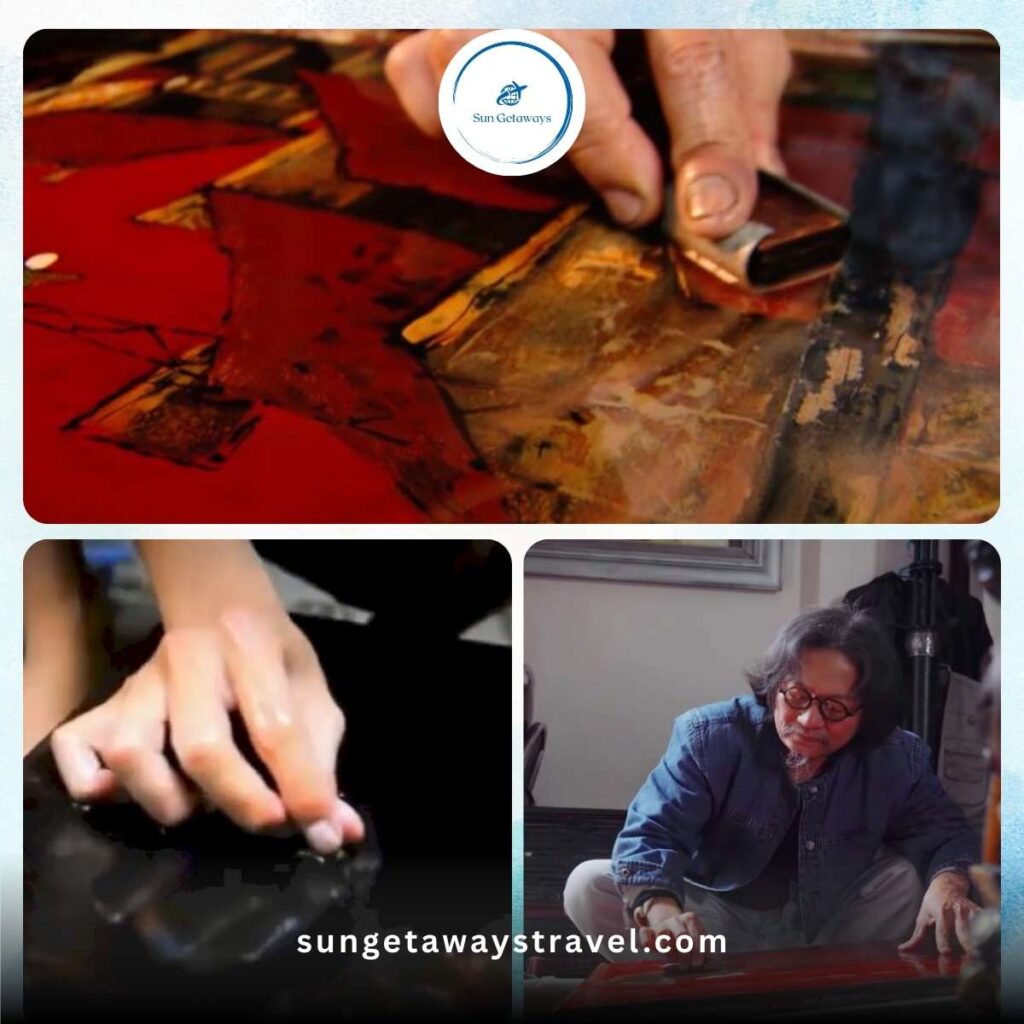
Understanding lacquerware painting techniques is essential to appreciating Vietnamese lacquer painting as a serious fine art rather than a purely decorative craft. Each technique requires long-term planning, technical precision, and deep material knowledge.
5.1. Core Techniques
Layering:
- Multiple layers of lacquer and pigment are applied gradually over weeks or even months.
- Each layer must dry completely before the next is added, creating depth and durability.
Inlaying:
- Materials such as eggshell, gold leaf, or silver foil are embedded between lacquer layers.
- This technique adds texture, contrast, and symbolic richness to the composition.
Polishing:
- Surfaces are carefully polished to reveal hidden layers beneath.
- The polishing stage determines the final balance of color, light, and depth.
Color sealing:
- Final lacquer layers protect the artwork from moisture and aging.
- These layers also unify the composition, creating a smooth and harmonious surface.
For those interested in sound-based heritage, discover👉 Vietnamese musical instrument craft and the principles behind traditional instrument making in Vietnam, from court music to folk performance.
5.2. Why Technique Matters
- The final image is not fully visible until the last polishing stage, making the process unpredictable.
- Artists must visualize the finished work from the very beginning, often months in advance.
- Mistakes are extremely difficult to correct, requiring high precision and patience.
- The success of a painting depends as much on technique as on artistic vision.
These lacquerware painting techniques highlight the complexity and craftsmanship that define Vietnamese lacquer painting as a refined art form.
6. Common Themes in Vietnamese Lacquer Painting
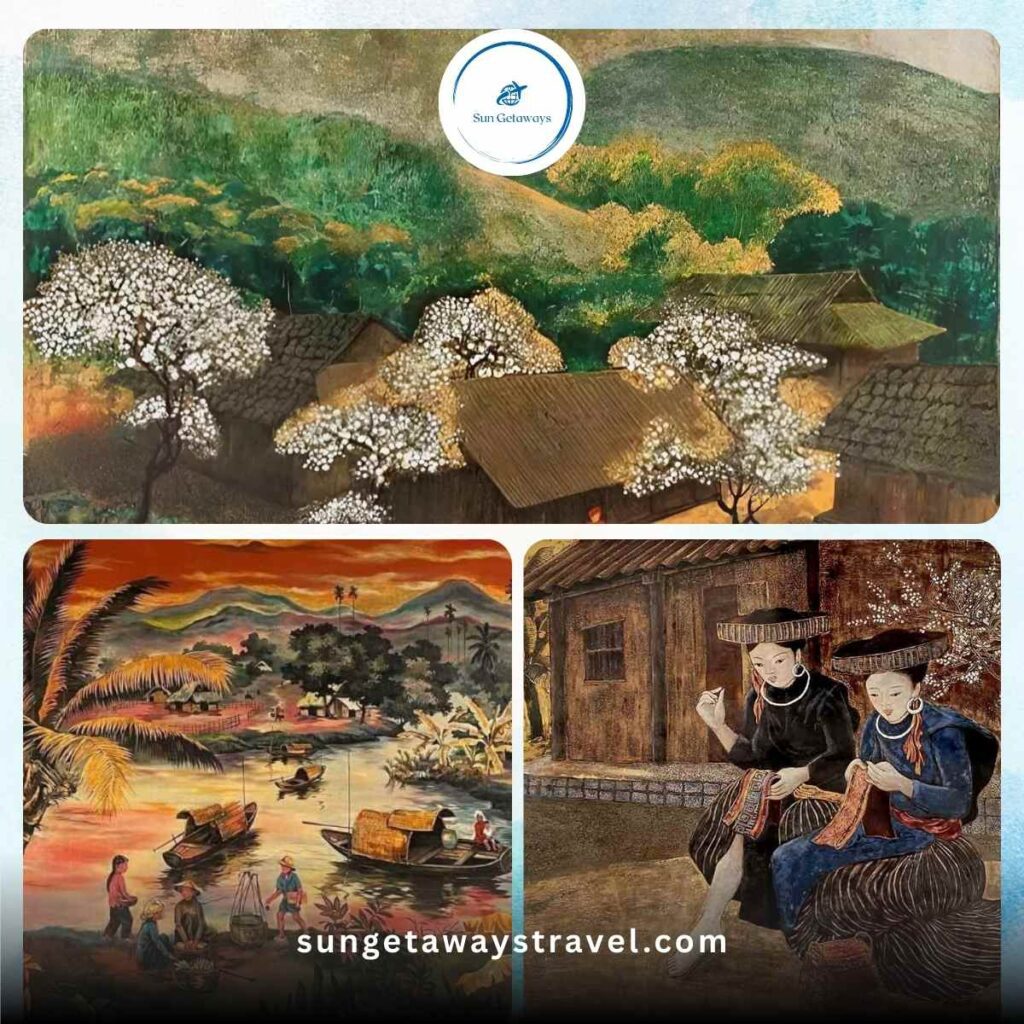
Themes in Vietnamese lacquer painting often reflect cultural memory, spiritual values, and everyday life rather than literal realism. Artists use symbolism and atmosphere to convey deeper meanings.
Popular subjects include:
- Rural landscapes and village life: Scenes of rice fields, rivers, and traditional homes emphasize harmony with nature.
- Traditional festivals and rituals: Depictions of communal celebrations highlight cultural continuity and collective identity.
- Women, family, and communal harmony: Female figures often symbolize nurturing, resilience, and social balance.
- Nature-inspired abstract compositions: Stylized forms and textures suggest natural rhythms rather than realistic detail.
- Spiritual and symbolic imagery: References to Buddhism, folk beliefs, and ancestral worship appear through color and form.
Rather than strict realism, many works emphasize mood, emotion, and cultural essence, reinforcing the distinctive identity of Vietnamese lacquer painting.
7. Comparison Table: Vietnamese Lacquer Painting Techniques
| Technique | Description | Cultural Significance |
|---|---|---|
| Layering | Applying multiple lacquer layers over time | Represents patience and discipline |
| Eggshell Inlay | Embedding crushed eggshell for texture | Symbolizes purity and renewal |
| Gold/Silver Leaf | Adding metallic layers between lacquer | Associated with prosperity and spirituality |
| Polishing | Revealing hidden layers through sanding | Reflects philosophical depth |
| Natural Pigments | Using mineral and organic colors | Connection to nature and tradition |
This table helps readers understand how lacquerware painting techniques shape both aesthetics and meaning.
8. Vietnamese Lacquer Painting in Contemporary Art
Today, Vietnamese lacquer painting continues to thrive in both traditional and contemporary contexts.
Modern developments include:
- Abstract and experimental compositions
- Social and historical commentary
- Fusion with modern design and architecture
- Exhibition in international galleries and museums
Despite innovation, artists continue to rely on traditional lacquer techniques, preserving the integrity of the art form.
If you are curious about performance and ritual culture, read more about 👉 Vietnamese folk masks and the enduring Vietnamese folk mask making tradition across regions and festivals.
9. Best Places to Experience Vietnamese Lacquer Painting
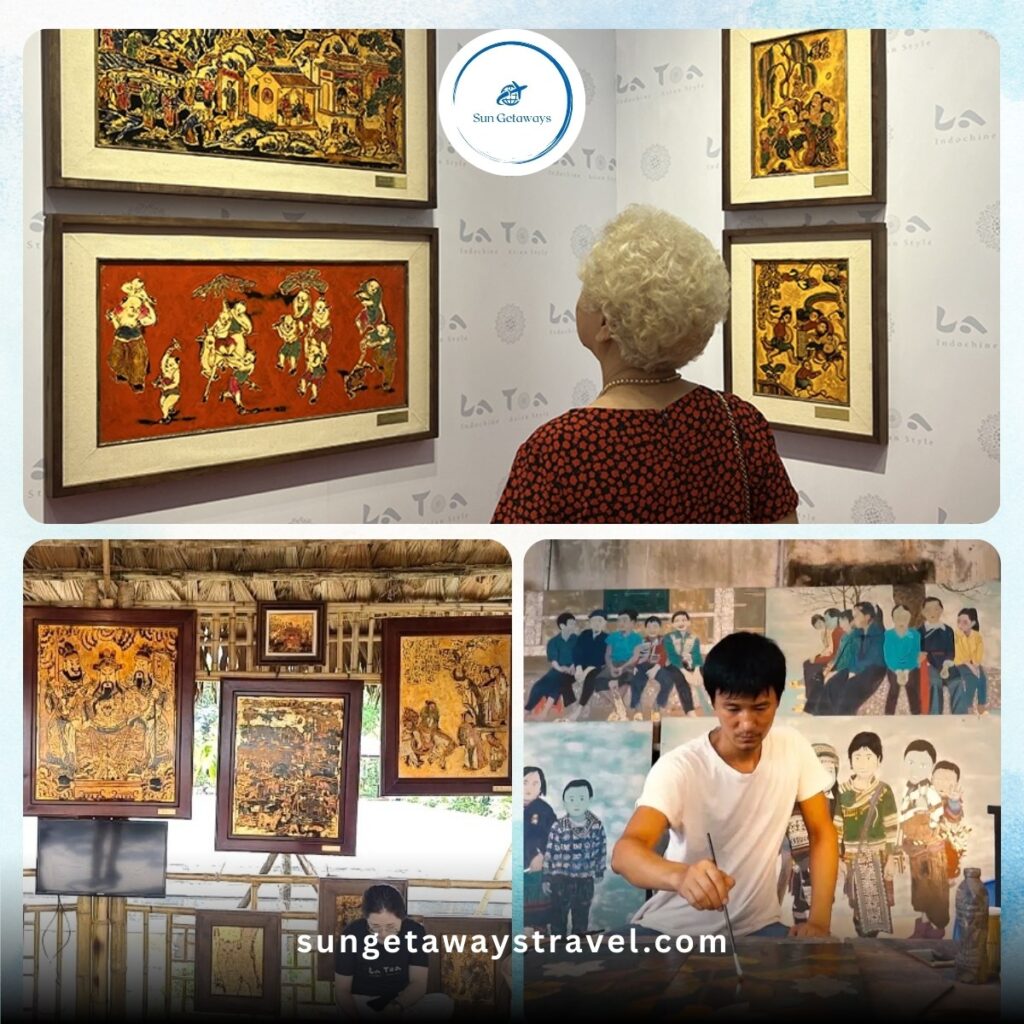
Visitors interested in Vietnamese lacquer painting can explore both historical and living traditions.
- Art museums and galleries featuring lacquer works
- Traditional craft villages producing lacquerware
- Educational workshops and exhibitions
- Royal-era lacquer decorations and artifacts
- Connection to ceremonial and spiritual arts
- Refined aesthetic rooted in imperial culture
- Home-based workshops maintaining handmade techniques
- Generational transmission of lacquer skills
- Less-commercialized artistic environments
👉 Need quick advice or want to talk directly with our team?
Contact us via WhatsApp for fast support and personal recommendations.
10. How to Appreciate Lacquerware Painting as a Visitor
To fully appreciate Vietnamese lacquer painting, visitors should approach it thoughtfully, with patience and cultural awareness.
Take time to observe surface depth and texture:
- Lacquer paintings reveal their beauty gradually through layered surfaces.
- Light reflection, color transitions, and hidden details become clearer when viewed slowly.
Learn basic lacquerware painting techniques before viewing:
- Understanding layering, inlaying, and polishing helps explain why the artwork looks subtle rather than bold.
- Even basic knowledge allows viewers to recognize technical mastery.
Respect workshops and avoid touching unfinished works:
- Fresh lacquer layers are extremely delicate and sensitive to humidity.
- Touching unfinished pieces can permanently damage months of work.
Ask artisans about materials and process when appropriate:
- Many artisans are happy to explain their techniques if approached politely.
- These conversations provide valuable insight into both craft and cultural meaning.
Understanding the creative process greatly enhances appreciation of the final lacquer artwork, transforming it from a visual object into a cultural and artistic experience.
Expert Insight:
“Vietnamese lacquer painting is one of the most refined expressions of traditional craftsmanship in Vietnam. For visitors, understanding the techniques behind each piece transforms admiration into true appreciation.”
— Mrs. Emma Nguyen – Tour Operator Manager with over 12 years of experience at Sun Getaways Travel
Conclusion
Vietnamese lacquer painting stands as a powerful example of how traditional art can remain relevant across centuries. Through complex materials, layered techniques, and cultural symbolism, it embodies the Vietnamese worldview—patient, harmonious, and deeply connected to nature and spirit. By understanding both Vietnamese lacquer painting and the lacquerware painting techniques behind it, audiences gain insight into a living tradition that continues to evolve while honoring its roots.
👉 If you prefer a journey tailored exactly to your interests, pace, and travel style, let Sun Getaways Travel help you design a customized tour created just for you.


Related Tour

Ba Na Hills Full Day Tour


10 Reviews

Experience Vietnam’s Diverse Regions in 14 Days
31 Reviews
6 Days Hanoi Sapa Da Nang Muslim Trip
0 Reviews

Northern Vietnam Delights: Hanoi, Halong Bay & Sa Pa 6 Days
27 Reviews
10-Day Serenity in Vietnam: Honeymoon Haven
10 Reviews

Ask a question
Leave a Comment (0)
No questions yet. Be the first to ask a question!
See related Posted
Luxury Golf Resorts in Vietnam – Elite Golf Travelers

Vietnam is increasingly recognized as a premier golf destination in Asia, therefore luxury golf…
Macrame in Vietnam: The Revival of Knot Art in Contemporary Craft Culture

Macrame in Vietnam reflects the country’s growing engagement with contemporary handmade culture, where global…
Vietnamese Musical Instrument Craft: Traditional Instrument Making in Vietnam

Vietnamese musical instrument craft reflects a long-standing relationship between sound, material, and cultural memory.…
Traditional Vietnamese Kite Art: History, Craftsmanship, and Cultural Meaning

Traditional Vietnamese kite art is a living expression of folk creativity, community values, and…
Vietnamese Folk Masks: Tradition, Symbolism & Cultural Meaning

Vietnamese folk masks are a distinctive form of traditional art that reflects the spiritual…
Vietnamese Embroidery Art: Traditional Craftsmanship & Cultural Meaning

Vietnamese embroidery art is a refined traditional craft that reflects patience, cultural memory, and…