







How to Experience Authentic Vietnamese Agricultural Tourism on Your Next Trip
 Dan Vy
  3 min. to read
 When travelers think of Vietnam, they often imagine vibrant street food markets, stunning terraced rice fields, and the endless charm of local villages. But there’s another side to the country that’s often overlooked — Vietnamese agricultural tourism. This form of travel lets visitors go beyond sightseeing to live the daily rhythm of rural Vietnam: planting rice, catching fish, harvesting tea, and connecting with local farmers.
Whether you’re seeking a peaceful escape or a meaningful cultural encounter, Vietnamese agricultural tourism offers the best of both worlds — nature and authenticity. In this guide, we’ll show you how to make your next trip to Vietnam a true immersion into its countryside charm.
1. What Is Vietnamese Agricultural Tourism?
At its core, Vietnamese agricultural tourism combines travel with hands-on rural experiences. Instead of visiting farms as passive observers, travelers actively participate in daily agricultural life — from sowing seeds to preparing traditional meals made from fresh, local ingredients.

This type of tourism benefits both sides: visitors gain unforgettable experiences, while farmers receive additional income and recognition for preserving traditional livelihoods.
Common forms include:
- Rice farming and buffalo plowing in the northern highlands
- Tea-picking and tasting in Thai Nguyen or Moc Chau
- Organic vegetable planting in Tra Que Village (Hoi An)
- Fruit harvesting in the Mekong Delta
- Coffee farm visits in Buon Ma Thuot
Each activity highlights a unique aspect of Vietnam’s agricultural heritage — one that’s deeply tied to its culture and community.
2. Why Choose Vietnamese Agricultural Tourism?
For many travelers, Vietnam’s cities can feel bustling and fast-paced. Rural tourism offers a completely different experience — a chance to slow down, reconnect with nature, and rediscover simplicity.
Here’s why Vietnamese agricultural tourism is becoming one of the country’s most sought-after experiences:
a. Authentic Connection with Locals
Farm stays in Vietnam and farm tours Vietnam bring travelers into direct contact with local families. You’ll stay in homestays surrounded by rice paddies, share homemade meals, and listen to stories passed down through generations. It’s not just sightseeing; it’s genuine human connection.

b. Sustainable Travel Choice
Agricultural tourism supports local economies and helps preserve traditional farming techniques. By choosing farm tours Vietnam, you contribute directly to sustainable rural development rather than mass tourism.
c. Experiential Learning
Learn traditional techniques like rice transplanting, fish catching using bamboo baskets, or making organic compost. These hands-on experiences are often therapeutic and educational — especially for families and groups.
d. Breathtaking Natural Landscapes
From the emerald terraces of Sapa to the lush orchards of the Mekong Delta, rural Vietnam is filled with postcard-perfect scenery. Agricultural tourism allows you to work within these landscapes, not just photograph them.
3. Top Destinations for Vietnamese Agricultural Tourism
Vietnam’s diversity means there’s no single “best” place for Vietnamese agricultural tourism — every region offers a unique flavor. Let’s explore some must-visit spots for your next farm-inspired journey.
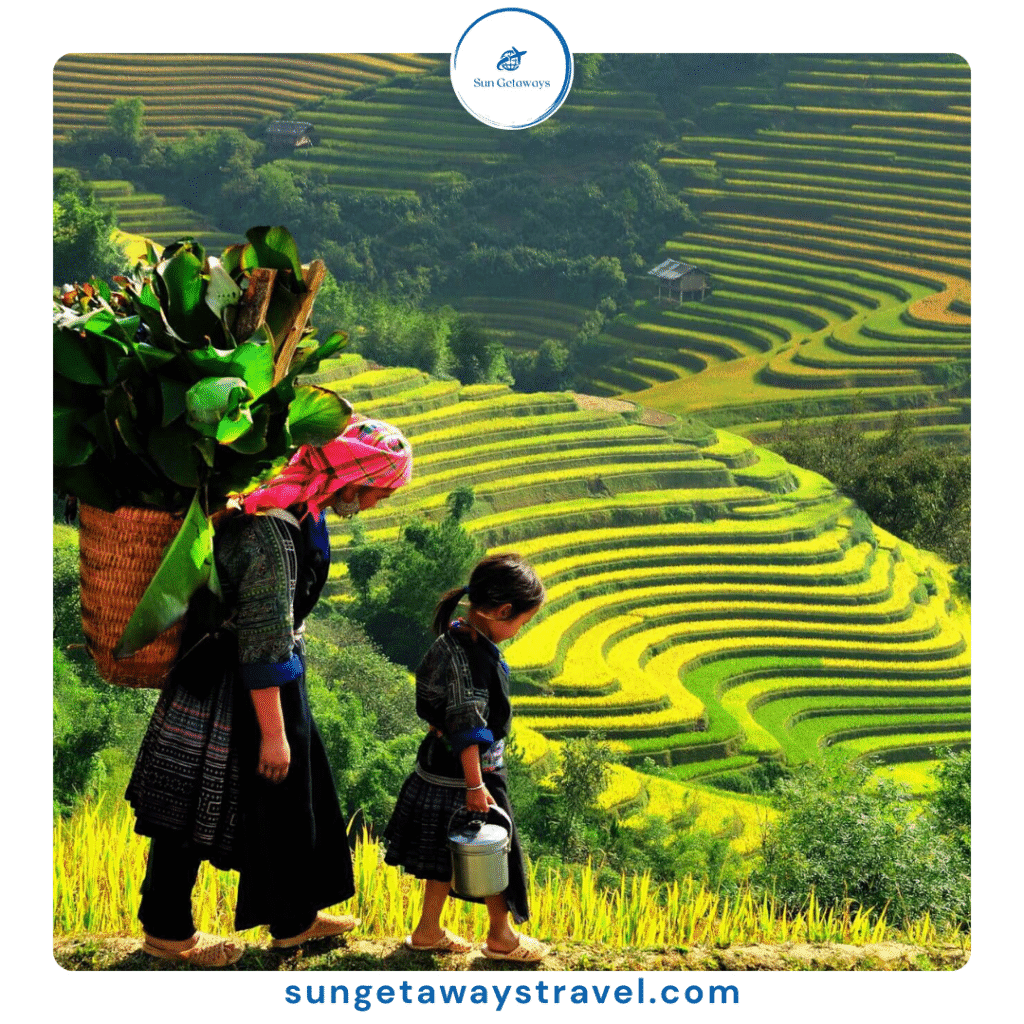
a. Sapa – The Icon of Rice Terraces
Sapa is perhaps the most iconic destination for farm experiences. Travelers can join local ethnic communities like the H’mong and Dao to plant or harvest rice in stunning stepped fields. Trekking routes here combine scenic beauty with hands-on farming activities.
b. Hoi An – Tra Que Vegetable Village
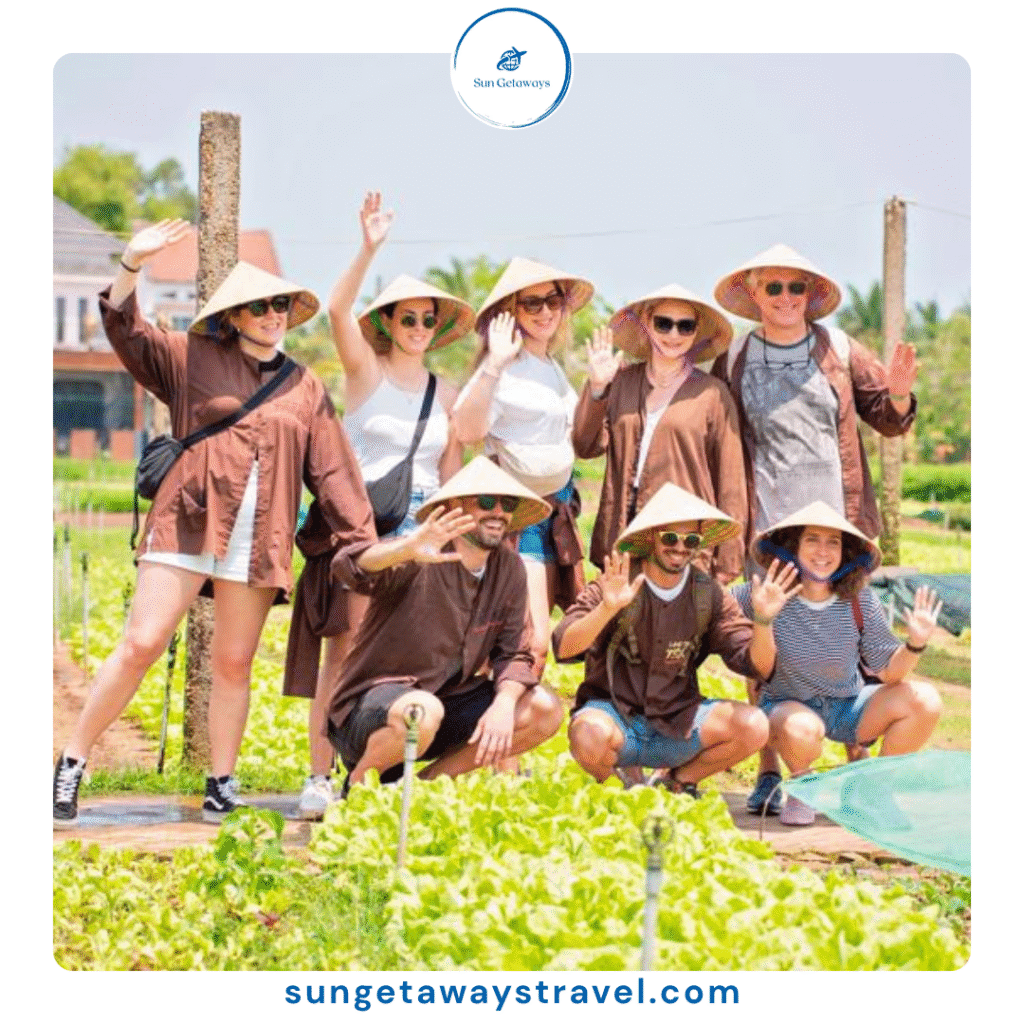
Located just 3 km from Hoi An Ancient Town, Tra Que Village is a model of organic farming. Visitors can learn to prepare soil, water vegetables with traditional tools, and even cook dishes using fresh-picked herbs. Many farm tours Vietnam itineraries include a morning here followed by a local cooking class.
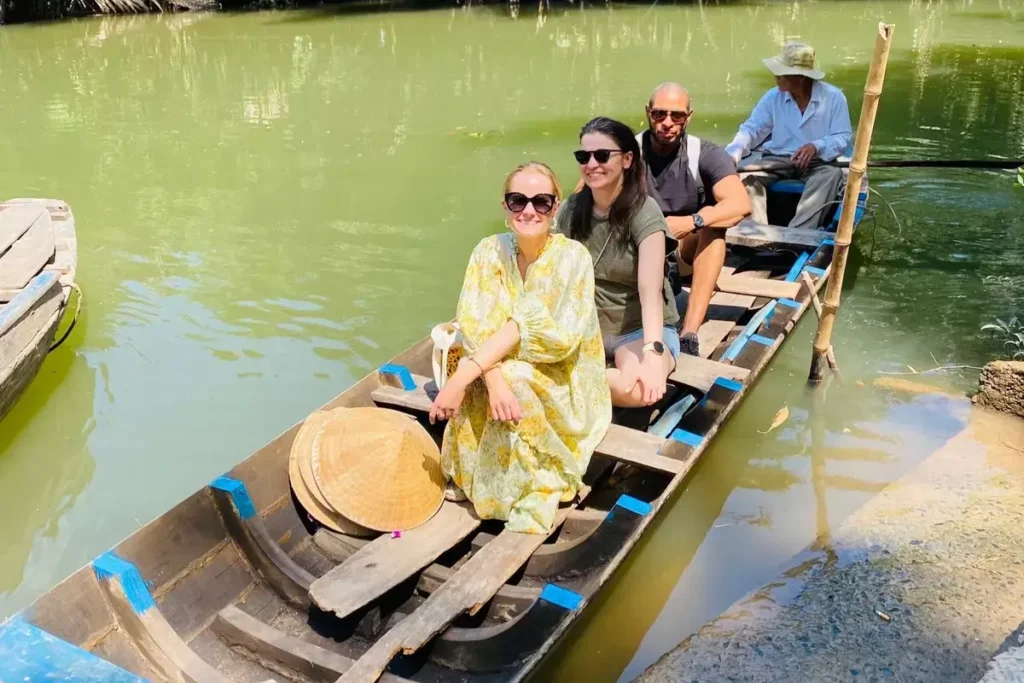
c. Mekong Delta – Fruit Gardens and Floating Markets
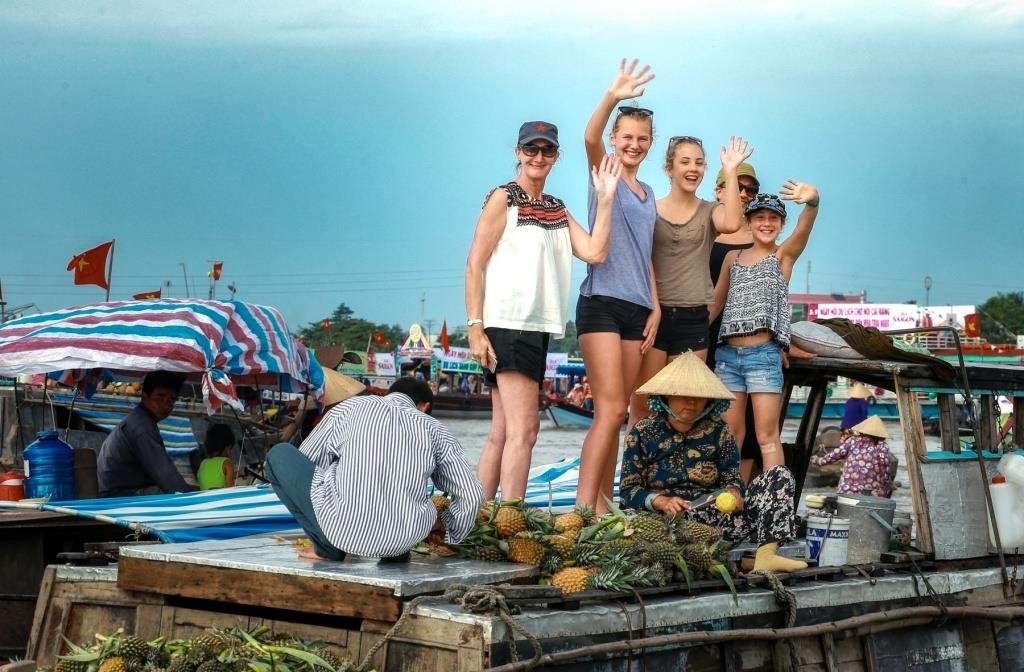
In the south, the Mekong Delta offers an abundance of tropical fruit farms. From tasting ripe rambutan and durian to rowing through canals lined with coconut palms, you’ll get to see how local farmers live in harmony with water.
d. Moc Chau and Thai Nguyen – Tea Plantations
Northern Vietnam’s misty highlands are perfect for tea cultivation. Visitors can join tea-picking sessions, learn about tea processing, and sample different varieties — a calm, meditative experience.
e. Buon Ma Thuot – Coffee Heaven
Known as Vietnam’s coffee capital, Buon Ma Thuot invites travelers to visit coffee plantations, roast beans, and understand the story behind Vietnam’s famous robusta Vietnamese coffee.
4. How to Plan the Perfect Vietnamese Agricultural Tourism Trip
Planning your countryside journey requires balancing comfort and authenticity. Here’s how to make the most of it.
Step 1: Choose the Right Season
Vietnam’s farming calendar changes throughout the year. For rice planting, visit in May–June; for harvest, September–October. Fruit farms in the Mekong Delta are best from April to August.
Step 2: Combine Farm Life with Cultural Discovery
Many farm tours Vietnam include nearby cultural attractions — ethnic villages, temples, and markets. Blending these together gives you a fuller understanding of rural Vietnamese culture.
Step 3: Travel with Local Experts
Working with a trusted tour operator to ensures your itinerary is authentic and well-organized. Our local connections allow you to access family-run farms and genuine communities not often open to mass tourism.
➡️ Ready to feel Vietnam’s heartbeat in its countryside? Contact Sun Getaways Travel (WhatsApp) today to start crafting your personalized rural adventure.
Step 4: Be Prepared for Hands-On Experiences
Expect to get a little muddy! Bring light clothing, sunscreen, and a curious spirit. The best memories often come from spontaneity and effort.
5. Expert Insight: Why Agricultural Tourism Matters
According to Emma, a travel consultant with over 12 years of experience organizing tours across Vietnam, agricultural tourism is “the most transformative form of travel.”
“When travelers spend a day working side-by-side with Vietnamese farmers, they don’t just see the country — they feel it. It’s the laughter during lunch breaks, the stories shared over tea, and the pride of harvesting something real.”
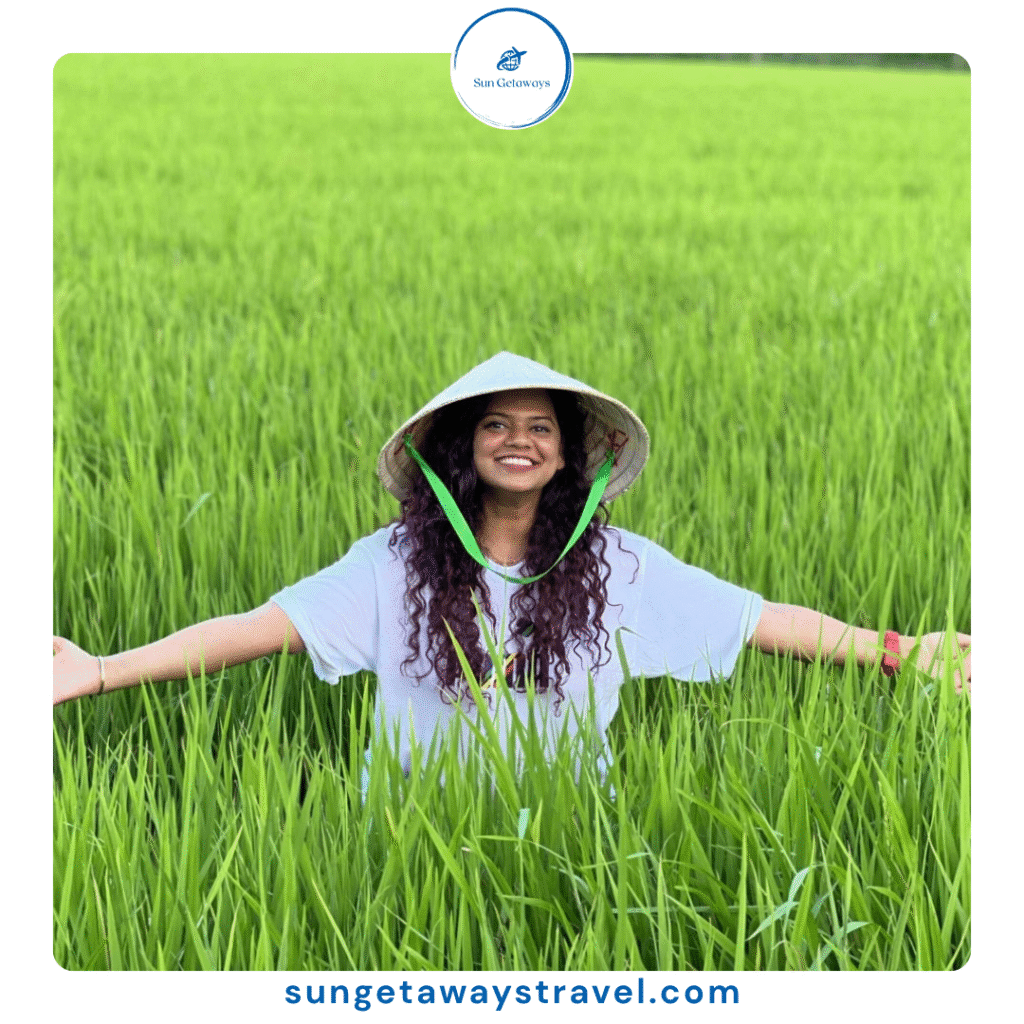
Emma emphasizes that Vietnamese agricultural tourism is not only about fun but about understanding sustainability. “It helps visitors see how climate, culture, and community intertwine. And in return, it gives farmers a dignified way to share their traditions.”
Her advice: Choose smaller, community-based tours that ensure your money supports local families directly.
6. What to Expect on Vietnamese Agricultural Tourism
To help you visualize your experience, here’s what a typical farm tours Vietnam itinerary might look like:
Morning:
- Welcome by local farmers
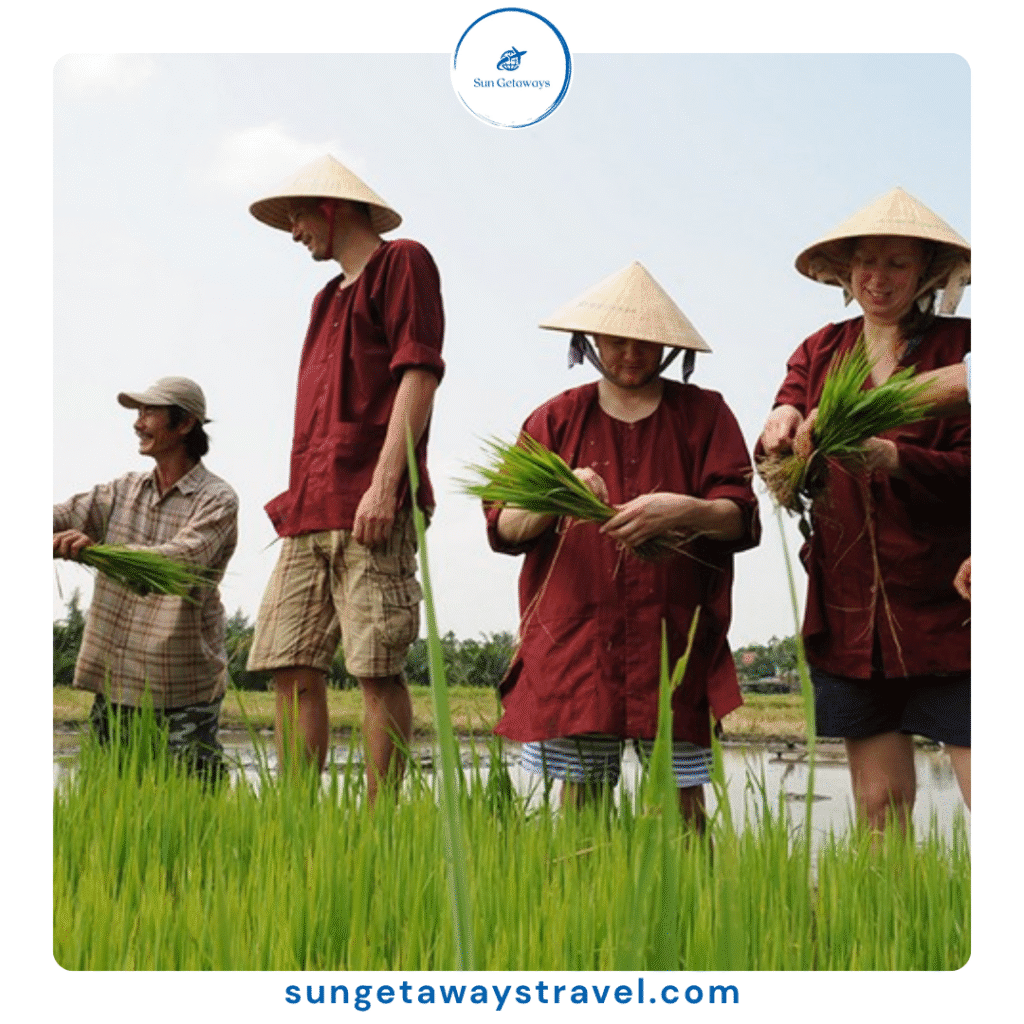
- Participate in daily activities such as plowing or planting
- Enjoy herbal tea made from local ingredients
Afternoon:
- Join a family for a home-cooked lunch using farm produce
- Learn to craft bamboo baskets or cook traditional dishes
- Explore nearby villages or scenic landscapes by bicycle
Evening:
- Relax in a homestay, surrounded by peaceful countryside
- Watch the sunset over rice paddies — a moment of pure stillness
This balance of activity and relaxation makes Vietnamese agricultural tourism a favorite for couples, families, and solo travelers alike.
7. Practical Tips for Vietnamese Agricultural Tourism Visitors
- Respect local customs: Always greet hosts politely and dress modestly.
- Ask before taking photos: Many rural families value privacy.
- Use eco-friendly products: Avoid plastic bottles or chemical sprays during farm visits.
- Try local dishes: Freshly cooked countryside meals are unforgettable — from “cơm lam” (bamboo sticky rice) to homemade pickles.
And most importantly, travel with an open heart. The best part of Vietnamese agricultural tourism isn’t what you do — it’s who you meet along the way.
8. Creating Lasting Impact Through Travel
By joining Vietnamese agricultural tourism, you contribute to more than just your own experience — you become part of a positive cycle. Each booking helps farmers diversify income, protect the environment, and pass traditional skills to younger generations.
At Sun Getaways Travel, we design itineraries that combine cultural depth with comfort, ensuring you experience authentic rural life while leaving a positive footprint.
🌾 Let your next journey grow something meaningful — reach out to us via WhatsApp and start planning your countryside adventure today.
Conclusion – Vietnamese Agricultural Tourism
Vietnam’s countryside holds stories that can’t be told from a city balcony. Through Vietnamese agricultural tourism, travelers step into those stories — planting, tasting, and learning alongside the very people who keep the country’s traditions alive.
Whether it’s a peaceful day in Tra Que, a sunrise over Sapa’s rice terraces, or a tea-picking session in Moc Chau, each experience is a step closer to Vietnam’s true heart. For a journey that offers both adventure and tranquility, exploring Vietnam’s stunning natural wonders and vibrant rural life is unmatched.
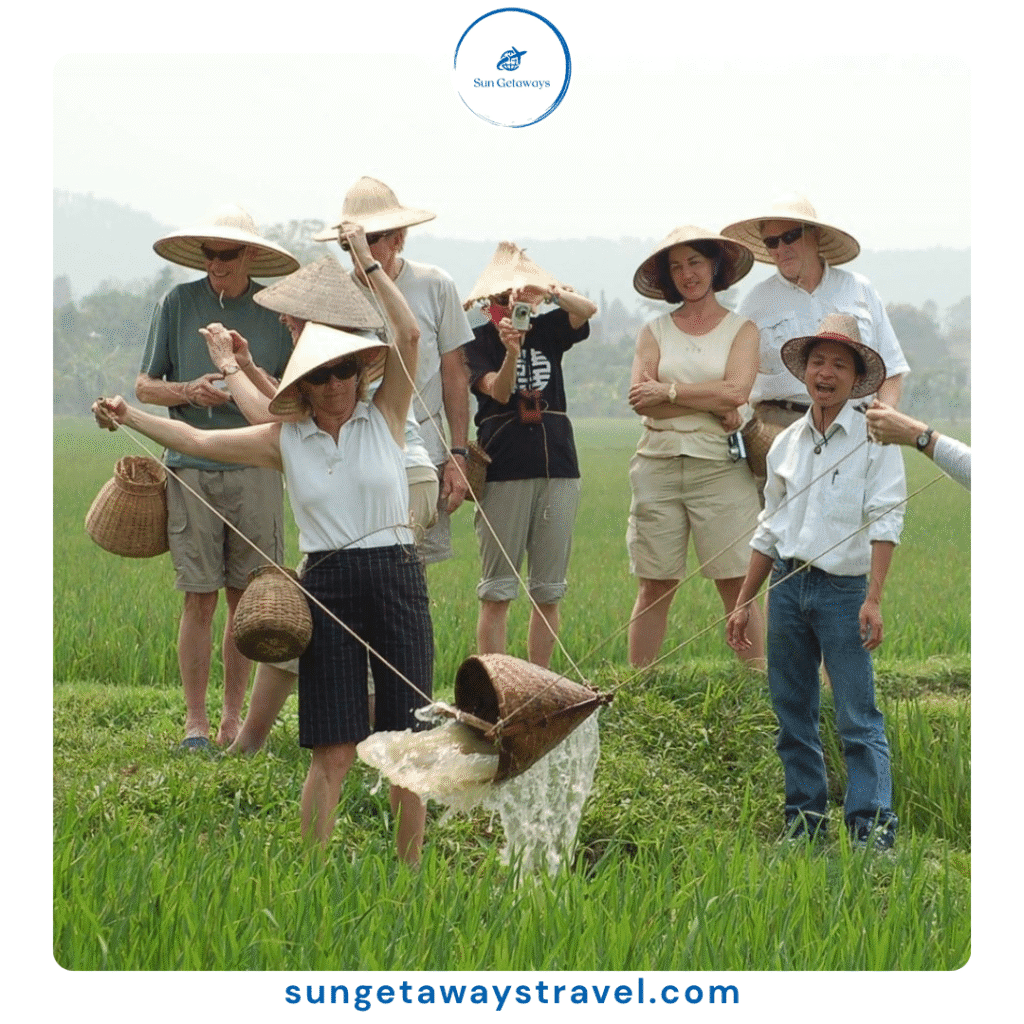
So next time you visit Vietnam, don’t just pass through — become part of the harvest.
FAQs About Vietnamese Agricultural Tourism
It’s a type of travel where visitors join local farmers in daily activities like planting rice, harvesting fruit, or cooking with fresh produce — offering a hands-on cultural experience.
Top destinations include Sapa, Hoi An’s Tra Que Village, the Mekong Delta, Moc Chau, and Buon Ma Thuot — each with its own unique rural charm.
Yes! Many farm tours Vietnam are designed for families and kids, combining outdoor fun with learning about nature and traditional farming life.
Light, comfortable clothes, sunscreen, and insect repellent are recommended. Be ready to get a little muddy — it’s part of the fun!
You can easily plan and book authentic farm experiences through trusted operators like Sun Getaways Travel, who work directly with local communities.


Related Tour

Travel eSIM: 5GB/Day – 30 Days


0 Reviews
12 Days Vietnam Local Food Tour
15 Reviews

18 Days Vietnam Family Holiday Tour
0 Reviews



12 Days Vietnam Relaxing Tour With Phu Quoc Island
39 Reviews
Ask a question
Leave a Comment (0)
No questions yet. Be the first to ask a question!
See related Posted
Luxury Golf Resorts in Vietnam – Elite Golf Travelers

Vietnam is increasingly recognized as a premier golf destination in Asia, therefore luxury golf…
Macrame in Vietnam: The Revival of Knot Art in Contemporary Craft Culture

Macrame in Vietnam reflects the country’s growing engagement with contemporary handmade culture, where global…
Vietnamese Musical Instrument Craft: Traditional Instrument Making in Vietnam

Vietnamese musical instrument craft reflects a long-standing relationship between sound, material, and cultural memory.…
Traditional Vietnamese Kite Art: History, Craftsmanship, and Cultural Meaning

Traditional Vietnamese kite art is a living expression of folk creativity, community values, and…
Vietnamese Folk Masks: Tradition, Symbolism & Cultural Meaning

Vietnamese folk masks are a distinctive form of traditional art that reflects the spiritual…
Vietnamese Embroidery Art: Traditional Craftsmanship & Cultural Meaning

Vietnamese embroidery art is a refined traditional craft that reflects patience, cultural memory, and…