







Best Time to Visit a Vietnam Bird Sanctuary for Migration Season
 Dan Vy
  3 min. to read
 Vietnam is often celebrated for its dramatic landscapes, rich culture, and world-famous cuisine. Yet beyond bustling cities and emerald rice fields lies a quieter, more poetic side of the country—its wetlands, forests, and coastal reserves where thousands of birds arrive each year on epic migratory journeys. For nature lovers, photographers, and slow travelers, timing your trip to a Vietnam bird sanctuary during migration season can be nothing short of magical.
In this comprehensive guide, we will explore why Vietnam is a premier avian destination, the specific windows of the migration season, the top sanctuaries to visit, and how you can combine birdwatching in Vietnam with high-quality travel itineraries.
Key Takeaways
- Vietnam is a premier destination for a bird sanctuary visit due to its location along the East Asian–Australasian Flyway.
- The best times for birdwatching are during migration seasons, especially from December to February for peak diversity.
- Top regions include Xuan Thuy (North), Son Tra Peninsula (Central), and Tram Chim (South).
- Visitors should prepare for basic facilities, and optimal viewing times are early mornings and late afternoons.
- Offers a rewarding experience with unique species, including the critically endangered Black-faced Spoonbill.
Why Vietnam is a Premier Destination for a Vietnam Bird Sanctuary Visit
Vietnam’s unique geography places it directly along the East Asian–Australasian Flyway, one of the world’s most critical migration routes. Stretching from Siberia and Northeast Asia down to Australia, this flyway brings millions of birds through the country annually.

Several factors make a Vietnam bird sanctuary particularly attractive to migratory species:
- Strategic Location: Vietnam serves as a vital bridge and wintering ground for birds escaping the harsh northern winters.
- Diverse Ecosystems: From the mangroves of the Red River in Vietnam to the peat swamp forests of the South, the variety of habitats is staggering.
- Predictable Patterns: The transition between dry and wet seasons creates a reliable “food calendar” for migratory species.
Unlike highly commercialized birding destinations, birdwatching in Vietnam offers a more raw and immersive experience. There is minimal artificial feeding and a heavy reliance on local ecological knowledge, making it rewarding for travelers who value authenticity over convenience.
The Best Time for Birdwatching in Vietnam: A Seasonal Overview
Migration season is the defining factor for any successful trip. While resident birds are visible year-round, species diversity and population size peak when travelers align their visit with global flyway movements.
Key Migration Periods
- Autumn Migration (September – November): Large flocks of waders and shorebirds begin arriving from North Asia. The wetlands are high-energy as birds settle into their winter homes.
- Wintering Season (December – February): Peak Diversity. This is the absolute best time to visit a Vietnam bird sanctuary. Populations are stable, and the weather in Vietnam in December is cool and dry—perfect for observation.
- Spring Migration (March – April): Birds begin active feeding to store energy for their journey back north. This is also when you will hear the most bird song.
- Summer Season (May – August): Focus shifts to resident species and breeding behaviors, particularly in forest habitats.

Regional Guide: Top Vietnam Bird Sanctuary
To maximize your sightings, you should understand which region of Vietnam shines during specific months. Combining locations can significantly enhance your birdwatching in Vietnam experience.
1. Northern Vietnam: Coastal Waders and Limestone Forests
The North experiences clear seasonal changes. Migration peaks from October to March.
- Xuan Thuy National Park (Red River Delta): A Ramsar-listed coastal wetland famous for shorebirds, waterfowl, and the rare Black-faced Spoonbill. It is one of the most vital wildlife sanctuaries in Vietnam.
- Van Long Nature Reserve (Ninh Binh): Limestone wetlands and marshes offering excellent visibility from small boats. It is ideal for beginners.
2. Central Vietnam: Mountain Endemics and Passages
Central regions see localized migration and coastal movements. The best months are November to February.
- Son Tra Peninsula (Da Nang): Excellent for coastal movements and spotting forest birds alongside the rare Red-shanked Douc Langur.
3. Southern Vietnam: Wetland Wonders
The Mekong Delta hosts birds year-round, but migration peaks between December and April.
- Tram Chim National Park: Famous for Sarus cranes and vast grasslands.
- U Minh Thuong National Park: U Minh Thuong National Park offers peat swamp forests that are less crowded and rewarding for serious birders.
What Birds Can You See During Migration Season at a Vietnam Bird Sanctuary?
Migration season transforms a Vietnam bird sanctuary into a biodiversity hotspot.
Common Migratory Species
- Waterbirds: Egrets, herons, and various species of storks.
- Shorebirds: Sandpipers, plovers, and ducks.
- Notable Sightings: Kingfishers, bee-eaters, and migratory raptors like eagles.
Rare & Notable Sightings
For many birders, the thrill lies in spotting species rarely seen elsewhere (You can often find these alongside other Vietnam marine wildlife in coastal areas):
- Black-faced Spoonbill: A critically endangered species often found in Xuan Thuy.
- Sarus Crane: The tallest flying bird, which returns to the Mekong Delta annually.
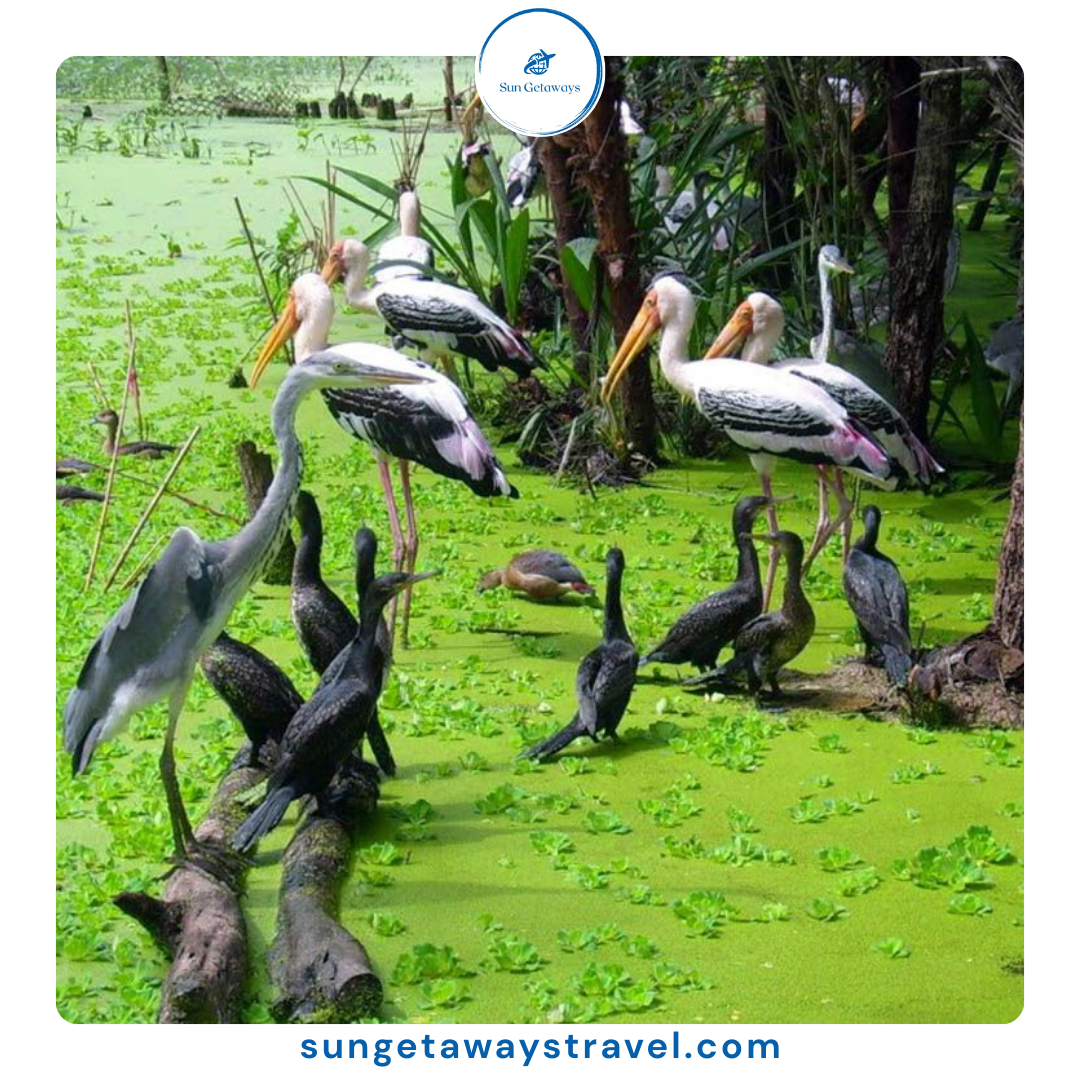
- Darter & Painted Stork: Frequent inhabitants of southern wetlands.
Planning Your Visit: Tips and Essential Gear
Planning well increases both your comfort and your sighting success. Preparation is essential, as facilities inside many sanctuaries remain basic.
Best Time of Day
- Early Morning (5:30–9:00 AM): Most active feeding and vocalization.
- Late Afternoon (3:30–6:00 PM): Birds return to roosts, offering great light for silhouettes.
Essential Gear
- Binoculars: 8x or 10x magnification is the industry standard.
- Clothing: Wear neutral-colored (green, tan, brown) clothing. Bright colors act as a warning signal to birds. (Find more in our Vietnam packing guide for suggestions).
- Protection: High-quality insect repellent and a light rain jacket are non-negotiable.

Common Mistakes to Avoid
- Visiting outside migration season: Missing the peak window (Dec–Feb) leads to significantly fewer sightings.
- Skipping local guides: Bird movements are subtle; without a guide, you may miss up to 70% of the hidden species.
- Expecting “Zoo-like” Visibility: These are wild animals in dense habitats; patience is your best tool.
Expert Insight: Emma’s Advice
Emma, a tour consultant with 12 years of experience designing nature-based itineraries in Vietnam, shares:
“Many travelers underestimate Vietnam’s importance for migratory birds. The key is timing and choosing the right sanctuary—when migration peaks, Vietnam can rival any birding destination in Asia. I always emphasize the importance of local guides who understand seasonal bird movement patterns.”
Costs and Entry Fees for a Vietnam Bird Sanctuary Tour
Most sanctuaries remain very affordable. You can check the full cost of activities Vietnam guide for more details:
- Entrance fees: $2–$10 USD.
- Boat rides: $5–$15 USD (essential in wetlands like Van Long or Tram Chim).
- Local guide: $20–$40 USD per session.
Combining Bird Sanctuaries with a Vietnam Itinerary
A Vietnam bird sanctuary visit fits seamlessly into broader travel plans. By using established tour routes, you can balance nature, culture, and comfort.
Suggested Combinations Using Sun Getaways Travel Tours
Based on our current offerings, here is how you can integrate birdwatching in Vietnam into your trip:
| Region | Bird Sanctuary | Suggested Tour Match |
| Northern | Xuan Thuy / Van Long | 7-Day Northern Vietnam Tour (Hanoi, Halong, Sapa). |
| Southern | Tram Chim / Mekong | 4-Day Guided Mekong Delta Tour or experiencing life along the rivers. |
| Central | Son Tra Peninsula | Hoi An Discovery or a visit to the Cham Islands. |
| Multi-Region | Various | Vietnam South To North 10 Days Tour. |
Sun Getaways Travel specializes in building flexible itineraries that integrate birdwatching with cultural and culinary experiences. Whether you are looking for a 4-Day Guided Tour of Northern Vietnam or a deep dive into the Mekong Delta Tour, we can match migration timing with your travel schedule.

FAQs about Vietnam Bird Sanctuaries
- What is the single best month for birding? January is widely considered the best month due to peak migration and stable, dry weather.
- Is birdwatching in Vietnam suitable for beginners? Yes, especially in the wetlands of Ninh Binh (Van Long) or the Mekong (Tram Chim), where boat rides make observation easy.
- Do I need a special permit? Most sanctuaries are open to the public with a standard entrance fee, though some remote areas may require local guide accompaniment.
- Are the sanctuaries family-friendly? Many are, though the early start times and quiet nature of birding may be challenging for very young children.
- Can I use a drone for photography? Drones are strictly restricted in most sanctuaries to avoid distressing the wildlife. Always ask your local guide first.
For nature lovers, photographers, and slow travelers, the answer is a resounding yes. Migration season reveals Vietnam at its most vibrant. When timed correctly, a visit to a Vietnam bird sanctuary delivers exceptional biodiversity without the massive crowds found in better-known birding hotspots.
Would you like Sun Getaways Travel to help you design a custom nature-focused itinerary? Contact us for a free consultation to match the peak migration window with your travel dates!


Related Tour

2 Days Central Vietnam Highlights Tour


8 Reviews


5 Days Halal Food Tour Hanoi Sapa & Trang An
0 Reviews

Small Group Vietnam South to North 12 Days Tour
25 Reviews

Hands On Art & Craft Experience from Hanoi
0 Reviews
Ask a question
Leave a Comment (0)
No questions yet. Be the first to ask a question!
See related Posted
Luxury Golf Resorts in Vietnam – Elite Golf Travelers

Vietnam is increasingly recognized as a premier golf destination in Asia, therefore luxury golf…
Macrame in Vietnam: The Revival of Knot Art in Contemporary Craft Culture

Macrame in Vietnam reflects the country’s growing engagement with contemporary handmade culture, where global…
Vietnamese Musical Instrument Craft: Traditional Instrument Making in Vietnam

Vietnamese musical instrument craft reflects a long-standing relationship between sound, material, and cultural memory.…
Traditional Vietnamese Kite Art: History, Craftsmanship, and Cultural Meaning

Traditional Vietnamese kite art is a living expression of folk creativity, community values, and…
Vietnamese Folk Masks: Tradition, Symbolism & Cultural Meaning

Vietnamese folk masks are a distinctive form of traditional art that reflects the spiritual…
Vietnamese Embroidery Art: Traditional Craftsmanship & Cultural Meaning

Vietnamese embroidery art is a refined traditional craft that reflects patience, cultural memory, and…