







North to South: Top Must-Visit War Tunnels in Vietnam for History Buffs
 Dan Vy
  3 min. to read
 Vietnam’s history is etched deeply into its landscape, specifically within the remarkable tunnels in Vietnam. From the northern borders to the southern delta, these underground sites in Vietnam once served as vital lifelines for survival and military strategy. Exploring these subterranean networks offers a visceral way to experience the country’s resilience and heritage firsthand.
Key Takeaways
- The tunnels in Vietnam served as vital survival and military strategy hubs throughout the country’s history.
- Vietnam has key tunnel sites in the north, central, and south, showcasing different historical perspectives and experiences.
- Visitors can explore key locations like the Cu Chi and Vinh Moc Tunnels to understand the significance of these underground sites.
- Travelers should come prepared, as many tunnels remain narrow and require time to appreciate their history and context.
- Guided tours enhance understanding of the tunnels in Vietnam, offering deeper insights into their role during wartime.
Northern Vietnam: Early Defensive And Strategic Tunnel Systems
Traveling in northern Vietnam often begins in Hanoi, where many visitors base themselves before venturing to surrounding historical sites. While the north is less famous for large tunnel complexes than the south, it still played a crucial role in early resistance and defensive strategies.
Visiting tunnels in Vietnam in this region helps history-focused travelers understand how underground systems evolved before reaching their most complex form further south. For those staying in the capital, the Hanoi Old Quarter serves as a perfect cultural starting point.
1. Vinh Moc Tunnels (Quang Tri Province) – ⭐⭐⭐⭐⭐
The Vinh Moc Tunnels are among the most structurally sophisticated underground sites in Vietnam, built not for temporary movement but for long-term living. Located near the former DMZ, these tunnels sheltered entire villages during intense bombardment, including families, schools, and medical rooms.
Travelers often reach this site after staying overnight in Hue, making it a natural extension of a Central Vietnam itinerary. Walking through the narrow passages gives visitors a visceral sense of daily civilian life during wartime rather than just military tactics.
- 📍 Location: Quang Tri Province (north of Hue)
- 🧱 Multi-level tunnels with living quarters
- 👨👩👧 Civilian-focused design, not just combat use
- 💡 Pro tip: Visit with a guide to understand tunnel zoning and ventilation design

2. Khe Sanh Combat Base – ⭐⭐⭐⭐½
Khe Sanh Combat Base is one of the most significant surface-level wartime sites in Central Vietnam and is often visited alongside nearby tunnel systems for a fuller historical picture. Located in Quang Tri Province, this former U.S. Marine base played a pivotal role during the 1968 Tet Offensive and helps travelers understand how above-ground military operations interacted with nearby underground networks.
Many visitors reach Khe Sanh after staying in Hue or Dong Ha, making it a logical stop when tracing wartime history north to south. While it is not a tunnel site itself, Khe Sanh provides essential context for understanding why tunnels in Vietnam became such a critical survival and defense strategy in surrounding areas.
- 📍 Location: Huong Hoa District, Quang Tri Province
- 🛩️ Preserved aircraft, bunkers, and defensive positions
- 🗺️ Strategic hilltop location near the former DMZ
- 💡 Pro tip: Combine Khe Sanh with the Vinh Moc Tunnels and DMZ sites in one day to understand both surface battles and underground life in the same region

Central Vietnam: Strategic Sanctuaries and Hidden Networks
While the North has the massive civilian shelters and the South has the combat mazes, Central Vietnam’s tunnels in Vietnam are often “hidden gems” that offered strategic support near key battlegrounds like Hue and Da Nang.
1. Khe Trai Tunnels (Thua Thien Hue) – ⭐⭐⭐⭐
Hidden in the jungle-covered hills of Huong Tra, the Khe Trai Tunnels served as the headquarters for the Hue city party committee during the 1968 Tet Offensive. It is a raw, authentic site that feels a world away from the manicured tourist routes.
- The Experience: This is a rugged and narrow network. You can explore the command center, meeting rooms, and secret shelters used by high-ranking officials. It offers a chillingly realistic perspective on the strategic planning that took place right under the enemy’s feet.
- 📍 Location: Huong Tra Town, Thua Thien Hue Province (approx. 25km from Hue city center).
- 💡 Pro Tip: The path to the tunnels can be steep and overgrown; wear sturdy trekking shoes and bring a flashlight, as this site is less developed for mass tourism.
2. Ky Anh Tunnels (Quang Nam) – ⭐⭐⭐⭐⭐
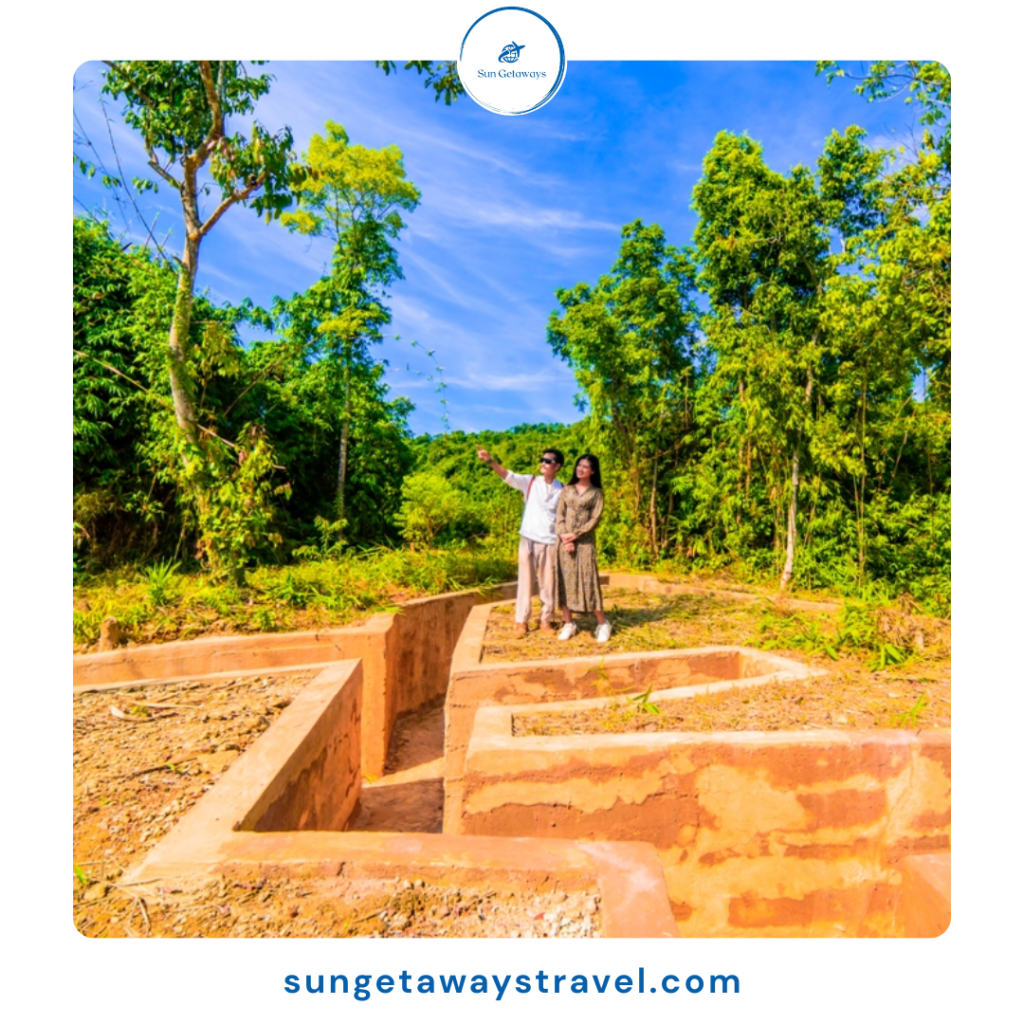
Located south of Da Nang, the Ky Anh Tunnels are among the three largest tunnel systems in Vietnam, alongside Cu Chi and Vinh Moc. This 32km labyrinth was built with an incredible level of secrecy, often using local communal houses and even family altars as hidden entrances.
- The Experience: Unlike the widened tourist tunnels in the South, Ky Anh remains mostly in its original state. You’ll see trapdoors disguised as straw stacks or kitchen stoves. The tunnel connects various villages, serving as a vital supply route and a safe haven for local militia.
- 📍 Location: Tam Ky City, Quang Nam Province (approx. 45 mins from Hoi An).
- 💡 Pro Tip: This site is best visited with a guide who can explain the complex “trapdoor” system. It pairs perfectly with a visit to the Vietnamese Heroic Mother Statue nearby.

👉 Central Vietnam itineraries such as Danang and Hoi An Discovery in 4 Days often focus on surface heritage, but can be extended to include wartime sites for history-focused travelers.
Southern Vietnam: The Most Famous War Tunnels
Southern Vietnam is where underground warfare reached its most complex and extensive form. Travelers typically base themselves in Ho Chi Minh City before exploring surrounding historical sites. This region contains the most well-preserved and visited tunnels in Vietnam, offering direct, immersive experiences that define many history-focused itineraries.
1. Cu Chi Tunnels – ⭐⭐⭐⭐⭐
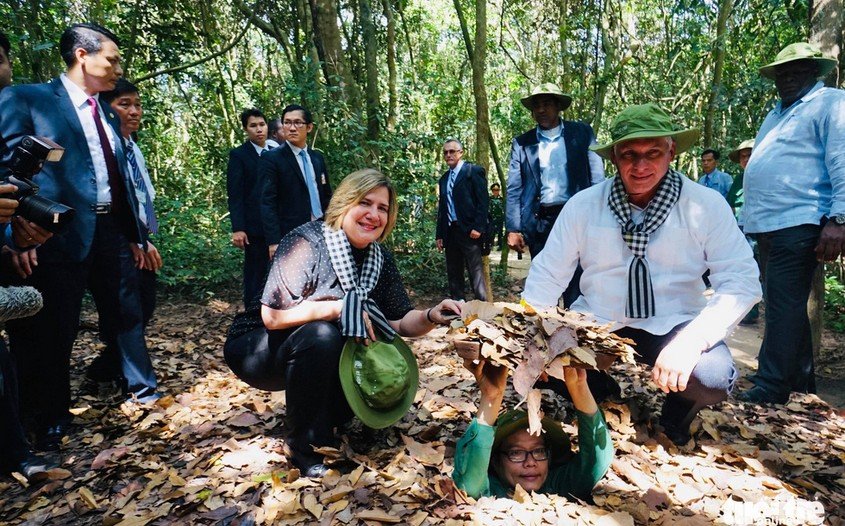
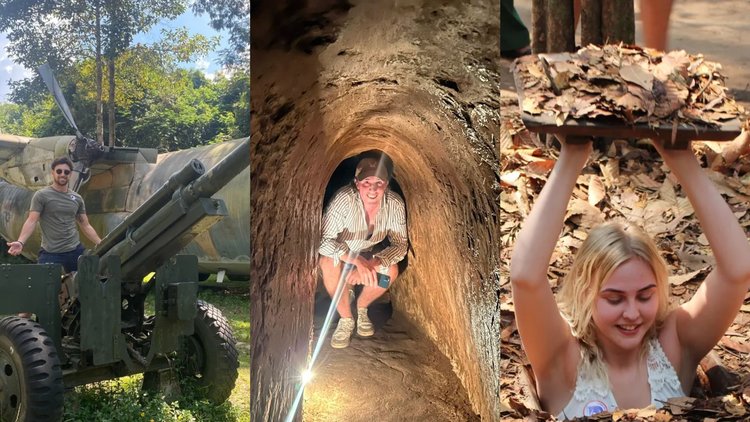
The Cu Chi Tunnels are the most famous of all tunnels in Vietnam, drawing visitors from around the world. Located just outside Ho Chi Minh City, this vast underground network once stretched over hundreds of kilometers, enabling communication, supply transport, and surprise attacks.
Travelers often include Cu Chi as a half-day trip from the city, fitting easily between museum visits and urban exploration. The site demonstrates how underground warfare functioned as a complete living and fighting system.

- 📍 Location: Cu Chi District, Ho Chi Minh City
- 🕳️ Extensive crawl-through sections
- 🛠️ Displays of traps, weapons, and living quarters
- 💡 Pro tip: Choose early-morning visits to avoid crowds and heat
👉 The Cu Chi Tunnels Guerilla Warfare Half-Day Tour is one of the most efficient ways to explore this site with expert context and transportation included.
2. Ben Dinh Tunnels (Cu Chi Area) – ⭐⭐⭐⭐
Ben Dinh is a less crowded section of the Cu Chi tunnel system and is often preferred by travelers who want a calmer experience. While structurally similar, it offers wider passages and clearer signage, making it suitable for visitors who may find tighter spaces challenging. As one of the notable underground sites in Vietnam, it complements the main Cu Chi visit well.
- 📍 Location: Cu Chi District
- 🚶 Easier access tunnels
- 📖 Strong educational displays
- 💡 Pro tip: Ideal for families or first-time tunnel visitors
Quick Comparison Of Major War Tunnel Sites
| Tunnel Site | Region | Experience Level | Best For |
|---|---|---|---|
| Vinh Moc Tunnels | Central | Moderate | Civilian wartime life |
| Central Coast Remnants | Central | Light | Contextual learning |
| Cu Chi Tunnels | South | Intense | Full underground warfare |
| Ben Dinh Tunnels | South | Moderate | Comfortable exploration |
Tips For Visiting Vietnam’s War Tunnels
Visiting historical tunnel systems requires preparation, both physically and mentally. These tunnels in Vietnam are preserved as learning spaces, but they remain narrow, humid, and emotionally impactful. Planning ahead ensures a meaningful and respectful experience.
- 🎒 Wear light, breathable clothing and closed shoes
- 💧 Carry water, especially in southern sites
- 🧠 Read background history before entering tunnels
- 📸 Follow photography rules to respect preservation
- 🕰️ Allow time after visits for reflection
Common Misconceptions About Underground War Sites
Many travelers arrive with assumptions shaped by documentaries or movies. Understanding what these underground sites in Vietnam truly represent helps set realistic expectations.
- ❌ “All tunnels are large and easy to walk through”
- ❌ “They were only used for fighting”
- ❌ “A quick visit is enough”
✔️ In reality:
- Most tunnels are extremely narrow
- Many supported civilian life and logistics
- Proper visits require time and context
Planning A North-To-South Historical Journey
For history buffs, Vietnam is best experienced as a continuous narrative rather than isolated destinations. Traveling independently between regions can be complex, especially when coordinating transport, historical sites, and daily pacing. This is particularly true when visiting multiple tunnels in Vietnam across different regions, as distances are long and context varies.
Key challenges when self-planning:
- 🚆 Long travel times between regions
- 📍 Remote tunnel locations
- 🧭 Lack of historical interpretation without guides
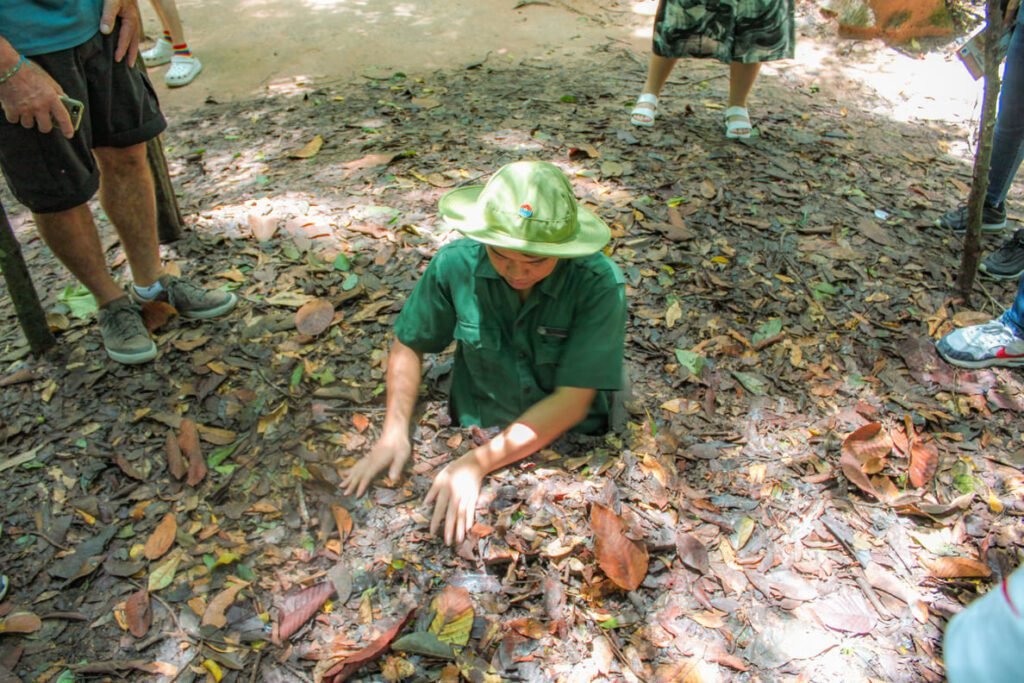
👉 Structured programs like Vietnam South To North 10 Days Tour or Vietnam Classic Tour From North To South help connect major underground sites with museums, battlefields, and cities into one coherent journey.
For travelers wanting flexibility, curated itineraries ensure that underground sites in Vietnam are visited in logical sequence without rushing or missing key context.
“After more than a decade designing history-focused itineraries, I’ve learned that war tunnels are best experienced as part of a broader narrative, not isolated stops. When travelers rush from one tunnel site to another without context, they often miss the human stories behind them. Spacing tunnel visits across regions—from the south to the north—helps visitors understand how geography shaped wartime strategies.”
— Emma, Senior Vietnam Tour Consultant & Operations Specialist (12 Years Experience)
FAQs About War Tunnels In Vietnam
1. Are Vietnam’s war tunnels safe to visit?
Yes, all major sites are reinforced and monitored, though narrow spaces may feel uncomfortable for some visitors.
2. How long does a tunnel visit usually take?
Most sites require 1–3 hours, depending on size and interpretation depth.
3. Are tunnels suitable for children?
Some sections are, but parents should assess comfort levels carefully.
4. Can visitors avoid crawling through tunnels?
Yes, many sites offer surface-level exhibitions and optional tunnel access.
5. Do I need a guide to understand tunnel systems?
Guides significantly enhance understanding by explaining layout and historical context.
Conclusion: Exploring Tunnels in Vietnam
Exploring the most important tunnels in Vietnam reveals stories of resilience, ingenuity, and survival that cannot be fully understood from above ground. These remarkable underground sites in Vietnam provide history buffs with unforgettable insight into how ordinary people endured extraordinary circumstances.
If you want expert guidance for a seamless historical journey, you can reach out via direct WhatsApp travel support or design your own route with a custom-built Vietnam heritage itinerary tailored to your interests.


Related Tour

Best of Saigon: 3-Day Team Building Tour


9 Reviews

11-Day Taste of Vietnam From North to South
31 Reviews

Discover the Gems of Vietnam in 14 Days
23 Reviews

Travel eSIM: 5GB/Day – 30 Days
0 Reviews

7 Day Adventure Trekking Bac Ha Ban Phung Hoang Su Phi
10 Reviews

4 Day Hoang Su Phi Trekking
23 Reviews
Ask a question
Leave a Comment (0)
No questions yet. Be the first to ask a question!
See related Posted
Luxury Golf Resorts in Vietnam – Elite Golf Travelers

Vietnam is increasingly recognized as a premier golf destination in Asia, therefore luxury golf…
Macrame in Vietnam: The Revival of Knot Art in Contemporary Craft Culture

Macrame in Vietnam reflects the country’s growing engagement with contemporary handmade culture, where global…
Vietnamese Musical Instrument Craft: Traditional Instrument Making in Vietnam

Vietnamese musical instrument craft reflects a long-standing relationship between sound, material, and cultural memory.…
Traditional Vietnamese Kite Art: History, Craftsmanship, and Cultural Meaning

Traditional Vietnamese kite art is a living expression of folk creativity, community values, and…
Vietnamese Folk Masks: Tradition, Symbolism & Cultural Meaning

Vietnamese folk masks are a distinctive form of traditional art that reflects the spiritual…
Vietnamese Embroidery Art: Traditional Craftsmanship & Cultural Meaning

Vietnamese embroidery art is a refined traditional craft that reflects patience, cultural memory, and…