






Traditional Vietnamese Cakes: Popular Types and Local Tips
 HoangAn
  3 min. to read
 Have you ever felt curious about traditional Vietnamese cakes but felt lost when seeing too many unfamiliar names at local markets? Many travelers want to explore local food deeply, yet they do not know which cakes are truly traditional or worth trying. In this guide, you will discover traditional Vietnamese cakes, their cultural meaning, key ingredients, popular types, and where travelers can enjoy authentic traditional Vietnamese desserts during a trip to Vietnam.
Key Takeaways
- Traditional Vietnamese cakes are linked to culture and local ingredients, offering a rich culinary heritage.
- These cakes are often enjoyed during festivals and family gatherings, symbolizing respect and connection.
- Key ingredients include sticky rice, mung beans, coconut milk, and palm sugar, creating mild and natural flavors.
- Popular traditional Vietnamese cakes include Banh Chung, Banh Tet, and Banh Gio, each with unique regional characteristics.
- Travelers can find these cakes in local markets, street food stalls, and food tours, making them accessible during their trip.
1. What Makes a Cake “Traditional” in Vietnamese Cuisine?
Before tasting, travelers often ask what makes a cake “traditional” in Vietnam. Understanding this helps you choose cakes with real cultural value, not tourist-only versions.
Traditional Vietnamese cakes are cakes that have existed for generations and are linked to daily life, festivals, or family rituals. They are often handmade and follow recipes passed down through families.
Another key feature is the use of local ingredients. Because of this, many traditional Vietnamese cakes reflect Vietnam’s agricultural roots and seasonal harvests.
2. The Role of Traditional Cakes in Vietnamese Culture
Traditional cakes are deeply connected to Vietnamese culture and social life. They are not just snacks but symbols of respect, sharing, and celebration.
These cakes often appear during festivals such as Tet, Mid-Autumn Festival, and ancestral ceremonies. Families prepare and offer cakes to honor their ancestors and wish for luck.
In daily life, people also give traditional Vietnamese desserts as gifts. Locals often bring cakes when visiting relatives or friends, especially in rural areas. This makes cakes an important bridge between food and human connection.
3. Common Ingredients
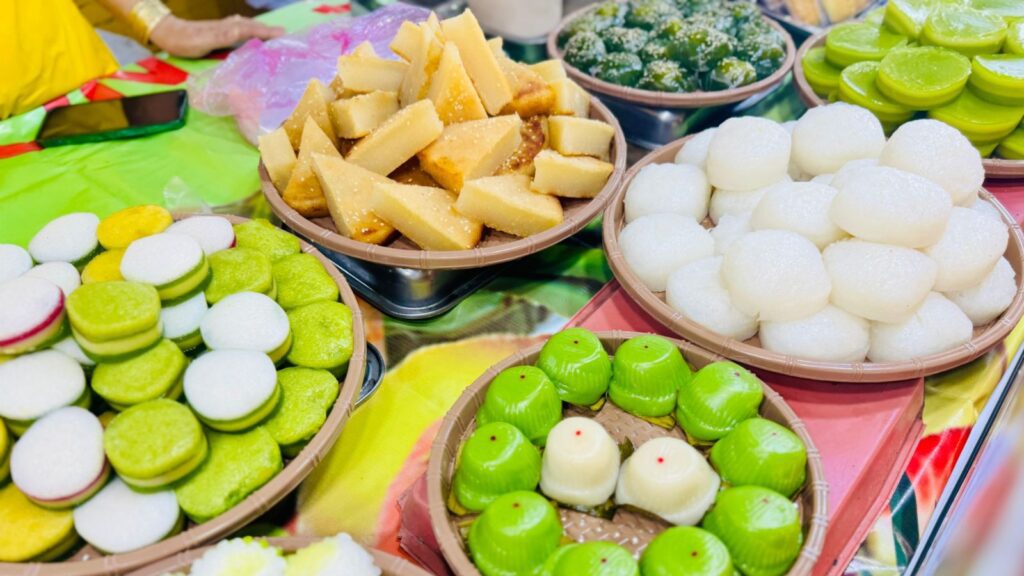
Traditional Vietnamese cakes are easy to recognize thanks to their simple and local ingredients. Most of them come from farming traditions and seasonal harvests, which makes the flavors gentle and natural.
- Sticky rice and rice flour
Sticky rice is the most common base for traditional Vietnamese cakes. It creates a soft and chewy texture that feels filling but not heavy. Cooks also use rice flour in steamed cakes, which creates a smooth and light bite. - Mung beans
People often cook, mash, and lightly sweeten mung beans, then use them as fillings or layers inside cakes. This ingredient adds softness and balances the texture of sticky rice very well. - Coconut milk and grated coconut
Coconut milk brings richness and aroma, especially in southern-style cakes. People sometimes mix grated coconut into the dough or add it as a topping. This is why many traditional Vietnamese desserts have a gentle coconut fragrance. - Palm sugar or cane sugar
Instead of refined sugar, traditional recipes use palm sugar or cane sugar. The sweetness is mild and warm, not sharp. This suits travelers who prefer desserts that are not too sweet. - Banana leaves
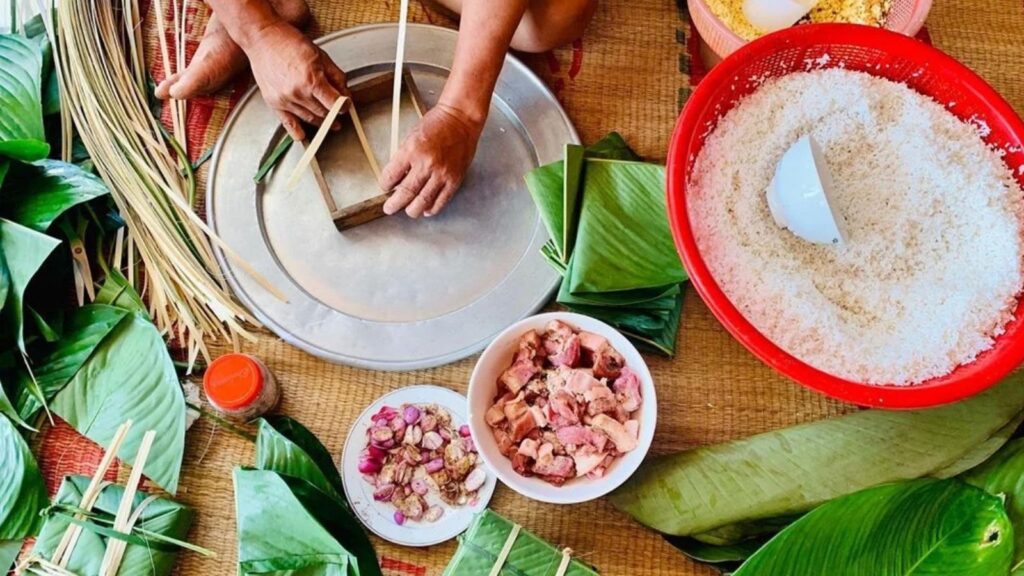
Vietnamese often uses banana leaves to wrap cakes before steaming or boiling. They keep the cake moist and add a natural scent. This wrapping method is also eco-friendly and deeply traditional.
4. Popular Traditional Vietnamese Cakes You Should Know
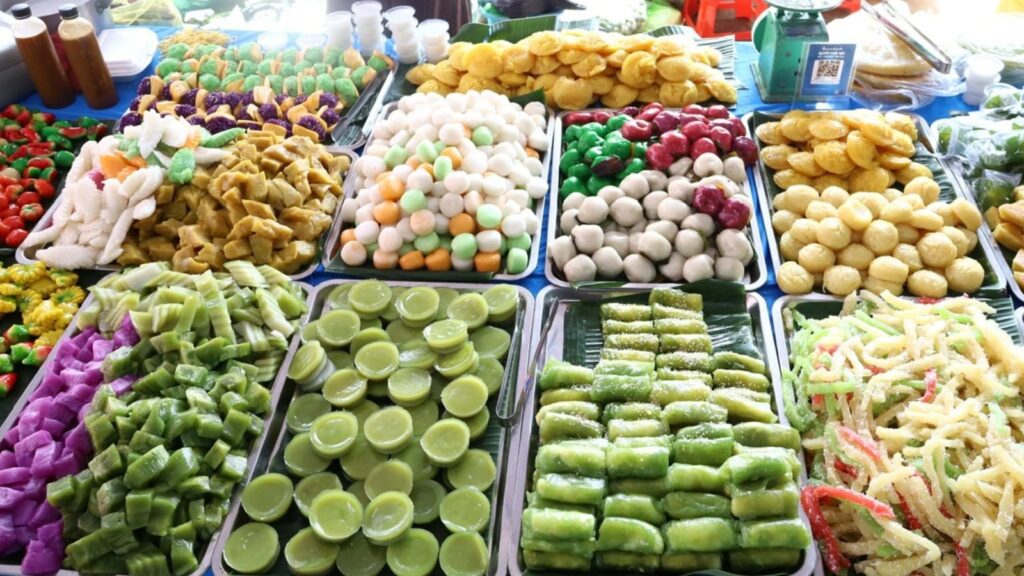
Vietnam offers a wide range of traditional cakes. Below are some well-known cakes that travelers often encounter, especially on food walks and local markets.
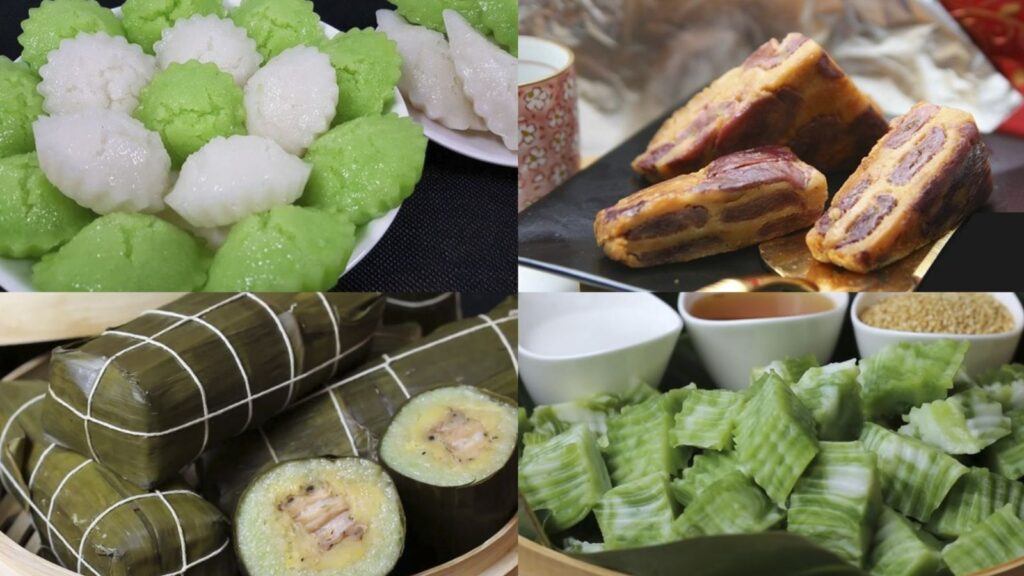
- Banh Chung
People make this square cake from sticky rice, mung beans, and pork, then wrap it in banana leaves and tie it with bamboo strings. Banh Chung has a strong connection to Tet and symbolizes the earth in Vietnamese beliefs. - Banh Tet
Similar in ingredients to Banh Chung, Banh Tet (it’s “Tét”, not “Tết” in “Tet Holiday”) has a cylindrical shape. It is more popular in southern Vietnam and often sliced into round pieces. Travelers may see it sold in morning markets during festivals. - Banh Gio
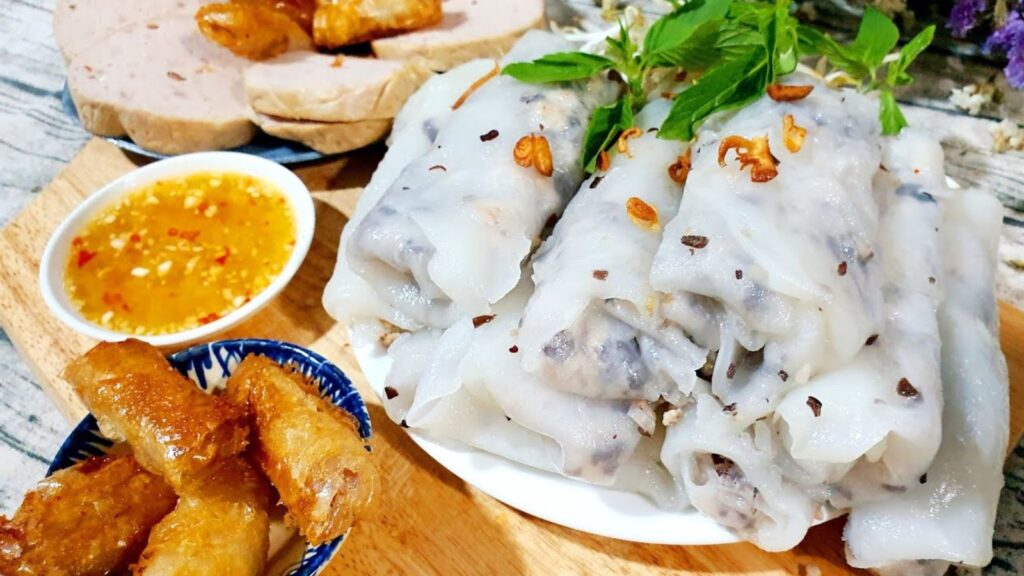
This pyramid-shaped cake uses rice flour and minced pork filling. It has a soft texture and mild taste. Banh Gio is easy to find as street food in cities like Ha Noi. - Banh Beo
These small steamed rice cakes are served in shallow dishes. They are topped with dried shrimp and crispy pork fat. Banh Beo is common in central Vietnam, especially Hue. - Banh It
Banh It is made from sticky rice dough with mung bean filling. It is often wrapped in banana leaves and steamed. This cake is popular during family gatherings and small ceremonies. - Banh Troi
These round glutinous rice balls are filled with palm sugar. When cooked, the sugar melts inside. Banh Troi is usually eaten during the Han Thuc festival. - Banh Da Lon
Known for its colorful layers, this cake uses rice flour, tapioca flour, and coconut milk. Each layer is steamed slowly. It is one of the most eye-catching traditional Vietnamese desserts.
5. Regional Differences in Traditional Vietnamese Cakes
Vietnam’s long geography creates clear regional differences in traditional cakes. Each region reflects its climate, ingredients, and local taste.
Below is a simple overview to help travelers understand these differences before choosing what to try.
| Region | Common Cakes | Flavor Style | Typical Occasions |
|---|---|---|---|
| North Vietnam | Banh Chung, Banh Gio | Mild, savory | Tet, daily snacks |
| Central Vietnam | Banh Beo, Banh It | Balanced, light | Festivals, family meals |
| South Vietnam | Banh Tet, Banh Da Lon | Sweeter, richer | Tet, street markets |
Northern cakes focus on balance and subtle taste. Central cakes are small and refined. Southern cakes often use more coconut milk and sugar, making them sweeter and softer.
6. Where Travelers Can Try Traditional Vietnamese Cakes
Travelers do not need to look far to find traditional Vietnamese cakes. These cakes are part of daily life and appear in many easy-to-access places across Vietnam.
- Local wet markets
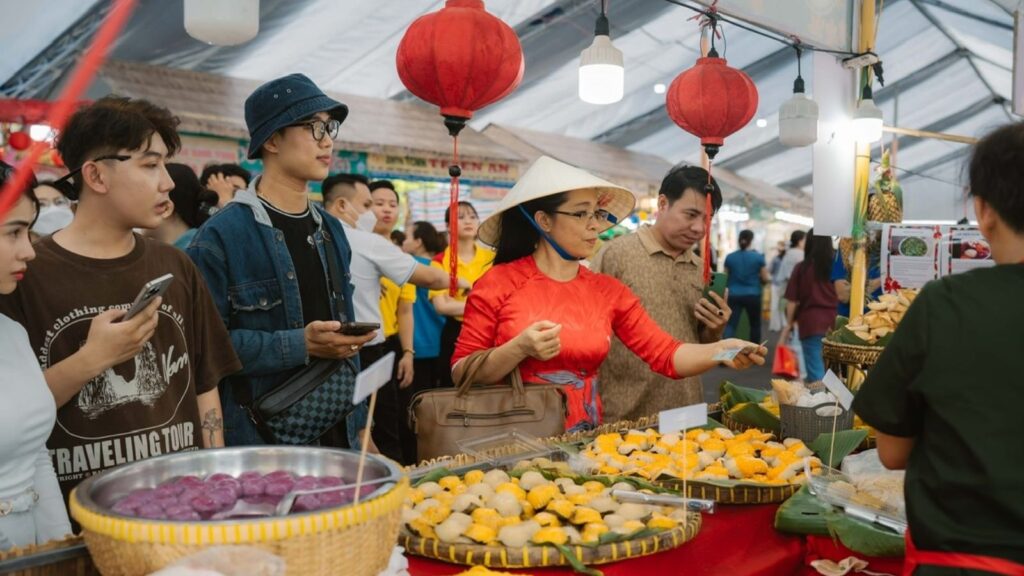
Morning markets are the best places to find fresh traditional cakes. Vendors usually make them early in the day. Prices are low, and the atmosphere feels very local and authentic. - Street food stalls near residential areas
Small street stalls often sell a few types of cakes each day. These stalls are popular with locals, which is a good sign of quality. Travelers can easily stop for a quick taste while walking around. - Old quarters in big cities
Areas like the Old Quarter in Ha Noi offer many traditional snacks. Some families have sold cakes there for decades. Joining a Ha Noi food tour helps travelers understand the stories behind each cake. - Food-focused travel experiences
A guided Vietnam food tour allows travelers to try both savory dishes and traditional Vietnamese desserts in one route. This option is ideal for first-time visitors who want local insight without confusion.
7. Practical Tips for Travelers
A few simple tips can help travelers enjoy traditional Vietnamese cakes in a smarter and more local way, especially when moving across different regions of Vietnam.
- Taste cakes along your journey
Traditional cakes vary by region, so travelers should try them naturally along a North to South tour or South to North Vietnam tour. This way, each stop brings a new flavor and story. - Focus on regional specialties
Northern cakes are mild, central cakes are small and delicate, while southern cakes are sweeter. Regional tours make it easier to taste cakes where they truly belong. - Balance cake tasting with sightseeing
Traditional cakes are filling, so it is best to enjoy them between sightseeing stops. Combining cake tasting with cultural visits creates a smooth travel pace, especially on long journeys that cover several regions of Vietnam. - Ask locals or guides for quick tips
A short local suggestion often leads to better cake choices, especially during food-focused or regional travel days.
8. FAQs about Traditional Vietnamese Cakes
No, most traditional Vietnamese cakes are mildly sweet. They focus on balance rather than strong sugar taste.
Yes, many cakes use only rice, beans, and coconut. However, some contain pork, so it is best to ask before buying.
Prices are very affordable. Most cakes cost from 1-10 USD, depending on size and location.
Yes, but choose cakes with shorter shelf life carefully. Some cakes last only one or two days.
Yes, if you choose busy stalls with fresh products. Morning markets are usually the safest option.
9. Conclusion
Traditional Vietnamese cakes offer travelers a gentle and meaningful way to understand Vietnamese culture through food. From simple ingredients to deep cultural stories, these cakes reflect daily life across regions. Exploring traditional Vietnamese desserts helps travelers connect with local people beyond famous landmarks.
Ready to explore Vietnam through its traditional flavors? Let Sun Getaways Travel help you design a journey where authentic food, local culture, and real experiences come together – just the way Vietnam should be discovered.


Related Tour

Mekong Experience: My Tho & Ben Tre


7 Reviews
Explore the Ho Chi Minh City Floating Market in 6 Days
8 Reviews

Exploring Vietnam: 9 Days of Adventures
10 Reviews

Private Vietnam Luxury Tour 13 Days
24 Reviews

5-Days Ho Chi Minh Floating Market Tour Join Group
24 Reviews
Ask a question
Leave a Comment (0)
No questions yet. Be the first to ask a question!
See related Posted
Luxury Golf Resorts in Vietnam – Elite Golf Travelers

Vietnam is increasingly recognized as a premier golf destination in Asia, therefore luxury golf…
Macrame in Vietnam: The Revival of Knot Art in Contemporary Craft Culture

Macrame in Vietnam reflects the country’s growing engagement with contemporary handmade culture, where global…
Vietnamese Musical Instrument Craft: Traditional Instrument Making in Vietnam

Vietnamese musical instrument craft reflects a long-standing relationship between sound, material, and cultural memory.…
Traditional Vietnamese Kite Art: History, Craftsmanship, and Cultural Meaning

Traditional Vietnamese kite art is a living expression of folk creativity, community values, and…
Vietnamese Folk Masks: Tradition, Symbolism & Cultural Meaning

Vietnamese folk masks are a distinctive form of traditional art that reflects the spiritual…
Vietnamese Embroidery Art: Traditional Craftsmanship & Cultural Meaning

Vietnamese embroidery art is a refined traditional craft that reflects patience, cultural memory, and…