




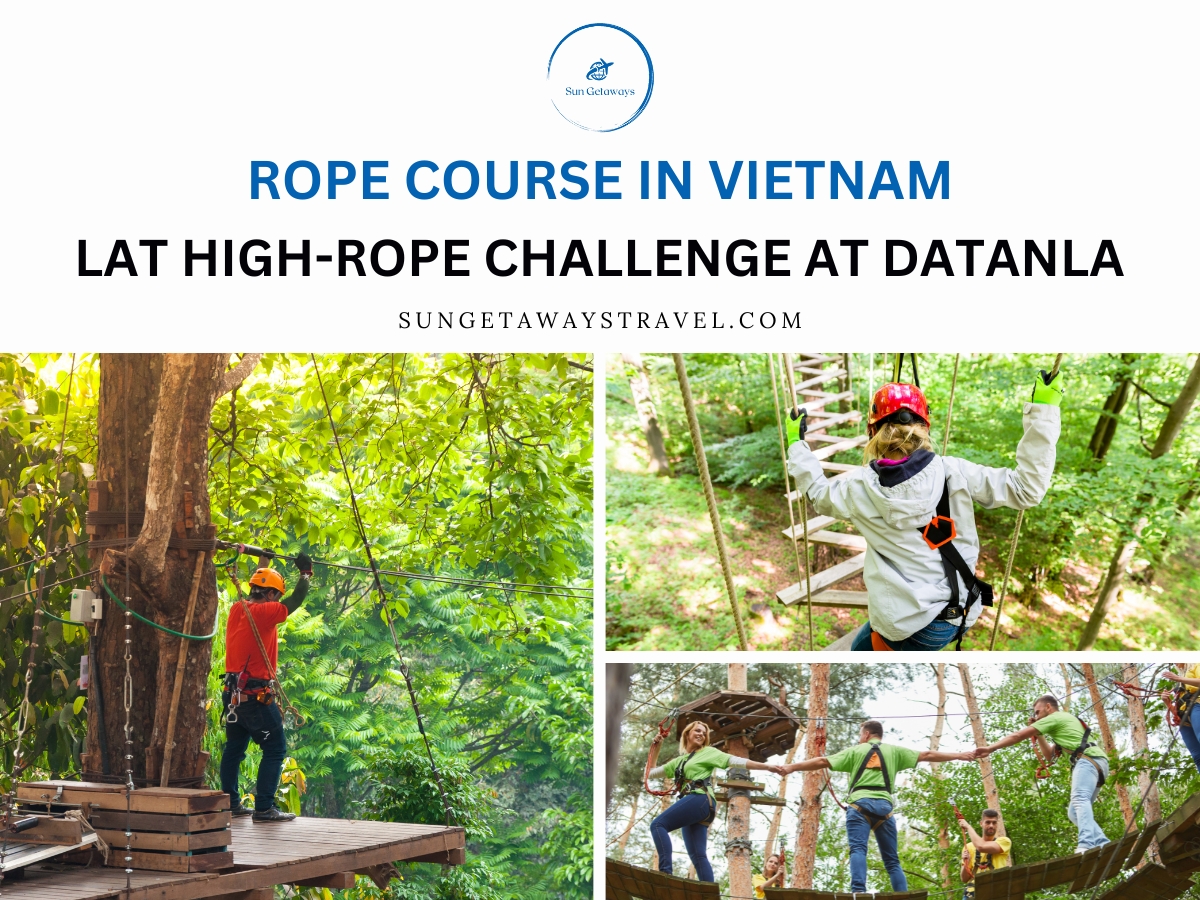
Rope Course in Vietnam: Da Lat High-Rope Challenge at Datanla
 PhamDuong
  3 min. to read
 Da Lat is known for romance and cool weather. However, it is also home to the most established rope course in Vietnam. Located at Datanla Waterfall, this Vietnam high-rope challenge course offers aerial obstacles, ziplining, and mental challenges in pine forests. The experience suits adventure travelers seeking something active and different in Da Lat.
Key Takeaways
- Da Lat offers Vietnam’s most natural rope course environment: High elevation, dense pine forests, and a cool climate allow the rope course at Datanla to integrate seamlessly into nature, creating a safer and more authentic experience than artificial setups elsewhere.
- Progressive design suits both beginners and adventure seekers: The Vietnam high-rope challenge course is structured in levels that gradually increase in height and difficulty, helping first-time participants build confidence while still challenging experienced travelers.
- Strong safety standards ensure a memorable adventure: European-certified equipment, professional supervision, and clear safety systems make the Datanla rope course one of the most reliable and rewarding adventure activities in Da Lat.
1. Why Da Lat Is the Home of Rope Course in Vietnam
The natural terrain and climate of Da Lat provide the perfect backdrop for a rope course, offering features that few other regions in Vietnam can replicate.
1.1. Natural terrain and climate advantages
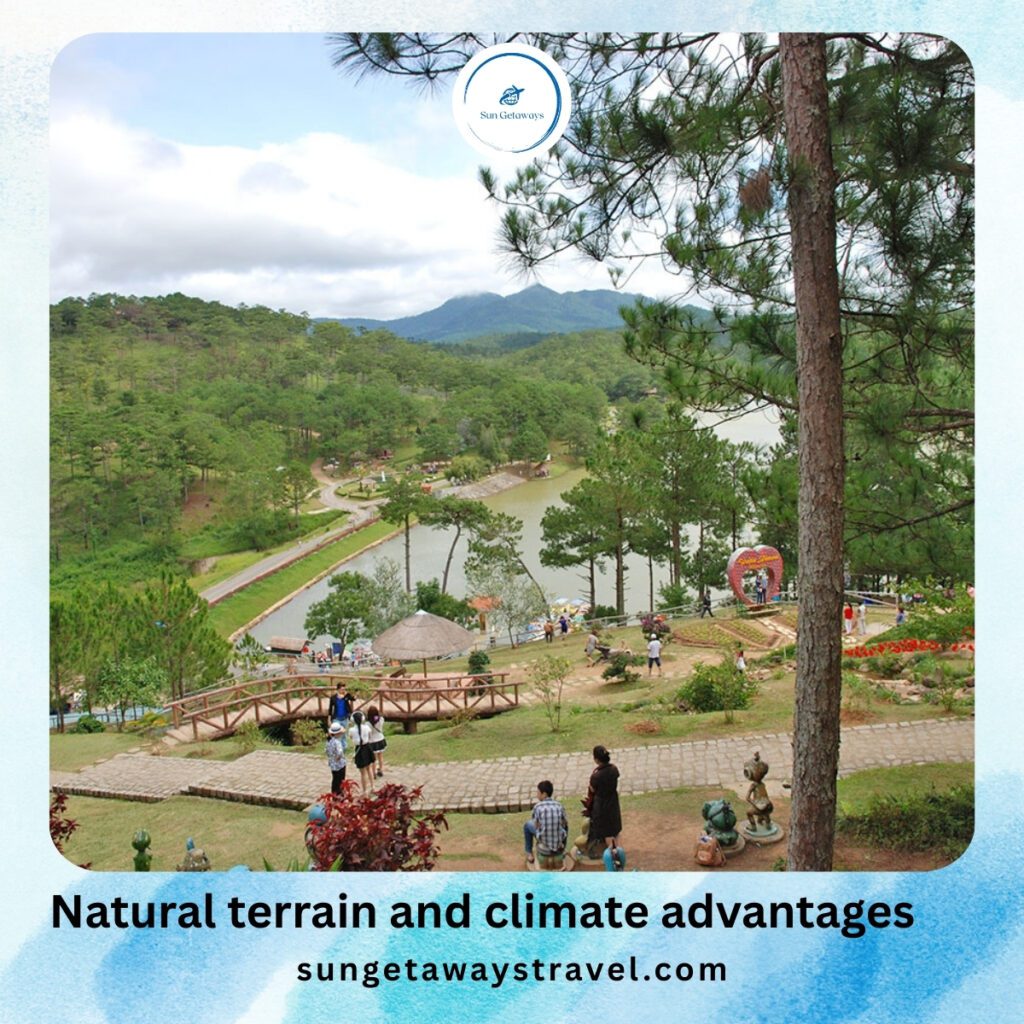
Da Lat offers conditions that perfectly support a professional rope course in Vietnam. The city’s elevation provides natural height without artificial towers. Pine forests create stable anchor points and constant shade. Meanwhile, cool temperatures reduce fatigue during physical activity. Compared to coastal destinations, Da Lat allows rope courses to integrate naturally into the environment.
1.2. Why other regions cannot replicate this experience
Most Vietnamese cities lack consistent elevation and forest density. As a result, building a true Vietnam high-rope challenge course elsewhere would require heavy artificial structures. Additionally, in Da Lat, nature already provides the framework. This advantage explains why Datanla remains the country’s most developed rope course location.
2. Overview of the High Rope Course in Vietnam – Datanla
The Datanla High Rope Course has been carefully developed to balance adventure with safety, following European design standards for outdoor challenge courses.
2.1. Development and design philosophy of Rope Course in Vietnam
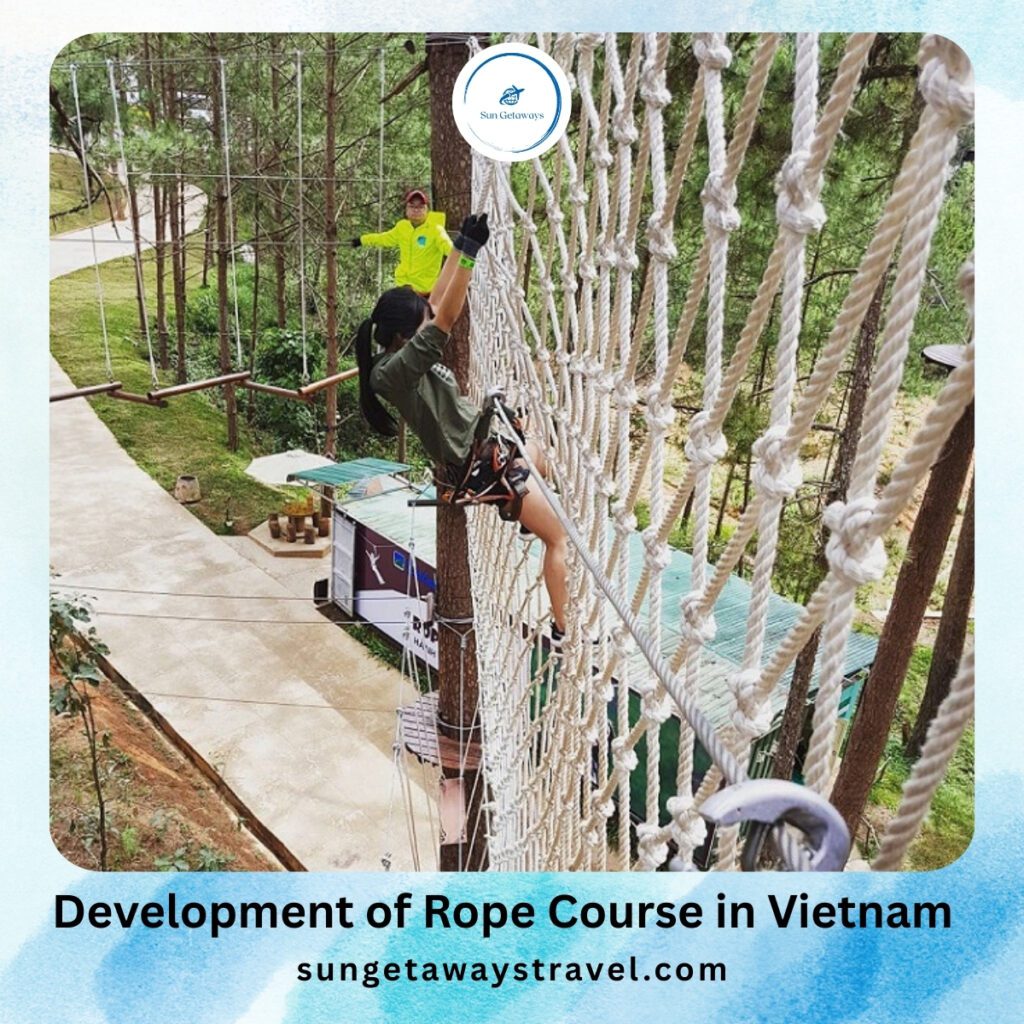
The High Rope Course at Datanla opened in 2016 and quickly became a standout adventure activity. Designed according to European safety concepts, this rope course in Vietnam emphasizes gradual progression rather than sudden exposure to height. Every obstacle encourages balance, planning, and controlled movement.
2.2. Duration and overall experience flow
A full session lasts approximately two hours. This timeframe allows participants to rest between levels and adapt gradually. Unlike rushed attractions, the Vietnam high-rope challenge course focuses on quality experience over speed. Therefore, travelers can fully engage with each challenge.
3. Course Structure, Levels, and Challenge Design
The course is thoughtfully divided into progressive levels, allowing participants to build confidence before attempting more demanding challenges.
3.1. Progressive difficulty system in Rope Course in Vietnam
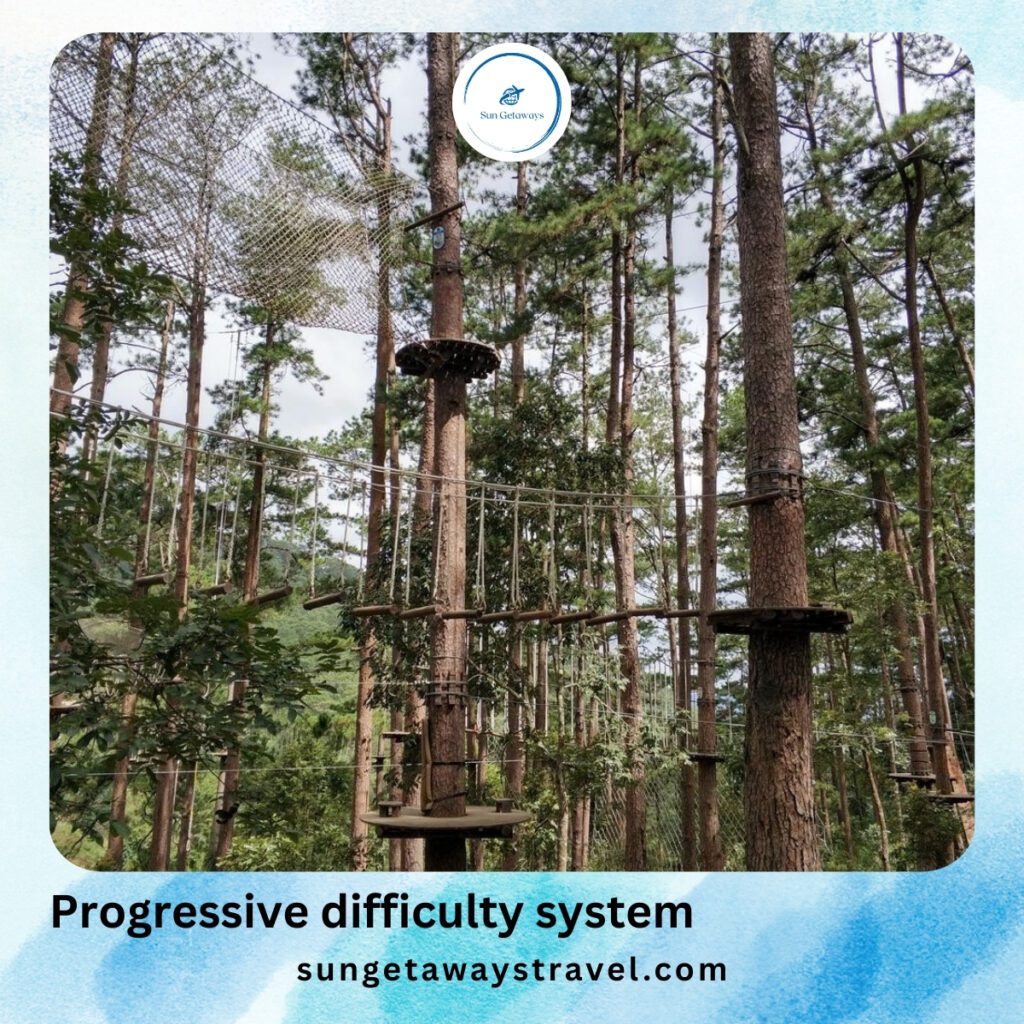
This Vietnam high-rope challenge course is carefully designed with a progressive difficulty system rather than a single continuous route. The course is divided into clearly defined levels, each representing a different height and challenge intensity. Participants must complete lower sections before unlocking access to higher levels. This structure prevents sudden exposure to height and reduces psychological stress.
At the beginner level, platforms remain relatively close to the ground. Besides, these early stages allow participants to understand rope tension, balance control, and clipping techniques. As confidence increases, the course gradually elevates participants higher into the forest canopy. Therefore, this progression helps first-time visitors overcome fear naturally, without pressure.
Importantly, instructors continuously assess participant readiness. If someone feels uncomfortable, they may repeat a level or stop safely at any point. Because of this design, the rope course in Vietnam at Datanla feels challenging yet controlled. Even travelers with no prior adventure experience can adapt comfortably while still feeling a sense of achievement.
3.2. Types of obstacles and physical demands
Beginner-level obstacles
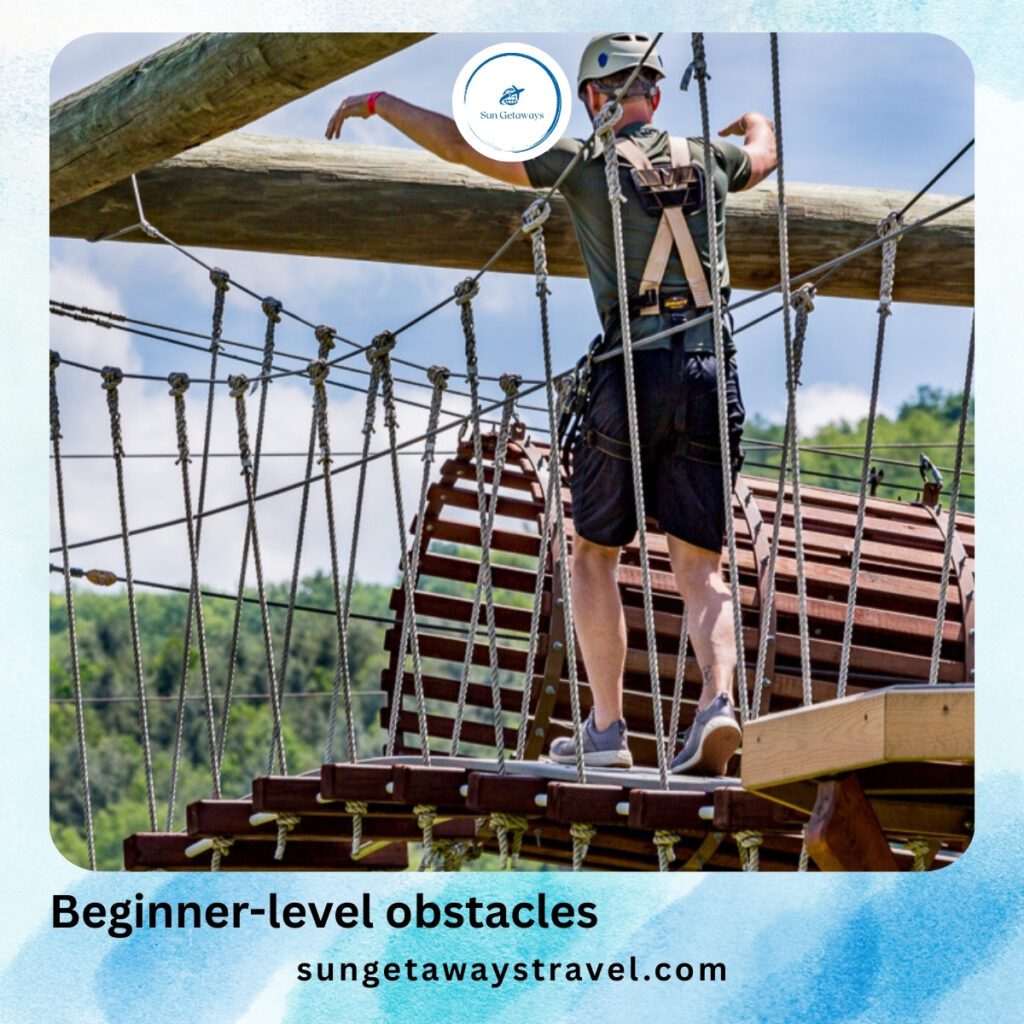
Obstacle design is the defining feature of this rope course in Vietnam. At the beginner level, participants focus on balance and coordination. Typical obstacles include rope bridges, swinging wooden steps, and narrow beams suspended between trees. These challenges train foot placement, posture, and overall body awareness. Beginners gain confidence while learning basic climbing and safety skills.
Mid-level challenges
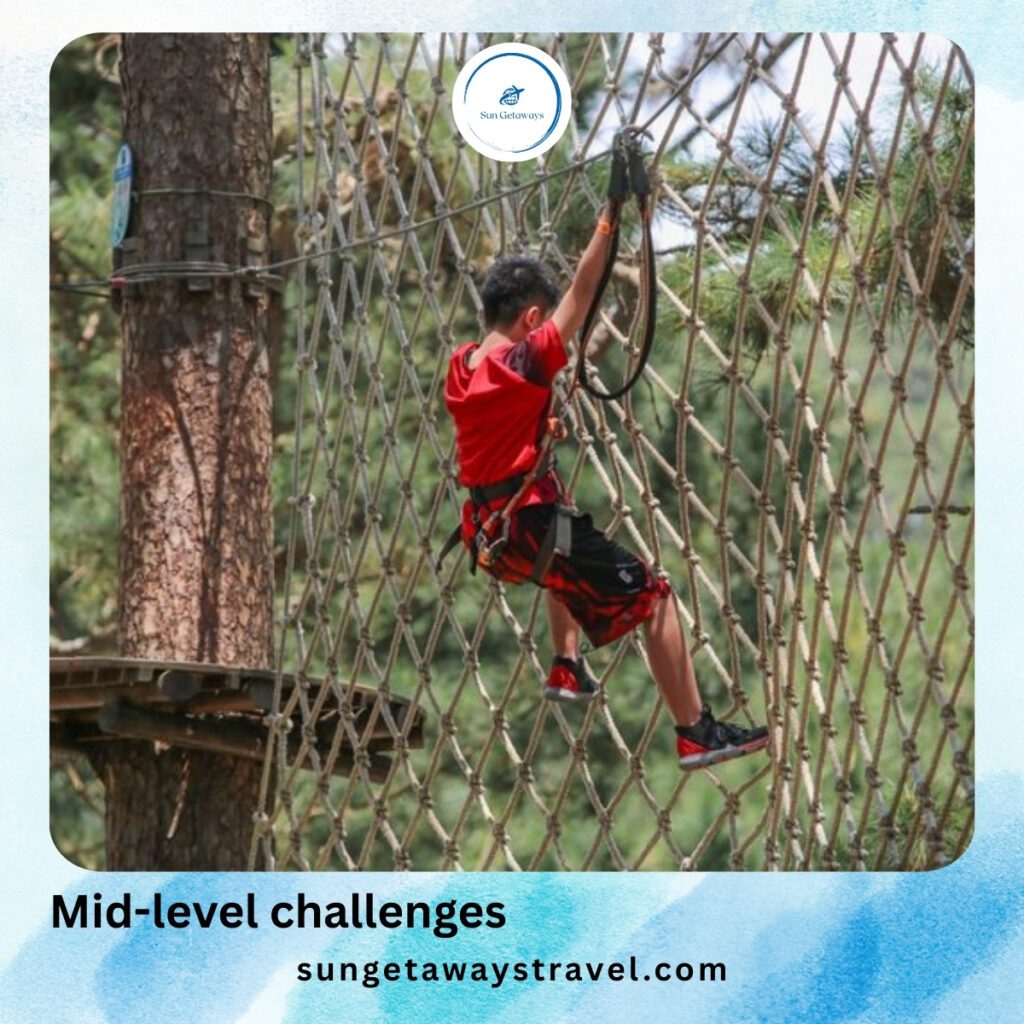
Mid-level stages increase both complexity and height. Participants encounter wider gaps between platforms, angled rope crossings, and moving elements that react to body weight. These obstacles demand stronger core control, improved grip strength, and enhanced mental focus. At this stage, careful planning and deliberate movement become critical for success.
Advanced-level experiences
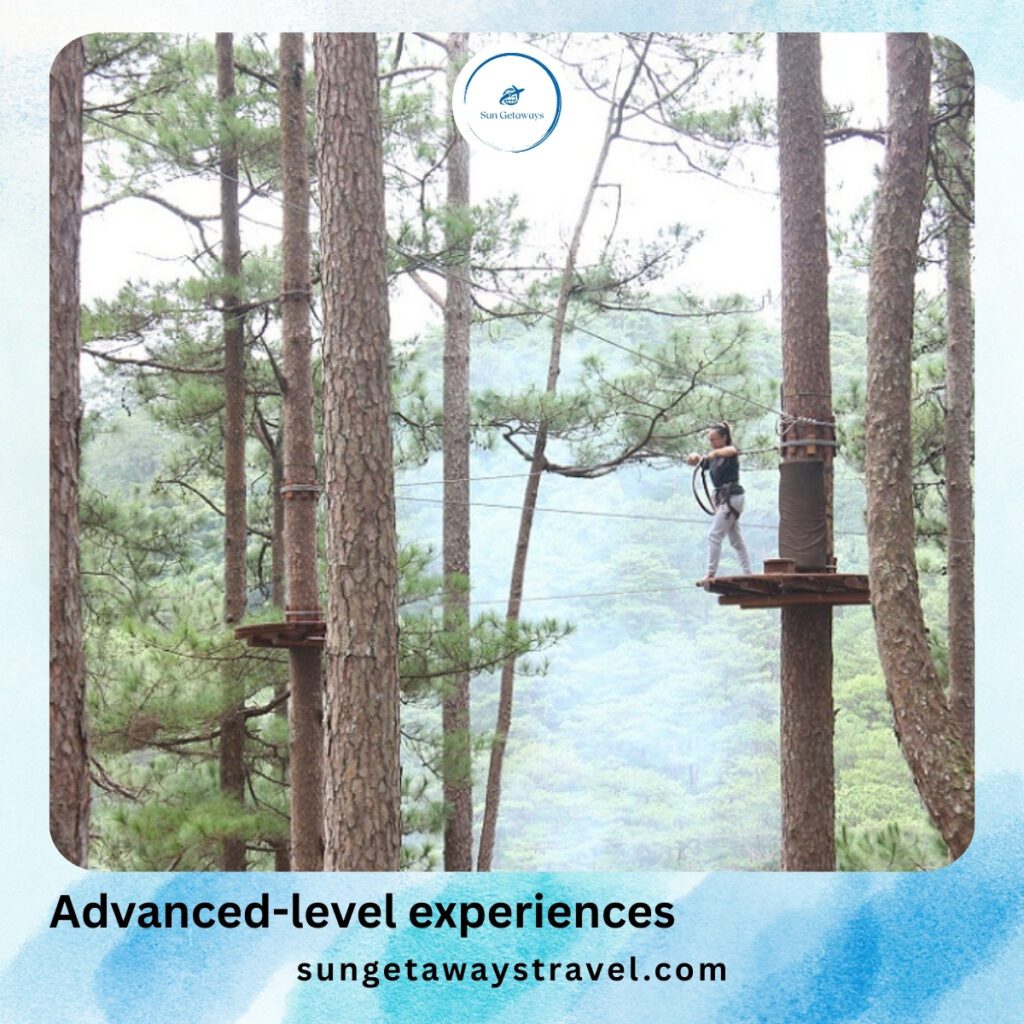
Advanced levels are the most demanding in the Vietnam high-rope challenge course. Participants navigate long ziplines, suspended cargo nets, and unstable rope ladders. Obstacles are spaced farther apart, requiring both physical endurance and mental resilience. This stage pushes adventurers to manage fear, fatigue, and decision-making simultaneously, providing a strong sense of achievement.
Thanks to this layered design, the course remains accessible to beginners while still challenging seasoned adventurers. The variety of obstacles ensures that no two sections feel repetitive, making the overall rope course in Vietnam experience both engaging and rewarding.
For those seeking a deeper experience, you can explore a 16-day Vietnam adventure experience trip that blends high-energy activities, scenic destinations, and authentic local encounters.
4. Safety Standards and Professional Supervision
Safety is a top priority, and the course relies on certified equipment and regular inspections to maintain high standards.
4.1. Certified equipment and systems
Safety is the foundation of the rope course in Vietnam at Datanla. All harnesses, helmets, and carabiners meet European certification standards. Trees used for anchoring undergo professional inspections. Equipment checks occur before every session.
4.2. Instructor training and on-course support
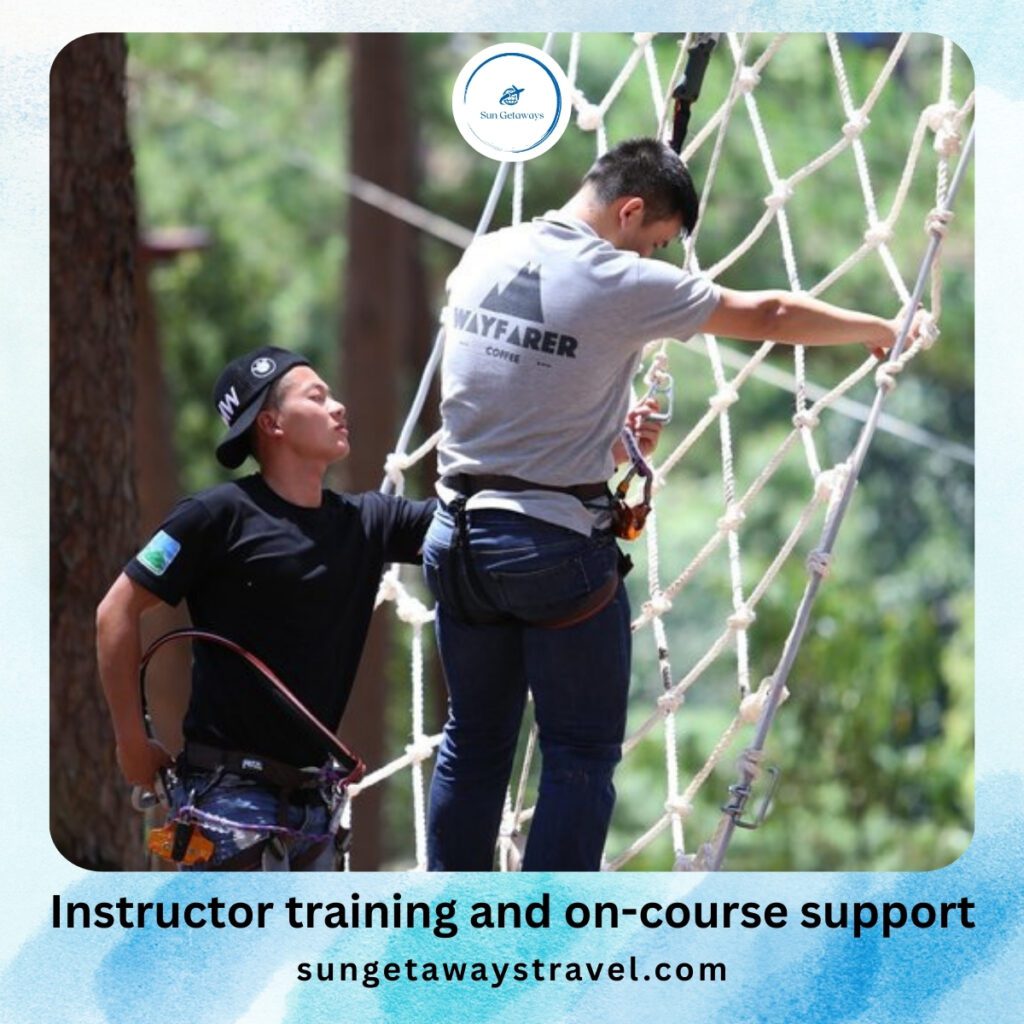
Before starting, participants receive mandatory training. Instructors explain clipping techniques and emergency procedures. Practice obstacles are required before entering higher levels. Throughout the Vietnam high-rope challenge course, staff monitor participants closely and provide assistance when necessary.
“The High Rope Course in Da Lat allows guests to push personal limits while remaining protected by advanced safety systems.” – Ms. Emma Nguyen, Head of Tour Operations at Sun Getaways Travel
5. Practical Information: Location, Timing, and Pricing
Knowing how to reach the course and plan your visit can make your adventure smoother and more enjoyable.
5.1. Location and access to rope course in Vietnam
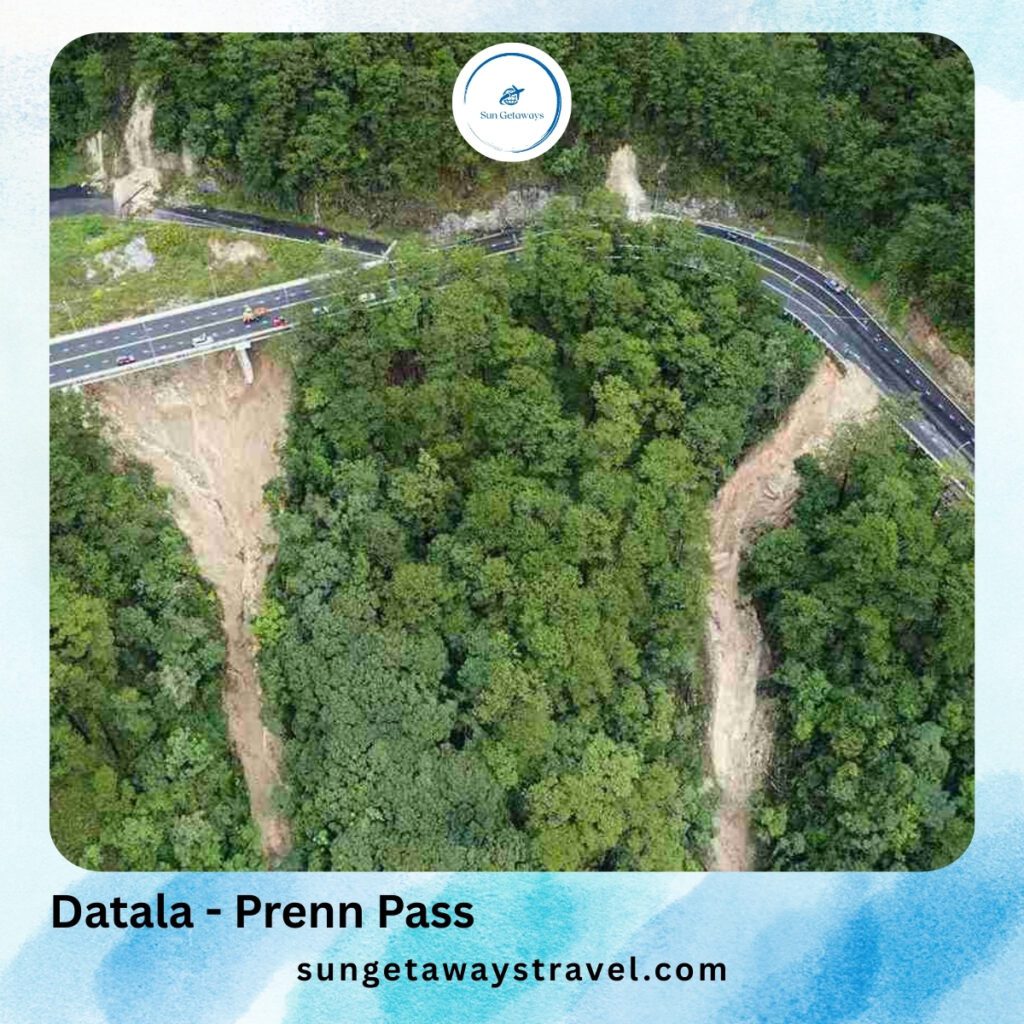
The course is located inside Datanla Tourist Area on Prenn Pass. From Da Lat city center –Lam Dong province, travel time is about forty minutes. Moreover, taxis, motorbikes, and private cars offer easy access. This convenience makes the rope course in Vietnam ideal for half-day itineraries.
5.2. Opening hours and ticket prices
Operating hours run daily from 07:00 to 17:00, with the last entry at 15:00. Ticket prices vary by time slot. Early sessions are cheaper than peak hours. Prices generally range from 270,000 to 350,000 VND per person. Booking in advance is recommended.
If you need quick assistance, you can contact our team directly via WhatsApp for fast support.
6. Who Should Try the Vietnam High-Rope Challenge Course
The rope course is designed for a wide range of travelers, from adventure seekers to families looking for a safe outdoor activity.
6.1. Suitable traveler profiles
The Vietnam high-rope challenge course is designed for travelers seeking an active outdoor experience combined with natural scenery. It is especially appealing to adventure-oriented visitors who enjoy physical movement, mild adrenaline, and personal challenges in forest environments.
Couples often choose this experience as a shared activity, supporting each other through obstacles and celebrating progress together. Group travelers and corporate teams also benefit, as many elements encourage communication, trust, and coordination rather than individual speed.
6.2. Age range and participation suitability
Families can safely enjoy this rope course in Vietnam, as lower-level routes are specifically designed for children and first-time participants. These sections allow younger players to experience height and movement without excessive difficulty.
While the course is accessible to a wide audience, it may not be suitable for travelers with serious medical limitations or extreme fear of heights. In such cases, alternative nature-based activities in Da Lat may offer a more comfortable experience.
7. Tips for the Vietnam High-Rope Challenge Course
Planning ahead ensures that your rope course experience is enjoyable and stress-free.
7.1. How to plan your visit efficiently
To enjoy the Vietnam high-rope challenge course without unnecessary pressure, plan your visit with enough time to complete all levels comfortably. The full experience typically requires around two hours, depending on rest breaks and group size.
Choosing a less crowded time allows smoother progression between obstacles and better interaction with instructors. A relaxed pace improves focus and reduces fatigue, especially for first-time participants.
7.2. What to wear and bring when joining rope course in Vietnam
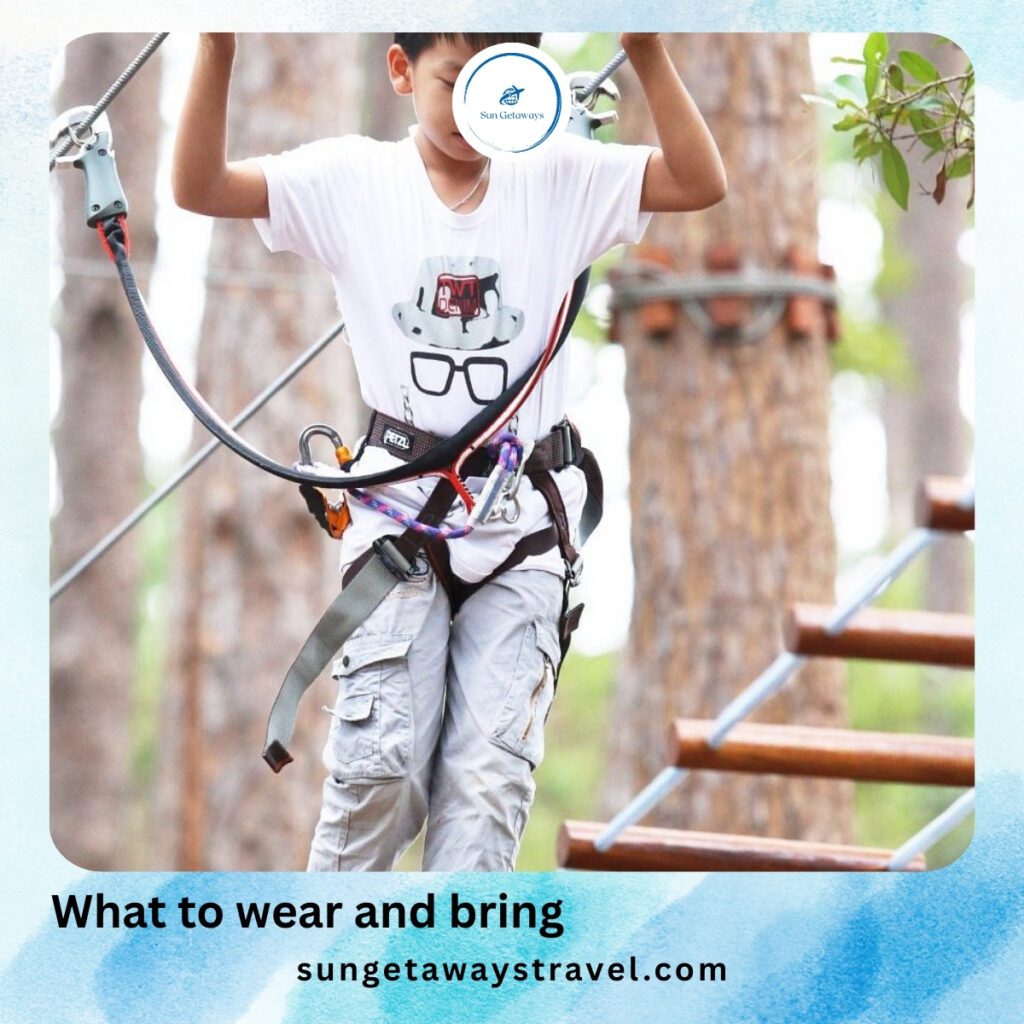
Appropriate clothing plays a key role in enjoying the rope course in Vietnam. Because wear flexible sportswear that allows free movement. Moreover, void long skirts, oversized jackets, or loose accessories that may interfere with safety equipment.
Footwear should provide good grip and ankle support, as many obstacles involve wooden platforms, rope bridges, and uneven surfaces. Gloves are helpful for handling ropes and nets, while sunscreen protects against prolonged sun exposure in open sections.
7.3. Physical readiness and safety awareness
Although no advanced athletic training is required, participants should be prepared for continuous movement, climbing, and balancing. Warming up before starting helps reduce muscle strain and improves coordination during early obstacles.
Always follow instructor guidance carefully. Safety systems are professionally installed, but personal awareness remains essential. If fatigue or discomfort occurs, slowing down or requesting assistance is encouraged. The goal is steady progress, not speed.
7.4. On-course behavior and practical advice
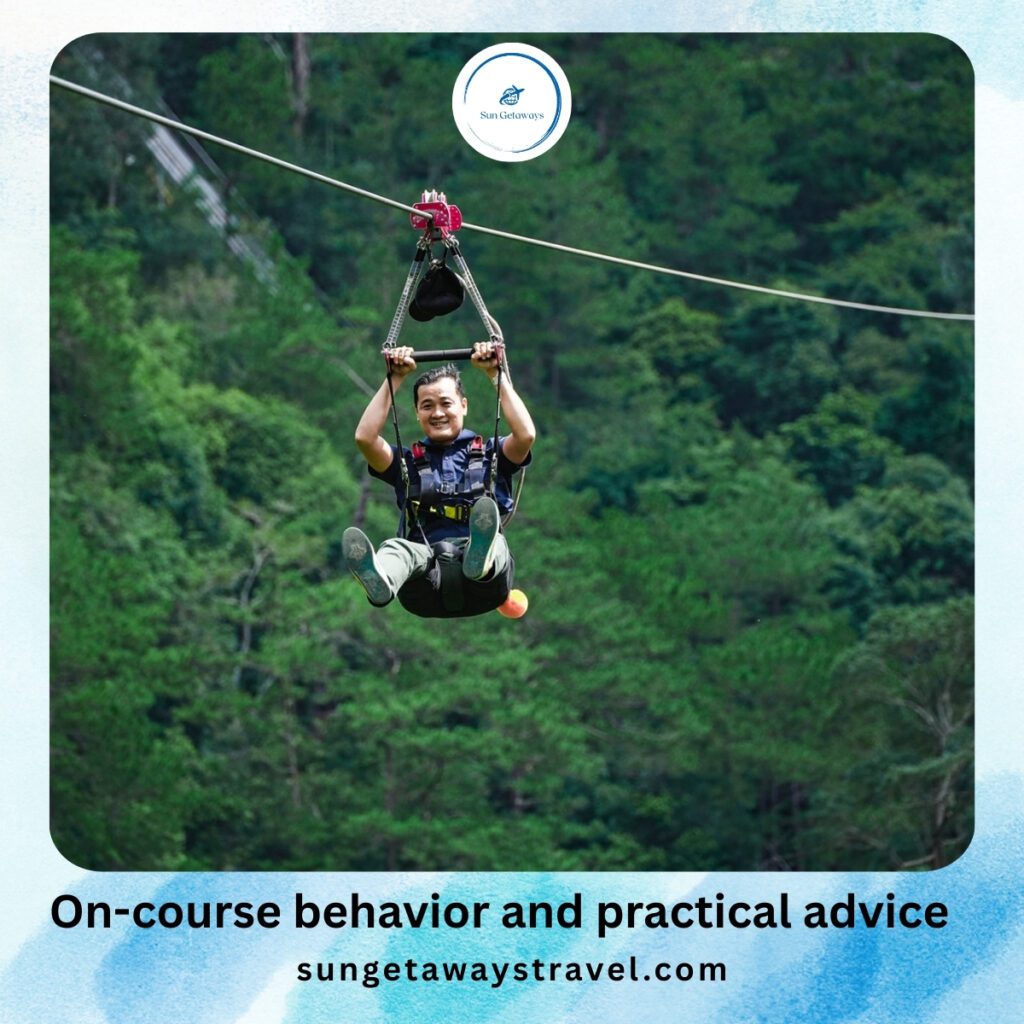
- Maintain a steady rhythm rather than rushing through obstacles
- Observe others to understand techniques before attempting new elements
- Stay hydrated, especially on warm days
- Secure personal belongings to avoid dropping items during climbs
By applying these practical strategies, visitors can fully enjoy the Vietnam high-rope challenge course while maintaining confidence and safety throughout the experience.
8. Frequently Asked Questions about Rope Course in Vietnam
The Vietnam high-rope challenge course ranges from 1 meter at beginner levels to 20 meters at advanced sections. Beginners start low and gradually progress to higher platforms.
Yes, lower levels are child-friendly, with secure harnesses and easy obstacles. Adults can accompany children for supervision and support.
Bring athletic wear, sneakers, gloves, sunscreen, and a small secure bag for personal items. Avoid loose or long clothing that may snag.
The average duration is about 2 hours, depending on your speed and rest breaks.
Absolutely. The rope course in Vietnam is designed with progressive levels to help first-time participants gain confidence before tackling advanced challenges.
Conclusion
The High Rope Course at Datanla defines what a professional rope course in Vietnam should be. As the country’s most developed Vietnam high-rope challenge course, it offers safe adventure in a natural forest environment. With proper preparation and timing, this experience becomes a memorable highlight of any Da Lat trip.
For travelers interested in custom-designed adventure days, Sun Getaways Travel provides tailored Da Lat itineraries that combine safety, comfort, and authentic exploration.


Related Tour

13-Day Vietnam Adventure Motorbike Street Food Sightseeing


27 Reviews

7 Days Best of Northern Vietnam
49 Reviews
5 Days Halal Food Tour Hanoi Sapa & Trang An
0 Reviews

Best of Saigon: 3-Day Team Building Tour
9 Reviews

14-Day Explore Vietnam Local Food
20 Reviews

Northern Vietnam Delights: Hanoi, Halong Bay & Sa Pa 6 Days
27 Reviews
Ask a question
Leave a Comment (0)
No questions yet. Be the first to ask a question!
See related Posted
Luxury Golf Resorts in Vietnam – Elite Golf Travelers

Vietnam is increasingly recognized as a premier golf destination in Asia, therefore luxury golf…
Macrame in Vietnam: The Revival of Knot Art in Contemporary Craft Culture

Macrame in Vietnam reflects the country’s growing engagement with contemporary handmade culture, where global…
Vietnamese Musical Instrument Craft: Traditional Instrument Making in Vietnam

Vietnamese musical instrument craft reflects a long-standing relationship between sound, material, and cultural memory.…
Traditional Vietnamese Kite Art: History, Craftsmanship, and Cultural Meaning

Traditional Vietnamese kite art is a living expression of folk creativity, community values, and…
Vietnamese Folk Masks: Tradition, Symbolism & Cultural Meaning

Vietnamese folk masks are a distinctive form of traditional art that reflects the spiritual…
Vietnamese Embroidery Art: Traditional Craftsmanship & Cultural Meaning

Vietnamese embroidery art is a refined traditional craft that reflects patience, cultural memory, and…