






Mekong Delta Food Tour: Hidden Flavors You Must Try
 PhamDuong
  3 min. to read
 The Mekong Delta is Vietnam’s culinary heart, shaped by rivers, seasons, and daily life. A well-designed Mekong Delta food tour combines floating markets, home kitchens, and vibrant Mekong Delta street food scenes. Travelers do not simply eat. Additionally, they can explore culture through flavors, routines, and human connections. This guide helps you plan a meaningful Mekong Delta food tour centered on authentic Mekong Delta street food and local dining traditions.
Key Takeaways
- Mekong Delta street food provides an authentic taste of local culture, with main dishes and desserts reflecting daily life and regional flavors.
- Floating markets and local stalls offer immersive dining experiences, allowing travelers to witness daily routines while enjoying fresh, traditional meals.
- Smart planning and local insight such as eating early, sharing dishes, and following crowds, enhances the enjoyment and safety of a Mekong Delta food tour.
1. What to Eat on a Mekong Delta Food Tour
Within a Mekong Delta food tour, local dishes are generally divided into two groups: main dishes and light desserts, following everyday eating habits in the region.
1.1. Main Dishes
Main dishes represent the core of daily meals in the delta and are commonly found in floating markets, roadside stalls, and family-run eateries that define Mekong Delta street food.
1.1.1. Bun Mam (Vietnamese Gumbo)

Bun Mam is one of the most intense noodle soups commonly in a Mekong Delta food tour. The dish originated from Cambodian cuisine but was adapted using local fermented freshwater fish instead of strong prahok paste. This adjustment makes the aroma milder while preserving depth and character.
A typical bowl contains rice vermicelli topped with crispy pork belly, squid, shrimp, eggplant, and mixed herbs. Besides, the broth delivers layered flavors that move between salty, sweet, sour, and earthy notes. Prices usually range from 40,000 to 65,000 VND per bowl at local eateries.
1.1.2. Lau Mam (Fermented Fish Hotpot)

Lau Mam is a communal hotpot that reflects social dining traditions of southern Vietnam. Because local cooks simmer the broth with fermented fish, pork bones, coconut water, and regional spices, gradually adding seasonal vegetables to build rich flavors.
This dish is often shared among families or groups of friends during evening gatherings. Moreover, each ingredient absorbs the broth differently, creating changing textures and aromas. A full pot typically costs between 250,000 and 450,000 VND depending on size.
1.1.3. Hu Tieu My Tho (My Tho Noodle)
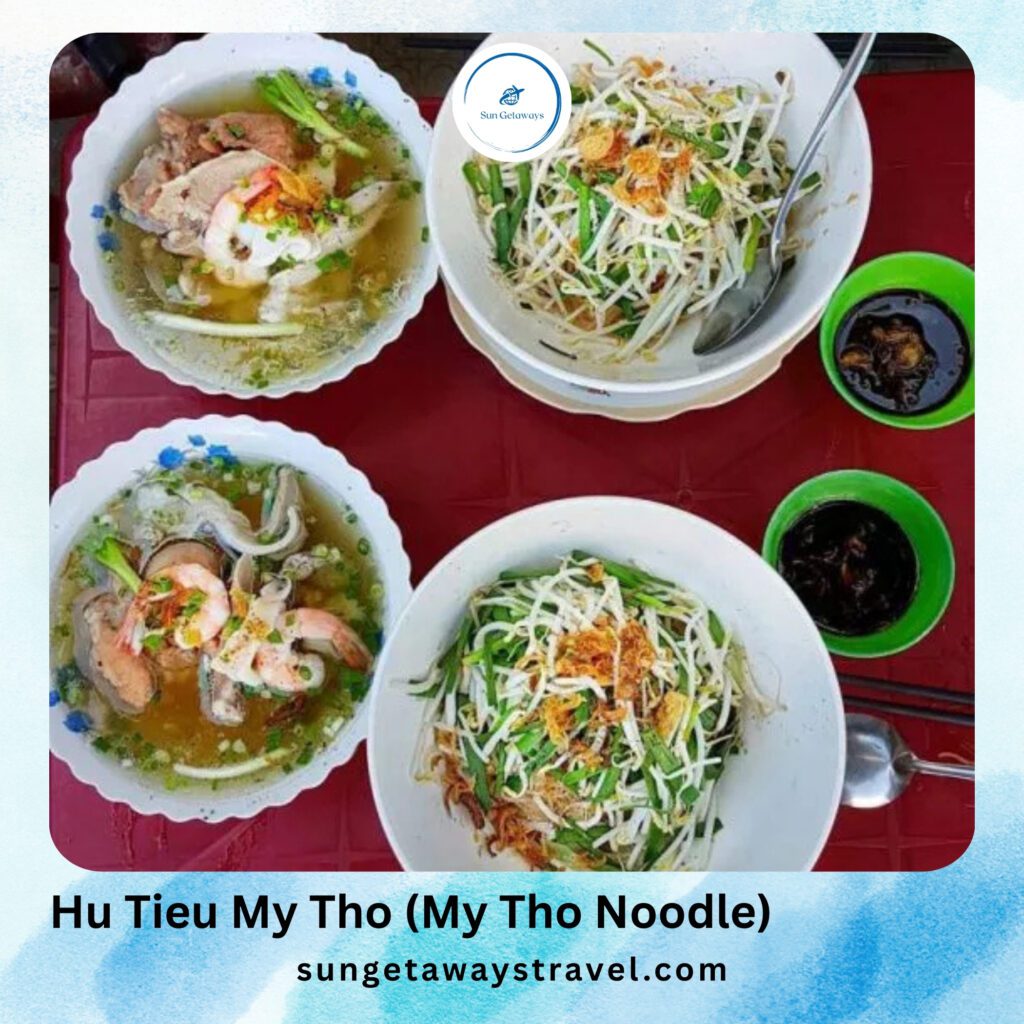
Hu Tieu My Tho is widely regarded as a culinary symbol of the region, as local rice varieties give the noodles a chewy texture that stays firm in hot broth. Besides, locals often eat this dish early in the morning as a comforting start to the day.
Toppings usually include pork slices, shrimp, liver, quail eggs, and fresh herbs. Moreover, he broth tastes clean, lightly sweet, and never greasy, even after finishing the bowl. Prices typically range from 35,000 to 60,000 VND at traditional eateries.
1.1.4. Bun Nuoc Leo (Fish Broth Rice Noodle)
Bun Nuoc Leo reflects the cultural blending found across the Mekong Delta food tour experience. The broth uses fermented fish paste balanced with lemongrass, finger root, and coconut water. These ingredients soften the fish aroma while enhancing fragrance.
Vendors serve thin rice noodles topped with plump shrimp, tender pork, and fresh herbs, creating a light yet aromatic dish perfect for lunch or dinner. A bowl typically costs 30,000 to 55,000 VND, offering a satisfying taste of the Mekong Delta.
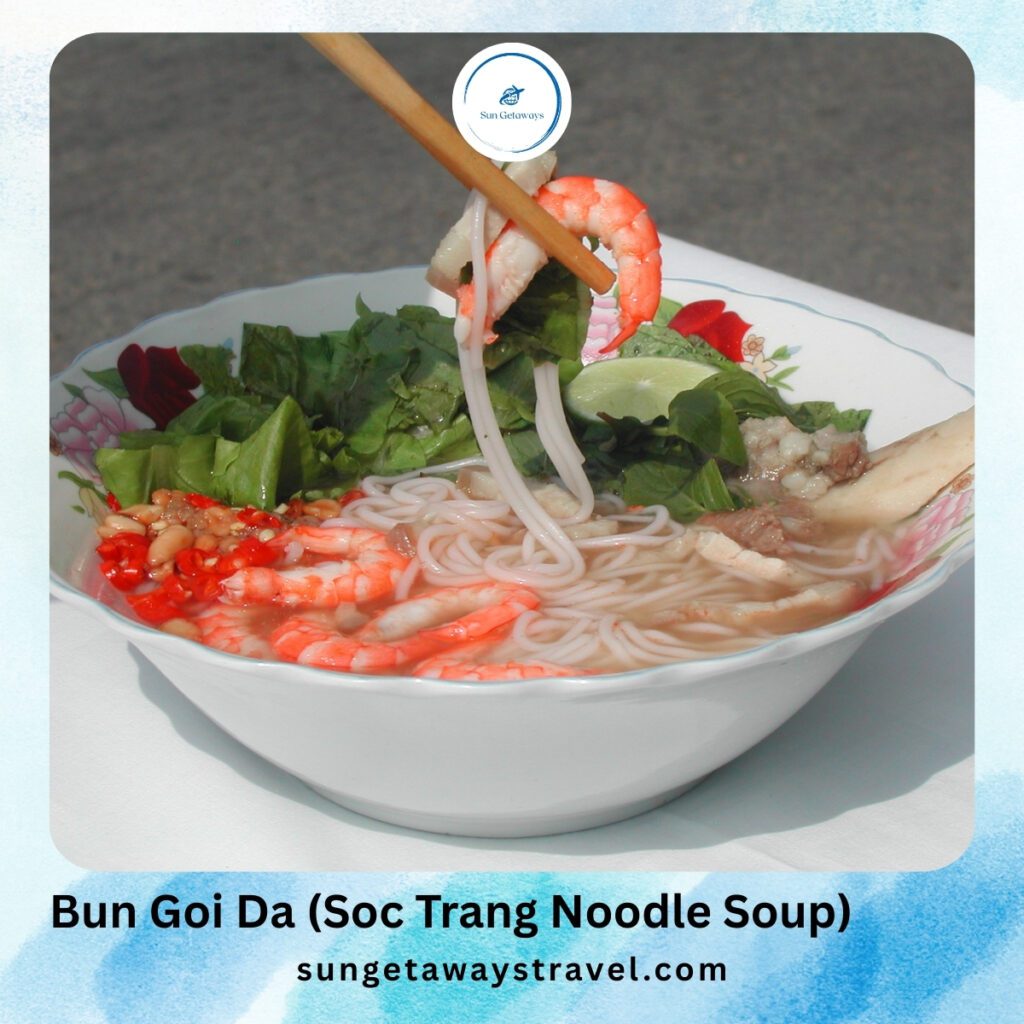
1.1.5. Bun Goi Da (Soc Trang Noodle Soup)

Bun Goi Da is a lesser-known specialty originating from Soc Trang province. Despite its simple presentation, the broth balances sour tamarind, sweetness, and savory pork flavors. Locals value the dish for its comforting and familiar taste.
Rice noodles come with pork, shrimp, and assorted vegetables, delivering a harmonious blend of flavors and textures. However, a bowl only costs between 35,000 and 50,000 VND.
“The Mekong Delta is a living kitchen, and the best experiences come from engaging directly with locals. Don’t rush; savor each dish, ask questions, and embrace the unexpected flavors” – Ms. Emma Nguyen, Head of Tour Operations at Sun Getaways Travel.
1.1.6. Bun Ken (Island Broth)

Bun Ken introduces coastal influences into the Mekong Delta food tour experience with a rich, aromatic broth made from fish, coconut milk, and lemongrass. Locals often add fresh herbs, cucumber, and shredded vegetables, enjoying it as a hearty breakfast. A serving typically costs 40,000 to 60,000 VND.
If you’re curious about other popular Vietnamese breakfast dishes, check out our guide to Vietnamese breakfast foods to discover more noodles, soups, and morning specialties from across the country.
1.1.7. Banh Xeo (Vietnamese Pancake)

Banh Xeo is a familiar sight when exploring Mekong Delta street food in rural areas and countryside villages, where the pancake is cooked slowly over wood fire. The pancake is large, thin, and crispy, with turmeric giving it a deep golden color and a subtle earthy aroma. The batter spreads wide across the pan, creating a delicate texture that crackles lightly when folded.
Diners break the pancake into smaller pieces and wrap them with fresh herbs, leafy greens, and rice paper before dipping. The eating experience is slow, communal, and often shared among friends rather than rushed meals. Each pancake usually costs between 30,000 and 50,000 VND, making it accessible on a Mekong Delta food tour.
1.1.8. Banh Khot (Mini Rice Pancake)

Banh Khot offers a lighter option within Mekong Delta street food, especially for travelers who prefer smaller portions. Vendors cook these mini pancakes in round molds, crisping the edges while keeping the center soft and moist. Coconut milk in the batter adds a gentle richness without overpowering the dish.
Normally people eat Banh Khot with fresh herbs and dipping sauce, often served as a shared snack during the day. The contrast between crispy rims and soft interiors creates a balanced and satisfying bite. A typical serving costs between 25,000 and 45,000 VND.
Once you’ve enjoyed these iconic Mekong Delta flavors, consider extending your adventure with our Mekong Eco Tour, which pairs culinary delights with rivers, orchards, and traditional villages.
1.2. Desserts in Mekong Delta
After enjoying savory dishes, desserts add a gentle sweetness that completes the Mekong Delta food tour experience.
1.2.1. Banh Pia (Pia Cake)

Banh Pia is a famous dessert often encountered during a Mekong Delta food tour, especially in Soc Trang province. The cake has a flaky, layered crust that feels soft yet slightly chewy, different from Northern mooncakes. Inside, smooth mung bean paste mixes with durian, producing a creamy, fragrant filling that lingers pleasantly.
Locals usually enjoy this dessert with hot tea, which balances the sweetness and prevents it from feeling too heavy. Besides, they often buy it as gifts rather than daily snacks. A single cake typically costs between 15,000 and 30,000 VND depending on size and filling.
1.2.2. Banh Bo Thot Not (Palm Sugar Honeycomb Cake)
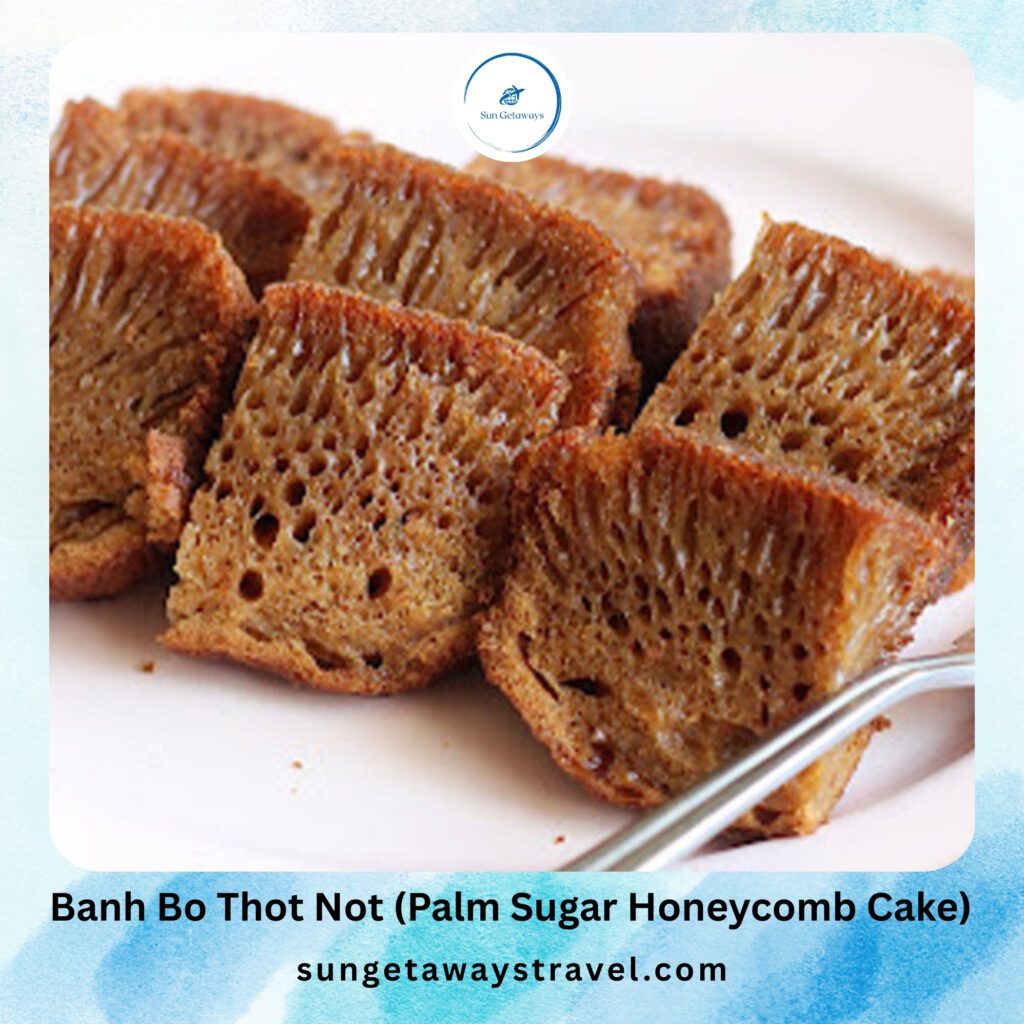
Banh Bo Thot Not is a distinctive dessert made from palm sugar, a specialty of An Giang and the Khmer communities. The cake has a spongy, airy texture with natural honeycomb holes formed through careful fermentation. Palm sugar gives it a deep golden color and a mild sweetness that feels clean rather than sharp.
The flavor is fragrant and creamy thanks to coconut milk, with a subtle caramel note from the palm sugar. Prices usually range from 10,000 to 25,000 VND per piece, making it a simple highlight of Mekong Delta street food.
1.2.3. Bo Bia Ngot (Sweet Popiah)

Bo Bia Ngot is a childhood snack that still appears frequently in Mekong Delta street food scenes today. Thin crepe wrappers are filled with malt candy blocks, shredded coconut, and black sesame seeds. A few drops of fragrant flower essence give the roll a surprisingly aromatic finish.
The texture is crunchy, sweet, and slightly chewy, creating a playful contrast in every bite. Besides, vendors usually sell it from bicycles or small carts along local streets. And each roll costs around 5,000 to 10,000 VND and is often added as a light ending to a Mekong Delta food tour.
To make your trip seamless and personalized, you can contact our team directly for guidance and private arrangements through this WhatsApp.
2. Where to Eat on a Mekong Delta Food Tour
Choosing where to eat is just as important as knowing what to eat. On a Mekong Delta food tour, dining locations are closely tied to daily life rather than tourist design. Travelers usually encounter food in open, informal, and community-based settings.
2.1. Floating Markets and Riverbanks

Floating markets are spread across several Mekong Delta provinces, each serving surrounding rural communities. The most well-known include Cai Rang Floating Market (Can Tho), Phong Dien Floating Market (Can Tho), Cai Be Floating Market (Tien Giang), Nga Nam Floating Market (Soc Trang), Long Xuyen Floating Market (An Giang), and Tra On Floating Market (Vinh Long).
Each market reflects local trade patterns rather than tourism planning. Boats sell noodles, coffee, fruits, and simple meals cooked onboard. Additionally, eating here allows travelers on a Mekong Delta food tour to experience daily river life naturally.
2.2. Local Markets and Street Stalls

Traditional wet markets are the most reliable places to explore regional flavors across the delta. Well-known examples include Xom Moi Market (Can Tho), My Tho Market (Tien Giang), Tra On Market (Vinh Long), Soc Trang Central Market (Soc Trang), and Chau Doc Market (An Giang). These markets serve local residents rather than tourists.
Food stalls usually operate from early morning until late afternoon, focusing on a few signature dishes. Vendors often cook beside their stalls, allowing visitors to watch each step. This environment reflects the everyday rhythm of Mekong Delta street food.
If you want to discover more about the delta’s villages, rivers, and authentic culinary experiences in detail, take a look at our Mekong Delta Day Trip guide for a full-day adventure.
3. Practical Tips for Enjoying Mekong Delta street food
Here are five practical tips to enjoy a Mekong Delta food tour and experience authentic Mekong Delta street food.
- Eating early helps you find fresher dishes, as most savory foods sell out before noon across the delta.
- Following local crowds is more reliable than online reviews when choosing stalls serving Mekong Delta street food.
- Sharing dishes allows travelers to taste more varieties during a Mekong Delta food tour without overeating.
- Carrying small cash bills makes street transactions quicker, since most vendors do not accept cards.
- Observing how locals order and eat provides useful cues, even without speaking Vietnamese.
4. FAQ About Mekong Delta Food Tours
The ideal months are from November to April, when waterways are low and markets are lively, ensuring a smooth Mekong Delta food tour experience.
Yes, most dishes are freshly prepared with local ingredients, but it’s recommended to eat at busy stalls to enjoy authentic and safe Mekong Delta street food.
Yes, vegetarian or seafood-only dishes are available, and vendors can adjust recipes upon request on a Mekong Delta food tour.
Conclusion
A well-planned Mekong Delta food tour offers more than just meals; it immerses travelers in culture, daily routines, and local connections. From bustling floating markets to intimate family-run eateries, every bite tells a story. Exploring Mekong Delta street food allows visitors to taste history, creativity, and community all at once.
For travelers seeking private, flexible, and immersive culinary experiences, Sun Getaways Travel offers expertly designed food journeys across the Mekong Delta.


Related Tour
Hands On Art & Craft Experience from Hanoi


0 Reviews

Experience History and Local Life in the Mekong Delta 5 Days
11 Reviews

Experience Vietnam’s Diverse Regions in 14 Days
31 Reviews

Explore Kong Skull Island in Vietnam: A 14 Day Journey
50 Reviews

12 Days Vietnam Relaxing Tour With Phu Quoc Island
39 Reviews

16-Day Vietnam Adventure Experience trip
0 Reviews
Ask a question
Leave a Comment (0)
No questions yet. Be the first to ask a question!
See related Posted
Luxury Golf Resorts in Vietnam – Elite Golf Travelers

Vietnam is increasingly recognized as a premier golf destination in Asia, therefore luxury golf…
Macrame in Vietnam: The Revival of Knot Art in Contemporary Craft Culture

Macrame in Vietnam reflects the country’s growing engagement with contemporary handmade culture, where global…
Vietnamese Musical Instrument Craft: Traditional Instrument Making in Vietnam

Vietnamese musical instrument craft reflects a long-standing relationship between sound, material, and cultural memory.…
Traditional Vietnamese Kite Art: History, Craftsmanship, and Cultural Meaning

Traditional Vietnamese kite art is a living expression of folk creativity, community values, and…
Vietnamese Folk Masks: Tradition, Symbolism & Cultural Meaning

Vietnamese folk masks are a distinctive form of traditional art that reflects the spiritual…
Vietnamese Embroidery Art: Traditional Craftsmanship & Cultural Meaning

Vietnamese embroidery art is a refined traditional craft that reflects patience, cultural memory, and…