







Vietnamese Musical Instrument Craft: Traditional Instrument Making in Vietnam
 PhamDuong
  3 min. to read
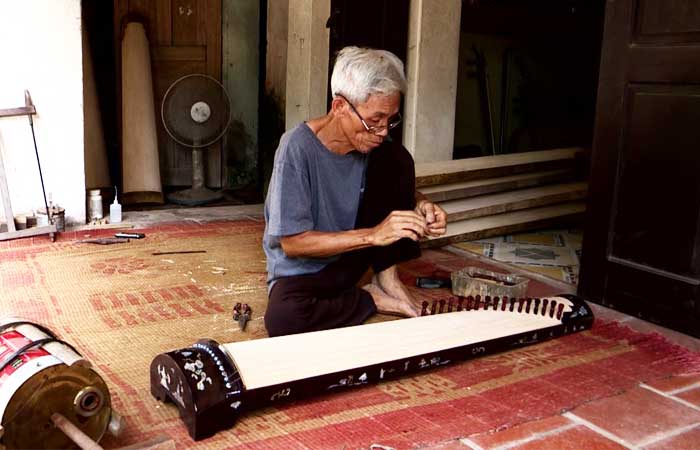
 Vietnamese musical instrument craft reflects a long-standing relationship between sound, material, and cultural memory. Rooted in village life, rituals, and court traditions, traditional instrument making in Vietnam combines natural materials with refined handcraft techniques to create instruments that express harmony, restraint, and collective identity. Each instrument tells a story of community, belief, and the Vietnamese way of listening to the world.
Key Takeaways
- Vietnamese musical instrument craft intertwines sound, material, and cultural memory, reflecting community identity and traditions.
- Instruments support rituals, storytelling, and social bonding, evolving from early origins to formal court influences.
- Materials such as bamboo and animal skin play a crucial role in sound quality, while techniques emphasize balance and craftsmanship.
- Different regions of Vietnam develop distinct instrument styles and philosophies influenced by local history and culture.
- Contemporary practices adapt these crafts for modern contexts, preserving cultural heritage while fostering innovation.
1. Introduction to Vietnamese Musical Instrument Craft
Vietnamese musical instrument craft represents a deep connection between sound, material, and cultural memory. Long before written notation or formal music education, Vietnamese communities developed musical instruments as part of ritual life, storytelling, and communal expression.
Rather than serving purely aesthetic purposes, traditional instrument making in Vietnam evolved to support:
- Spiritual ceremonies and ancestor worship
- Folk performances and village festivals
- Daily labor rhythms and social bonding
Each instrument reflects not only acoustic knowledge but also craftsmanship shaped by local materials, climate, and worldview. As a result, Vietnamese musical instruments are inseparable from the cultural environments that produced them.
2. Historical Development of Traditional Instrument Making in Vietnam
The evolution of Vietnamese musical instrument craft closely follows the country’s social structure, belief systems, and regional diversity.
2.1 Early Origins and Folk Foundations
Traditional instruments existed long before formal historical records, emerging organically within village life.
Key historical characteristics include:
- Instruments crafted from bamboo, wood, gourds, animal skin, and metal
- Music integrated into agricultural cycles, rituals, and communal gatherings
- Knowledge transmitted orally from artisans to apprentices
In early Vietnamese society, instrument makers were often musicians themselves, ensuring that craftsmanship and performance evolved together.
2.2 Court Music and Institutional Craftsmanship
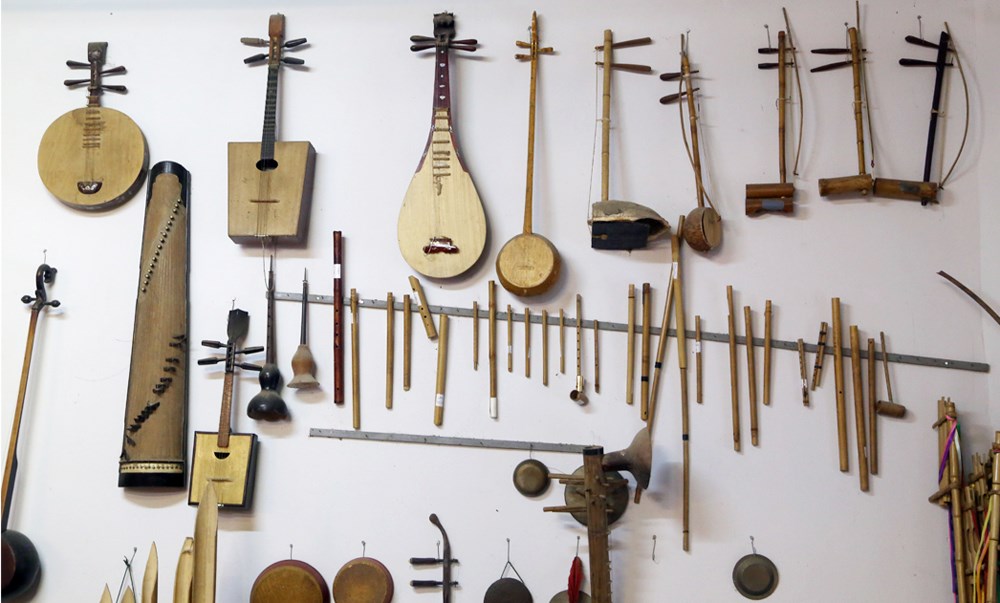
During feudal dynasties, musical instrument making reached a higher level of formalization.
Notable developments include:
- Standardized instruments for royal orchestras
- Strict rules governing size, tuning, and materials
- Craftsmanship aligned with Confucian ideas of harmony and order
Court music traditions, especially under imperial patronage, elevated instrument making into a respected specialized craft while influencing folk practices.
2.3 Modern Adaptation and Preservation
The modern era brought significant challenges and transformations.
However:
- Craft villages adapted instruments for performance, education, and tourism
- Cultural institutions began documenting endangered techniques
- Musicians collaborated with artisans to preserve authentic sound
Today, Vietnamese musical instrument craft survives through a balance between preservation and creative adaptation.
If you are interested in understanding the broader cultural context behind Vietnam’s creative heritage, start with an overview of 👉 Vietnamese traditional arts to explore key traditional art forms in Vietnam, from folk practices to court-influenced traditions.
3. Cultural Values Embedded in Vietnamese Musical Instrument Craft
Vietnamese musical instrument craft reflects cultural values beyond sound production or decorative form.
Core values include:
- Harmony with nature: Instruments are designed to resonate with natural acoustics rather than overpower them
- Community orientation: Music supports collective rituals and shared identity
- Balance and restraint: Sound emphasizes subtlety over dramatic volume
- Respect for lineage: Designs follow inherited proportions and tuning systems
These values align closely with broader Vietnamese aesthetics found in folk painting, embroidery, and ritual performance.
4. Materials Used in Traditional Instrument Making in Vietnam
Material selection is central to both sound quality and cultural meaning.
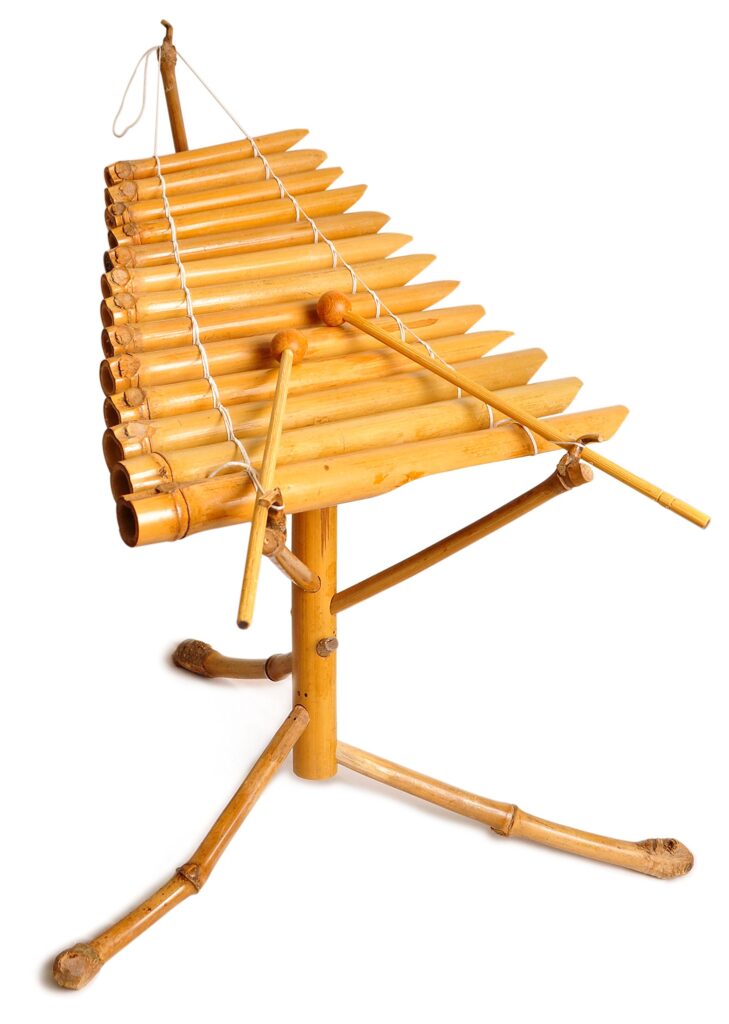
Common materials include:
- Bamboo: Lightweight, resonant, and widely available
- Hardwood: Used for string instruments and structural components
- Animal skin: Provides tonal warmth for drums
- Metal alloys: Used selectively for gongs and bells
- Natural adhesives and resins: Maintain acoustic integrity
Material choice reflects environmental knowledge accumulated over generations.
If you are curious about performance and ritual culture, read more about 👉 Vietnamese folk masks and the enduring Vietnamese folk mask making tradition across regions and festivals.
5. Core Techniques in Vietnamese Musical Instrument Craft
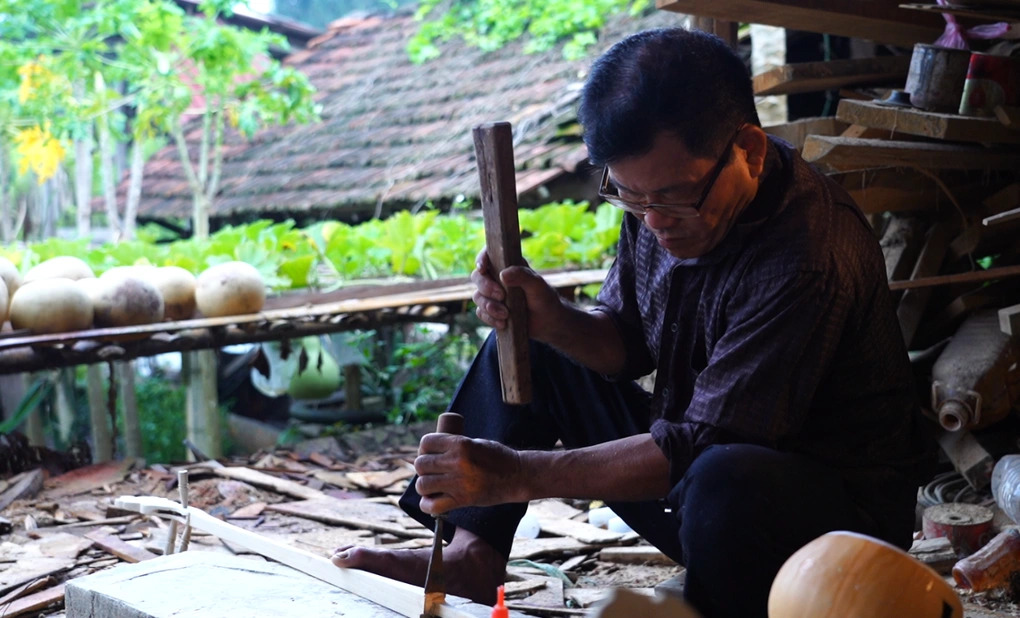
While materials provide the physical foundation, it is technique that ultimately transforms raw matter into expressive sound. Traditional instrument making in Vietnam is guided by precise handwork, deep listening skills, and experiential knowledge accumulated over generations. Artisans rely less on written measurement and more on sensory judgment, allowing each instrument to develop its own voice.
5.1 Shaping and Structural Balance
Instrument bodies must achieve acoustic balance while remaining structurally sound.
Key techniques include:
- Hand-carving or bending to precise proportions, ensuring the body responds evenly to vibration
- Maintaining symmetry while allowing organic variation, reflecting natural materials rather than mechanical uniformity
- Reinforcing stress points without deadening sound, especially in areas subject to tension or repeated impact
Structural balance determines tonal stability, responsiveness, and long-term durability.
5.2 Tuning and Sound Calibration
Tuning is an iterative, experience-based process rather than a fixed technical step.
Traditional methods involve:
- Adjusting thickness and cavity size to fine-tune resonance and sustain
- Testing sound repeatedly during construction, often pausing to listen and reassess
- Relying on auditory memory rather than measurement tools, guided by inherited sound ideals
Each instrument is tuned for its cultural and performance context, not universal pitch standards.
5.3 Surface Finishing and Resonance Control
Finishing influences both the visual character and acoustic quality of an instrument.
Typical approaches include:
- Natural lacquer or oil for protection, applied in thin layers to preserve vibration
- Minimal decoration to preserve resonance, avoiding unnecessary surface weight
- Avoiding excessive weight or coating, which could dampen sound response
Function consistently takes priority over ornamentation in traditional practice.
To explore one of Vietnam’s most refined visual art forms, read our in-depth guide on 👉 Vietnamese lacquer painting and learn how traditional materials and lacquerware painting techniques shape its distinctive aesthetic.
6. Major Categories of Traditional Vietnamese Musical Instruments
Vietnamese musical instruments can be broadly grouped based on how they produce sound, with each category serving distinct musical and social functions.
6.1 String Instruments
String instruments form the melodic core of many Vietnamese musical traditions.
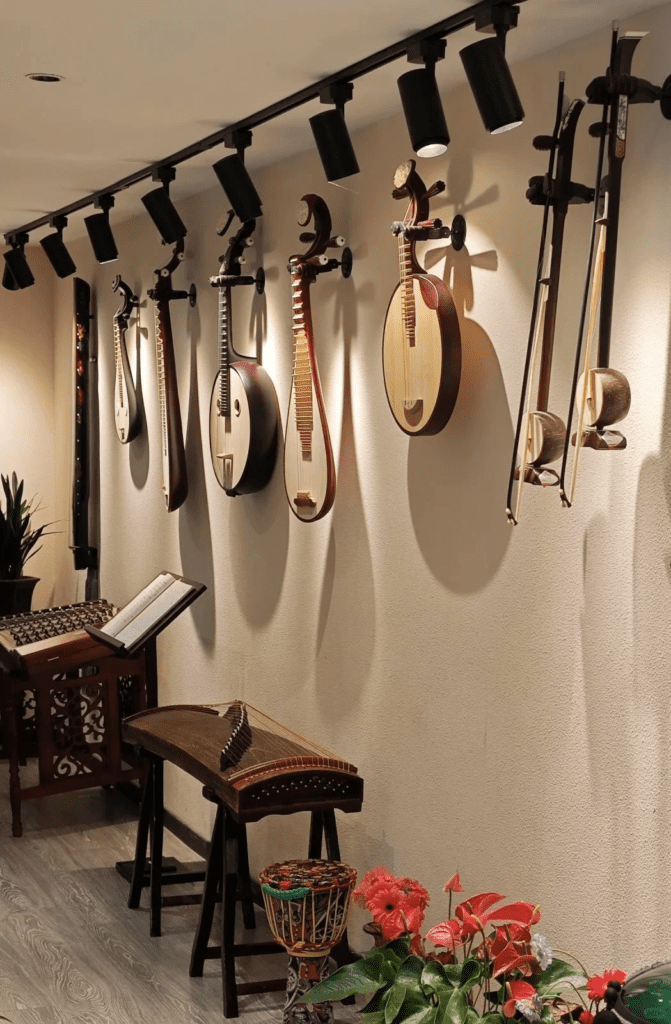
Common examples include:
- Đàn bầu (monochord), known for expressive pitch bending and emotional depth
- Đàn tranh (zither), used in both solo and ensemble settings
- Đàn nguyệt (moon lute), supporting vocal music and storytelling
These instruments emphasize melodic expression, subtle phrasing, and emotional nuance.
6.2 Wind Instruments
Wind instruments often accompany communal and outdoor events.
Examples include:
- Bamboo flutes, valued for their soft and lyrical tone
- Double-reed instruments, providing penetrating and ceremonial sound
- Mouth organs, capable of harmony and sustained tones
Their sound blends naturally with open spaces and collective gatherings.
6.3 Percussion Instruments
Percussion instruments anchor rhythm, structure, and ritual significance.
Common forms include:
- Drums for ceremonies and festivals, marking time and transitions
- Gongs in highland traditions, serving both musical and spiritual roles
- Bells for spiritual signaling, used in religious and communal contexts
Rhythm often carries symbolic meaning beyond tempo, reinforcing social and spiritual order.
7. Regional Variations in Traditional Instrument Making
Across Vietnam, traditional instrument making developed in response to local history, social structure, and performance contexts. While materials and basic principles may overlap, each region cultivated distinct sound ideals and construction philosophies that reflect regional identity.
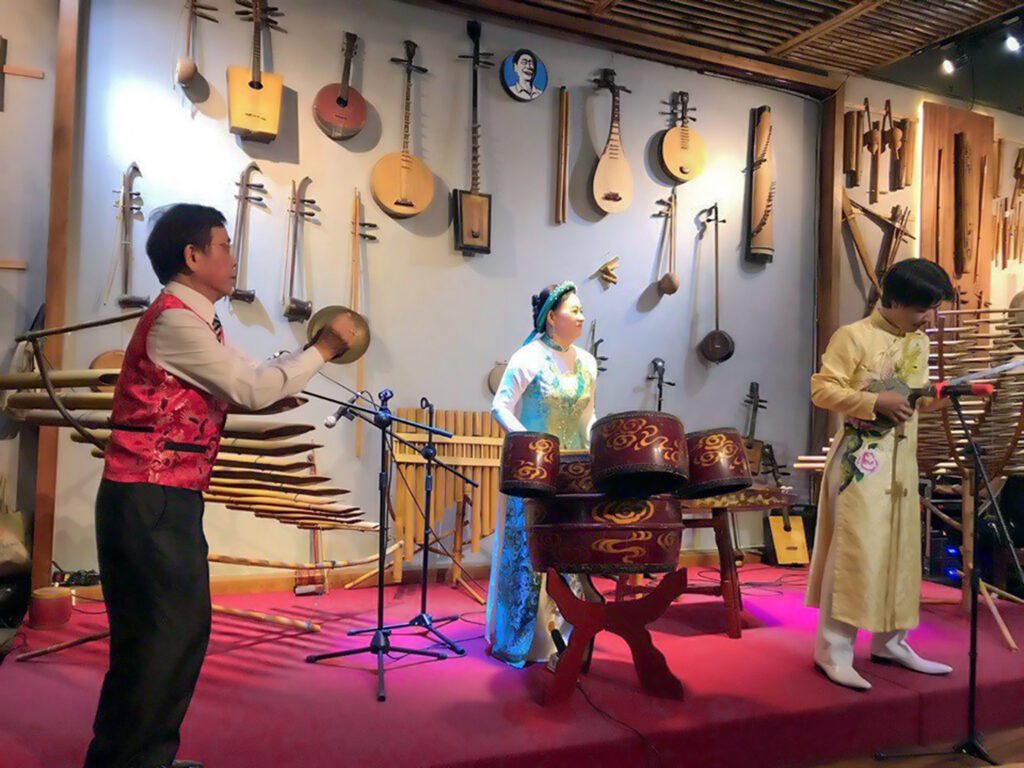
7.1 Northern Vietnam
Northern traditions emphasize refinement, restraint, and tonal balance, shaped by both court influence and long-standing folk performance.
Characteristics include:
- Strong influence of court and folk orchestras, particularly in ceremonial, theatrical, and ritual music traditions
- Subtle tonal control, with careful attention to tuning, resonance, and ensemble harmony
- Instruments used in Chèo and ritual music, designed to support storytelling, vocal performance, and communal expression
These qualities reflect a cultural preference for moderation and symbolic clarity.
7.2 Central Vietnam
Central regions reflect ceremonial formality rooted in imperial history and court ritual.
Features include:
- Instruments associated with royal music, especially those developed for Nhã nhạc performances
- Emphasis on order and structure, with standardized forms and controlled sound dynamics
- Historical preservation of tuning systems, maintained through court traditions and formal teaching
Instrument making here prioritizes dignity, balance, and continuity.
7.3 Southern Vietnam
Southern traditions are more flexible and adaptive, shaped by migration, trade, and multicultural interaction.
Typical traits include:
- Integration with folk entertainment, including community celebrations and popular performance forms
- Cross-cultural influences, incorporating elements from Khmer, Chinese, and Cham traditions
- Emphasis on improvisation, allowing performers greater expressive freedom
These instruments reflect openness and creative adaptability.
👉 Need quick advice or want to talk directly with our team? Contact us via WhatsApp for fast support and personal recommendations.
8. Vietnamese Musical Instrument Craft in Contemporary Culture
In contemporary Vietnam, traditional instrument making continues to adapt to new artistic and educational contexts without losing its cultural foundations.
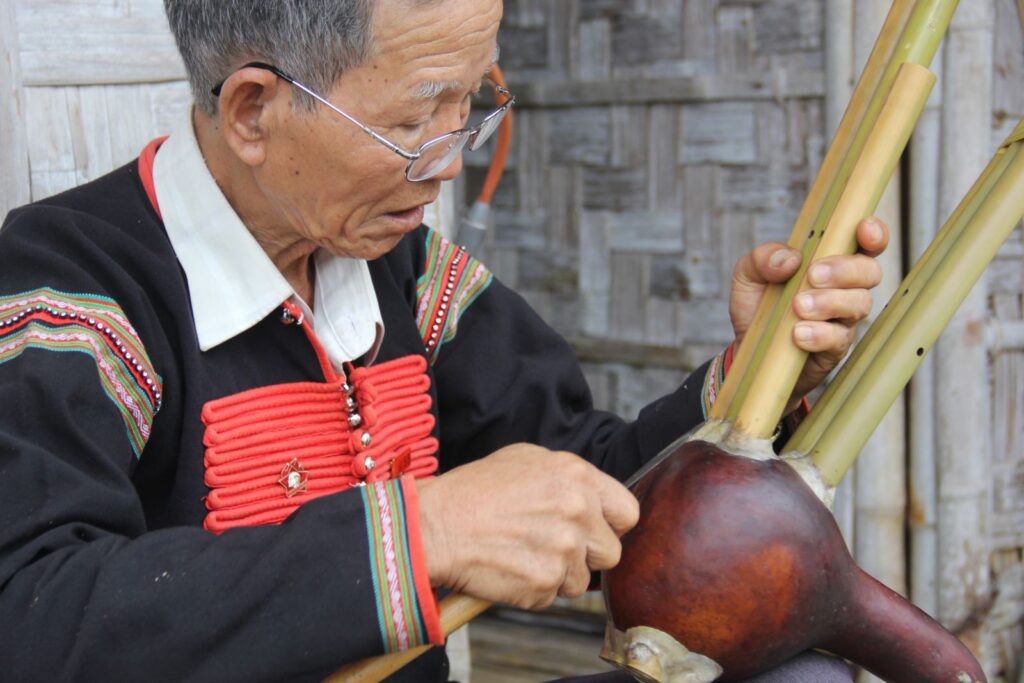
Modern developments include:
- Instruments used in fusion and experimental music, combining traditional sound with modern genres
- Educational programs teaching traditional craft, ensuring transmission of skills and knowledge
- Museums and workshops preserving endangered techniques, documenting materials, tuning, and construction methods
These efforts keep the craft relevant while respecting inherited traditions.
9. How to Experience Vietnamese Musical Instrument Craft as a Visitor
Visitors can engage with Vietnamese musical instrument craft in ways that respect both artisans and performers.
Recommended approaches include:
- Visiting craft villages and workshops to observe materials, tools, and construction stages
- Observing artisans without interrupting process, allowing careful and precise work to continue
- Attending live performances to understand sound context, connecting instruments to their musical roles
Understanding both sound and construction deepens appreciation beyond visual observation.
👉 If you prefer a journey tailored exactly to your interests, pace, and travel style, let us help you design a
customized tour created just for you.
10. Best Places to Explore Traditional Instrument Making in Vietnam
Hanoi: Hanoi offers access to both scholarly and performative traditions.
- Museums and traditional music ensembles presenting historical instruments and live demonstrations
- Educational demonstrations explaining construction, tuning, and performance contexts
Hue: Hue preserves the most formalized instrument traditions.
- Court music heritage linked to imperial ritual and performance
- Ceremonial instrument collections showcasing refinement and historical continuity
Central Highlands: The Central Highlands maintain unique communal instrument traditions.
- Gong culture traditions recognized for their spiritual and social importance
- Community-based performances where instruments remain part of daily cultural life
11. Comparison Table: Major Vietnamese Traditional Instruments
| Instrument Type | Primary Material | Cultural Context | Key Characteristic |
|---|---|---|---|
| Đàn bầu | Wood, metal string | Folk & court music | Expressive pitch bending |
| Đàn tranh | Wood, silk/nylon strings | Ensemble performance | Delicate melodic range |
| Festival drums | Wood, animal skin | Ritual & festivals | Symbolic rhythm |
| Gongs | Metal alloy | Highland rituals | Spiritual resonance |
“Traditional Vietnamese musical instruments are not designed for volume or spectacle. They are designed to listen—to nature, to ritual time, and to collective memory.”
— Mrs. Emma Nguyen, Tour Operator Manager with over 12 years of experience at Sun Getaways Travel
12. Conclusion
Vietnamese musical instrument craft represents a living dialogue between material, sound, and cultural values. Through traditional instrument making in Vietnam, generations of artisans have preserved not only musical forms but also ways of listening, working, and belonging. In a rapidly modernizing world, these instruments continue to remind us that craftsmanship is as much about cultural continuity as it is about sound.
👉 If you’re looking for ready-made itineraries and inspiring travel ideas, explore our full collection of
Vietnam tours designed around culture, nature, and authentic local experiences.


Related Tour

6 Days Muslim Hanoi Sapa Trang An & Halong Bay


0 Reviews

7 Days Best of Northern Vietnam
49 Reviews

Explore Kong Skull Island in Vietnam: A 14 Day Journey
50 Reviews

Explore the Ho Chi Minh City Floating Market in 6 Days
8 Reviews


Experience the Best of Northern Vietnam in 5 Days
22 Reviews
Ask a question
Leave a Comment (0)
No questions yet. Be the first to ask a question!
See related Posted
Luxury Golf Resorts in Vietnam – Elite Golf Travelers

Vietnam is increasingly recognized as a premier golf destination in Asia, therefore luxury golf…
Macrame in Vietnam: The Revival of Knot Art in Contemporary Craft Culture

Macrame in Vietnam reflects the country’s growing engagement with contemporary handmade culture, where global…
Traditional Vietnamese Kite Art: History, Craftsmanship, and Cultural Meaning

Traditional Vietnamese kite art is a living expression of folk creativity, community values, and…
Vietnamese Folk Masks: Tradition, Symbolism & Cultural Meaning

Vietnamese folk masks are a distinctive form of traditional art that reflects the spiritual…
Vietnamese Embroidery Art: Traditional Craftsmanship & Cultural Meaning

Vietnamese embroidery art is a refined traditional craft that reflects patience, cultural memory, and…
Dong Ho Folk Painting: The Cultural Soul of Vietnamese Woodblock Prints
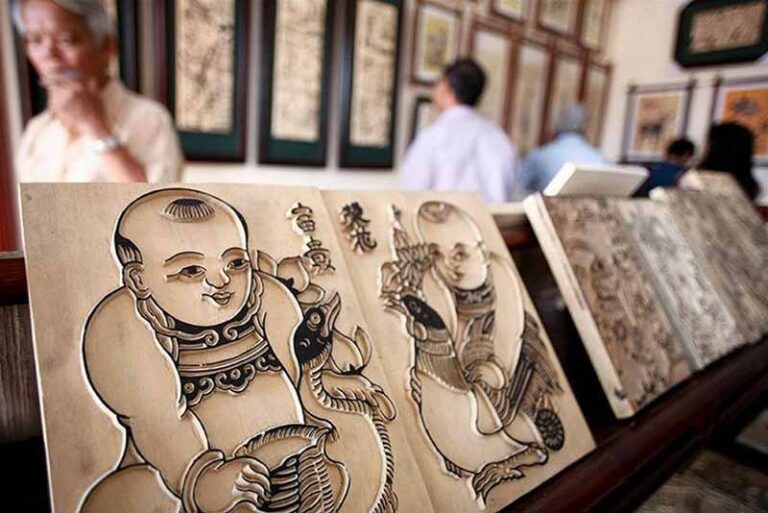
Dong Ho folk painting is one of Vietnam’s most enduring traditional art forms, reflecting…