






Vietnamese Folk Masks: Tradition, Symbolism & Cultural Meaning
 PhamDuong
  3 min. to read
 Vietnamese folk masks are a distinctive form of traditional art that reflects the spiritual beliefs, moral values, and communal imagination of Vietnamese society. Rooted in rituals, festivals, and folk theater, the Vietnamese folk mask making tradition transforms simple materials into powerful symbolic identities. Through exaggerated expressions, meaningful colors, and inherited craftsmanship, folk masks reveal how Vietnamese communities visualize morality, spirituality, and social order across generations.
Key Takeaways
- Vietnamese folk masks represent deep cultural values and community identity, reflecting spirituality and morality.
- The Vietnamese folk mask making tradition integrates natural materials like wood and papier-mâché, ensuring sustainability and cultural relevance.
- Masks serve various functions, including ritual, theatrical, and festival purposes, each type conveying distinct meanings.
- Regional variations highlight different artistic influences and social roles, contributing to the diversity of Vietnamese folk masks.
- Modern interest in Vietnamese folk masks leads to their incorporation in contemporary art, heritage education, and cultural preservation efforts.
1. Introduction to Vietnamese Folk Masks
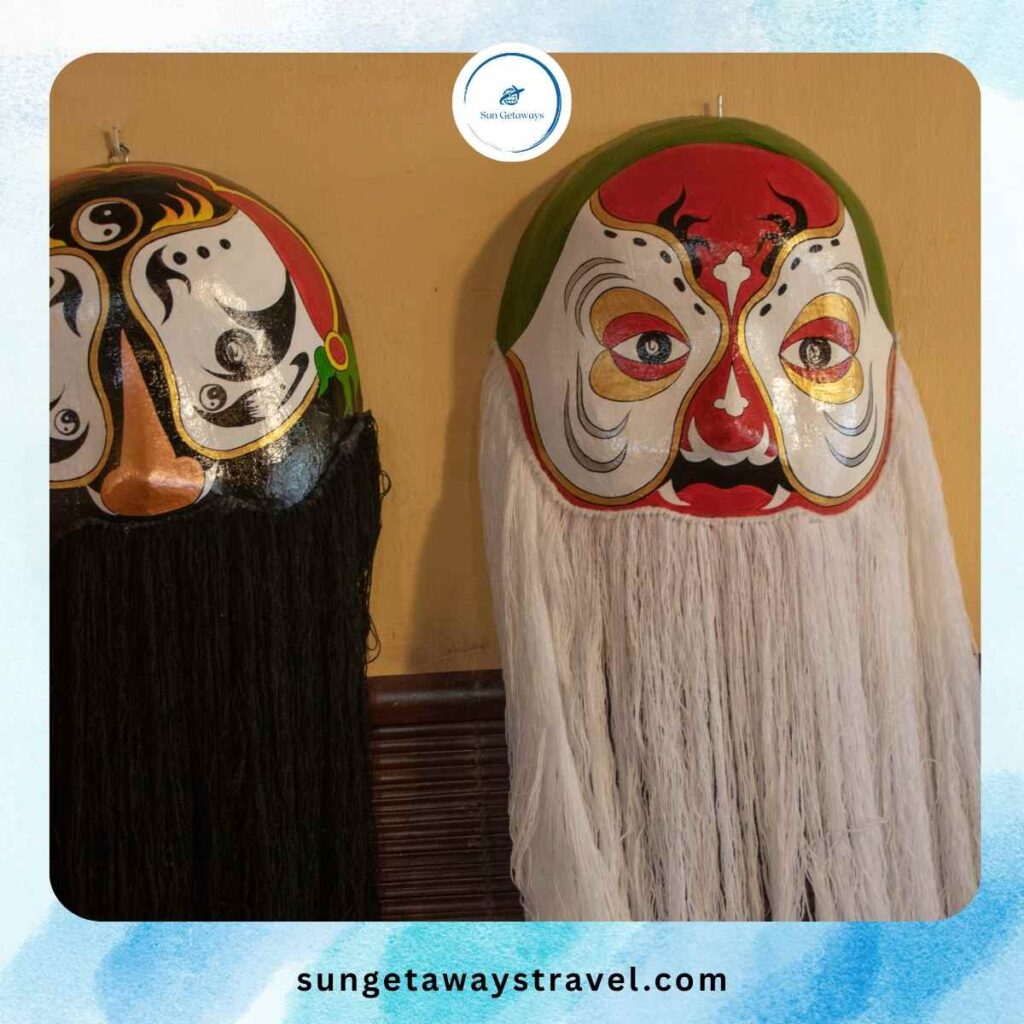
Vietnamese folk masks are a vivid and symbolic form of traditional art that reflects the spiritual beliefs, social values, and collective imagination of Vietnamese communities. Long before masks became decorative souvenirs, they played an essential role in rituals, festivals, theater, and communal storytelling.
Rooted in village life, the Vietnamese folk mask making tradition combines craftsmanship, symbolism, and performance. Each mask is not merely an object, but a visual identity representing deities, spirits, social roles, or moral archetypes. Through color, expression, and material, folk masks communicate meanings that words alone cannot convey.
2. Historical Origins of Vietnamese Folk Mask Making Tradition
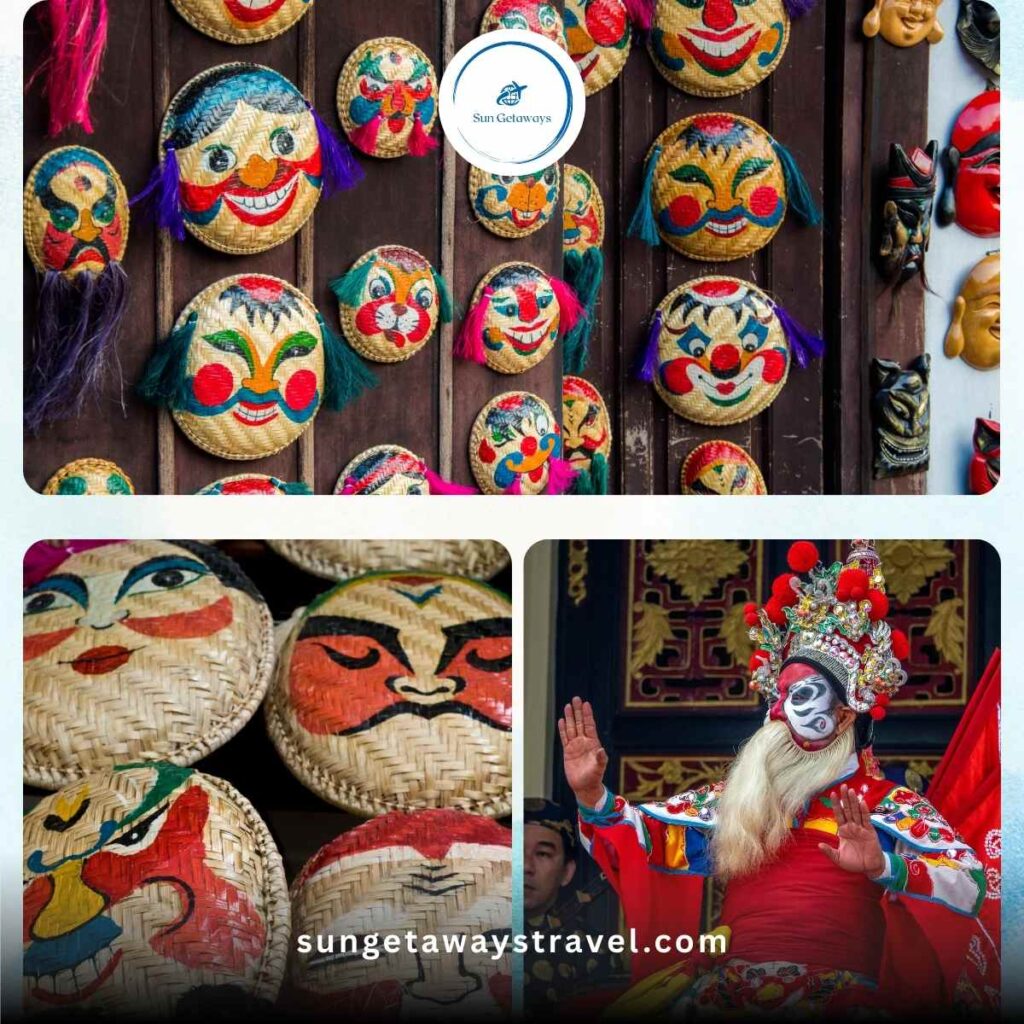
The tradition of folk mask making in Vietnam developed organically within ritual practices, seasonal festivals, and theatrical performances.
2.1 Early Ritual and Spiritual Roots
Masks were originally used in spiritual and communal contexts rather than for decoration. Key historical characteristics include:
- Masks used in village rituals, agricultural ceremonies, and spirit worship
- Strong connection to animism, ancestor veneration, and folk beliefs
- Masks representing protective spirits, demons, or symbolic forces of nature
In early Vietnamese society, masks functioned as tools to communicate with the unseen world and maintain harmony between humans and spirits.
2.2 Masks in Folk Theater and Performance
Over time, masks became integral to traditional performance arts. Notable developments include:
- Use of masks in folk theater forms such as Cheo, Tuong, and ritual dances
- Clear visual distinction between characters through exaggerated facial features
- Masks reinforcing moral lessons and social values during performances
Theatrical masks allowed audiences to immediately recognize character types, emotions, and ethical roles.
2.3 Evolution Through Social Change
As society evolved, folk masks adapted to new contexts. Changes included:
- Gradual decline of ritual use in some regions
- Preservation through festivals and cultural performances
- Revival through tourism, education, and contemporary art
Despite these shifts, the core symbolic language of Vietnamese folk masks remains intact.
For those interested in sound-based heritage, discover 👉 Vietnamese musical instrument craft and the principles behind traditional instrument making in Vietnam, from court music to folk performance.
3. Cultural Values Embedded in Vietnamese Folk Masks
Vietnamese folk masks embody collective cultural values rather than serving as vehicles for individual artistic self-expression. Created within communal contexts such as festivals, rituals, and folk theater, masks function as visual symbols that communicate shared moral concepts and social norms.
Core values include:
- Community over individuality: Masks represent archetypal figures—heroes, villains, spirits, and social roles—rather than personal identities. This reflects a worldview in which individual presence is secondary to collective memory and communal order.
- Moral symbolism: Ethical qualities such as goodness, evil, loyalty, greed, wisdom, and deceit are encoded through facial structure, expression, and color. Masks serve as visual lessons, reinforcing moral distinctions within folk narratives.
- Spiritual balance: Many masks operate at the boundary between the human and spiritual realms. They are used to invoke protection, appease spirits, or restore harmony between visible and invisible worlds.
- Humor and satire: Exaggerated features and grotesque expressions are often employed to mock negative behavior, social hypocrisy, or moral failure. Humor becomes a tool for critique and social reflection.
Together, these values make Vietnamese folk masks not only expressive artifacts, but also instructive cultural instruments embedded in community life.
4. Materials Used in Vietnamese Folk Mask Making Tradition
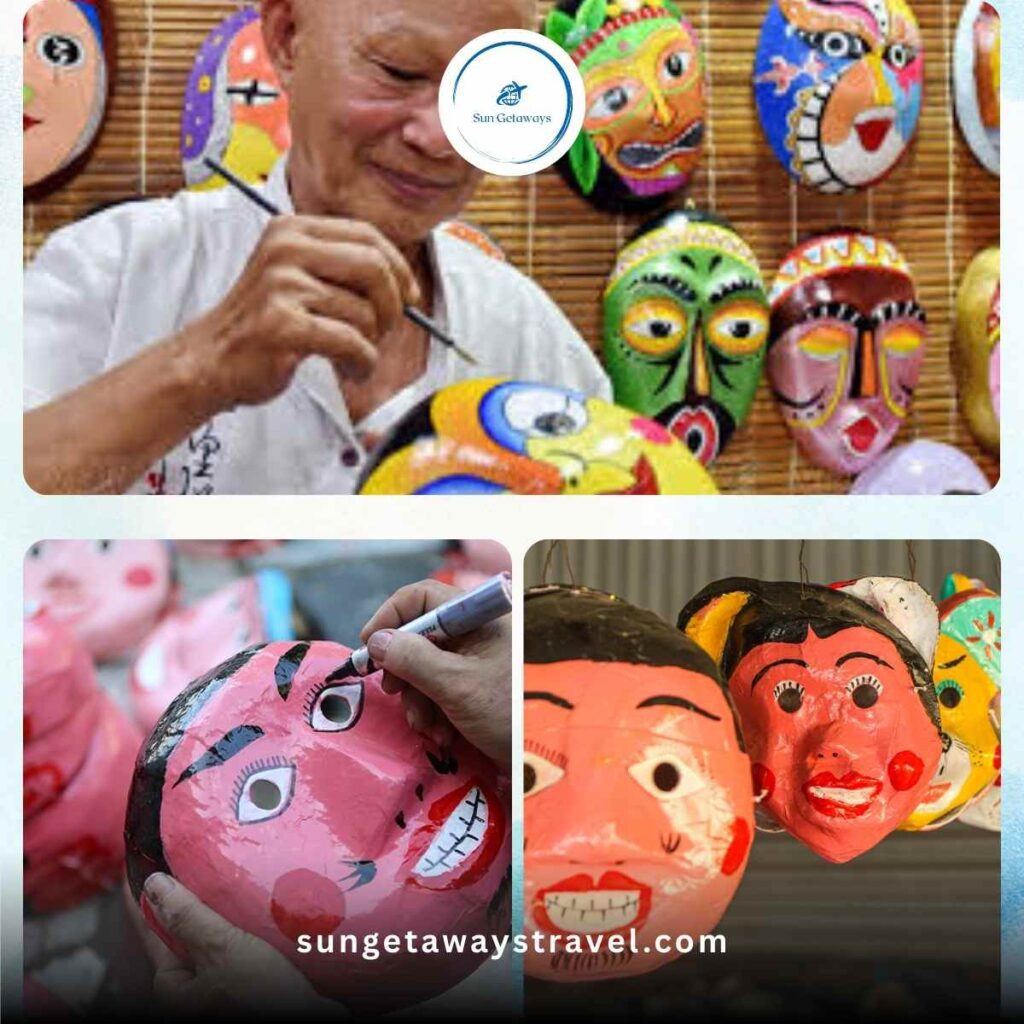
The Vietnamese folk mask making tradition relies on natural, locally sourced materials that reflect both environmental conditions and cultural pragmatism.
Common materials include:
- Wood: Lightweight and easy to carve, wood from jackfruit or fig trees is commonly used. These woods are durable yet soft enough to allow detailed shaping and expressive forms.
- Papier-mâché: Frequently used for festival masks, papier-mâché offers flexibility, low cost, and ease of production. It allows communities to create masks for temporary ceremonial use.
- Natural pigments: Colors are traditionally derived from minerals, plants, ash, and soot. These pigments produce earthy tones consistent with folk aesthetics and symbolic color systems.
- Lacquer or plant-based sealants: Natural coatings protect mask surfaces from moisture and wear while enhancing visual depth and longevity.
Material choice reflects a balance between functionality, symbolism, sustainability, and local knowledge.
5. Techniques in Vietnamese Folk Mask Making
Traditional techniques distinguish authentic folk masks from mass-produced or purely decorative replicas. These techniques prioritize symbolic clarity over technical perfection.
5.1 Hand-Carving and Shaping
Traditional masks are shaped entirely by hand, without industrial tools or molds.
Key steps include:
- Rough carving or molding of the base form to establish overall proportions and character type
- Refining facial features and expressions such as eyes, mouths, and brows to convey emotion and moral identity
- Balancing symmetry with expressive exaggeration to enhance visual impact and recognizability
The objective is not anatomical realism, but clear symbolic communication that can be understood from a distance or in performance.
5.2 Painting and Symbolic Color Use
Color plays a central role in conveying meaning and identity in Vietnamese folk masks.
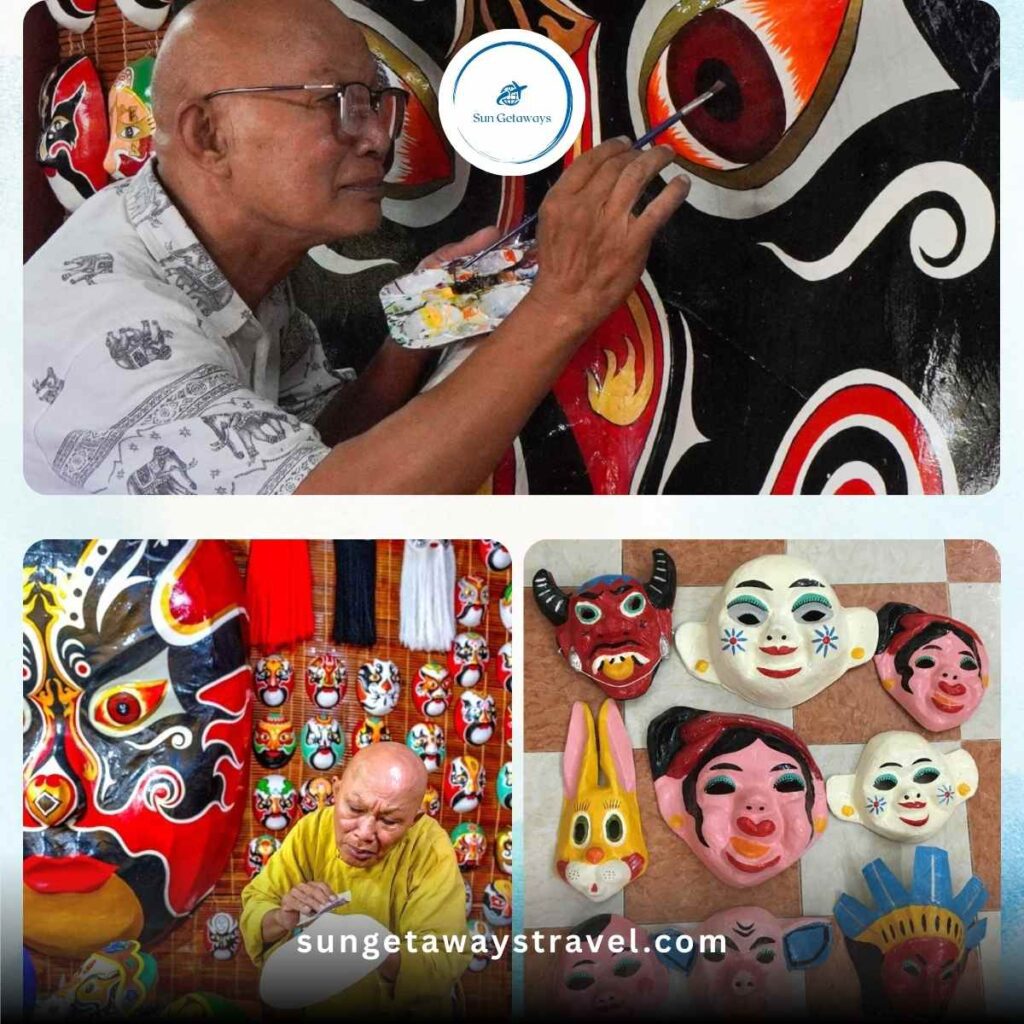
Typical associations include:
- Red for power, courage, authority, or righteous anger
- Black for integrity, seriousness, or moral strength
- White for cunning, ambiguity, or duplicity
- Gold for divine, sacred, or supernatural figures
Painting follows inherited conventions passed down through generations, ensuring continuity in symbolic interpretation.
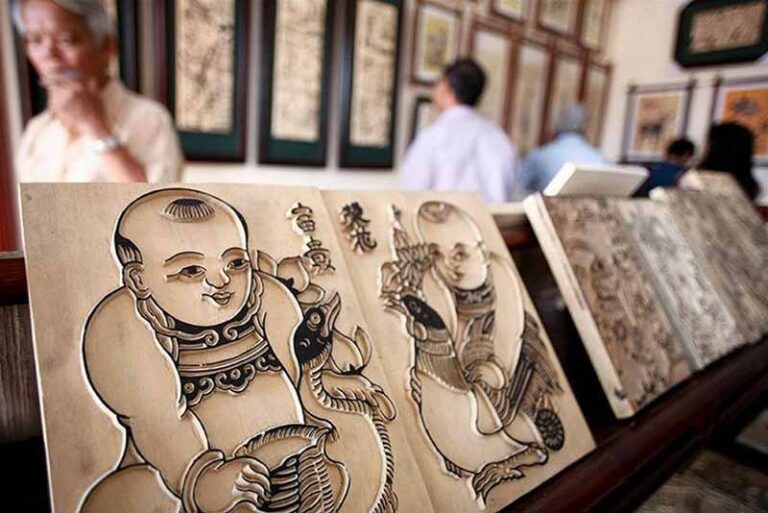
To better understand Vietnam’s folk visual culture, discover 👉 Dong Ho folk painting and the unique process behind dong ho woodblock prints, rooted in village life and Lunar New Year traditions.
6. Common Types of Vietnamese Folk Masks
Vietnamese folk masks vary according to their social function and performance context.
Major types include:
- Ritual masks: Used in religious ceremonies, spirit invocation, and protective rites
- Theatrical masks: Represent stylized characters in traditional drama and folk theater
- Festival masks: Worn during communal celebrations, processions, and seasonal festivals
- Decorative masks: Modern adaptations inspired by traditional forms, often for display rather than performance
Each type fulfills a distinct role within cultural practice and collective memory.
To explore art forms shaped by wind, sound, and community life, visit 👉 traditional Vietnamese kite art and learn about handmade kite traditions in Vietnam preserved through generations.
7. Regional Variations of Vietnamese Folk Masks
Regional diversity contributes to variations in form, expression, and symbolic emphasis.
Northern masks emphasize:
- Strong theatrical influence, particularly from folk drama
- Bold expressions and high-contrast colors for visibility in performance
- Connection to village festivals and Chèo theater, where moral storytelling is central
Central traditions reflect:
- Influence of royal and ceremonial culture, especially in symbolic restraint
- More formalized and dignified expressions
- Connection to Tuồng theater, known for structured roles and moral codes
Southern masks tend to be:
- More playful and accessible, reflecting open community participation
- Used mainly in festivals and communal events rather than formal theater
- Influenced by multicultural traditions, including Khmer and Chinese elements
8. Vietnamese Folk Masks in Contemporary Culture
Today, Vietnamese folk masks are experiencing renewed interest as cultural heritage gains greater visibility.
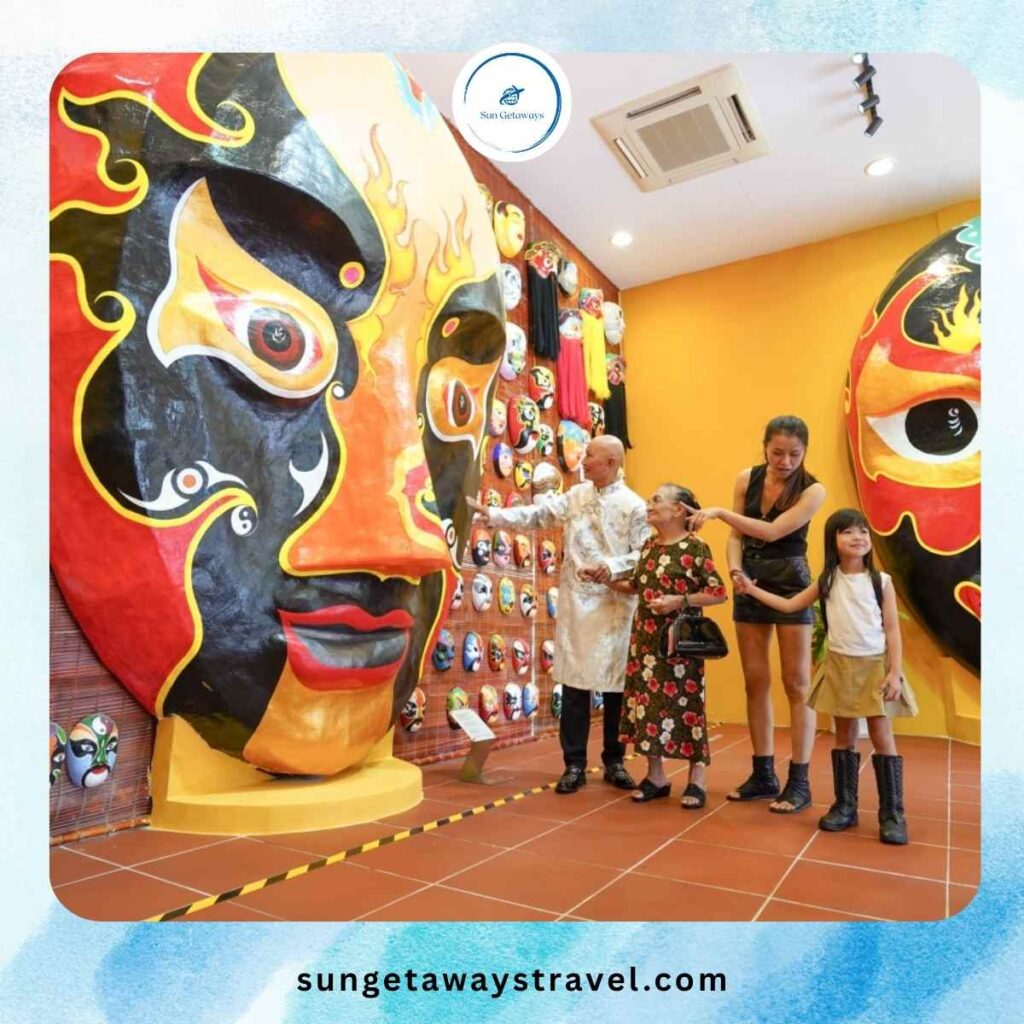
Modern adaptations include:
- Masks used as interior décor and collectible art objects
- Educational tools in cultural preservation and heritage programs
- Contemporary artworks inspired by folk aesthetics and symbolism
While usage contexts continue to evolve, traditional symbolism and cultural meaning remain at the core of Vietnamese folk mask traditions.
9. How to Experience Vietnamese Folk Masks as a Visitor
Visitors can engage with Vietnamese folk masks in a respectful and culturally informed way by understanding their original social and ritual contexts. Rather than viewing masks as mere decorative objects, visitors are encouraged to approach them as living expressions of community memory and performance traditions.
Recommended approaches include:
- Visiting traditional festivals and performances where masks are used in their original settings, such as village celebrations, seasonal rituals, and folk theater. Observing masks in motion helps reveal their symbolic function and emotional impact.
- Exploring museums and cultural centers that provide historical interpretation, curated collections, and contextual explanations. These spaces help distinguish authentic folk traditions from modern commercial adaptations.
- Learning symbolic meanings before purchasing masks, including color symbolism, character types, and regional styles. This knowledge supports ethical consumption and appreciation of craftsmanship.
Understanding cultural context prevents misinterpretation, superficial use, and the reduction of folk masks to purely commercial souvenirs.
👉 If you prefer a journey tailored exactly to your interests, pace, and travel style, let us help you design a
customized tour created just for you.
10. Best Places to Explore Vietnamese Folk Masks
Hanoi: Hanoi offers access to both academic and performative traditions.
- Museums of ethnography and traditional theater showcasing folk masks alongside ritual objects and performance costumes
- Festivals featuring folk performances where masks appear in theatrical and communal contexts
Hue: Hue preserves more formalized and ceremonial mask traditions.
- Tuồng theater traditions that employ highly symbolic masks and facial painting
- Ceremonial and historical mask usage connected to royal culture and ritual practices
Hoi An and Craft Villages: Hoi An and surrounding craft villages highlight hands-on cultural experiences.
- Artisan workshops where visitors can observe mask-making techniques and materials
- Cultural demonstrations for visitors that explain symbolism, performance roles, and regional styles
These locations provide complementary perspectives on Vietnamese folk masks—from scholarly preservation to living craft traditions.
11. Vietnamese Folk Masks vs Other Traditional Mask Traditions
| Aspect | Vietnamese Folk Masks | Japanese Noh Masks | Balinese Masks |
|---|---|---|---|
| Primary Function | Ritual & community | Theater | Ritual & dance |
| Expression | Exaggerated, symbolic | Subtle, refined | Dynamic, dramatic |
| Materials | Wood, papier-mâché | Wood | Wood |
| Cultural Focus | Collective values | Individual emotion | Spiritual embodiment |
“Vietnamese folk masks are not simply performance props. They represent how communities visualize morality, spirituality, and social order through shared symbols passed down across generations.”
— Mrs. Emma Nguyen – Tour Operator Manager with over 12 years of experience at Sun Getaways Travel
12. Conclusion
Vietnamese folk masks embody a unique intersection of art, ritual, and social communication. Through the enduring Vietnamese folk mask making tradition, communities have preserved symbolic systems that continue to shape cultural identity today. For those seeking to understand Vietnam beyond surface aesthetics, folk masks offer a powerful window into collective memory and spiritual imagination.
👉 Need quick advice or want to talk directly with our team? Contact us via WhatsApp for fast support and personal recommendations.


Related Tour
Hanoi Coffee Making and Tasting


19 Reviews

Vietnam South To North 10 Days Tour
21 Reviews

Northern Vietnam Delights: Hanoi, Halong Bay & Sa Pa 6 Days
27 Reviews

3 Days Tour Muslim Hanoi and Halong Bay
21 Reviews

Small Group Vietnam South to North 12 Days Tour
25 Reviews
Ask a question
Leave a Comment (0)
No questions yet. Be the first to ask a question!
See related Posted
Luxury Golf Resorts in Vietnam – Elite Golf Travelers

Vietnam is increasingly recognized as a premier golf destination in Asia, therefore luxury golf…
Macrame in Vietnam: The Revival of Knot Art in Contemporary Craft Culture

Macrame in Vietnam reflects the country’s growing engagement with contemporary handmade culture, where global…
Vietnamese Musical Instrument Craft: Traditional Instrument Making in Vietnam

Vietnamese musical instrument craft reflects a long-standing relationship between sound, material, and cultural memory.…
Traditional Vietnamese Kite Art: History, Craftsmanship, and Cultural Meaning

Traditional Vietnamese kite art is a living expression of folk creativity, community values, and…
Vietnamese Embroidery Art: Traditional Craftsmanship & Cultural Meaning

Vietnamese embroidery art is a refined traditional craft that reflects patience, cultural memory, and…
Dong Ho Folk Painting: The Cultural Soul of Vietnamese Woodblock Prints
Dong Ho folk painting is one of Vietnam’s most enduring traditional art forms, reflecting…