








Vietnamese Bun Rieu: Your Ultimate Guide to Crab Noodle Soup in Vietnam
 HoangAn
  3 min. to read
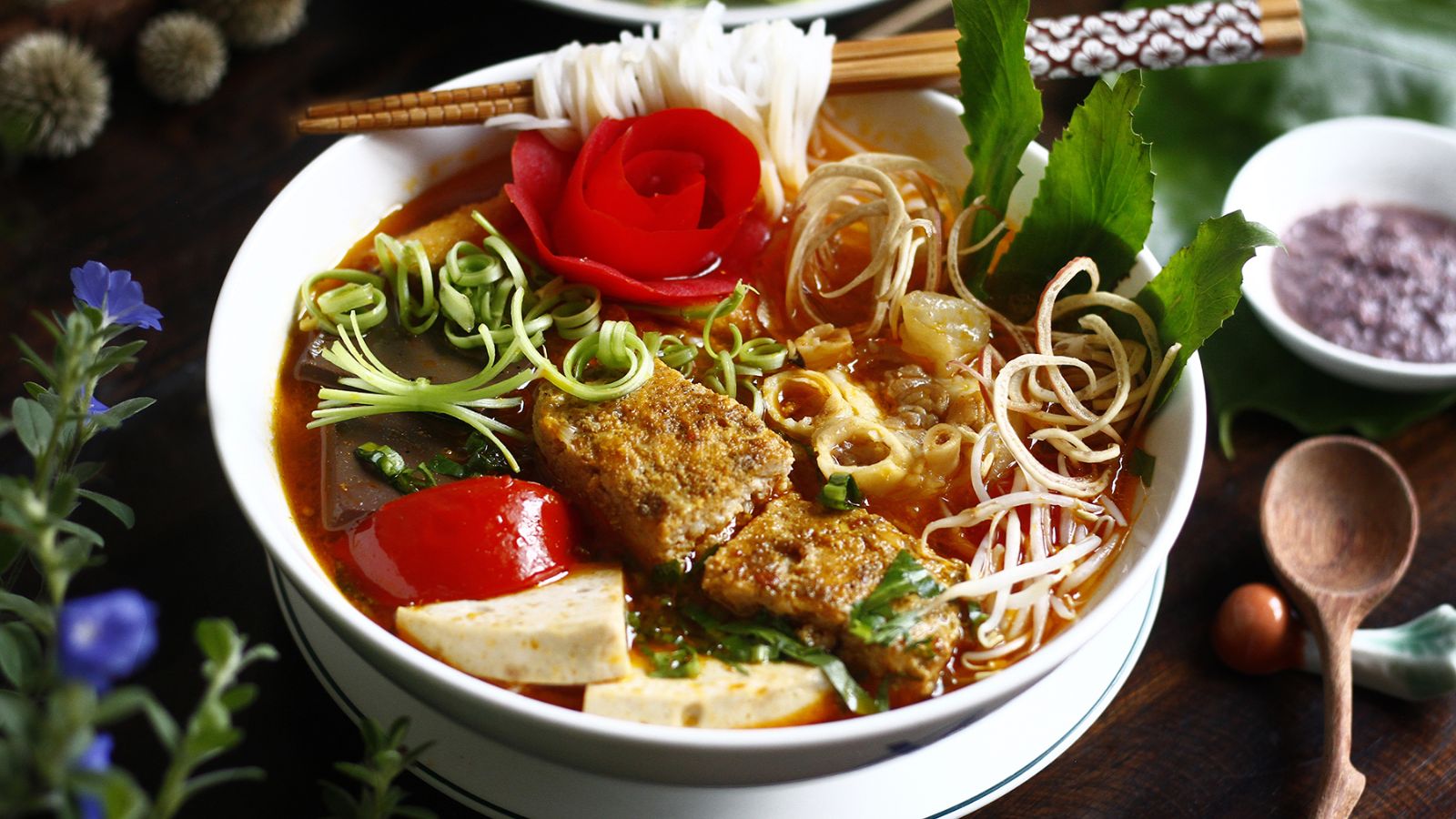
 Are you excited to taste Vietnamese Bun rieu on your next trip? This tangy and flavorful dish, also known as Vietnamese crab noodle soup, is a local favorite that combines fresh ingredients and rich broth. In this guide, you’ll learn what makes Bun rieu special, where to find the best bowls, and tips for enjoying it like a local.
Key Takeaways
- Vietnamese Bun rieu is a tangy crab noodle soup with a rich broth made from crab paste and tomatoes.
- Enjoy distinctive regional variations: Northern style focuses on pure crab flavors, while Southern style adds more robust proteins and sweeter broth.
- Customize your bowl with essential condiments like fermented shrimp paste, lime, and fresh herbs for an authentic experience.
- Vietnamese Bun rieu remains affordable, making it a popular choice for budget-conscious travelers seeking local flavors.
- This dish provides a unique glimpse into Vietnamese culture, best enjoyed in places like Hanoi’s Old Quarter and Ho Chi Minh City.
1. What Defines Vietnamese Bun rieu? The Broth and Crab
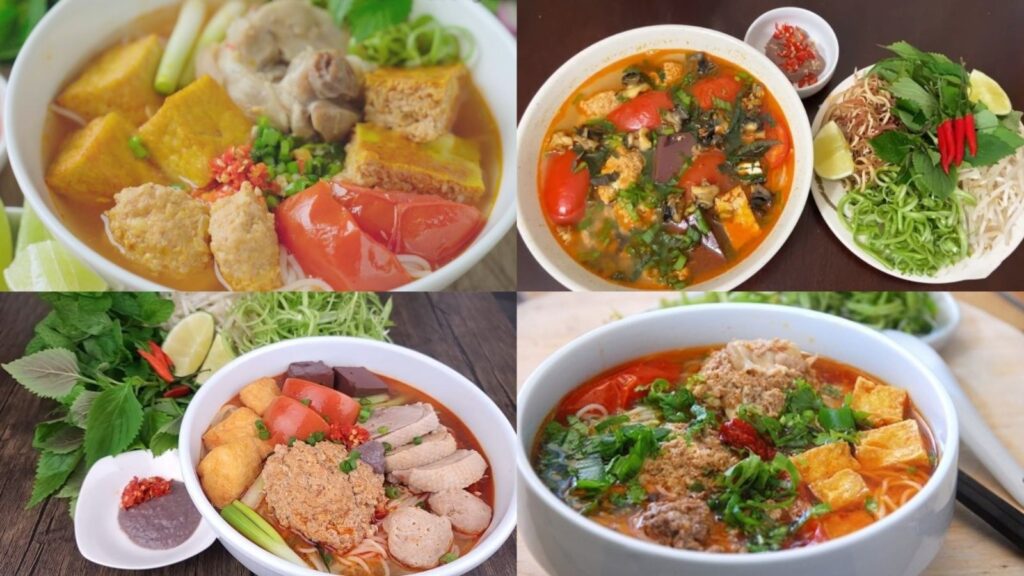
Vietnamese Bun rieu stands apart from other Vietnamese noodle dishes because of its signature flavor profile: simultaneously savory, slightly sweet, and tangy (sour). This balance is achieved through its two most crucial ingredients: crab paste and tomato.
1.1. The Tangy and Savory Vietnamese Bun rieu Broth
The broth of Vietnamese Bun rieu is a beautiful reddish-orange color, thanks to the addition of tomatoes and annatto seeds. Its flavor is bright and immediately distinct.
- Tomato and Tamarind Base: The tangy flavor comes from fresh tomatoes, which are cooked down and simmered into the broth, often enhanced by a touch of tamarind or vinegar. This acidity is essential as it cuts through the richness of the crab.
- Rieu Cua (Crab Paste): The heart of the dish is the rieu cua (crab meat paste), which is soft, fluffy crab and shrimp paste. This paste is gently cooked in the broth, where it coagulates and floats to the top, forming the savory, delicate “crab roe.” This provides the rich, authentic seafood flavor.
1.2. The Essential Components of Vietnamese Crab Noodle Soup
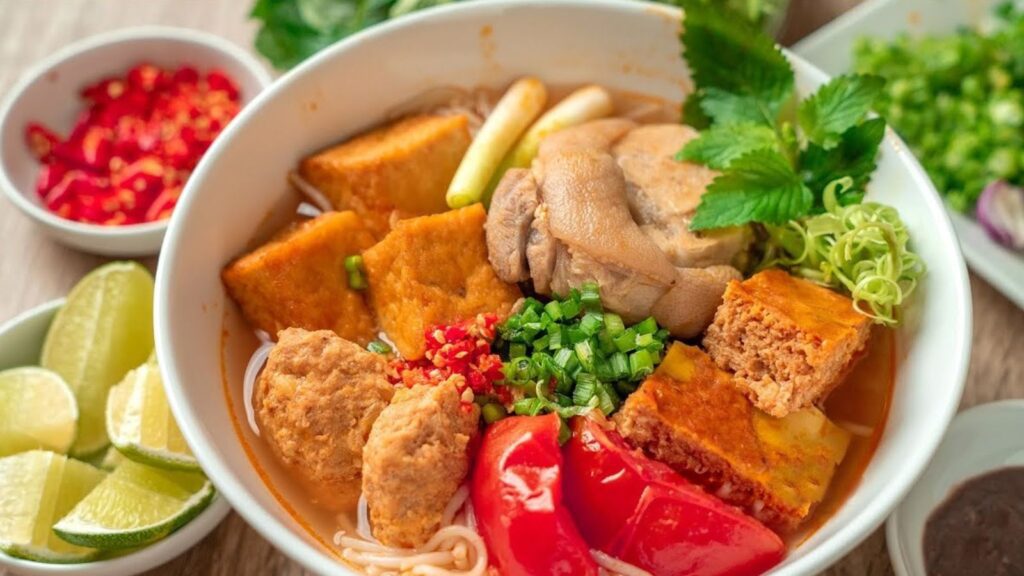
A traditional bowl of Vietnamese Bun rieu is a rich tapestry of ingredients, combining various proteins and textures. The result is a filling and diverse meal.
- Vermicelli Noodles (Bun): Like many other northern-style dishes, Bun rieu uses thin, round rice vermicelli noodles (bun). These soft noodles absorb the tangy broth perfectly, providing a comforting base for the rich toppings.
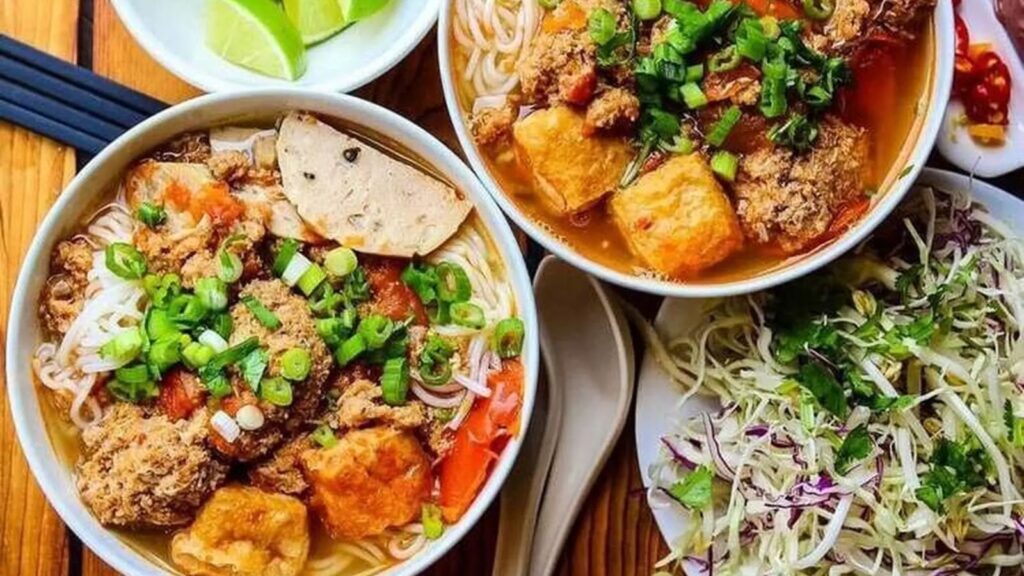
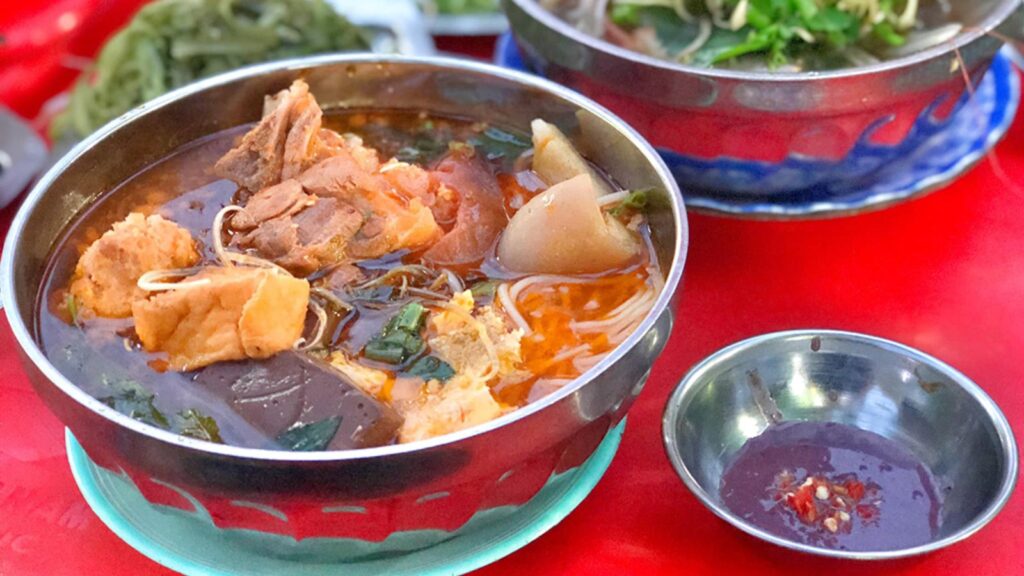
- Protein Toppings: Besides the crab paste, common toppings include fried tofu (dau phu), snails (oc – in some regional variations), sliced pork sausage (cha lua), and sometimes pieces of congealed pig’s blood (huyet). These additions ensure a complex savory profile in every bite.
2. Regional Variations of Vietnamese Bun rieu
While its origins are traditionally rooted in Northern Vietnam, Vietnamese Bun rieu has traveled across the country, adapting to regional tastes and available ingredients.
2.1. Vietnamese Bun rieu in Hanoi (Northern Style)
The Northern style is often considered the most traditional, emphasizing the purity of the crab and the tangy flavor.
- Focus on Crab and Tofu: Northern Bun rieu tends to be simpler, focusing heavily on the delicate rieu cua (crab paste) and fried tofu. The broth’s tanginess is sharp and clean.
- Minimal Meats: In Hanoi, you are less likely to find heavy additions like pork knuckles or beef. The focus remains on the light, refreshing quality of the crab and tomato broth. This style is popular among the local food tour circuits in the Old Quarter.
2.2. Southern Vietnamese Bun rieu
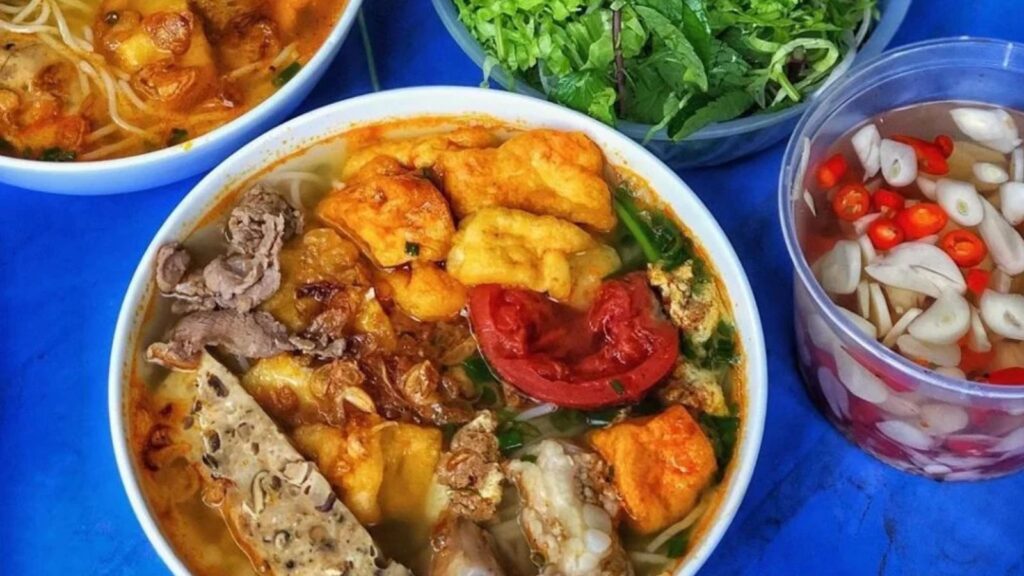
When you travel south to Ho Chi Minh City, the Vietnamese crab noodle soup takes on a richer, sweeter, and more loaded character.
- Added Proteins: Southern vendors often add more robust ingredients like boiled pork shank, and sometimes shrimp paste (mam tom) for an extra layer of savory depth. The broth here is typically slightly sweeter to suit the Southern palate.
- Abundant Vegetables: In the South, the side plate of raw vegetables is even larger and more varied, often including shredded cabbage, bean sprouts, and various mints. This abundance adds a necessary cool crunch to the warm soup.
3. The Art of Customizing Your Vietnamese Bun rieu Bowl
Customization is key to enjoying Vietnamese Bun rieu. The dish is served with an extensive plate of fresh vegetables and condiments, allowing you to perfect the flavor balance.
3.1. Essential Condiments for Vietnamese Bun rieu
Every table will have these key items to help you achieve the perfect savory-sour balance in your Vietnamese Bun rieu.
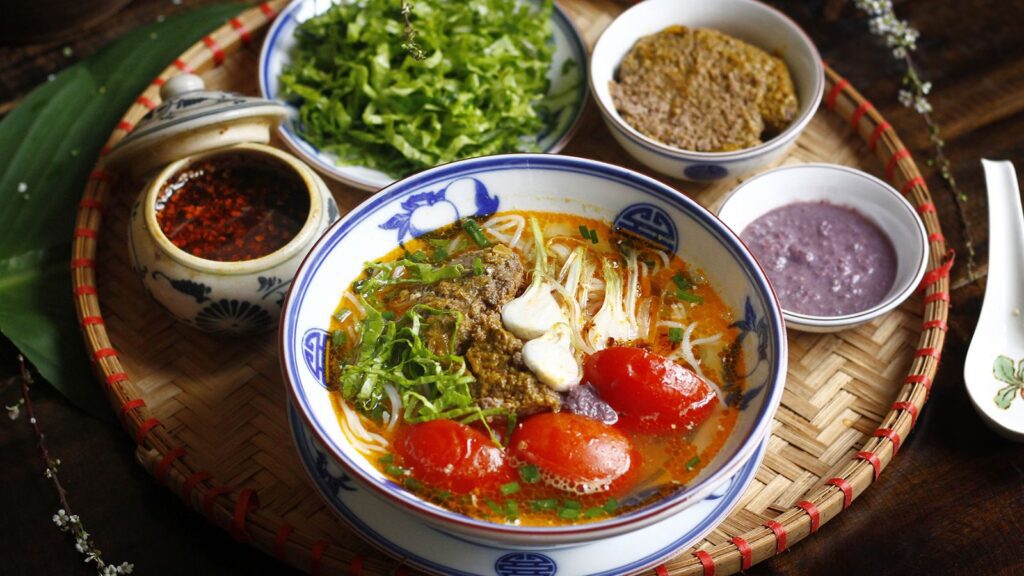
- Mam Tom (Fermented Shrimp Paste): A small bowl of mam tom (fermented shrimp paste) is always provided, even though the broth already contains rieu cua. It is meant to be added sparingly, often mixed with chili, to provide an intense umami punch that enhances the crab flavor.
- Lime and Chili: A squeeze of fresh lime or kumquat juice will enhance the crucial tanginess of the broth. Sliced chili peppers or chili oil are available to add a kick of heat.
3.2. Herbs and Vegetables that Complete the Dish
The accompanying herbs are critical. Do not ignore them; they are essential for the traditional flavor.
- Shredded Banana Blossom: This vegetable adds a unique, slightly astringent flavor and a fantastic crunchy texture to the warm, soft noodles and delicate crab.
- Tia To (Perilla Leaf): Perilla leaves have a distinct, slightly minty and anise-like flavor that works exceptionally well with seafood. Tearing the leaves and mixing them into the hot broth truly elevates the dish.
Mrs. Emma Nguyen – Tour Operator Manager with over 12 years of experience at Sun Getaways Travel advises: “The mam tom served on the side with Vietnamese Bun rieu is optional, but it truly unlocks the depth of the dish’s flavor. Add just a tiny bit, mix it with lime, and taste the difference. It provides the perfect savory finish to the tangy broth.”
4. The Affordable Cost of Vietnamese Bun rieu
As a staple street food, Vietnamese Bun rieu offers travelers a fantastic, complex, and filling meal for a very low price point.
4.1. Typical Price Range for Vietnamese Crab Noodle Soup
Despite the complexity of preparing the crab broth and the number of ingredients, this Vietnamese noodle soup remains highly affordable across the country.
| Location Type | Price Range (VND) | Price Range (USD Approx.) | Key Takeaway |
| Street Stalls/Local Shops | 35,000 VND – 60,000 VND | $1.40 – $2.40 | Best local atmosphere and lowest price, often cash only. |
| Specialized Restaurants | 65,000 VND – 90,000 VND | $2.60 – $3.60 | Cleaner environment, larger portions, great for comfortable dining. |
This value proposition makes Vietnamese Bun rieu a popular choice for budget-conscious travelers seeking authentic seafood flavors.
4.2. How to Ask for Extras and Omissions
A useful tip when ordering is to specify if you want to leave out certain traditional elements that might be new to you. For example, if you prefer to skip the pig’s blood, you can say: “Khong lay huyet” (No huyet). If you are feeling extra hungry, simply ask for “Them cua” (more crab) for a small extra fee.
5. Connecting Bun rieu to Your Vietnam Travel
Enjoying a bowl of Vietnamese Bun rieu is a deep immersion into Vietnamese daily life, particularly in the northern and southern delta regions where freshwater crab is abundant.
5.1. Best Places to Enjoy Vietnamese Bun rieu and Sightseeing
The best places to enjoy this delicious Vietnamese crab noodle soup are in the major food hubs, perfectly blending with cultural tours.
- Hanoi’s Old Quarter: The Old Quarter is filled with tiny stalls specializing in this dish. Enjoying a bowl here is the perfect start to a day of exploring Hoan Kiem Lake and the ancient streets. A local food tour can guide you to the hidden gems.
- Ho Chi Minh City’s Streets: In the south, Bun rieu is often enjoyed on bustling street corners, reflecting the city’s vibrant energy. Combining a food stop with a visit to the historic sites of the former Saigon is a wonderful way to spend a day.

5.2. Vietnamese Noodle Dishes: The Tangy Exception
Vietnamese Bun rieu provides a crucial contrast to other major Vietnamese noodle soups. While Pho is heavy on savory spices and Hu tieu is light and sweet, Bun rieu balances powerful savory elements with refreshing tanginess. This difference showcases the incredible complexity and range of the nation’s cuisine.
Ready to explore Hanoi’s rich history and savor Ho Chi Minh City’s vibrant flavors? Reach out to Sun Getaways Travel and let us craft a seamless journey where culture meets cuisine.
6. Practical Tips for Travelers
Knowing what to expect and how to order can ensure your first experience with this unique dish is fantastic and worry-free.
6.1. Is Vietnamese Bun rieu Strong-Smelling?
Compared to Bun dau mam tom, the aroma of Vietnamese Bun rieu is generally more palatable to first-time travelers.
- The Scent: The primary aroma comes from the cooked crab and the tangy tomatoes. While it has a savory seafood scent, it is rarely as pungent as the raw fermented shrimp paste (mam tom) often served on the side. The overall smell is usually quite appetizing.
6.2. Understanding the Crab Paste Texture
The texture of the rieu cua often surprises first-time diners. It is not like solid meat.
- The Texture: The rieu cua is light, spongy, and fluffy, formed when the ground crab meat and seasoning are cooked in the hot broth. It looks like a rustic custard or soft tofu and easily breaks apart when you eat it.
| Component | Key Flavor | Texture | Function in the Dish |
| Rieu Cua | Savory, fresh crab | Fluffy, spongy, delicate | Provides main protein and seafood base. |
| Broth | Tangy, mild sweetness | Liquid, light consistency | Creates the unique sour/savory balance. |
| Dau Phung | Neutral, slightly salty | Crispy exterior, soft interior | Adds necessary texture and absorbs the broth. |
7. FAQs about Vietnamese Bun rieu
Bun rieu has a crab-based, tangy broth, while pho is beef or chicken-based with a mild flavor.
Typically, Bun rieu is mild, but regional versions may include a bit of chili or shrimp paste for heat.
Yes, most cities like Hanoi and Ho Chi Minh City have street stalls and restaurants serving fresh Bun rieu.
Some vegetarian versions exist using tofu and tomatoes, but traditional Bun rieu contains crab and sometimes pork.
Yes, the soup is savory and mild, making it suitable for children. You can easily ask the vendor to omit the chili and pig’s blood (huyet) for a simpler bowl.
8. Conclusion
Vietnamese Bun rieu is more than a noodle soup – it’s a cultural experience. Its tangy crab broth, fresh herbs, and delicate noodles offer travelers a true taste of Vietnam. Whether visiting Hanoi, Hue, or Ho Chi Minh City, Bun rieu gives a flavorful glimpse into local life and culinary traditions.
Create your own custom tour with Sun Getaways Travel and uncover the best Bun rieu spots, enjoy local food tours, and savor authentic Vietnamese crab noodle soup. Begin your personalized Vietnam culinary adventure today and taste flavors you’ll never forget!


Related Tour

A Journey of a Lifetime: 12-Day Vietnam Beach Holiday


15 Reviews
Hoi An Sunrise Fish Market Tour
0 Reviews

Danang City and Ba Na Hills: A Captivating 4-Days Tour
34 Reviews

13 Days Vietnam Beauty from North to South
19 Reviews

Discover the Best of Northern Vietnam in 9 Days
29 Reviews

Ask a question
Leave a Comment (0)
No questions yet. Be the first to ask a question!
See related Posted
Luxury Golf Resorts in Vietnam – Elite Golf Travelers

Vietnam is increasingly recognized as a premier golf destination in Asia, therefore luxury golf…
Macrame in Vietnam: The Revival of Knot Art in Contemporary Craft Culture

Macrame in Vietnam reflects the country’s growing engagement with contemporary handmade culture, where global…
Vietnamese Musical Instrument Craft: Traditional Instrument Making in Vietnam

Vietnamese musical instrument craft reflects a long-standing relationship between sound, material, and cultural memory.…
Traditional Vietnamese Kite Art: History, Craftsmanship, and Cultural Meaning

Traditional Vietnamese kite art is a living expression of folk creativity, community values, and…
Vietnamese Folk Masks: Tradition, Symbolism & Cultural Meaning

Vietnamese folk masks are a distinctive form of traditional art that reflects the spiritual…
Vietnamese Embroidery Art: Traditional Craftsmanship & Cultural Meaning

Vietnamese embroidery art is a refined traditional craft that reflects patience, cultural memory, and…