






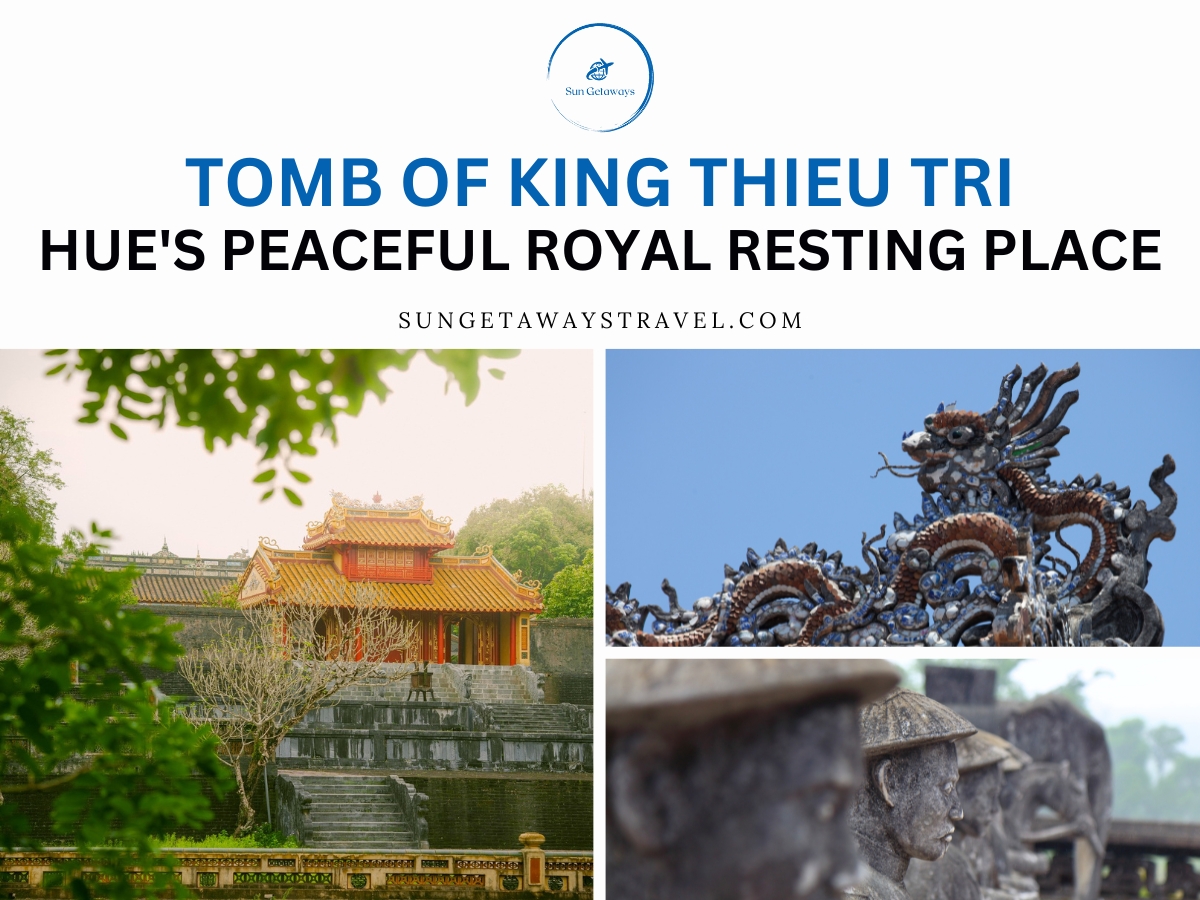
Tomb of King Thieu Tri: Hue’s Peaceful Royal Resting Place
 Hoang Pham
  3 min. to read
 Of all the imperial sites I’ve visited in Hue, some can feel a bit overwhelming with their sheer scale and grandeur. But every so often, you find a place that just feels different. It has a quietness and a sense of peace that stays with you. For me, that place is the Tomb of King Thieu Tri, also known as Xuong Lang.
There are several incredible Tombs in Hue, each with its own story and architectural style. Learning about them is a great way to understand the Nguyen Dynasty. In this article, I want to show you why this less-visited gem deserves a spot. It’s a special place within the UNESCO World Heritage complex.
Tomb of King Thieu Tri: A History of Humility and Speed
The story behind this tomb is just as compelling as the site itself. Unlike other rulers who spent years and vast resources planning their final resting places, King Thieu Tri had a different vision.
King Thieu Tri’s Reign
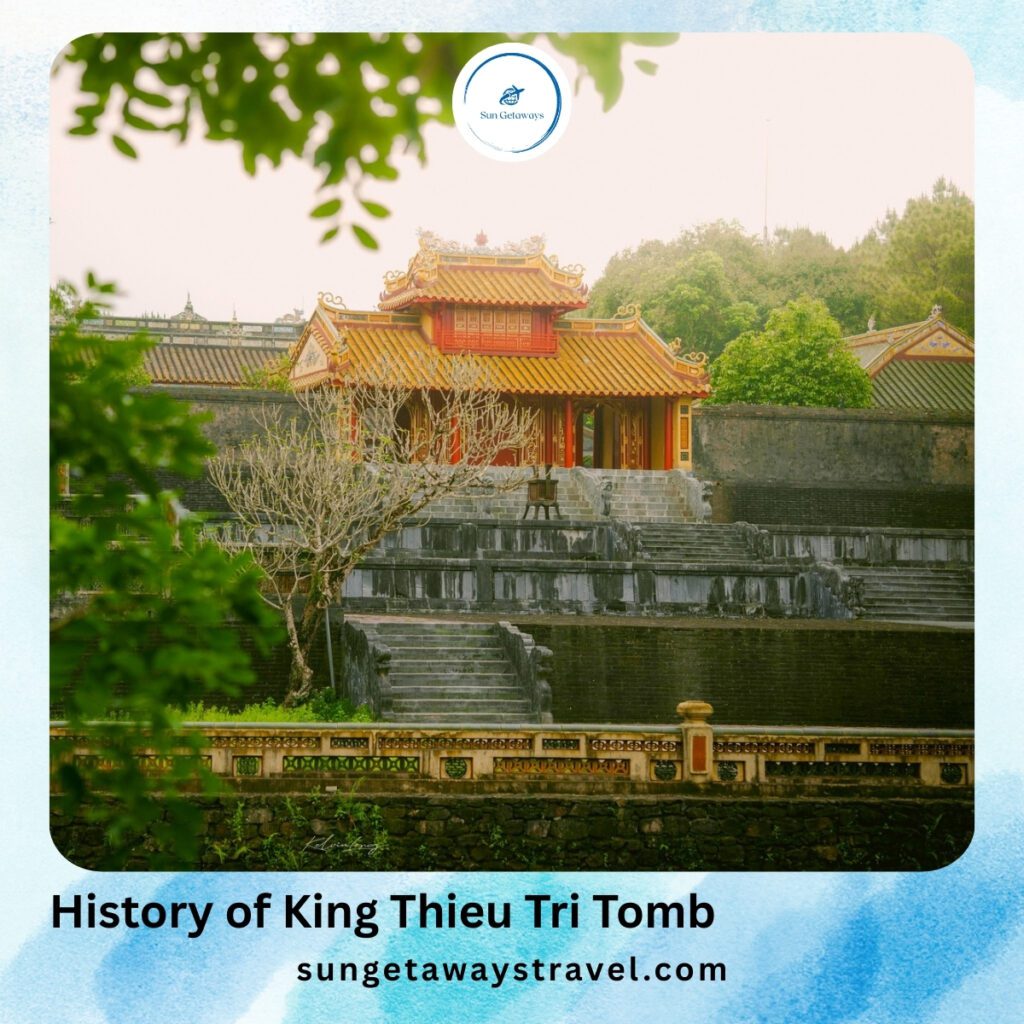
King Thieu Tri, the son of the great Emperor Minh Mang, ruled from 1841 to 1847. During his time on the throne, he never picked a location or designed a plan for his own tomb. He was very clear about his wishes. He deeply cared about his people and didn’t want to place a heavy financial or labor burden on them for his own monument. This tells you so much about the kind of person he was.
A Son’s Filial Duty
When King Thieu Tri passed away in 1847, his son, the future Emperor Tu Duc, immediately set out to honor his father’s final request. He commissioned the tomb’s construction with a deep sense of duty. What happened next was truly remarkable. The entire complex was completed in less than 10 months. This feat makes it the fastest-built royal tomb of the entire Nguyen Dynasty. It stands as a powerful symbol of a son’s love and an emperor’s humble spirit.
Architectural Structures of Thieu Tri Tomb (Xương Lăng)
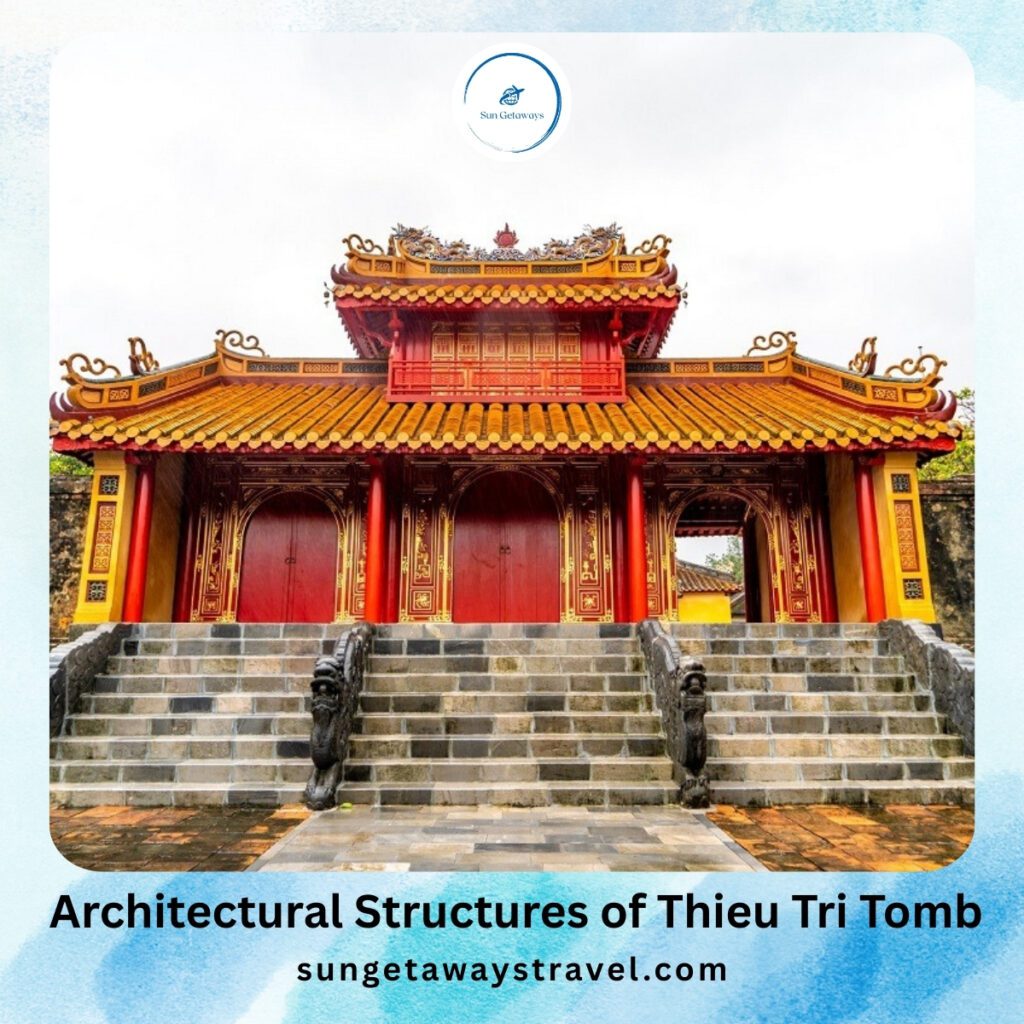
Walking through the tomb, you can really see how the architects cleverly blended elements from his predecessors. It’s like they took the best ideas and created something completely new.
Overall Structures
The layout is neatly divided into two main areas that sit parallel to each other: the worship section and the tomb section. The design is a brilliant combination of his father’s tomb (Minh Mang) and his grandfather’s tomb (Gia Long). From Gia Long’s tomb, it takes the idea of not having a huge outer wall, or La Thanh. Instead, it uses the rolling hills and lush landscape as its natural boundary, which I think is just beautiful.
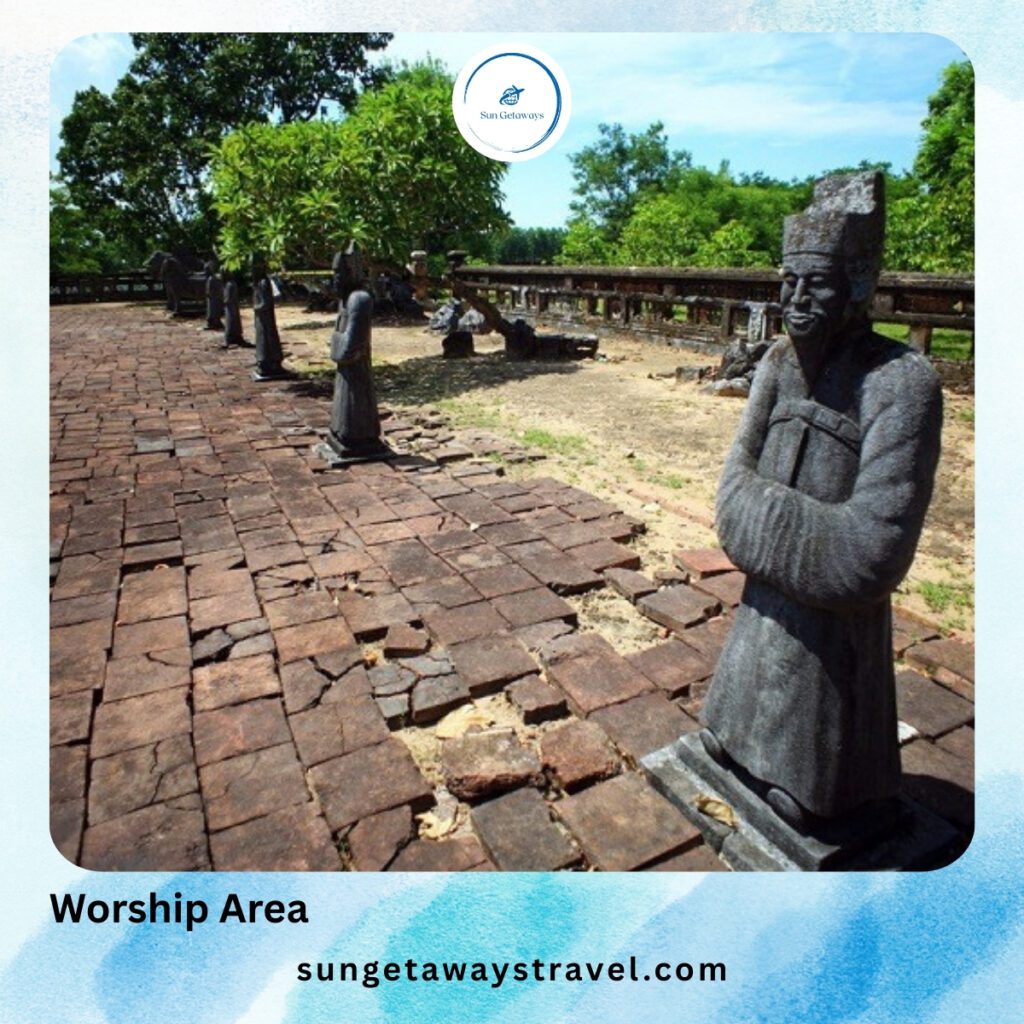
Worship Area
Your journey into the complex begins by crossing Dien Lake. From there, you pass through a beautiful three-gated entrance to reach the main worship hall, Bieu Duc Palace. This is the sacred space where the king and his queen are venerated. The air here feels calm and respectful.
Tomb Area
After the worship area, you move toward the tomb itself. You’ll walk through an honor courtyard flanked by silent stone statues of mandarins, elephants, and horses, all standing guard. This path leads you to the burial mound. Unlike the elaborate structures of other tombs in Hue or Vietnam, Thieu Tri’s is a simple, circular mound called the Buu Thanh. It is protected by a lovely crescent-shaped lake that wraps around it, adding to the site’s overall serenity.
Unique Highlights of Thieu Tri’s Tomb
So what really makes this tomb a must-see? For me, it comes down to two things: its incredible connection to the countryside and the powerful story of modesty it tells.
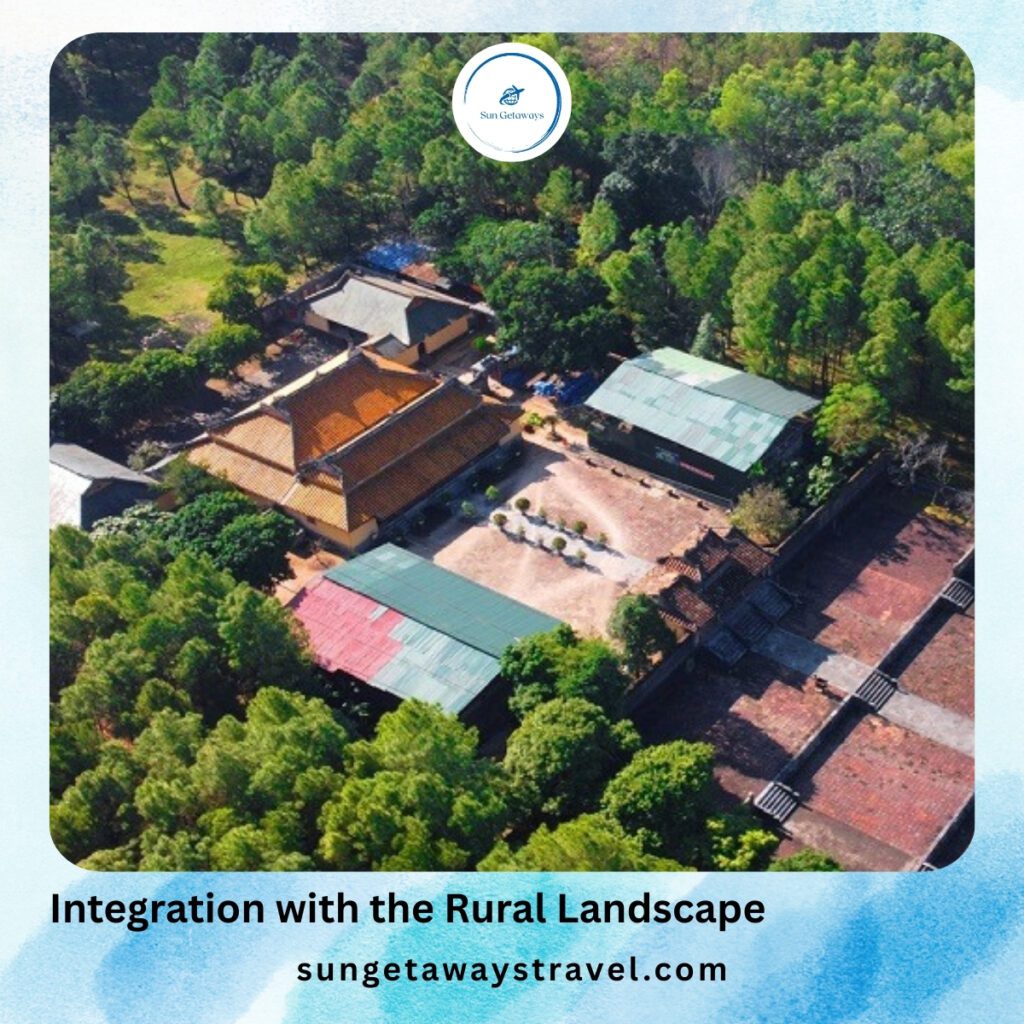
Integration with the Rural Landscape
This is the tomb’s most striking feature. Because it doesn’t have a massive wall shutting it off from the world, the tomb feels completely open to the surrounding rice paddies and gardens. As you wander the grounds, you can see farmers working in their fields and hear the sounds of village life. The setting is just so peaceful and authentically Vietnam.
The surrounding countryside is filled with grapefruit gardens and green fields. You’ll feel a sense of tranquility that is hard to find at the more crowded tourist spots. This connection with nature is what makes the Tomb of King Thieu Tri so special and memorable.
Symbolism of Modesty
Don’t mistake the tomb’s simple design and quick construction as signs of it being less important. In fact, it’s the opposite. These elements are a direct reflection of King Thieu Tri’s character. The choice to build it quickly and simply was a deliberate act of humility. It showed his deep concern for his kingdom’s resources and his desire not to burden his people. It’s a monument that values character over sheer size.
How to Get to the Tomb of King Thieu Tri
Getting to the tomb is part of the experience. It’s located about 8 km from the center of Hue, and the ride out there is lovely. You can easily grab a taxi or a car from a ride-sharing app.
But if you ask me, the best way to go is by renting a scooter or a bicycle. The journey will take you down quiet country roads, past small villages and expansive rice fields. You get a real glimpse into local life that you’d miss from inside a car. The scenery along the way sets the perfect mood for visiting this tranquil tomb.

Nearby Attractions: Exploring the Royal Heritage Trail
One of the great things about the Tomb of King Thieu Tri is its location. Planning your trip around these imperial sites is one of the best Things to Do in Hue. The city is rich with history, and each location offers a different perspective on the past. It’s close to several other key historical sites, making it easy to create a fantastic day of sightseeing.
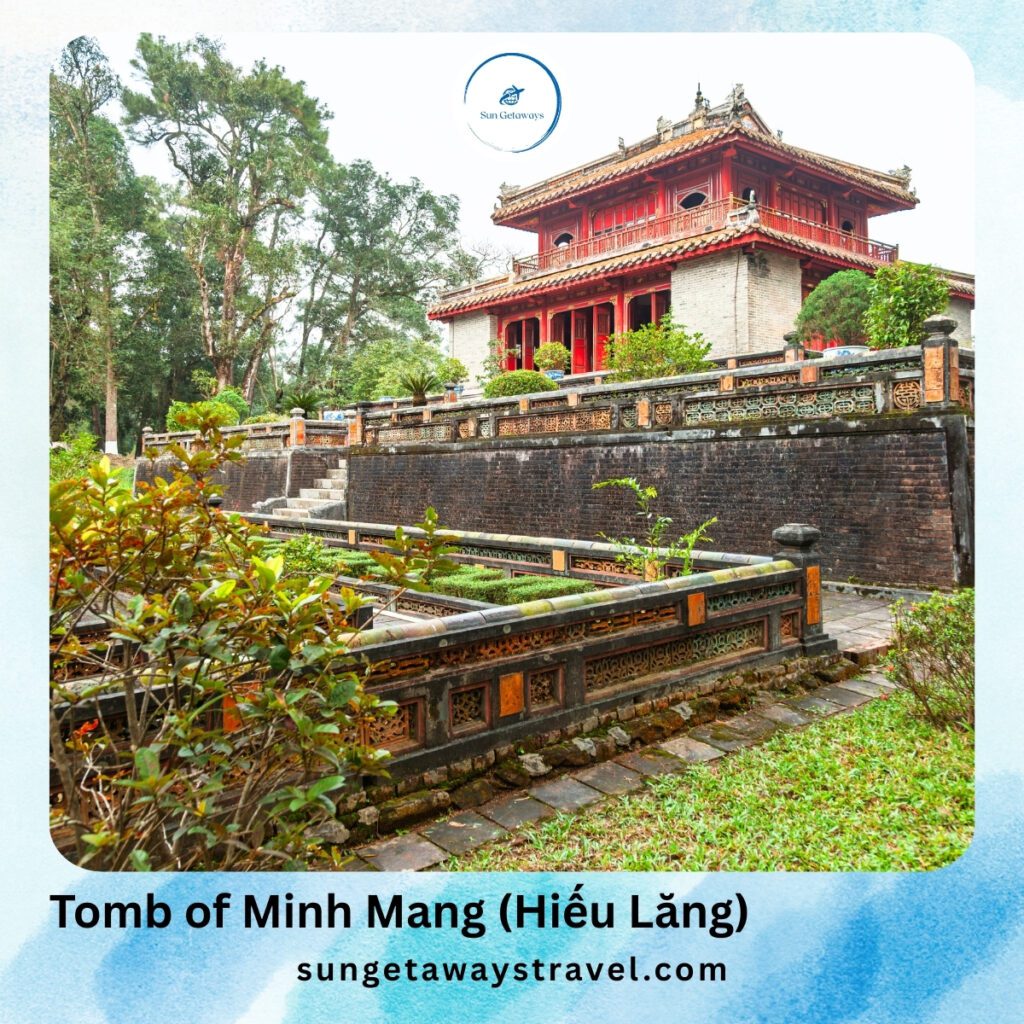
Tomb of Minh Mang (Hiếu Lăng)
Just a short distance away is the tomb of Thieu Tri’s father, Minh Mang. This complex is the definition of grandeur. It’s a vast and majestic site known for its perfect formal symmetry and impressive structures. Visiting Minh Mang’s tomb right after Thieu Tri’s provides a powerful and fascinating contrast between a father’s grand vision and his son’s humble one.
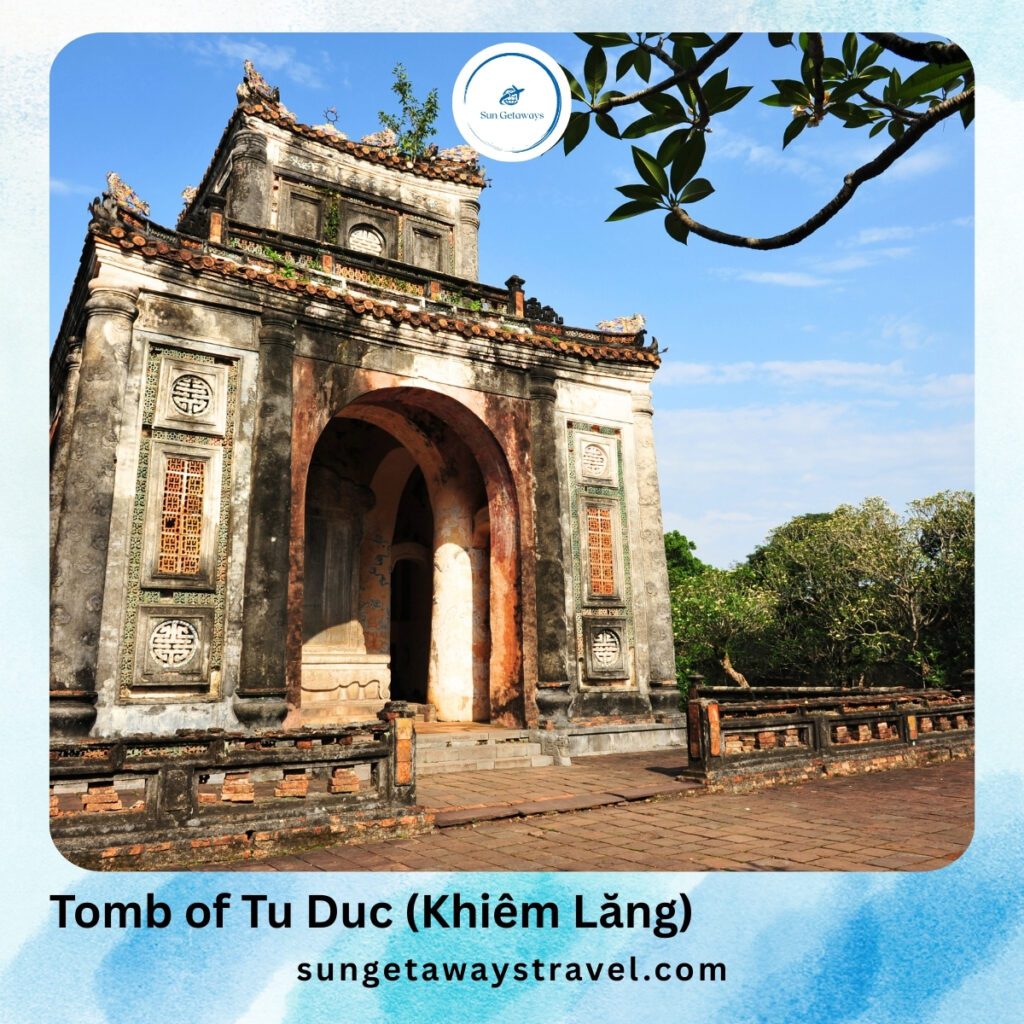
Tomb of Tu Duc (Khiêm Lăng)
Nearby you can also visit the tomb of Thieu Tri’s son, Tu Duc. This tomb is more lyrical and sprawling, feeling almost like a royal park. With its lakes, pavilions, and lush greenery, it reflects the poetic and romantic soul of Emperor Tu Duc. It’s another interesting comparison of the different personalities of the Nguyen rulers.
Tu Hieu Pagoda
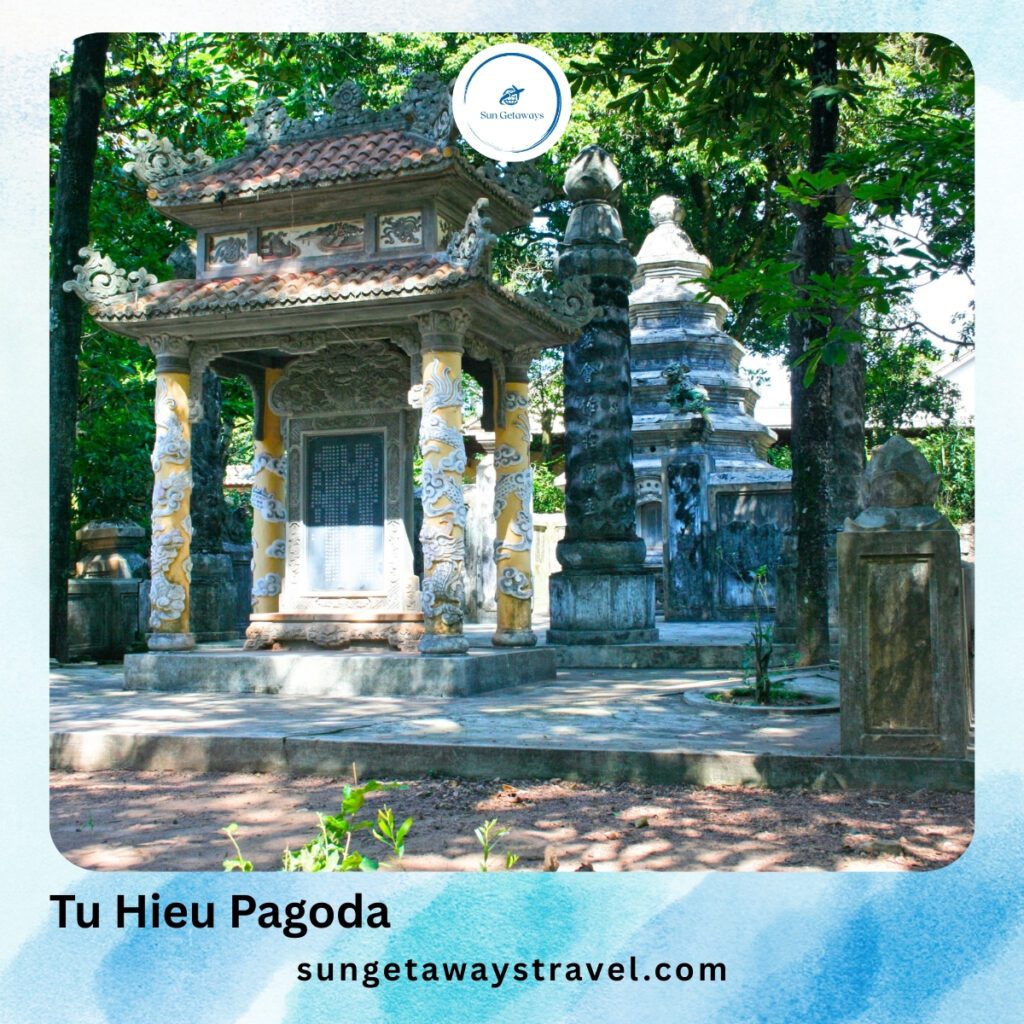
For a meaningful stop nearby, I highly recommend visiting Tu Hieu Pagoda. This tranquil Buddhist monastery is not only beautiful but also has a fascinating history, famously known as the place where the court eunuchs of the Nguyen Dynasty came to live out their final years. It’s a place of deep peace and history, offering a different perspective on the lives connected to the imperial court.
Hue is a major highlight, but there are many other amazing Things to Do in Central Vietnam. From the ancient town of Hoi An to the stunning beaches of Da Nang, the region is full of incredible experiences. If you want to see the best of the region without the stress of planning, our 4-Day Central Vietnam Tour covers all the highlights. We take care of the details so you can just enjoy the journey.
A Final Thought on Hue’s Most Humble Tomb
The Tomb of King Thieu Tri holds a unique place in Hue’s royal history. It’s not the biggest or the most elaborate, but it is a monument of serene beauty and profound humility.
Its thoughtful design, its beautiful connection to the landscape, and the story of how it was built make it a deeply rewarding stop. If you want to understand the diverse legacies of the Nguyen emperors beyond just their power and wealth, you can’t miss this tomb. It truly is a gem.
Every traveler has a different style, and we believe your trip should be perfect for you. If you have a specific itinerary in mind, you can Custom Your Tour with us to create your ideal Vietnam adventure.
FAQs about the Tomb of King Thieu Tri
How long does it take to visit the Tomb of King Thieu Tri?
A typical visit takes about 1 to 1.5 hours. This gives you plenty of time to see both the worship and tomb areas without rushing.
What makes Thieu Tri’s Tomb different from other royal tombs in Hue?
The main differences are its lack of a surrounding wall, its seamless integration with the rural landscape, and the incredible speed at which it was built (under 10 months).
What is the best way to get to the tomb?
The tomb is about 8 km from Hue’s city center. It’s easily reached by taxi, ride-sharing services, or by renting a scooter or bicycle for a more scenic trip.
Why is the tomb facing west-northwest?
This direction is unusual for Nguyen Dynasty architecture. It was chosen for its excellent feng shui, using the surrounding hills and the Perfume River to create a harmonious and protective location.
Is the Tomb of King Thieu Tri included in the ticket?
While it’s part of the UNESCO World Heritage site, individual tombs often require a separate ticket. You can buy single-site tickets or a combination ticket that covers several imperial sites for a better price. It’s always a good idea to check the latest ticketing policy when you arrive.


Related Tour

Northern Vietnam Delights: Hanoi, Halong Bay & Sa Pa 6 Days


27 Reviews


Small Group Vietnam South to North 12 Days Tour
25 Reviews



Hanoi’s Street Food 3-Hour Guided Tour
25 Reviews
Ask a question
Leave a Comment (0)
No questions yet. Be the first to ask a question!
See related Posted
Luxury Golf Resorts in Vietnam – Elite Golf Travelers

Vietnam is increasingly recognized as a premier golf destination in Asia, therefore luxury golf…
Macrame in Vietnam: The Revival of Knot Art in Contemporary Craft Culture

Macrame in Vietnam reflects the country’s growing engagement with contemporary handmade culture, where global…
Vietnamese Musical Instrument Craft: Traditional Instrument Making in Vietnam

Vietnamese musical instrument craft reflects a long-standing relationship between sound, material, and cultural memory.…
Traditional Vietnamese Kite Art: History, Craftsmanship, and Cultural Meaning

Traditional Vietnamese kite art is a living expression of folk creativity, community values, and…
Vietnamese Folk Masks: Tradition, Symbolism & Cultural Meaning

Vietnamese folk masks are a distinctive form of traditional art that reflects the spiritual…
Vietnamese Embroidery Art: Traditional Craftsmanship & Cultural Meaning

Vietnamese embroidery art is a refined traditional craft that reflects patience, cultural memory, and…