






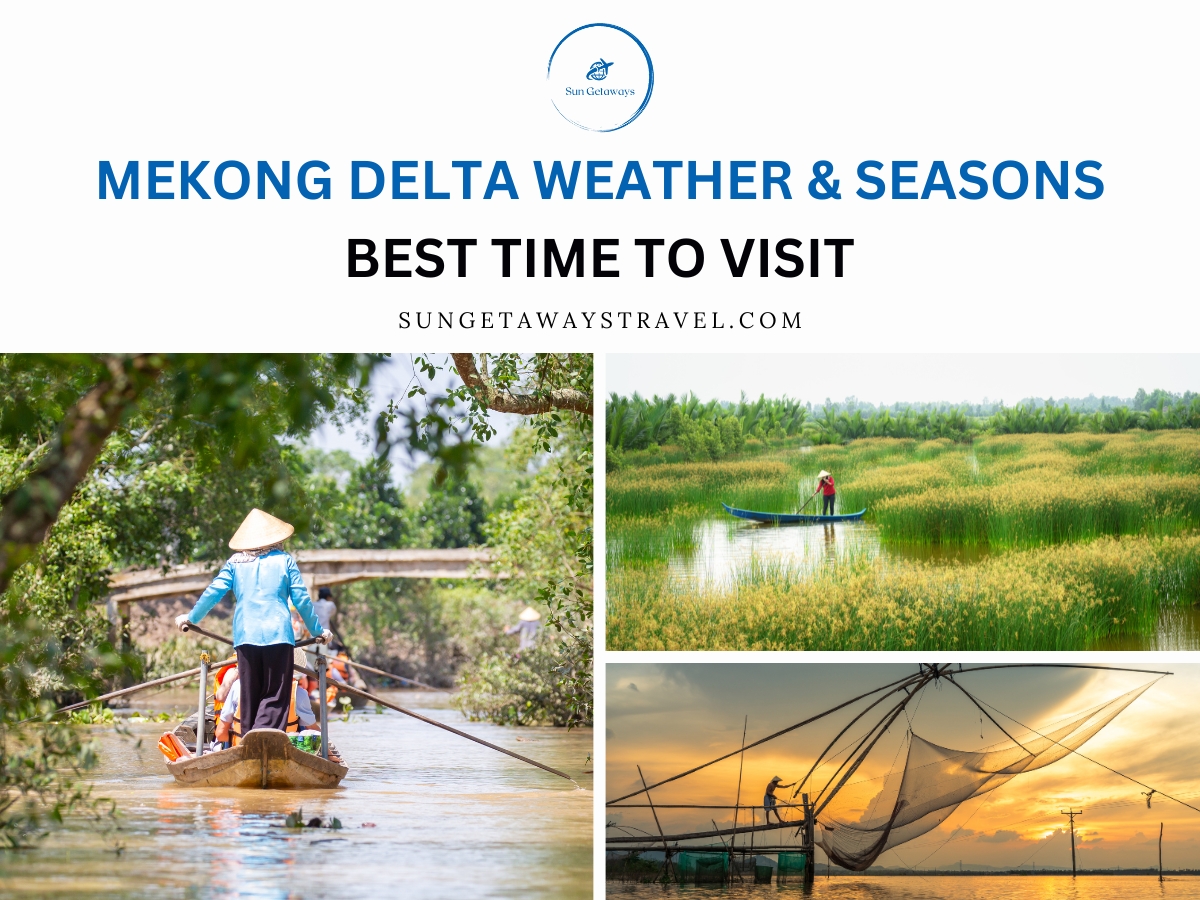
Mekong Delta Weather & Seasons: Best Time to Visit
 PhamDuong
  3 min. to read
 Understanding Mekong Delta weather is essential for travelers planning southern Vietnam itineraries. Because river life depends on seasonal changes, the Mekong Delta climate directly influences landscapes, activities, and transportation. Therefore, clear seasonal knowledge helps international visitors plan smoother and more rewarding journeys.
Key Takeaways
- Mekong Delta weather has only two seasons, but water levels and travel experiences change significantly within each season.
- Morning travel is optimal year-round, while afternoons require seasonal adjustments due to heat or rain.
- Every season offers unique experiences, from floating landscapes and seasonal food to festivals and quieter travel periods.
1. How Mekong Delta Weather Shapes Travel Experiences
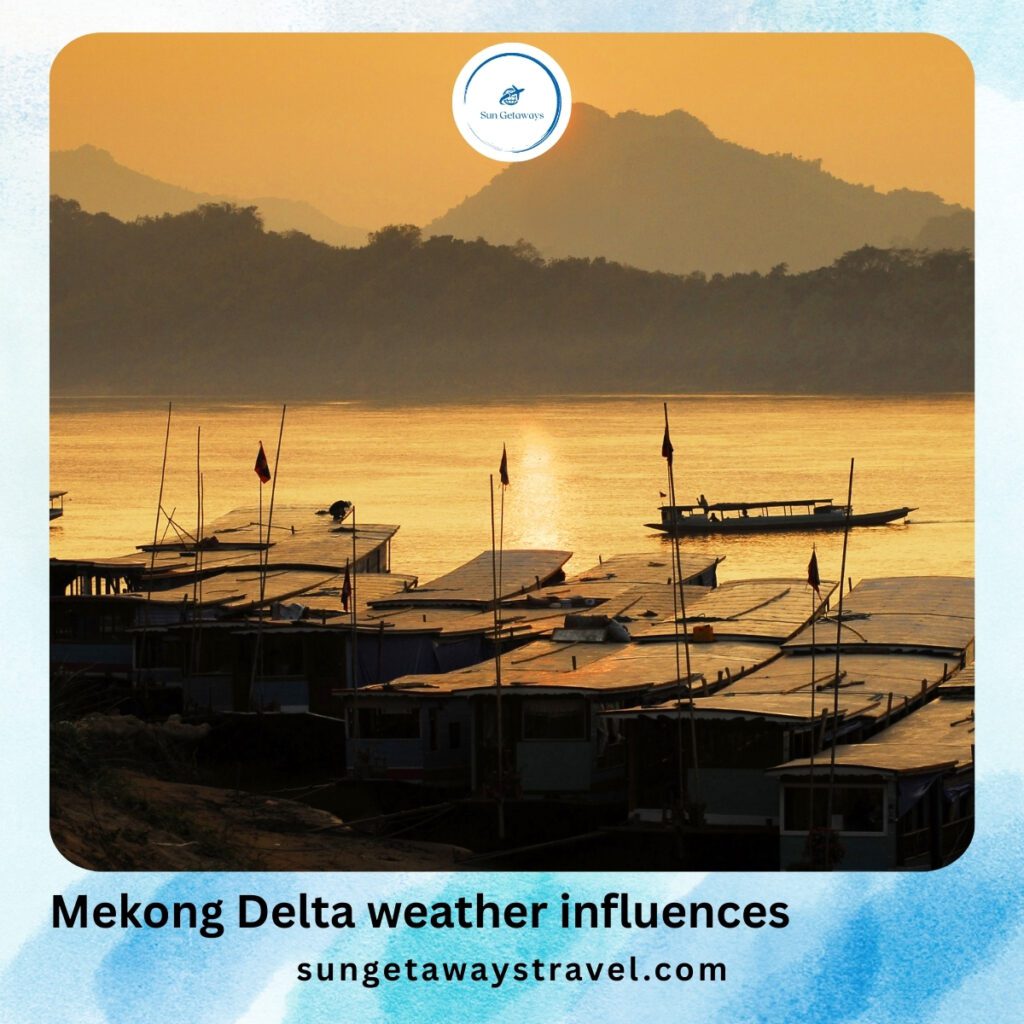
The Mekong Delta is a low-lying region shaped by rivers and canals. Because of this geography, Mekong Delta weather strongly influences movement, farming, and local lifestyles. As a result, travel experiences change noticeably throughout the year.
Water levels affect boat routes, floating markets, and rural access. Consequently, some activities feel more immersive in certain seasons. This connection makes seasonal awareness especially important for first-time visitors.
2. Mekong Delta Climate System Explained for Travelers
To understand how weather affects travel in the region, it is helpful to first look at how the Mekong Delta climate is structured throughout the year.
2.1. Why the Mekong Delta Has Only Two Main Seasons
The region lies close to the equator and receives consistent sunlight. Because of this, temperature variation remains minimal throughout the year. As a result, the Mekong Delta climate divides naturally into two seasons based on rainfall.
Monsoon winds bring moisture from the sea during certain months. Conversely, dry air dominates during the rest of the year. This cycle determines river behavior and agricultural rhythms.
2.2. Rainy Season Mekong Delta Weather: What to Expect
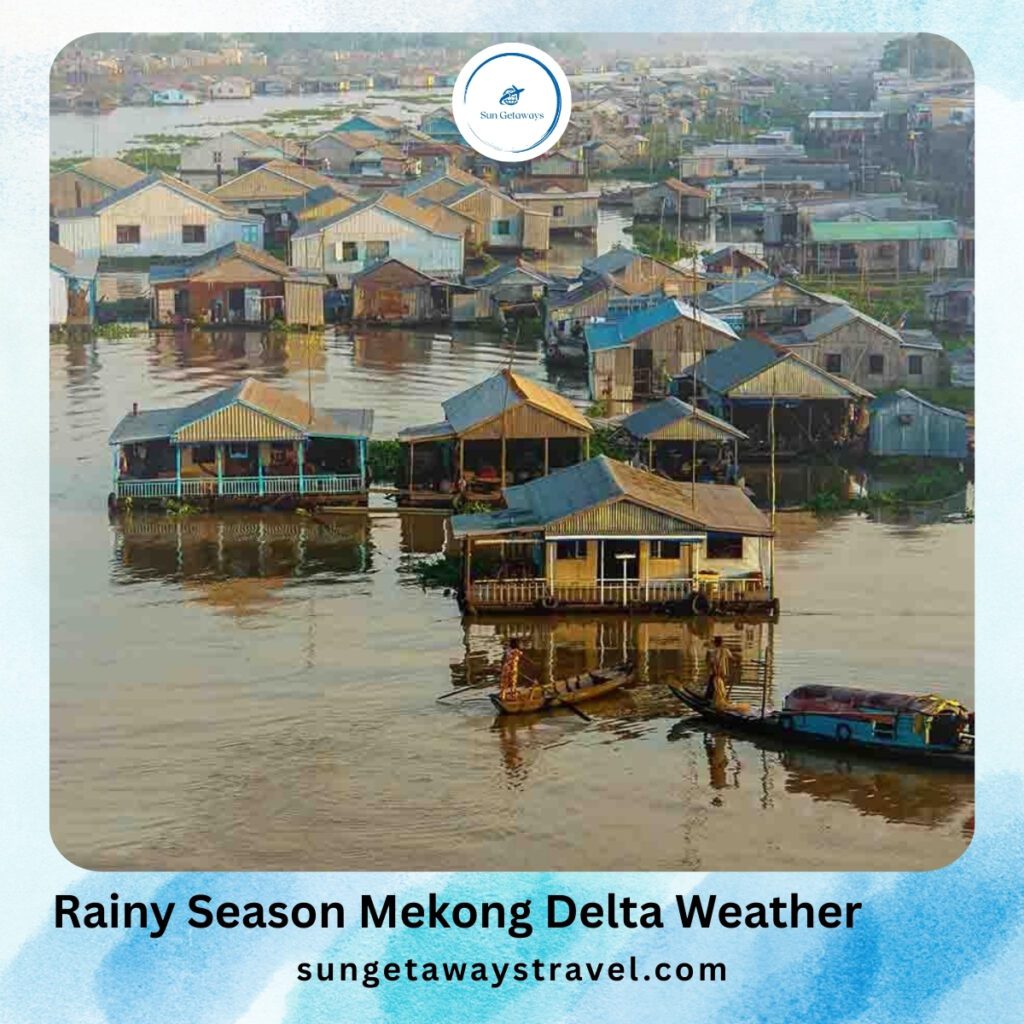
The rainy season runs from May to October and reshapes the landscape. Although rainfall increases significantly, Mekong Delta weather remains warm with average temperatures ranging from 25°C to 34°C. Thus, heat levels stay comparable to the dry season.
Afternoon showers help cool the air temporarily. As a result, evenings often feel more comfortable after rainfall. However, humidity rises quickly once rain subsides.
September usually records the highest humidity levels. Combined with warm temperatures, this creates a heavier atmosphere. Therefore, travelers should prepare for moisture rather than extreme heat.
2.3. Dry Season Mekong Delta Weather and Travel Comfort

The dry season lasts from November to April and offers stable atmospheric conditions. During this period, Mekong Delta weather features average temperatures between 24°C and 33°C. Consequently, daily schedules remain predictable with minimal weather disruption.
January is typically the coolest month of the year. Early mornings feel noticeably fresher, especially along rivers and open fields. Therefore, this month appeals to travelers sensitive to heat.
As the season progresses, temperatures gradually increase. April becomes the hottest month, with daytime highs often reaching 34–35°C. However, low rainfall helps offset discomfort by improving mobility.
With dry weather and predictable conditions, the season is ideal for enjoying a relaxed Mekong Delta food tour without weather-related disruptions.
3. Best Time to Visit Based on Travel Goals
Once you understand the seasonal climate, choosing the best time to visit the Mekong Delta becomes a matter of travel goals and personal preferences.
3.1. Visiting Mekong Delta in Peak Season (October to February)
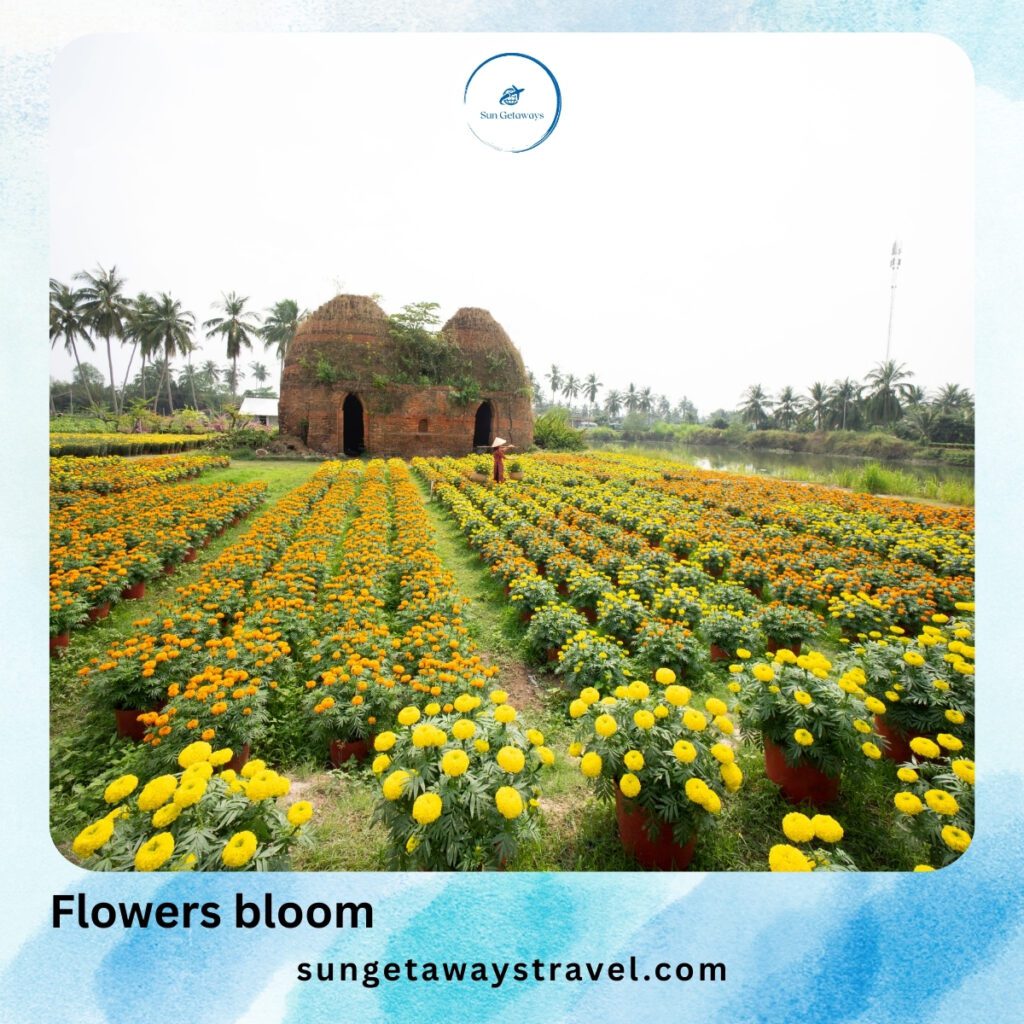
Peak season in the Mekong Delta usually falls between October and February, when the weather is at its most comfortable. During this period, Mekong Delta weather remains mostly dry, with clear skies and calm river conditions, making travel smooth and predictable. As a result, this is widely considered the best time for first-time visitors.
Daytime temperatures average around 28°C and drop by 3–4°C at night. Lower humidity makes outdoor exploration easier, especially for boat trips and village walks. Rainfall is rare, allowing travelers to follow fixed itineraries without disruption.
From January to February, the delta becomes particularly colorful. Flowers bloom across villages and fruit orchards enter harvest periods. However, this is also the busiest and most expensive time, with accommodations and tours often fully booked in advance.
During these comfortable months, a Mekong eco tour offers a relaxed way to explore rivers, orchards, and village life at an unhurried pace.
3.2. Visiting Mekong Delta in Low Season (March to September)
March to September is generally considered the low season for tourism. During these months, Mekong Delta weather becomes hotter and more humid, especially from June to September. Although conditions feel less comfortable, travel remains entirely possible.
Fewer visitors mean quieter attractions and more flexible schedules. Prices for accommodation and tours are often lower, offering better value for budget – conscious travelers. As a result, the experience feels slower and more authentic.
This period is also rich in tropical fruits. Despite occasional rain, the landscape stays lush and lively. Travelers willing to adapt their pace often find this season rewarding.
With fewer crowds during the low season, it becomes easier to explore a wider range of things to do in the Mekong Delta at a relaxed pace.
3.3. Visiting Mekong Delta During Floating Season (August to October)

Floating season typically occurs between August and October, corresponding to the 7th–9th lunar months. During this time, rising water levels expand rivers and canals across the delta. Under these Mekong Delta weather conditions, boat travel becomes a defining experience.
Annual floodwaters bring nutrient-rich alluvium to farmlands and support abundant aquatic life. Fish, shrimp, and seasonal plants flourish, reshaping daily life and local cuisine. This period also marks the start of a unique tourism season.
Food lovers especially enjoy floating season. Signature dishes include Linh fish hotpot with Dien Dien flowers, crispy fried Linh fish, and tiny river shrimp. These seasonal specialties are rarely available at other times of the year.
For travelers with limited time, a Mekong Delta day trip is an easy way to experience floating season highlights by boat.
3.4. Visiting Mekong Delta During Festivals
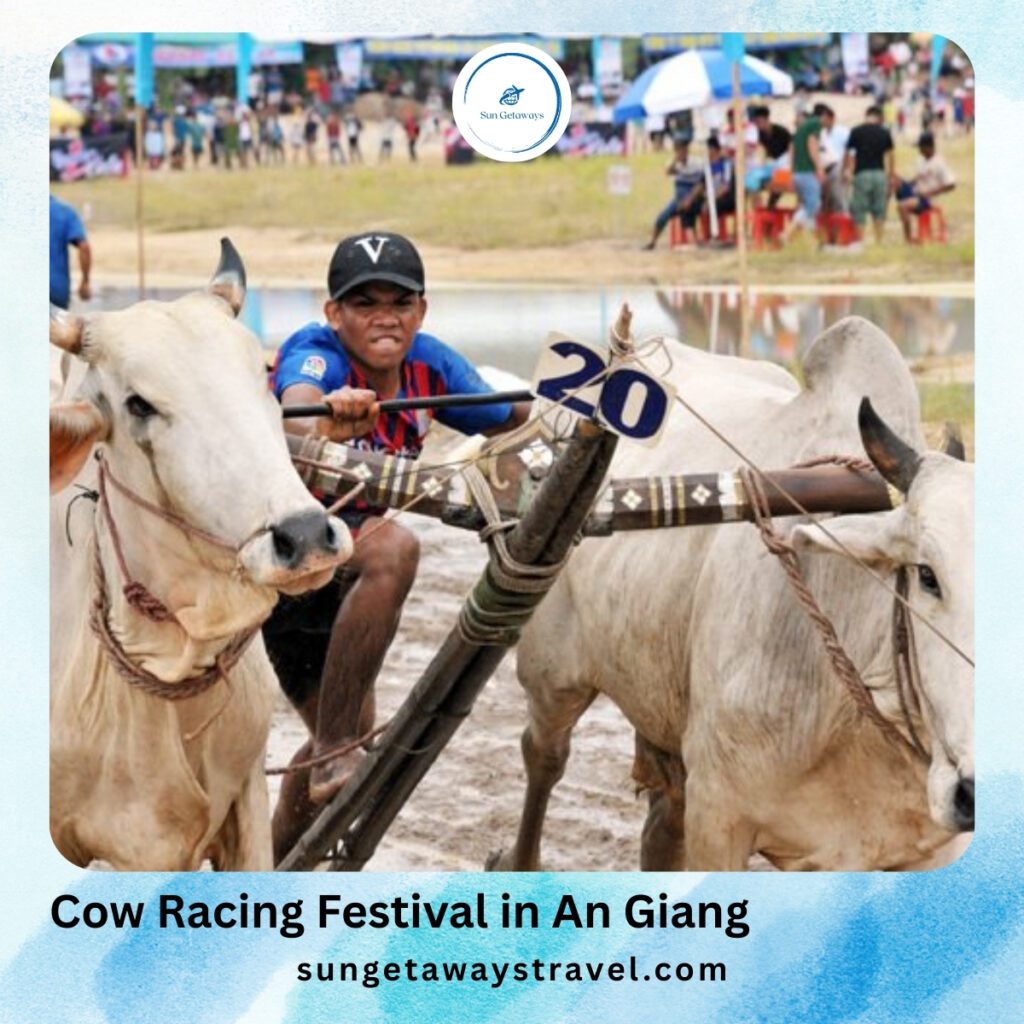
When planning your trip, checking the festival calendar can add cultural depth to your experience. Many festivals follow the lunar calendar and reflect local beliefs shaped by river life and seasonal rhythms.
Tet, the Vietnamese Lunar New Year, is the most important celebration. It usually falls between late January and mid-February and lasts around seven days. During this time, cities and towns across the Mekong Delta are decorated with flowers, lights, and incense, creating a festive atmosphere.
Other notable festivals include Ba Chua Xu Festival (late April, lunar calendar), Ok Om Bok Festival (October, lunar calendar), Chol Chnam Thmay (mid-April), Cow Racing Festival (August–September, lunar calendar), and several temple and offering festivals. Visiting during these events offers insight into the region’s spiritual and cultural life.
“From my experience guiding international travelers, there is no ‘bad’ season in the Mekong Delta. Each period reveals a different rhythm of river life, and understanding seasonal weather helps visitors connect more deeply with the region.” — Ms. Emma Nguyen, Head of Tour Operations at Sun Getaways Travel.
4. Best Time of Day to Explore the Mekong Delta by Season
Daily travel timing in the Mekong Delta changes between the dry and rainy seasons. Under typical Mekong Delta weather patterns, mornings remain the best time to explore in both seasons, but the reasons differ. During the dry season, early hours bring cooler air and lower humidity, with temperatures around 24–27°C, making boat trips and village walks comfortable.
In the rainy season, mornings are favored because rainfall usually arrives later in the day. Under these Mekong Delta climate conditions, travelers can visit floating markets and travel longer distances before afternoon showers begin. As a result, planning major activities before noon reduces weather disruption.
Afternoons vary by season. In the dry season, heat peaks between 12 p.m. and 3 p.m., so rest periods are recommended. In contrast, rainy-season afternoons often see short but heavy showers, limiting outdoor movement. Consequently, evenings in both seasons offer better comfort, with cooler temperatures and river breezes suitable for relaxed dining or short walks.
Need help choosing the right travel timing? Chat with our travel support team on WhatsApp for personalized advice.
5. What to Wear and Pack for Mekong Delta Weather
Preparing for the Mekong Delta means considering both comfort and practicality. With hot, humid conditions and frequent river breezes, knowing what to wear and pack ensures a more enjoyable and stress-free trip.
5.1. Clothing Choices for Hot and Humid Conditions
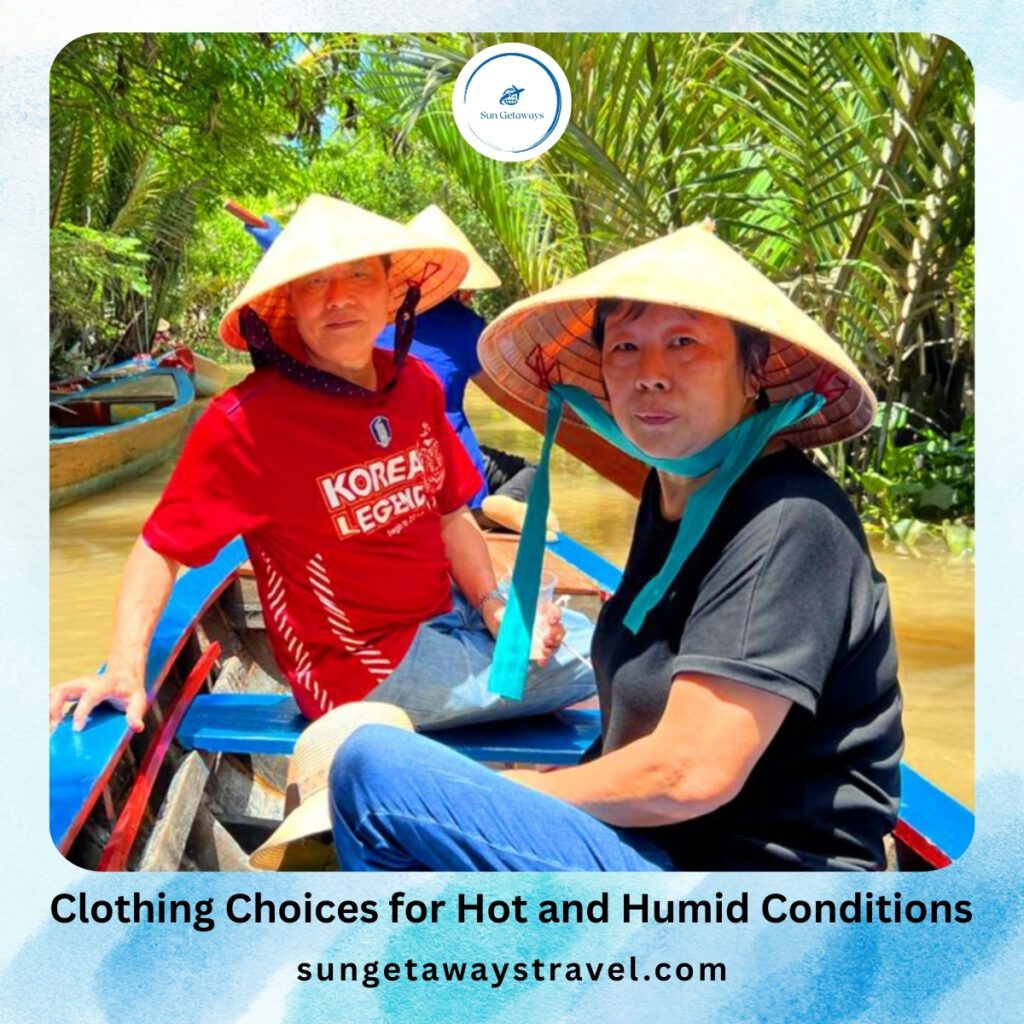
Because temperatures remain warm year-round, clothing selection plays a key role in travel comfort. Under typical Mekong Delta weather conditions, lightweight and breathable fabrics such as cotton or linen help manage heat and humidity effectively. Therefore, loose-fitting tops, light trousers, and comfortable walking clothes are ideal for daily activities.
Sun protection is equally important. Wide-brim hats, sunglasses, and sunscreen help reduce prolonged sun exposure, especially during midday. These items are essential for outdoor sightseeing and boat trips across the delta.
5.2. Essential Items to Pack by Season
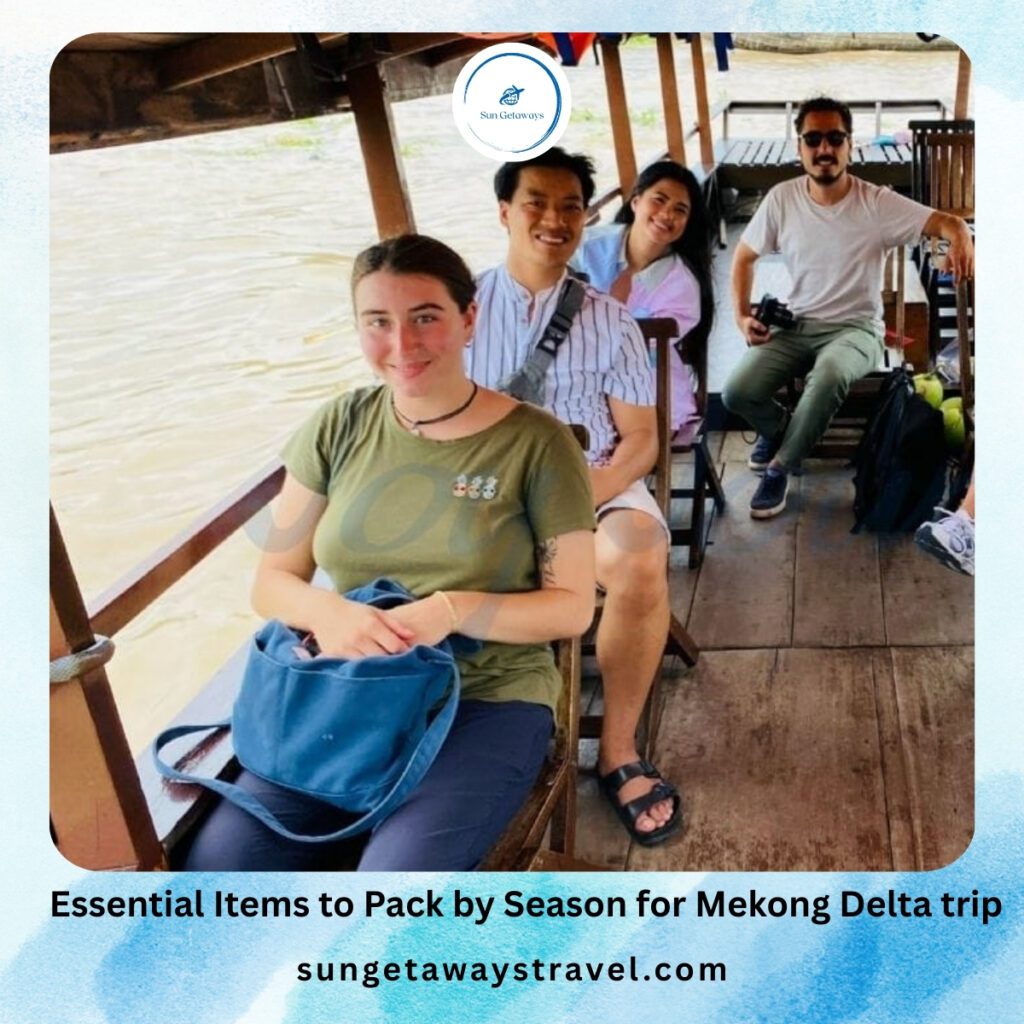
Seasonal changes influence what travelers should bring. During the rainy season, quick-dry clothing and a light rain jacket are practical, as short showers often occur in the afternoon. Under these Mekong Delta climate conditions, sandals or shoes with good grip improve safety on wet paths and docks.
In the dry season, stronger sun protection becomes more important due to longer sunny hours. Regardless of season, mosquito repellent is useful near rivers and orchards, particularly in the evening. Because boat travel is common, a waterproof bag helps protect electronics and travel documents.
6. FAQ about Mekong Delta Weather
No. Rainfall typically comes in short, heavy bursts during the afternoon, especially in the rainy season. Mornings and evenings are often dry and suitable for sightseeing and boat travel.
Seasonal flooding in the Mekong Delta is natural and controlled. Roads and waterways are adapted to higher water levels, and boat travel remains safe when guided by local operators.
Yes, but not negatively. Floating markets operate year-round, although water levels and boat density vary by season. In higher water months, markets often feel more vibrant and spacious.
Yes. Thanks to its tropical climate, the Mekong Delta can be visited throughout the year. While weather conditions vary between the dry and rainy seasons, travel remains possible in all months with proper planning.
Conclusion
Understanding Mekong Delta weather allows travelers to plan confidently and travel comfortably. Because the Mekong Delta climate shapes landscapes, culture, and daily rhythms, seasonal awareness enhances every experience. With proper planning, every month offers a rewarding way to explore the Mekong Delta.
If you value travel shaped by seasons and local rhythm, Sun Getaways Travel creates journeys designed for comfort, authenticity, and meaningful connection – across diverse destinations.


Related Tour

4 Days Halal Muslim Hanoi and Sapa


0 Reviews

4 Days Hanoi Halong Ninh Binh Muslim Tour
21 Reviews

6 Days Mekong Delta and Beach Relaxing
29 Reviews

14 Days of Spectacular Vietnam Sightseeing
26 Reviews
Rural and ancient land of Bac Ninh
0 Reviews
Ask a question
Leave a Comment (0)
No questions yet. Be the first to ask a question!
See related Posted
Luxury Golf Resorts in Vietnam – Elite Golf Travelers

Vietnam is increasingly recognized as a premier golf destination in Asia, therefore luxury golf…
Macrame in Vietnam: The Revival of Knot Art in Contemporary Craft Culture

Macrame in Vietnam reflects the country’s growing engagement with contemporary handmade culture, where global…
Vietnamese Musical Instrument Craft: Traditional Instrument Making in Vietnam

Vietnamese musical instrument craft reflects a long-standing relationship between sound, material, and cultural memory.…
Traditional Vietnamese Kite Art: History, Craftsmanship, and Cultural Meaning

Traditional Vietnamese kite art is a living expression of folk creativity, community values, and…
Vietnamese Folk Masks: Tradition, Symbolism & Cultural Meaning

Vietnamese folk masks are a distinctive form of traditional art that reflects the spiritual…
Vietnamese Embroidery Art: Traditional Craftsmanship & Cultural Meaning

Vietnamese embroidery art is a refined traditional craft that reflects patience, cultural memory, and…