






Bun bo Hue: The Ultimate Spicy Noodle Challenge in Vietnam
 HoangAn
  3 min. to read
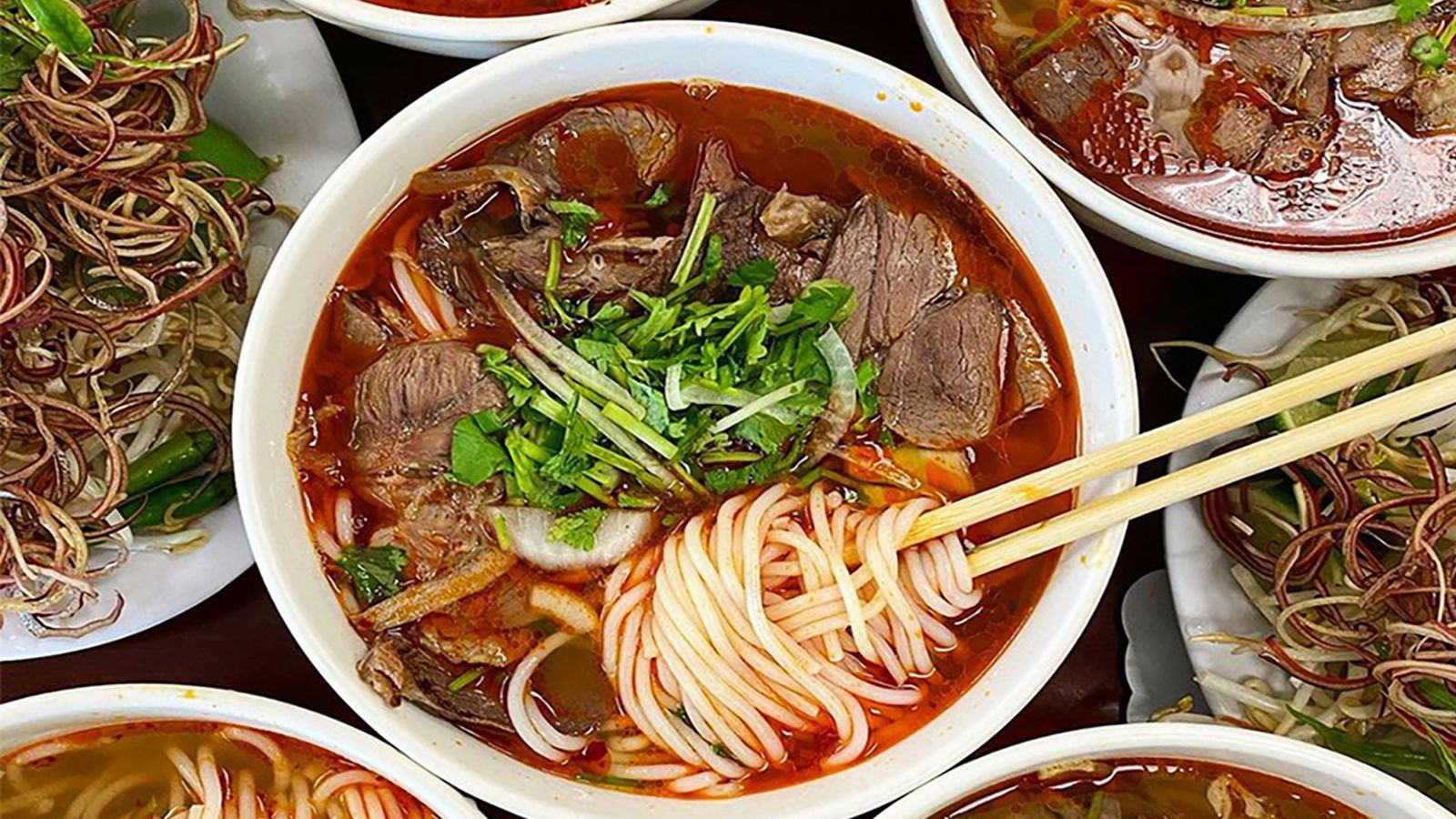
 Are you traveling to Vietnam and worried that all the Vietnamese noodle soups might taste too similar? Many visitors fear missing out on the unique regional flavors that define this country’s cuisine. Don’t worry! This guide is your perfect introduction to Bun bo Hue, the legendary beef noodle soup from Hue that promises a fiery and flavorful adventure. We will cover everything you need to know: what it is, why it’s so different, where to find the best bowl, and how to eat it like a local.
Key Takeaways
- Bun bo Hue is a unique beef noodle soup with a complex and spicy broth, known for its vibrant flavors from Central Vietnam.
- The rich broth features lemongrass, fermented shrimp paste, and chili oil, making it more intense compared to Pho.
- To find the best Bun bo Hue, seek humble street stalls bustling during breakfast hours, with a rich-colored broth.
- Customize your bowl with fresh herbs, lime, and optional condiments to enhance the flavor.
- Bun bo Hue is affordable, often costing under $2, providing a satisfying meal while exploring Hue’s culture.
1. What Makes Bun bo Hue Different? The Flavor Profile
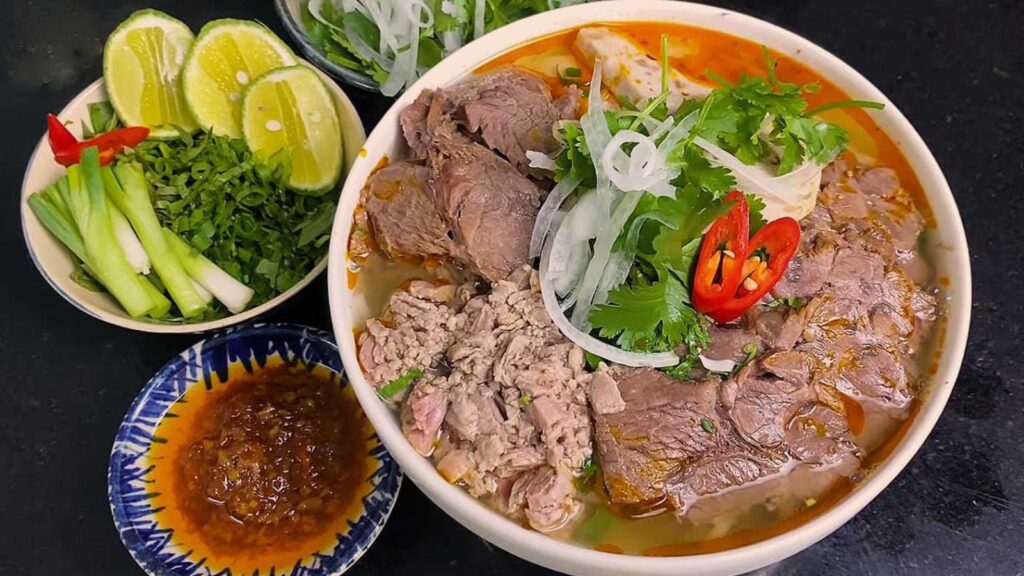
Bun bo Hue stands out fiercely among all Vietnamese noodle dishes. It is known for its intense, complex, and savory-spicy broth. This dish is the culinary pride of Hue, the former Imperial capital, and its flavors reflect the refined, yet bold, tastes of Central Vietnam.
1.1. The Secrets Behind the Signature Bun bo Hue Broth
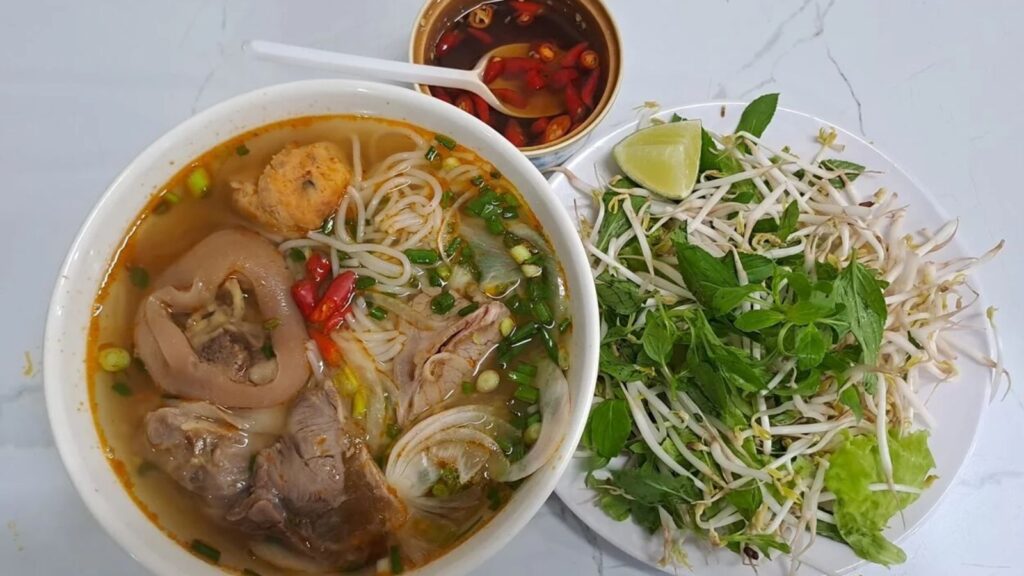
The broth is the heart and soul of Bun bo Hue. Unlike the clear, gentle broth of Pho, this broth is dark, rich, and profoundly aromatic.
- Lemongrass and Shrimp Paste (Mam Ruoc): The distinctive flavor comes from a huge amount of lemongrass, which is simmered for hours with beef bones and pork bones. Importantly, a small but powerful amount of fermented shrimp paste (mam ruoc) is added. This ingredient gives the broth its deep, funky, and savory punch, which is key to its authentic taste.
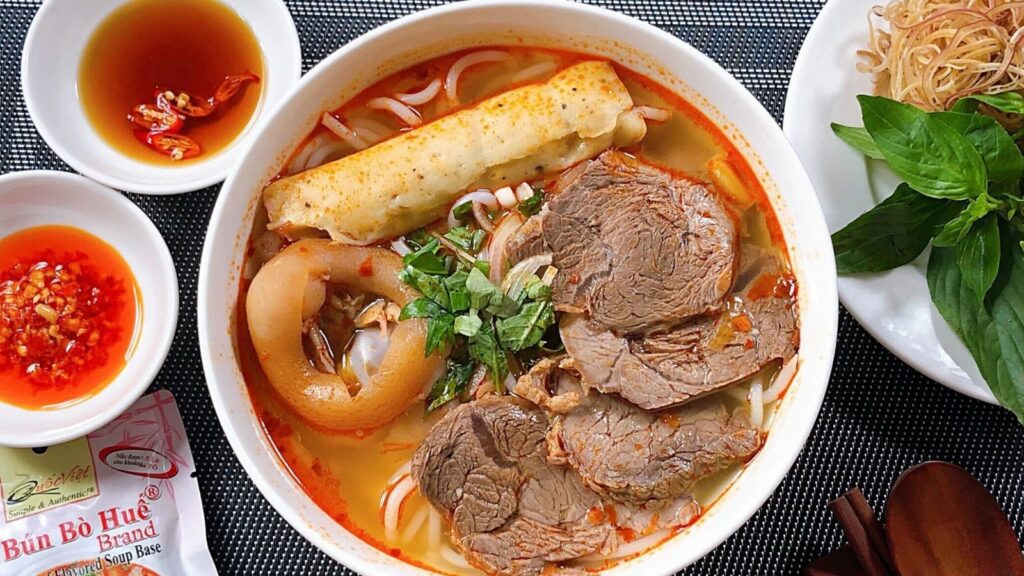
- Annatto Oil and Chili: The beautiful reddish-orange color of the broth comes from annatto seeds and plenty of chili oil. This combination ensures the Bun bo Hue is visually stunning and delivers that required spicy kick. It is essential to remember that even a mild bowl of Bun bo Hue is generally spicier than a standard bowl of Pho.
1.2. Components of an Authentic Bun bo Hue Bowl
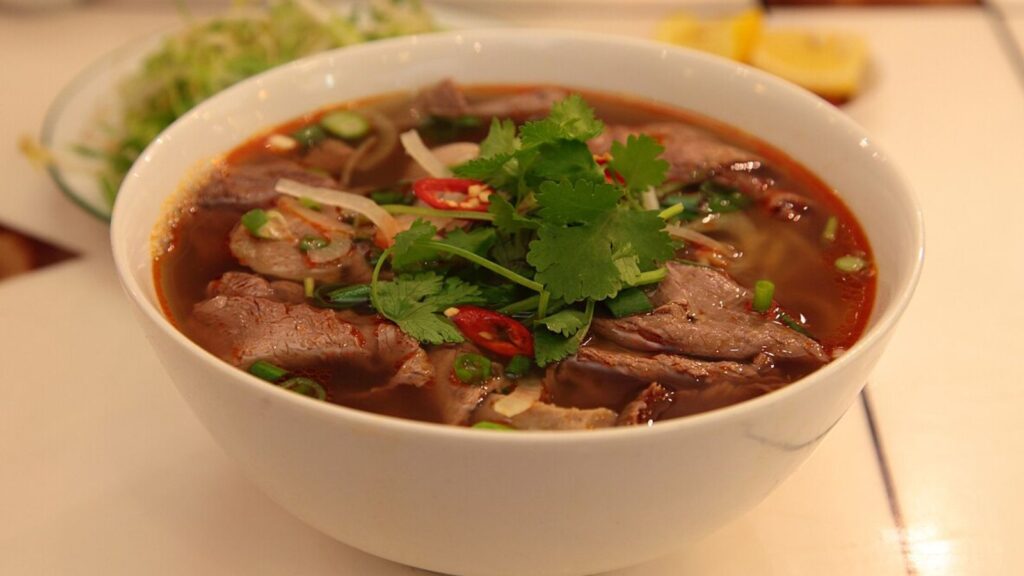
The ingredients in Bun bo Hue are traditionally more rustic and varied than in other soups. Each component adds a crucial layer of flavor and texture.
- The Noodles (Bun): Bun bo Hue uses thick, round rice vermicelli noodles. They are much sturdier than the thin noodles used in Pho or Bun cha. These thicker noodles are necessary to soak up the heavy, rich broth without falling apart.
- The Meats: A typical bowl of beef noodle soup from Hue is a carnivore’s delight. It often includes tender slices of boiled beef shank, substantial pieces of pig’s knuckle or trotters, and thick slices of Vietnamese pork sausage (cha lua). You might also find a cube of congealed pig blood (huyet), which has a unique, smooth texture and is considered a delicacy by locals.
2. How to Find the Best Bun bo in Hue
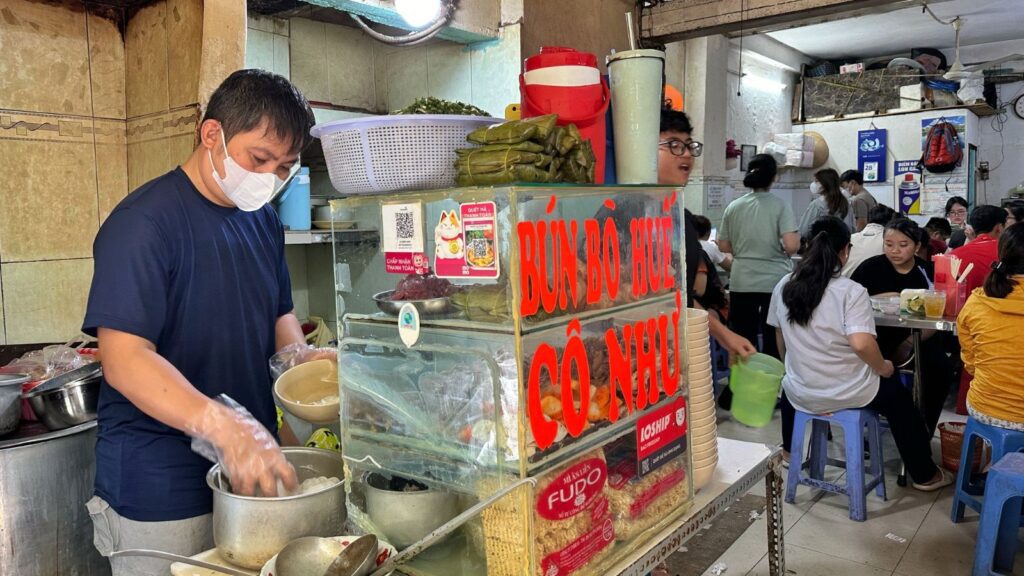
When you are in Hue, finding an authentic bowl of Bun bo Hue is an important mission. The best places are usually humble street stalls or small, family-run shops. These places specialize in this one dish.
2.1. Identifying Authentic Locations
The atmosphere of the best Bun bo Hue spots is as important as the taste. Look for a place that feels energetic and well-loved by the local community.
- Local Morning Rush: The most authentic spots often open very early and are busiest between 6:00 AM and 9:00 AM. Look for stalls with steam rising and lots of motorbikes parked outside. This morning rush indicates freshness and local preference.
- The Broth’s Appearance: Take a quick peek at the broth pot if you can. The broth should look rich, deep red or orange, and slightly opaque from the spices, not watery or pale. A dark, simmering pot means hours of flavor building.
2.2. Street Food vs. Restaurants
Both street food stalls and dedicated restaurants offer great beef noodle soup from Hue. Your choice depends on the experience you want.
- Street Stalls (The Traditional Way): Street stalls offer the most authentic and atmospheric experience. You will be seated on low plastic stools right next to the kitchen, witnessing the cooking process. The prices are the lowest here, and the flavor is often the boldest and most intense. This is an essential part of the local food tour experience in Hue.
- Dedicated Restaurants: These establishments offer slightly more comfortable seating and better cleanliness standards, which can ease the worries of first-time travelers. While the flavor is often excellent, the price might be a bit higher, and the atmosphere can be less raw and exciting than a street stall.
3. Customizing Your Bun bo Hue: Herbs and Condiments
One of the great pleasures of eating Bun bo Hue is customizing the flavor to your exact liking. The bowl served to you is just the starting point.
3.1. The Importance of Fresh Herbs and Vegetables
Every bowl of beef noodle soup from Hue comes with a generous plate of fresh garnishes. Do not be shy about adding them all.
- Banana Blossom and Mint: Shredded banana blossom (bap chuoi) and various mint leaves (rau thom) are essential. They add a refreshing, crunchy texture that provides a great contrast to the soup’s richness. These ingredients help to lighten the heavy flavor profile.
- Lime and Chili: Fresh lime wedges and sliced red chilies are crucial condiments. Squeezing lime juice into your broth adds brightness and cuts through the fat. If you love heat, add the chilies slowly, as they can be very potent!
3.2. Condiments to Enhance Your Bun bo Hue
There are a few optional condiments often available at the table. These are designed to fine-tune the savory, spicy, and umami elements.
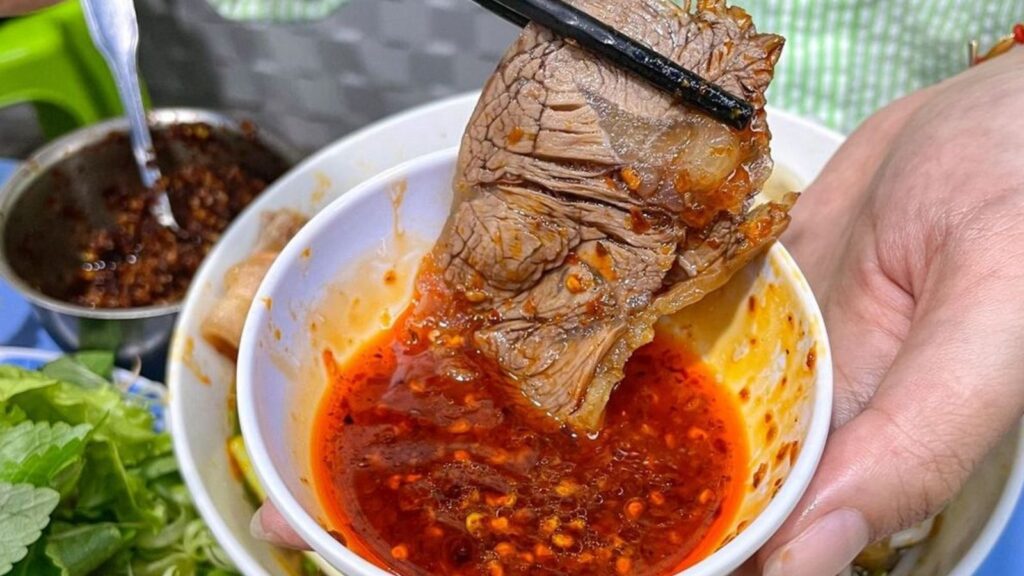
- Satay or Chili Paste: A thick, oily, often homemade chili-garlic paste is usually available. Adding half a teaspoon of this can significantly increase the depth of flavor and spiciness of your Bun bo Hue. Ask the vendor if you can try a small amount first.
- Extra Mam Ruoc (Shrimp Paste): Some serious fans of the dish like to add a tiny, extra dollop of the fermented shrimp paste for an even stronger savory aroma. Be warned, this is only for those who truly love bold flavors.
Mrs. Emma Nguyen – Tour Operator Manager with over 12 years of experience at Sun Getaways Travel advises: “When trying Bun bo Hue for the first time, only add half of the available chili or chili paste. The spiciness level in Hue is often higher than in Hanoi or Saigon, and we want you to enjoy the flavor without being overwhelmed by the heat!”
4. The Cost and Value of a Bowl of Bun bo Hue
For budget-conscious travelers, Vietnamese street food is an amazing value. Bun bo Hue offers a complete, protein-rich, and filling meal for a very low price.
4.1. Typical Price Range for Beef Noodle Soup from Hue
The price for this iconic soup is incredibly low, especially considering the time and ingredients that go into the complex broth. You will find that food costs are one of the most budget-friendly aspects of your trip.
| Location Type | Price Range (VND) | Price Range (USD Approx.) | Key Takeaway |
| Street Stalls/Local Shops | 30,000 VND – 45,000 VND | $1.20 – $1.80 | Most authentic, lowest price, usually cash only. |
| Mid-Range Restaurants | 50,000 VND – 80,000 VND | $2.00 – $3.20 | Cleaner environment, better seating, slightly higher cost. |
A large, satisfying bowl of Bun bo Hue for under $2 USD is truly a fantastic deal. Remember that these prices are generally fixed, so there is no need to bargain.
4.2. Are There Different Sizes or Special Orders?
Yes, you can often customize your order. If you see locals ordering something different, ask for the following:
- Topping Requests: You can often ask the vendor to omit certain items if you prefer. For example, if you do not want the pig’s blood, you can say “Khong lay huyet.”
- Extra Meat (Them Thit): If you are very hungry, you can ask for extra meat for a small additional cost. The extra meat might be just a few slices of beef or another piece of the pork knuckle.
5. Traveling to Hue: Beyond the Beef Noodle Soup
Hue is a truly unique destination that offers much more than just the incredible Bun bo Hue. As the former imperial capital, it is central to understanding Vietnamese history and culture. Exploring the ancient sites is a perfect complement to enjoying the local food.
5.1. Essential Sightseeing in the Imperial City
Your trip to Hue should absolutely include the historical highlights. These sites are easily accessible through local tours or by hiring a private driver for the day.
- The Imperial Citadel (Dai Noi): This massive walled fortress was the home of the Nguyen Dynasty emperors for over 140 years. Walking through the gates, palaces, and temples gives you an incredible sense of Vietnam’s imperial past. It is a UNESCO World Heritage site and a must-see.
- Thien Mu Pagoda: Located on the bank of the Perfume River, this seven-story pagoda is one of Hue’s most iconic symbols. The setting is beautiful and peaceful, and the view of the river is stunning, making it a popular spot for a gentle boat ride.

5.2. Why You Should Explore Hue’s Local Food Tour Scene
A local food tour in Hue is highly recommended because the city’s cuisine is distinct. Hue is famous for its small savory snacks (banh), many of which were originally created for the Imperial Court. A guided tour ensures you taste these specialized dishes and understand their history. Hue’s imperial heritage makes its cuisine both sophisticated and deeply rooted in local ingredients.
If you are planning your itinerary and want to ensure a smooth, deep-dive experience into Hue’s history and hidden local food gems, contact Sun Getaways Travel. We can help you customize your travel plan.
6. Addressing Traveler Concerns About Bun bo Hue
It is normal for travelers to have questions about trying such a flavorful and intense dish. Here are answers to common concerns about this popular beef noodle soup from Hue.
6.1. Can I Request Bun bo Hue to be Less Spicy?
Yes, you absolutely can! The level of spiciness in your Bun bo Hue comes primarily from the added chili oil and chili paste.
- Before Ordering: When you order, simply ask the vendor: “Khong cay” (No spicy) or “It cay” (A little spicy). They will prepare your bowl using less chili oil. You can always add more chili later, but you cannot take it out once it is in the broth!
- Chili on the Side: Most vendors provide chili paste on the side. If you are unsure, request that they leave the chili completely out and you will add it yourself, giving you full control over the heat level.
6.2. Is the Unique Flavor of Mam Ruoc Too Strong?
The fermented shrimp paste (mam ruoc) is certainly strong, but it is used expertly in Bun bo Hue. When simmered in the broth, its intense, fishy aroma transforms into a deep, savory, umami flavor. The heavy lemongrass and spice mask the initial “fishiness.” Do not let the ingredient scare you; it is fundamental to the rich taste, making the soup complex and unique.
7. FAQs about Bun bo Hue
Yes, most stalls are hygienic and use fresh ingredients. Busy vendors ensure high turnover and fresh bowls.
Yes, tofu, mushrooms, and other plant-based proteins are commonly used for vegetarian diners.
You can, but the most authentic flavors and traditional recipes are found in Hue itself.
You can adjust the spice level for children by asking for a mild version of the broth, making it enjoyable for the whole family.
Yes, some local cooking classes in Hue teach travelers how to make Bun bo Hue from scratch, including the special broth and noodles.
8. Conclusion
Bun bo Hue is not just a dish – it’s a journey into the heart of Hue’s culinary and cultural heritage. Every bowl offers a perfect balance of spicy broth, tender beef, and fresh herbs, giving travelers a true taste of local life. Enjoying beef noodle soup from Hue lets you soak in the lively markets, street-side stalls, and the friendly atmosphere that makes the city so unique.
Want to explore Hue’s flavors and sights in one trip? Let Sun Getaways Travel guide you on curated food tours that combine tasting the best Bun bo Hue with exploring Hue’s historic landmarks and hidden gems.


Related Tour

Visit Handicraft Villages in Hanoi


0 Reviews

Private Vietnam Luxury Tour 13 Days
24 Reviews

Ventures Through Vietnam 14 Days
25 Reviews

4 Days Muslim Da Nang Ba Na Hills & Hoi An
0 Reviews

Ask a question
Leave a Comment (0)
No questions yet. Be the first to ask a question!
See related Posted
Luxury Golf Resorts in Vietnam – Elite Golf Travelers

Vietnam is increasingly recognized as a premier golf destination in Asia, therefore luxury golf…
Macrame in Vietnam: The Revival of Knot Art in Contemporary Craft Culture

Macrame in Vietnam reflects the country’s growing engagement with contemporary handmade culture, where global…
Vietnamese Musical Instrument Craft: Traditional Instrument Making in Vietnam

Vietnamese musical instrument craft reflects a long-standing relationship between sound, material, and cultural memory.…
Traditional Vietnamese Kite Art: History, Craftsmanship, and Cultural Meaning

Traditional Vietnamese kite art is a living expression of folk creativity, community values, and…
Vietnamese Folk Masks: Tradition, Symbolism & Cultural Meaning

Vietnamese folk masks are a distinctive form of traditional art that reflects the spiritual…
Vietnamese Embroidery Art: Traditional Craftsmanship & Cultural Meaning

Vietnamese embroidery art is a refined traditional craft that reflects patience, cultural memory, and…