






Why Ben Tre Coconut Village Is the Ultimate Authentic Mekong Experience
 Dan Vy
  3 min. to read
 Ben Tre coconut village offers one of the most authentic ways to experience the Mekong Delta beyond crowded boat routes and tourist-heavy stops. Instead of large markets and staged performances which you’ll see in Ben Tre coconut tour, this region invites travelers into everyday river life shaped by coconut palms, family workshops, and quiet canals. A visit here reveals how locals live, work, and sustain generations through coconut-based livelihoods. This guide explains why Ben Tre stands apart—and how to experience it properly.
Key Takeaways
- Ben Tre coconut village offers an authentic Mekong Delta experience focused on coconut culture and local life.
- Travelers engage in meaningful interactions, exploring narrow canals and visiting family-run workshops.
- Coconuts are central to life here, influencing food, craft, energy, and household income.
- Recommended durations for visits range from half a day to overnight stays for deeper immersion.
- Choose the right tour for an authentic experience, prioritizing small groups and direct local interaction.
What Makes Ben Tre Coconut Village Different from Other Mekong Destinations
Many Mekong itineraries focus on floating markets in Vietnam or short river cruises, but Ben Tre coconut village provides a deeper cultural immersion rooted in agriculture and craftsmanship rather than spectacle.
Here’s why Ben Tre feels fundamentally different:
- 🌴 Coconut-centered lifestyle
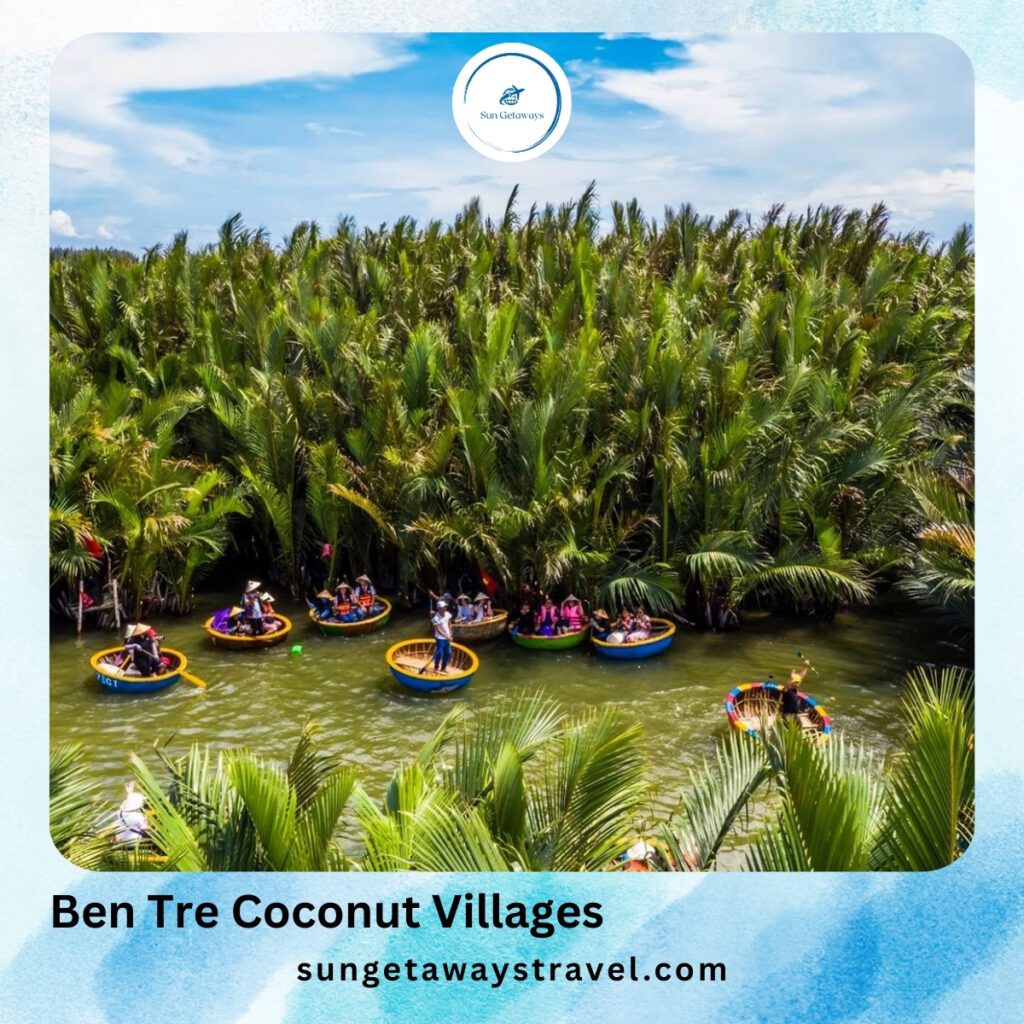
Ben Tre is known as Vietnam’s “Coconut Kingdom,” with millions of coconut trees shaping daily life, economy, and cuisine. - 🚤 Smaller canals, slower pace
Instead of wide waterways, narrow canals encourage peaceful river cruises in Vietnam. - 🏡 Family-run workshops
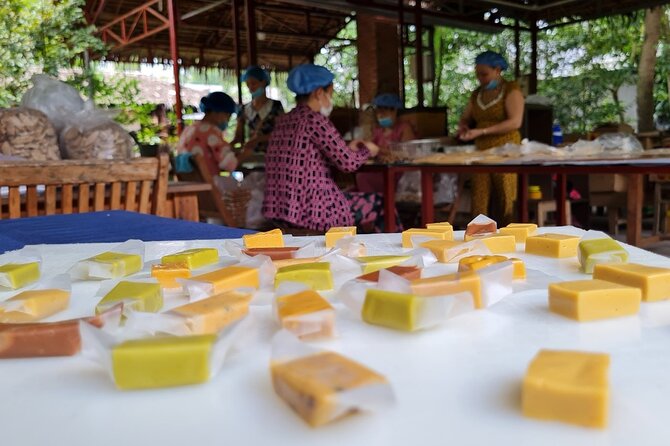
Coconut candy, mats, charcoal, oil, and handicrafts are produced in small family homes rather than factories. - 🚫 Lower tourism density
Fewer tour buses and less commercial pressure allow visitors to engage more naturally with locals.
These elements make Ben Tre coconut village one of the most genuine Mekong Delta sightseeing experiences available today.
Why Coconut Culture Defines Life in Ben Tre
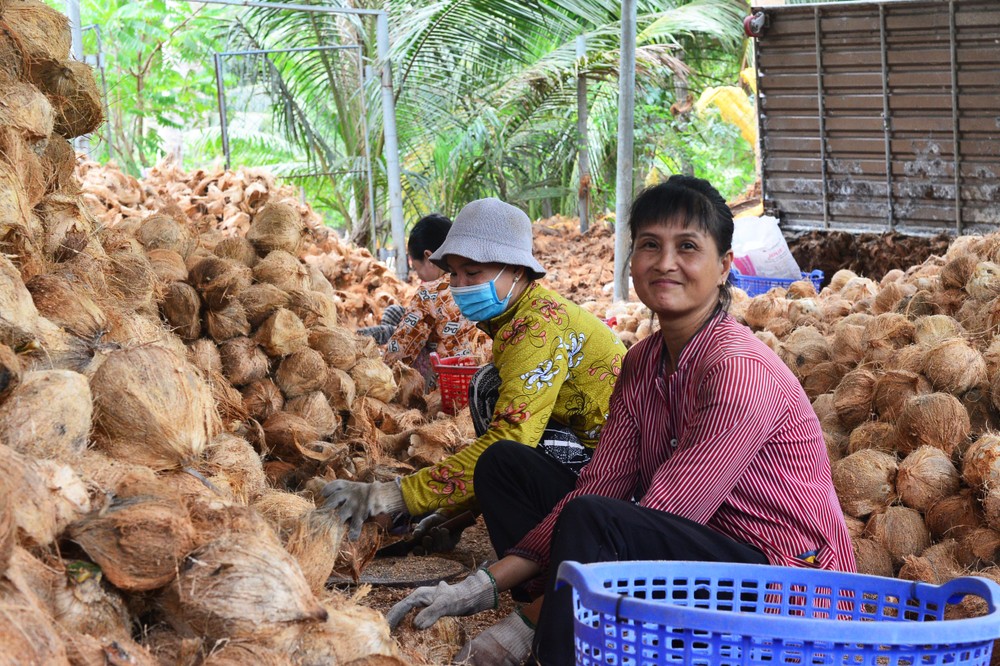
Coconuts in Ben Tre are not just an agricultural product—they are a way of life passed down through generations. Nearly every part of the tree is used, supporting a closed-loop economy that defines life along rivers in Vietnam.
Key ways coconuts shape Ben Tre daily life include:
- 🥥 Food production
Coconut milk, coconut rice, and coconut-based sweets appear in everyday meals and snacks. - 🧵 Craft and material use
Coconut husks are woven into ropes and mats; shells become bowls and souvenirs. - 🔥 Energy and fuel
Coconut shells are converted into charcoal used locally and exported abroad. - 💼 Household income
Many families rely on small-scale coconut processing as their primary livelihood.
A visit to Ben Tre coconut village allows travelers to see this system in action rather than hearing about it secondhand.
What You Experience on a Ben Tre Coconut Tour
A Ben Tre coconut tour is not a single attraction but a sequence of small, meaningful encounters that reveal rural Mekong life step by step.
Typical experiences include:
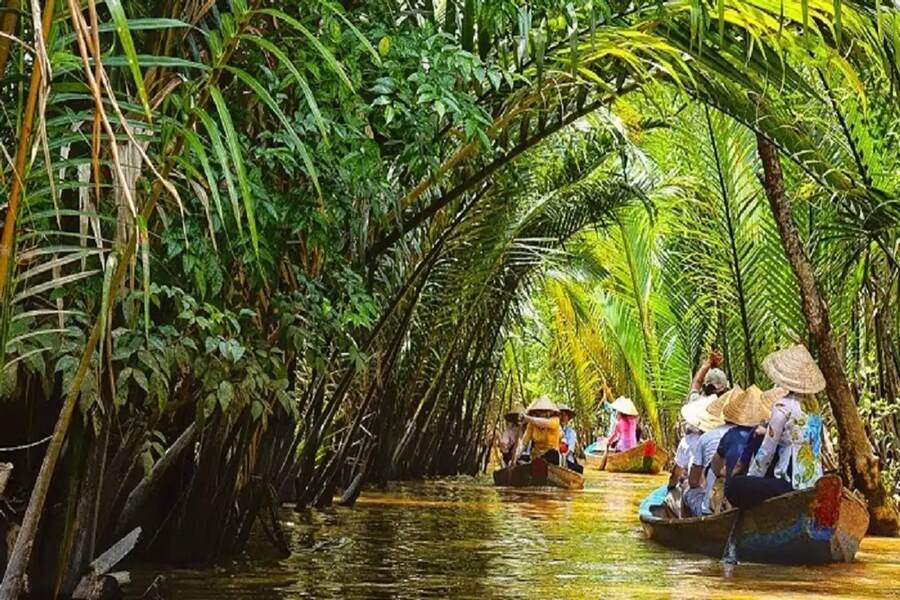
- 🚣 Rowing through coconut canals
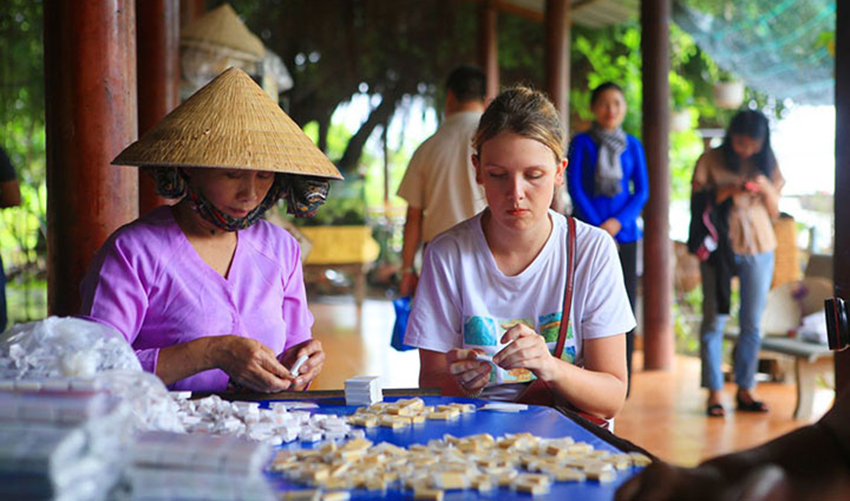
Hand-rowed sampans glide through shaded waterways, much like the famous Vietnam’s basket boat experiences. - 🍬 Visiting coconut candy workshops
Families demonstrate traditional candy-making methods using open stoves and hand tools. - 🧑🌾 Meeting local farmers
Guests learn how coconut trees are harvested and maintained year-round. - 🚲 Cycling village paths
Biking through coconut groves connects visitors with daily rhythms—schools, markets, and farms.
Unlike rushed itineraries, a well-designed Ben Tre coconut tour emphasizes time, interaction, and authenticity.
Culinary Delights: What to Eat in the Coconut Kingdom
Food in Ben Tre coconut village is a masterclass in using a single ingredient in a thousand ways. Your culinary journey should include:
- Coconut Bud Salad (Gỏi Củ Hủ Dừa): Taken from the very top of the tree, the “heart of palm” is crunchy, sweet, and refreshing. It is a delicacy reserved for special guests.
- Rice Cooked in Coconut (Cơm Dừa): Rice is steamed inside a coconut shell with coconut water, resulting in a fragrant, rich, and slightly sweet staple.
- Coconut Worms (Đuông Dừa): For the brave foodies, this is the ultimate Ben Tre coconut village challenge. These fatty larvae live inside the trees and are often eaten raw with fish sauce or fried. This is one of the must-try foods at Vietnamese floating market stops for brave foodies.
- Baked Coconut Cakes: Often sold at small roadside stalls, these warm treats are the perfect fuel for a village cycling trip.
Ben Tre Coconut Village vs Other Mekong Stops (Quick Comparison)
| Destination | Tourism Level | Experience Type | Authenticity |
|---|---|---|---|
| My Tho Travel | High | Commercial river tours | ⭐⭐ |
| Cai Rang Floating Market | Medium | Floating markets | ⭐⭐⭐ |
| Ben Tre coconut village | Low | Village & craft immersion | ⭐⭐⭐⭐⭐ |
This comparison explains why travelers seeking depth often choose Ben Tre coconut village over more famous Mekong hubs.
How Long Should You Spend in Ben Tre Coconut Village?
Rushing through Ben Tre limits its impact. While it’s possible to visit on a half-day trip, the most rewarding experiences come from slowing down.
Recommended durations:
- ⏱ Half-day: Quick introduction, limited interaction
- 🌿 Full-day: Ideal balance of canals, workshops, and cycling
- 🌙 Overnight stay: Deep immersion with Mekong Delta accommodation options
Spending more time allows travelers to observe daily routines that are invisible on fast-paced Mekong tours.
👉 If you want a thoughtfully paced Ben Tre coconut tour instead of a checklist stop, Sun Getaways Travel specializes in small-group itineraries that prioritize real village interaction.
When Is the Best Time to Visit Ben Tre Coconut Village?
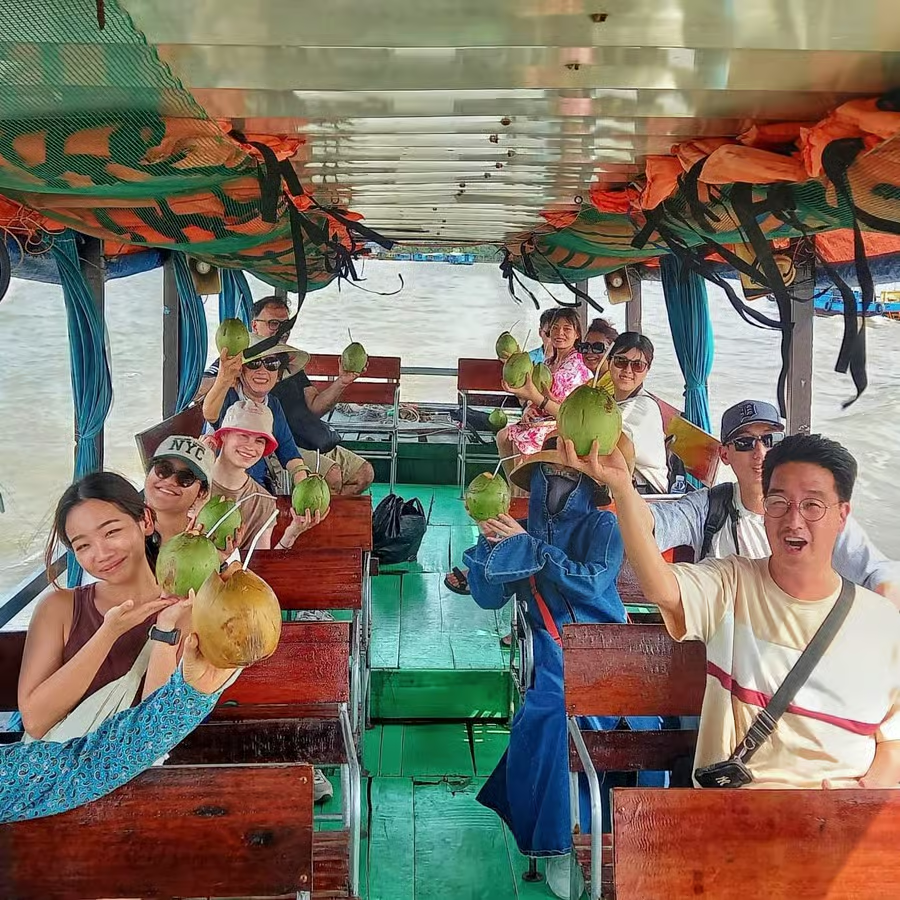
Ben Tre can be visited year-round, but seasonal differences affect comfort and atmosphere.
- ☀️ Dry season (Dec–Apr): Easier cycling, less humidity
- 🌧 Green season (May–Nov): Lush landscapes, fewer tourists
Coconut harvesting happens throughout the year, so cultural activities remain consistent regardless of season.
Expert Insight: Emma on Why Ben Tre Remains Authentic
“Ben Tre is one of the few Mekong destinations where tourism hasn’t replaced local life,” says Emma, a Vietnam travel consultant with 12 years of experience in designing and operating cultural tours.
“Families here don’t perform for visitors—they simply invite them in. That’s what makes Ben Tre coconut village so special.”
Emma notes that the key is choosing tours that respect village rhythms rather than disrupting them.
Choosing the Right Ben Tre Coconut Tour
Not all Ben Tre coconut tours offer the same level of authenticity. Some focus on quick stops with minimal explanation.
Look for tours that include:
- ✅ Direct visits to family homes
- ✅ Non-motorized canal experiences
- ✅ Small group sizes
- ❌ Avoid rushed itineraries with too many stops
A meaningful Ben Tre coconut tour should feel like a visit, not a performance.
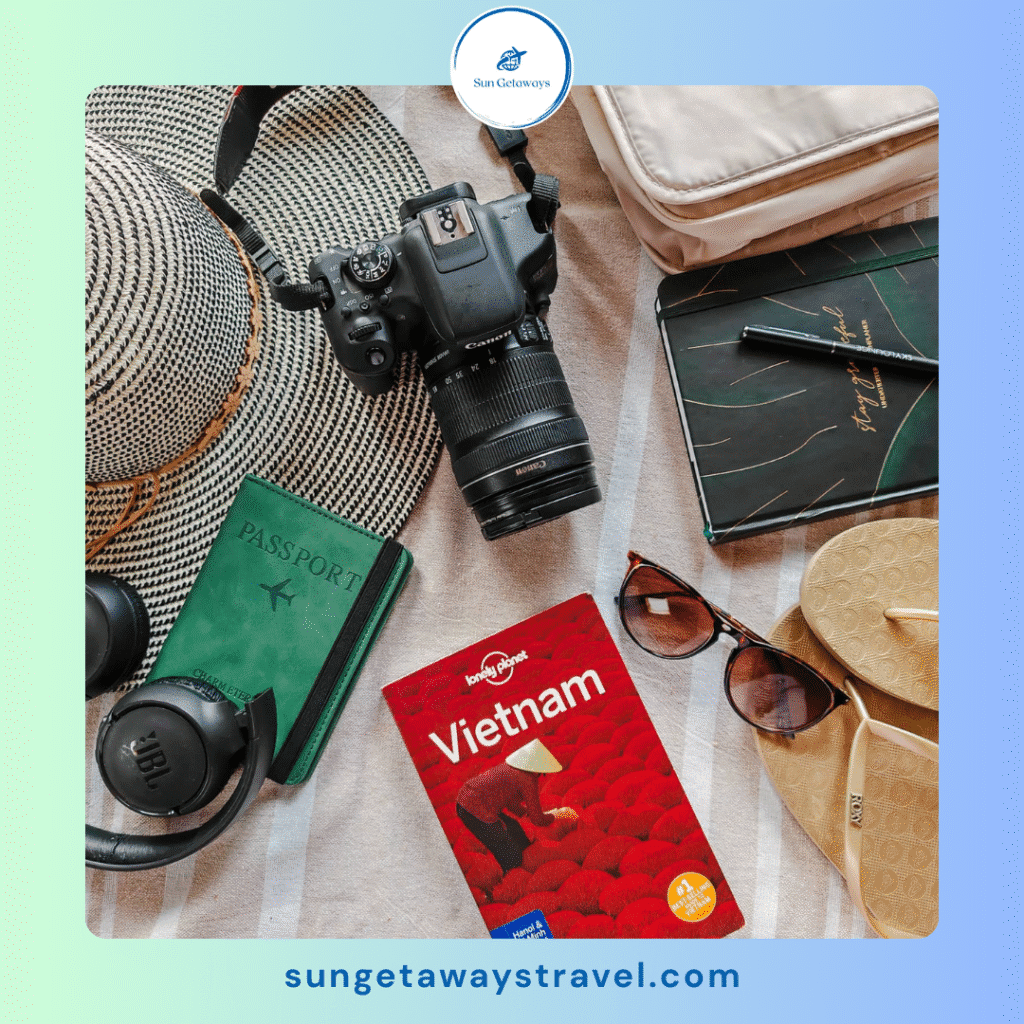
What to Pack for a Ben Tre Coconut Village Visit
Simple preparation enhances comfort:
- 👕 Light, breathable clothing
- 🧢 Hat and sunscreen
- 👟 Comfortable walking or cycling shoes
- 💧 Refillable water bottle
Combining Ben Tre with a Southern Vietnam Itinerary
Integrating a visit to Ben Tre coconut village into your broader travel plans is highly efficient due to its strategic location. As the gateway to the deep Mekong, it serves as the perfect transition between the urban energy of Saigon and the vast waterways of the lower delta.
Strategic Travel Pairings
- Ho Chi Minh City (The 2-Hour Escape): Because Ben Tre coconut village is only 1.5–2 hours from District 1, it is the most viable option for travelers seeking a high-quality Ben Tre coconut tour without the 4-hour commitment required to reach Can Tho. You can depart at 8:00 AM and be back in the city in time for a rooftop dinner.
- The “Mekong Loop” (Multi-Day Transit): For a comprehensive experience, start with a Ben Tre coconut tour to see artisanal crafts, then continue deeper to Tra Vinh (Khmer culture) or Can Tho (Floating Markets). This route avoids the repetitive “tourist islands” of My Tho and offers a more linear, logical flow.
- Southern Food-Focused Itineraries: If your trip is driven by flavor, Ben Tre is non-negotiable. Pair the coconut-infused dishes of the village with the street food of Saigon and the seafood of Vung Tau or Phu Quoc for a complete palate of the South.
👉 For travelers short on planning time, Sun Getaways Travel can integrate Ben Tre coconut village seamlessly into a broader Southern Vietnam journey.
Common Mistakes Visitors Make
- ❌ Treating Ben Tre as a photo stop
✔️ Solution: Allow time for interaction - ❌ Choosing the cheapest tour
✔️ Solution: Prioritize depth over price - ❌ Expecting floating markets everywhere
✔️ Solution: Appreciate village-based culture instead
Understanding Ben Tre’s strengths leads to a more rewarding experience.
FAQs About Ben Tre Coconut Village
1. Is Ben Tre coconut village suitable for first-time Vietnam visitors?
Yes, especially for travelers interested in culture and rural life.
2. How far is Ben Tre from Ho Chi Minh City?
Around 85 km, approximately 2 hours by road.
3. Is a Ben Tre coconut tour suitable for families?
Yes, most activities are gentle and family-friendly.
4. Can I visit Ben Tre coconut village independently?
Yes, but guided tours offer deeper cultural insight.
5. What makes Ben Tre different from other Mekong areas?
Its coconut-based economy and low tourism density.
For travelers seeking cultural depth, sustainability, and genuine local connection, Ben Tre coconut village is absolutely worth visiting. It offers something increasingly rare in Southeast Asia—an experience where tourism complements daily life instead of replacing it.


Related Tour

7 Days Muslim Hanoi Sapa Halong Bay & Da Nang


0 Reviews

Danang and Hoi An Discovery in 4 Days
35 Reviews

4 Days Hanoi Halong Ninh Binh Muslim Tour
21 Reviews


Exploring Vietnam: 9 Days of Adventures
10 Reviews
Ask a question
Leave a Comment (0)
No questions yet. Be the first to ask a question!
See related Posted
Luxury Golf Resorts in Vietnam – Elite Golf Travelers

Vietnam is increasingly recognized as a premier golf destination in Asia, therefore luxury golf…
Macrame in Vietnam: The Revival of Knot Art in Contemporary Craft Culture

Macrame in Vietnam reflects the country’s growing engagement with contemporary handmade culture, where global…
Vietnamese Musical Instrument Craft: Traditional Instrument Making in Vietnam

Vietnamese musical instrument craft reflects a long-standing relationship between sound, material, and cultural memory.…
Traditional Vietnamese Kite Art: History, Craftsmanship, and Cultural Meaning

Traditional Vietnamese kite art is a living expression of folk creativity, community values, and…
Vietnamese Folk Masks: Tradition, Symbolism & Cultural Meaning

Vietnamese folk masks are a distinctive form of traditional art that reflects the spiritual…
Vietnamese Embroidery Art: Traditional Craftsmanship & Cultural Meaning

Vietnamese embroidery art is a refined traditional craft that reflects patience, cultural memory, and…