





Macrame in Vietnam: The Revival of Knot Art in Contemporary Craft Culture
 PhamDuong
  3 min. to read
 Macrame in Vietnam reflects the country’s growing engagement with contemporary handmade culture, where global craft techniques are reinterpreted through local values of restraint, sustainability, and manual skill. Although macrame is not a traditional Vietnamese craft, its development demonstrates how knot art has been thoughtfully integrated into Vietnam’s artisan landscape, contributing to creative tourism, small-scale craftsmanship, and modern cultural expression.
Key Takeaways
- Macrame in Vietnam blends global techniques with local values of sustainability and craftsmanship.
- It supports small-scale artisans and fits into the rise of handmade culture driven by sustainability and creative tourism.
- Hoi An emerges as the primary hub for macrame, supported by its craft heritage and tourism.
- Vietnamese macrame emphasizes natural materials and minimalist aesthetics, distinguishing it from traditional crafts.
- Visitors can engage through workshops and artisan studios, fostering appreciation for this evolving craft.
1. Introduction to Macrame in Vietnam
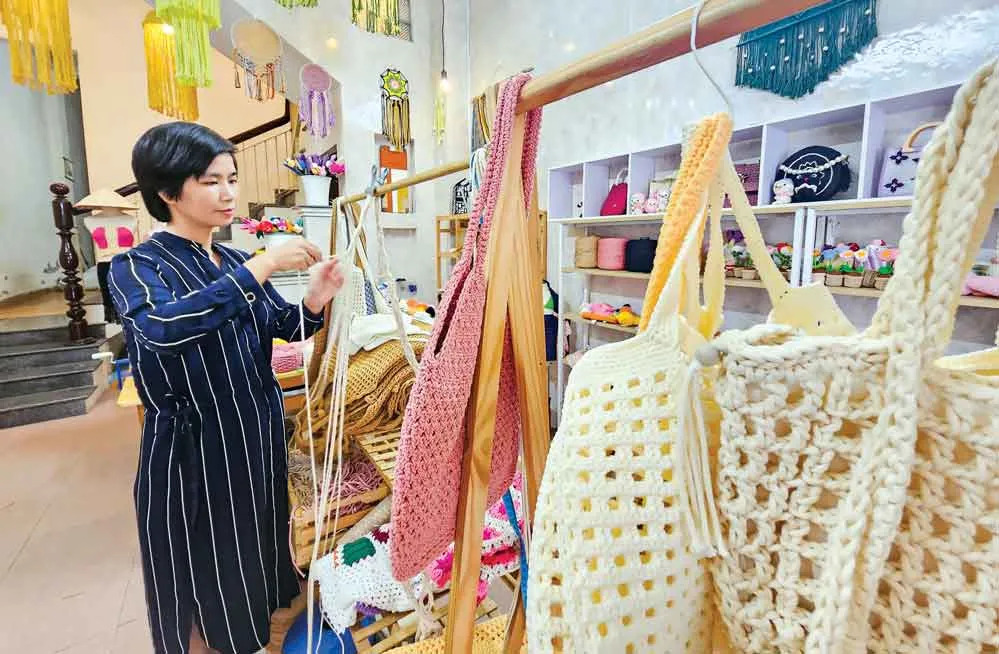
Macrame in Vietnam has emerged as a distinctive form of contemporary craft that bridges global handmade trends with local cultural sensibilities. While macrame is not a traditional Vietnamese craft in the historical sense, its integration into Vietnam’s artisan landscape reflects the country’s long-standing appreciation for handwork, patience, and material sensitivity.
In recent decades, macrame has gained popularity among Vietnamese artisans, designers, and small craft communities – particularly in cultural tourism hubs – where handmade objects serve both aesthetic and experiential purposes. Rather than replacing traditional crafts, macrame in Vietnam occupies a complementary space, enriching the broader ecosystem of handmade art.
2. Understanding the Cultural Context of Macrame in Vietnam
To understand how macrame took root in Vietnam, it is essential to consider the cultural environment that allowed it to flourish. Vietnamese craft traditions have always valued manual skill, repetition, and harmony with natural materials – principles that align closely with macrame techniques.
Within this broader cultural context, macrame did not spread evenly across the country. Its strongest development can be observed in specific localities where tourism, creativity, and artisanal exchange intersect.
2.1 The Rise of Handmade Culture in Vietnam
Vietnam has experienced a renewed interest in handmade and slow-living aesthetics, especially among younger generations. This shift is influenced by:
- Growing awareness of sustainability
- Desire for non-industrial, meaningful objects
- Expansion of creative tourism
Macrame fits naturally into this movement due to its low environmental impact and visible handcrafting process.
2.2 The Influence of Global Craft Movements
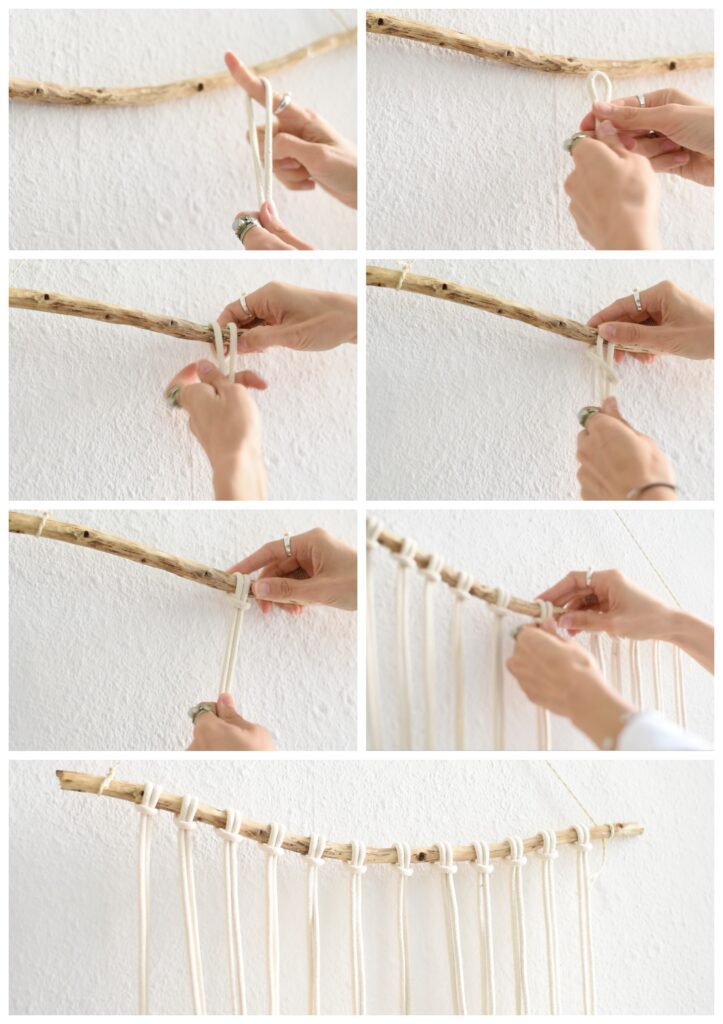
Macrame entered Vietnam largely through international craft exchanges, social media, and tourism networks. Rather than being copied mechanically, the technique was adapted to local tastes, materials, and uses – an approach consistent with Vietnam’s historical pattern of cultural adaptation.
To explore one of Vietnam’s most refined visual art forms, read our in-depth guide on 👉 Vietnamese lacquer painting and learn how traditional materials and lacquerware painting techniques shape its distinctive aesthetic.
3. What Makes Macrame in Vietnam Distinctive?
Although macrame techniques are globally shared, macrame in Vietnam has developed identifiable characteristics shaped by local conditions and values. These characteristics become clearer when examining the materials and visual language Vietnamese artisans favor.
3.1 Natural Materials and Environmental Sensibility
Vietnamese macrame commonly uses:
- Cotton and recycled cotton cords
- Jute and hemp fibers
- Locally sourced wooden rings and sticks
Material choices reflect an emphasis on sustainability and tactile warmth rather than synthetic perfection.
For travelers who want to go beyond observation and connect directly with local landscapes and communities, explore 👉 Sustainable trekking in Vietnam to experience cultural immersion, responsible travel practices, and meaningful encounters with local ways of life.
3.2 Minimalist Aesthetics with Cultural Restraint
Unlike heavily decorative styles seen elsewhere, macrame in Vietnam often emphasizes:
- Neutral colors
- Balanced proportions
- Functional beauty
This restrained aesthetic resonates with broader Vietnamese artistic traditions found in embroidery, lacquerware, and folk crafts.
4. Macrame in Hoi An: A Creative Hub of Knot Art
Among all regions, Macrame in Hoi An stands out as the most visible and developed expression of this craft. Hoi An’s unique cultural and economic conditions explain why macrame thrives there more than in other cities.
4.1 Why Hoi An Became a Center for Macrame
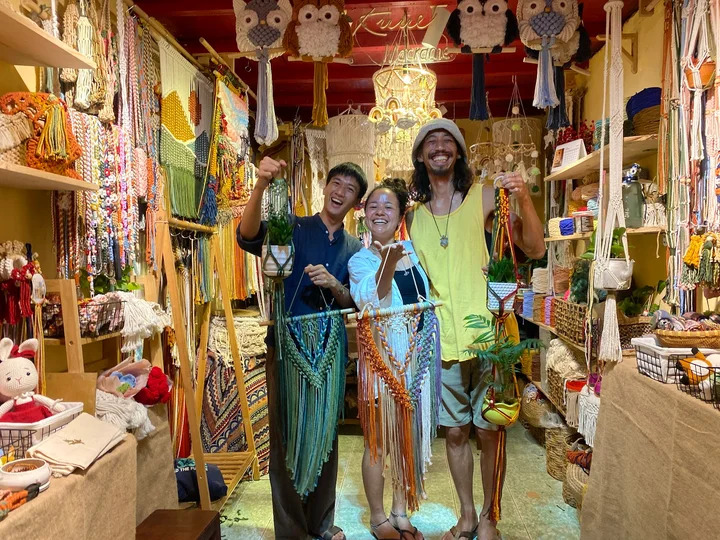
Hoi An combines several factors essential for macrame’s growth:
- Strong craft heritage, with generations of artisans skilled in bamboo, wood, textiles, and decorative handwork
- International tourism, providing constant exposure to global tastes and demand for handmade objects
- Supportive environment for small artisan businesses, including workshops, markets, and creative communities
Together, these conditions allow macrame to thrive as both a cultural practice and a sustainable livelihood.
4.2 Macrame Workshops and Artisan Studios in Hoi An
Many Hoi An artisans operate small studios that:
- Produce handmade macrame décor, ranging from wall hangings to functional household objects
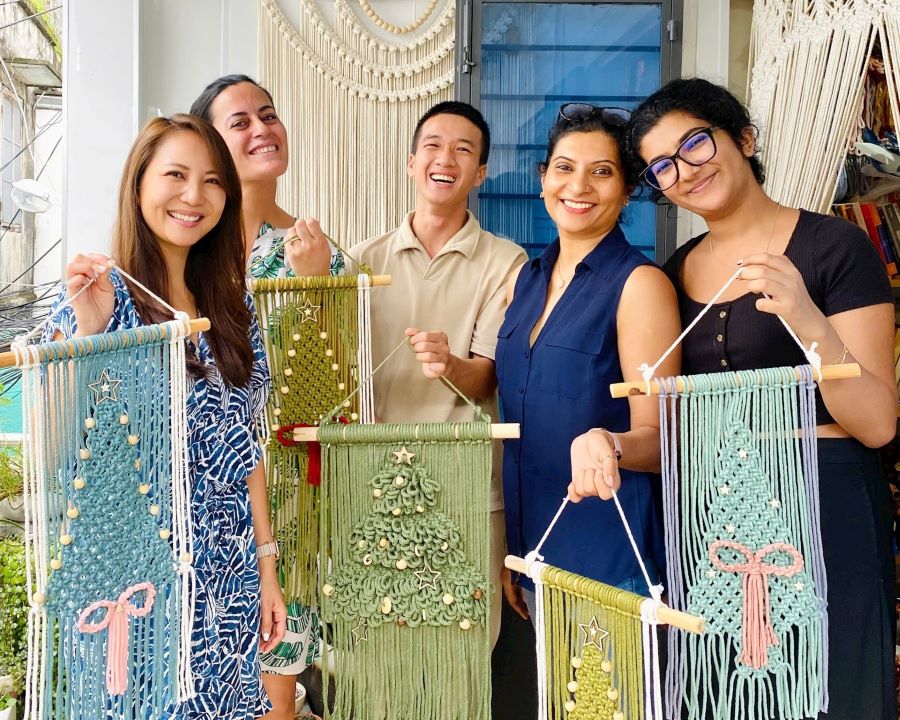
- Offer workshops for visitors, enabling hands-on learning rather than passive consumption
- Combine macrame with traditional materials like bamboo, reinforcing local material identity
These spaces function not only as production sites, but also as informal cultural classrooms where craft knowledge is shared.
5. Core Techniques Used in Vietnamese Macrame Craft
While materials provide the foundation, technique transforms simple cords into expressive forms. Vietnamese macrame emphasizes clarity of structure and consistency of tension. To better understand this craft, it is useful to examine its core techniques in detail.
5.1 Knotting Techniques and Structural Rhythm
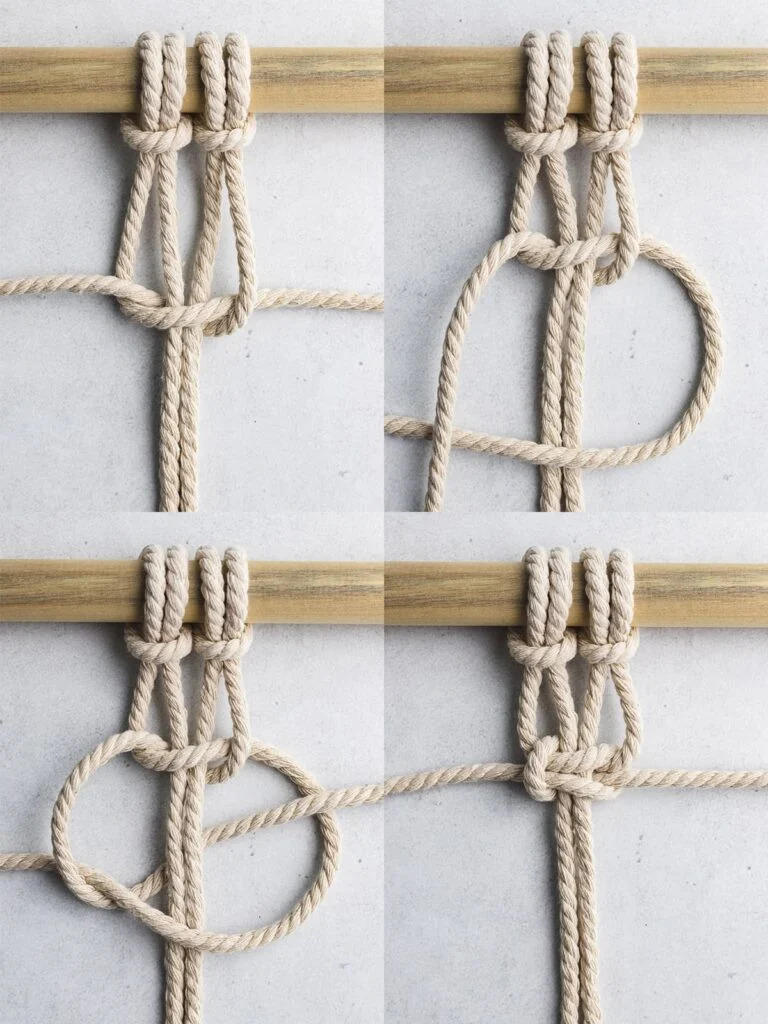
Key techniques include:
- Square knots and spiral knots, forming the basic structural vocabulary of most designs
- Alternating tension for visual rhythm, creating subtle movement within static forms
- Repetitive patterns ensuring balance, reinforcing both symmetry and durability
The goal is not decorative complexity, but visual coherence and rhythmic flow.
5.2 Tension Control and Hand Precision
Rather than relying on measurement tools, artisans depend on tactile sensitivity to maintain:
- Even spacing, ensuring visual consistency across the surface
- Structural integrity, allowing the piece to support weight or movement
- Visual harmony, where no single section dominates or collapses
This reliance on hand judgment aligns closely with Vietnam’s broader craft philosophy.
5.3 Finishing and Functional Considerations
Finishing practices prioritize usability and longevity:
- Trimming without over-polishing, preserving the natural texture of the fibers
- Avoiding unnecessary embellishment, which could interfere with structure
- Reinforcing stress points discreetly, extending functional lifespan
Across Vietnamese macrame traditions, function consistently outweighs ornamentation.
For those interested in sound-based heritage, discover 👉 Vietnamese musical instrument craft and the principles behind traditional instrument making in Vietnam, from court music to folk performance.
6. Comparison: Macrame in Vietnam and Traditional Vietnamese Crafts
| Aspect | Macrame in Vietnam | Traditional Vietnamese Crafts |
|---|---|---|
| Historical origin | Contemporary, global | Indigenous, centuries-old |
| Technique | Knotting by hand | Weaving, carving, casting |
| Tools | Minimal | Specialized tools |
| Materials | Cotton, jute, hemp | Bamboo, silk, wood |
| Cultural role | Decorative, lifestyle | Ritual, communal, symbolic |
| Adaptability | Highly flexible | Tradition-bound |
This comparison highlights macrame’s role as a modern complement rather than a replacement.
7. Economic and Social Impact of Macrame in Vietnam
Beyond aesthetics, macrame contributes meaningfully to local economies and social structures. Its impact becomes clearer when viewed through community-level practices.
7.1 Supporting Small-Scale Artisans
Macrame enables:
- Low-cost entry into craft production, as it requires minimal tools and affordable raw materials
- Home-based work, allowing artisans to balance craft production with family responsibilities
- Income diversification for artisans, particularly those already engaged in tourism or handmade trades
This level of accessibility makes macrame especially valuable in tourist regions, where flexible and small-scale production models are essential.
7.2 Macrame and Creative Tourism
Workshops and demonstrations allow visitors to:
- Engage directly with craft processes, transforming passive observation into active participation
- Understand handmade value, including time, skill, and material choices
- Participate respectfully, guided by artisans rather than commercial performance
Such interaction strengthens cultural exchange and supports ethical tourism, rather than reducing craft to mass-produced souvenirs.
To explore art forms shaped by wind, sound, and community life, visit👉 traditional Vietnamese kite art and learn about handmade kite traditions in Vietnam preserved through generations.
8. Macrame in Contemporary Vietnamese Design
Macrame in Vietnam continues to evolve alongside modern design trends. Rather than remaining static, the craft adapts to new contexts.
8.1 Integration into Interior and Lifestyle Design
Macrame is increasingly used in:
- Cafés and boutique hotels, where handmade textures create warmth and visual identity
- Eco-conscious interiors, aligning with natural materials and low-impact design philosophies
- Handmade fashion accessories, blending craft techniques with wearable form
Its adaptability allows macrame to move easily between decoration, function, and artistic expression.
8.2 Collaboration with Other Craft Forms
Some artisans combine macrame with:
- Ceramic elements, introducing contrast between soft fiber and rigid surfaces
- Bamboo structures, reinforcing local material traditions
- Textile art, expanding surface complexity and visual layering
These hybrid approaches reflect Vietnam’s broader creative adaptability and openness to cross-craft experimentation.
9. How to Experience Macrame in Vietnam as a Visitor
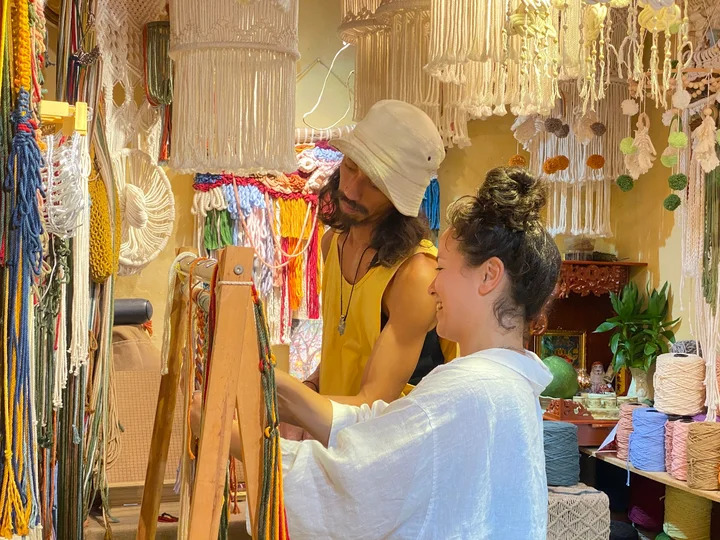
Visitors can engage with macrame meaningfully by approaching it as a cultural practice rather than a Visitors can engage with macrame most meaningfully when it is approached as a living cultural practice rather than a decorative commodity. Awareness and intention play a crucial role in respectful engagement.
Recommended approaches include:
- Visiting artisan studios and workshops, where production contexts are visible
- Participating in guided macrame classes, gaining hands-on understanding of technique
- Learning about materials and techniques before purchasing, supporting informed and ethical choices
Such contextual awareness deepens appreciation and contributes to sustainable craft economies.
👉 Need quick advice or want to talk directly with our team? Contact us via WhatsApp for fast support and personal recommendations.
10. Best Places to Explore Macrame in Vietnam
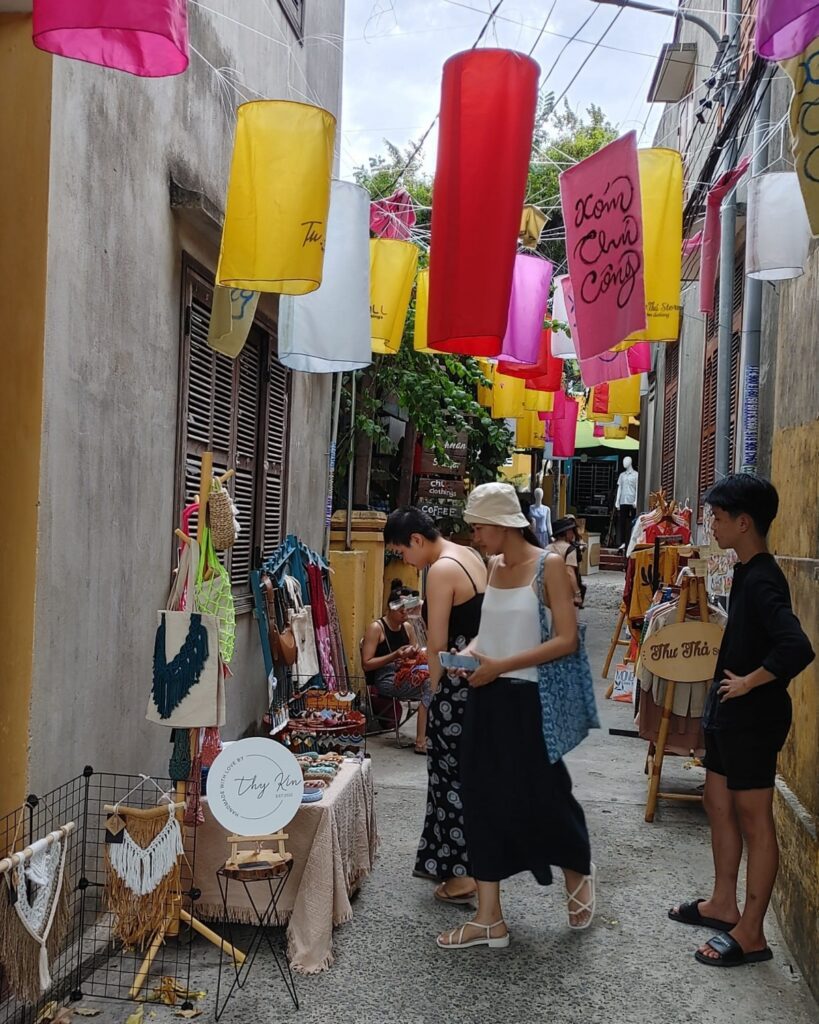
Hoi An: Hoi An remains the most visible center for macrame’s development in Vietnam.
- Artisan workshops and creative studios, often operated by independent makers
- Hands-on experiences for visitors, integrating learning with cultural tourism
Hanoi: Hanoi emphasizes conceptual and artistic reinterpretation.
- Contemporary craft markets, showcasing experimental and design-driven work
- Design-focused handmade spaces, connecting macrame with modern aesthetics
If you want to move from observation to creation, the Bat Trang Ceramic & Lacquer Painting Hands-On Experience Workshop offers a rare opportunity to work directly with local artisans.
Ho Chi Minh City: The city reflects macrame’s role within a fast-evolving urban design culture.
- Lifestyle brands integrating macrame, especially in interior and fashion contexts
- Experimental craft collaborations, linking macrame with broader creative industries
“Macrame in Vietnam illustrates how global craft techniques can be localized without erasing cultural identity. Its success lies not in imitation, but in adaptation—aligning material sensitivity, restraint, and communal values with contemporary needs.”
— Mrs. Emma Nguyen – Tour Operator Manager with over 12 years of experience at Sun Getaways Travel
This perspective underscores macrame’s role as a living, evolving craft.
12. Conclusion
Macrame in Vietnam represents more than a decorative trend. It reflects a broader cultural movement toward sustainability, handmade value, and creative exchange. In places like Hoi An, macrame demonstrates how contemporary craft can coexist with tradition—adding new layers to Vietnam’s rich artisanal heritage without displacing its roots.
👉 If you prefer a journey tailored exactly to your interests, pace, and travel style, let Sun Getaways Travel help you design a customized tour created just for you.


Related Tour

7 Days Northern Vietnam Tour: Hanoi, Halong, Sapa


23 Reviews

Love’s Retreat: Honeymoon Adventure in Vietnam 14 days
20 Reviews

Discover the Essence of Vietnam: A 12-Day Journey
46 Reviews


6 Days Mekong Delta and Beach Relaxing
29 Reviews

13 Days Vietnam Beauty from North to South
19 Reviews
Ask a question
Leave a Comment (0)
No questions yet. Be the first to ask a question!
See related Posted
Luxury Golf Resorts in Vietnam – Elite Golf Travelers

Vietnam is increasingly recognized as a premier golf destination in Asia, therefore luxury golf…
Vietnamese Musical Instrument Craft: Traditional Instrument Making in Vietnam

Vietnamese musical instrument craft reflects a long-standing relationship between sound, material, and cultural memory.…
Traditional Vietnamese Kite Art: History, Craftsmanship, and Cultural Meaning

Traditional Vietnamese kite art is a living expression of folk creativity, community values, and…
Vietnamese Folk Masks: Tradition, Symbolism & Cultural Meaning

Vietnamese folk masks are a distinctive form of traditional art that reflects the spiritual…
Vietnamese Embroidery Art: Traditional Craftsmanship & Cultural Meaning

Vietnamese embroidery art is a refined traditional craft that reflects patience, cultural memory, and…
Dong Ho Folk Painting: The Cultural Soul of Vietnamese Woodblock Prints
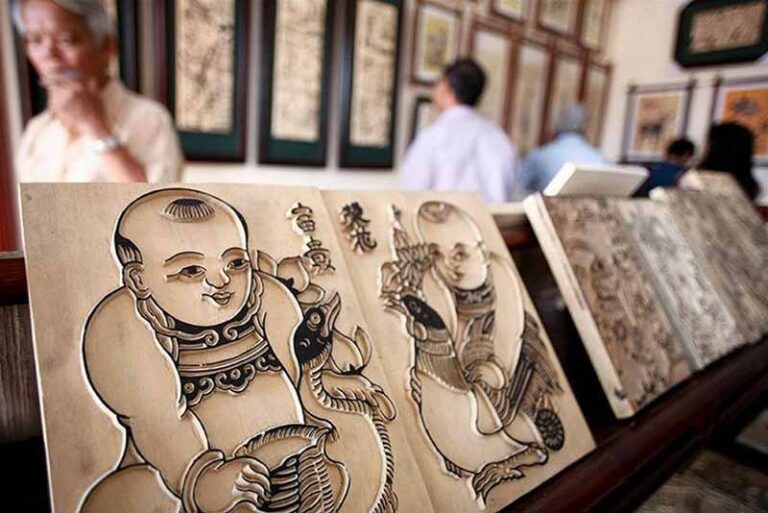
Dong Ho folk painting is one of Vietnam’s most enduring traditional art forms, reflecting…