








Is Sandboarding in Vietnam Safe for Beginners? A Complete Guide
 Dan Vy
  3 min. to read
 Sandboarding in Vietnam has quickly become one of the most talked-about adventure activities for travelers visiting coastal and desert-like regions. But if you’ve never tried it before, it’s natural to wonder whether sliding down massive sand dunes is actually safe – especially for beginners.
This guide breaks down everything you need to know, from real risks and safety measures to choosing the right location and tour. By the end, you’ll know exactly what to expect and whether sandboarding is right for you.
Key Takeaways
- Sandboarding in Vietnam offers a beginner-friendly experience due to soft dunes and accessible locations.
- Safety is generally assured for beginners when proper equipment, guidance, and conditions are followed.
- Mui Ne, Bau Trang, and Ninh Thuan are the top destinations for sandboarding in Vietnam.
- Timing matters: the best months are November to April, and early morning or late afternoon are ideal for sandboarding.
- Beginners should avoid common mistakes like riding steep slopes or attempting to stand too early for a more enjoyable experience.
What Is Sandboarding and Why Vietnam Is Perfect for It
Sandboarding is similar to snowboarding, except instead of snow, you glide down natural sand dunes using a specially designed board. While the sport originated in desert regions like Peru and Namibia, sandboarding in Vietnam has become increasingly popular thanks to the country’s long coastline, strong winds, and unique dune formations.

Vietnam’s sand dunes are mostly found near the coast, where wind patterns constantly reshape the landscape. Unlike rocky deserts, these dunes are soft, wide, and forgiving—making sand dunes sandboarding Vietnam especially suitable for beginners. The most famous locations include Mui Ne (Binh Thuan), Bau Trang (White Sand Dunes), and less-crowded dunes near Ninh Thuan.
Another advantage is accessibility. Most sandboarding spots in Vietnam are close to tourist towns, meaning you don’t need special permits or long expeditions to try the activity.
Is Sandboarding in Vietnam Safe for Beginners? The Short Answer
Yes—sandboarding in Vietnam is generally safe for beginners, provided you choose the right location, use proper equipment, and follow basic safety instructions. Compared to snowboarding or even surfing, sandboarding involves lower speeds and softer landings. The sand absorbs impact far better than snow-covered ice or rocky trails.
That said, Vietnam travel safety depends heavily on how and where you do it. Beginners who attempt sandboarding without guidance, use improvised boards, or ignore weather conditions face higher risks. This guide focuses on helping first-timers avoid those mistakes.
Understanding the Real Risks of Sandboarding in Vietnam
To make an informed decision, it’s important to understand the actual risks—rather than exaggerated fears.

The most common beginner injuries are minor scrapes, muscle soreness, and light bruises. These usually happen when riders lose balance or try to stand too early while descending. Serious injuries are rare, especially when compared to mountain sports or water-based adventures like wakeboarding in Vietnam.
Another factor is heat. Sand dunes can become extremely hot under midday sun, especially in southern Vietnam. Heat exhaustion, dehydration, and sunburn are more realistic concerns than falls. This is why timing and preparation matter as much as technique.
Wind conditions also play a role. Strong winds can reduce visibility and make dunes unstable. Reputable operators will avoid sandboarding during unsafe conditions.
Best Places for Safe Sandboarding in Vietnam
Not all dunes are equal. For beginners, choosing the right location is essential for safety and enjoyment.
Mui Ne Sand Dunes (Binh Thuan)
Mui Ne is the most popular destination for sandboarding in Vietnam, and for good reason. The dunes are wide, sloped gradually, and maintained by constant tourism activity. Boards are readily available, and local guides understand which slopes are safest for first-timers. For a complete guide, check out Mui Ne: Your Complete Guide to Sand Dune Exploration.

Bau Trang (White Sand Dunes)
Bau Trang offers a more scenic experience with larger dunes and fewer crowds. While the dunes are higher, there are beginner-friendly sections with long, smooth slopes. This area is ideal if you want to combine sandboarding with photography or a half-day adventure travel in Vietnam.

Ninh Thuan Sand Dunes
Less commercialized and quieter, Ninh Thuan’s dunes are suitable for travelers seeking a more natural experience. However, beginners should only attempt sandboarding here with local guidance, as facilities are limited.
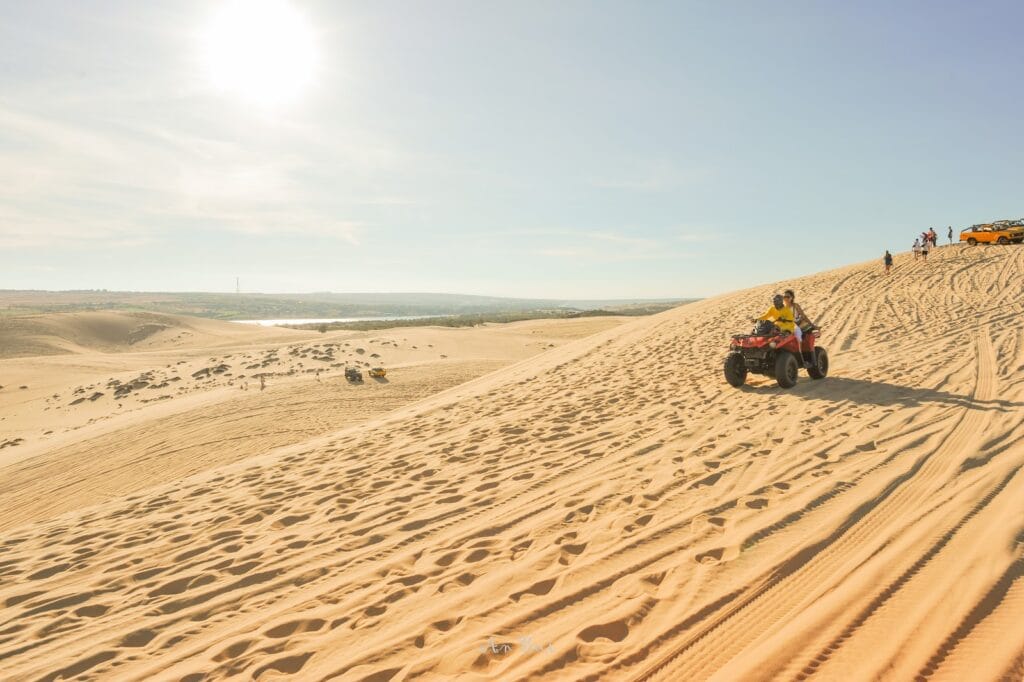
Across all these destinations, sand dunes sandboarding Vietnam remains safer than many adventure sports when done in appropriate zones.
What Beginners Should Expect During a Sandboarding Session
A typical beginner sandboarding experience starts with a short briefing. You’ll learn how to position your feet, control speed by shifting weight, and—most importantly—how to fall safely if you lose balance.
Most beginners start sitting or kneeling on the board rather than standing. This reduces speed and gives you more control. Standing rides usually come later, once you’re comfortable with balance and direction.
Sessions usually last between 30 minutes and 1 hour. That may not sound long, but climbing dunes repeatedly is physically demanding. Expect a workout for your legs and core.

Don’t waste time planning—let the experts handle it! Contact Sun Getaways Travel today for a custom-built itinerary that perfectly matches your budget and travel style.
Safety Equipment and Why It Matters
One of the reasons sandboarding in Vietnam is relatively safe is the simplicity of the equipment—but that doesn’t mean it should be overlooked.
Most operators provide lightweight boards with smooth bases designed for sand. These boards are slower and more stable than improvised plastic sleds. Wearing closed-toe shoes is strongly recommended, as sand can become extremely hot and uneven.
Helmets are not always standard, but for beginners—especially children or cautious travelers—they are worth requesting. Sunglasses or protective eyewear help prevent sand irritation, particularly on windy days.
Want to take the plunge? Everything you need to know about skydiving in Vietnam is here.
When Is the Safest Time to Go Sandboarding in Vietnam?
Timing plays a major role in safety and comfort.
The best months for sandboarding are from November to April (Find more in our seasonal guide), when weather is dry and winds are more predictable. During this period, dunes are firm but not overly hot.

The best time of day is early morning or late afternoon. Temperatures are lower, light is softer, and dunes are more stable. Midday sandboarding increases the risk of heat-related issues rather than physical injury.
Avoid sandboarding during heavy winds or after rain, when dunes may shift unpredictably.
Guided Tours vs. Going Solo: What Beginners Should Choose
While it’s technically possible to rent a board and sandboard independently, beginners are strongly advised to join a guided experience.
Guides help you:
- Choose safe slopes
- Understand wind and sand conditions
- Learn falling and braking techniques
- Avoid restricted or unstable areas

This is where working with experienced operators like Sun Getaways Travel adds value. They collaborate with local guides who understand dune conditions and adjust activities based on weather and skill level—making your first sandboarding experience safer and more enjoyable.
Expert Insight: Safety Perspective from Emma (12 Years Experience)
Emma, a senior travel consultant with over 12 years of experience designing adventure tours across Vietnam, shares this insight:
“Sandboarding is one of the safest entry-level adventure activities in Vietnam, especially compared to trekking or water sports. Most issues I’ve seen come from travelers ignoring heat, overestimating their fitness, or choosing poor-quality boards. With proper timing and guidance, beginners rarely face serious risks.”
Her experience reinforces that sandboarding in Vietnam is not inherently dangerous – it’s the approach that matters. Contact her for FREE assistance now??
Who Should Avoid Sandboarding?
While most people can safely try sandboarding, it may not be suitable for everyone.
Travelers with serious knee, ankle, or back issues should consult a doctor before participating. Those sensitive to heat or with mobility limitations may also find dune climbing challenging.
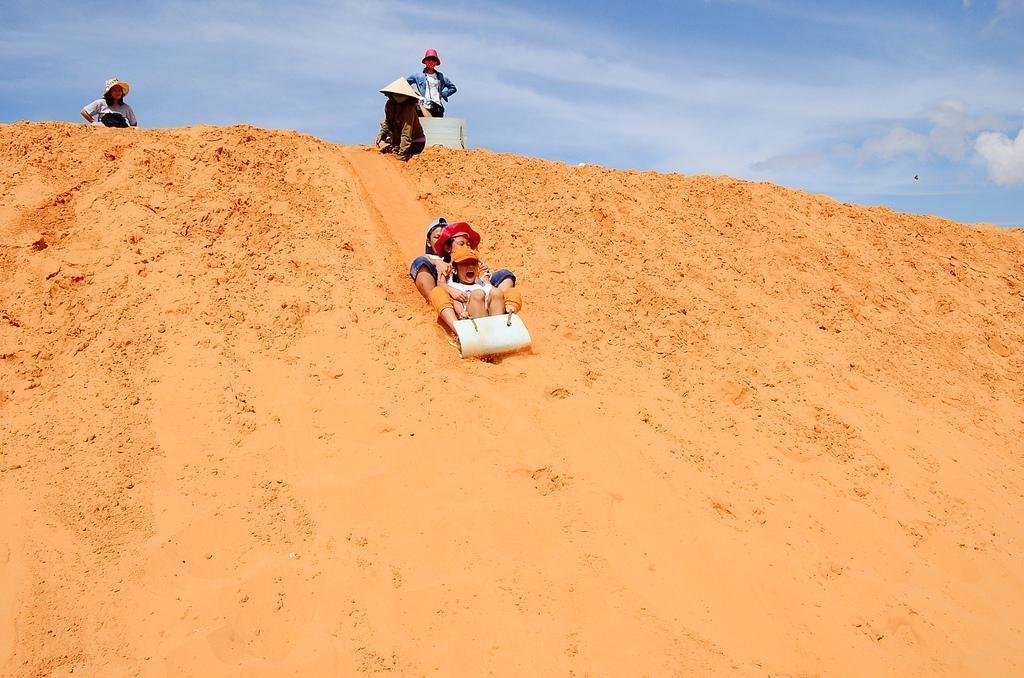
For everyone else, adjusting pace and choosing beginner slopes is usually enough to stay safe.
Dream of flying? Find out everything about skydiving in Vietnam, the ultimate freefall experience.
Common Beginner Mistakes (and How to Avoid Them)
Many safety concerns come from avoidable mistakes. Beginners often try to stand too early, ride steep slopes meant for experienced riders, or sandboard during peak heat.
Staying hydrated, resting between runs, and starting slow are simple ways to keep the experience safe and enjoyable. Listening to local advice matters more than pushing yourself. For advice on overall well-being, consult the Vietnam travel safety health guide.
Why Sandboarding in Vietnam Is Beginner-Friendly Compared to Other Countries
Unlike desert regions with sharp drops or compacted sand, Vietnam’s coastal dunes are soft and forgiving. Falls usually mean sliding rather than tumbling.
Additionally, tourism infrastructure makes sand dunes sandboarding Vietnam more accessible. Equipment rental, guides, and nearby medical facilities reduce overall risk compared to remote desert destinations.

Final Thoughts: Is Sandboarding in Vietnam Safe for Beginners?
For most travelers, the answer is a confident yes. With the right timing, location, and basic precautions, sandboarding in Vietnam is a safe, exciting, and memorable experience—even if you’ve never tried board sports before.
Choosing reputable operators, avoiding extreme conditions, and listening to guidance make all the difference. If you’re looking to add a low-risk adventure to your Vietnam itinerary, sandboarding is one of the best places to start.
FAQs About Sandboarding in Vietnam
No. When done on beginner-friendly dunes with proper guidance, it’s considered very safe.
No prior experience is needed. Most beginners start sitting or kneeling.
3. Where is the best place for sand dunes sandboarding Vietnam?
Mui Ne and Bau Trang are the most beginner-friendly locations.
Closed shoes, light clothing, sunglasses, and sunscreen are recommended.
Yes, on gentle slopes and with supervision, sandboarding is suitable for children.


Related Tour

3 Days Tour Muslim Hanoi and Halong Bay


21 Reviews

Hands On Art & Craft Experience from Hanoi
0 Reviews

Mekong Experience: My Tho & Ben Tre
7 Reviews

6-Days Ho Chi Minh Floating Market Tour
10 Reviews

Honeymoon Bliss in Vietnam 16 days
21 Reviews

16-Day Vietnam Adventure Experience trip
0 Reviews
Ask a question
Leave a Comment (0)
No questions yet. Be the first to ask a question!
See related Posted
Luxury Golf Resorts in Vietnam – Elite Golf Travelers

Vietnam is increasingly recognized as a premier golf destination in Asia, therefore luxury golf…
Macrame in Vietnam: The Revival of Knot Art in Contemporary Craft Culture

Macrame in Vietnam reflects the country’s growing engagement with contemporary handmade culture, where global…
Vietnamese Musical Instrument Craft: Traditional Instrument Making in Vietnam

Vietnamese musical instrument craft reflects a long-standing relationship between sound, material, and cultural memory.…
Traditional Vietnamese Kite Art: History, Craftsmanship, and Cultural Meaning

Traditional Vietnamese kite art is a living expression of folk creativity, community values, and…
Vietnamese Folk Masks: Tradition, Symbolism & Cultural Meaning

Vietnamese folk masks are a distinctive form of traditional art that reflects the spiritual…
Vietnamese Embroidery Art: Traditional Craftsmanship & Cultural Meaning

Vietnamese embroidery art is a refined traditional craft that reflects patience, cultural memory, and…